Other vulcanized rubber shock absorbers
CN → US| HS Code | Tariff Rate | Origin | Destination | Doc |
|---|---|---|---|---|
| 8487900040 | 38.9% | CN | US | Official Doc |
| 8487900080 | 88.9% | CN | US | Official Doc |
| 4016993000 | 35.0% | CN | US | Official Doc |
| 4016995500 | 37.5% | CN | US | Official Doc |
Product Images
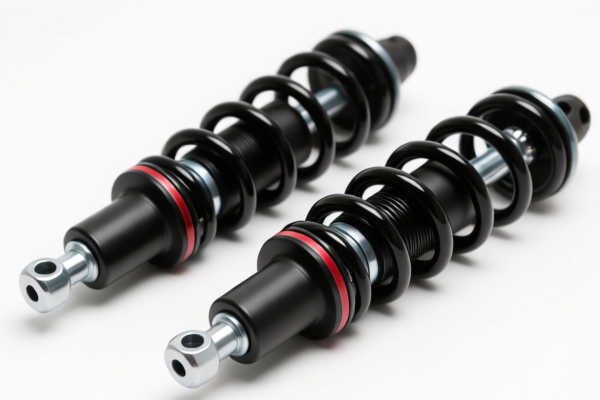
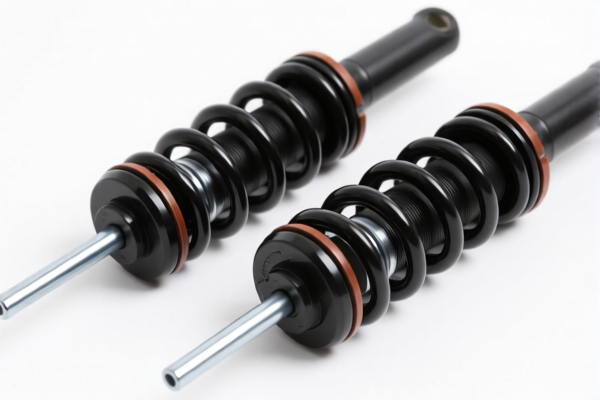
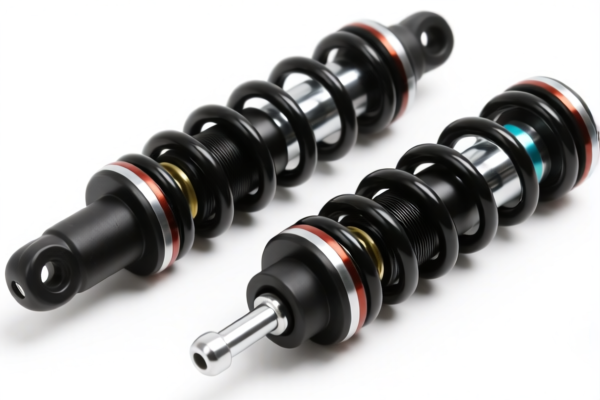
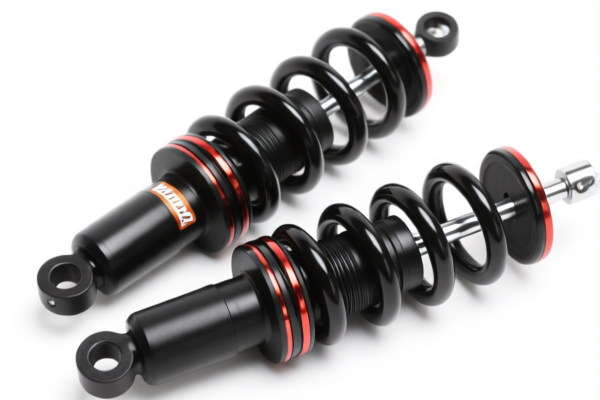
AI Analysis
🛡️ Other Vulcanized Rubber Shock Absorbers
🌐 HS Code Reference & Customs Clearance Guide | 2026 Latest Tariff Analysis | Strategic Import Strategy
📌 I. Product Definition & Classification: What Exactly Are "Vulcanized Rubber Shock Absorbers"?
Vulcanized rubber shock absorbers are critical damping components used in automotive, industrial, and machinery applications to absorb vibrations and impact energy. In international trade, their classification depends heavily on material composition, functional context (mechanical part vs. vehicle part), and structural integration.
⚠️ Key Distinction:
- If the product is a generic mechanical component not specific to vehicles → May fall under Chapter 84 (Machinery Parts).
- If the product is specifically for vehicle use or primarily rubber-based → May fall under Chapter 40 (Rubber Articles).
- Material Note: "Vulcanized rubber" implies processed rubber with improved durability, distinct from raw or unvulcanized rubber.
📦 II. HS Code Classification Matrix (2026 Latest Tariff Authority Cross-Reference)
| HS Code | Product Description | Applicable Scenario | Key Classification Logic |
|---|---|---|---|
8487.90.00.40 |
Rubber shock absorbers, classified as mechanical damping components | Generic machinery, industrial equipment | ✅ Fits "mechanical parts classification logic"; not electrical |
8487.90.00.80 |
Rubber shock absorbers, mechanical component assembly | Complex machinery assemblies | ✅ Mechanical parts; Note: May trigger steel/aluminum surcharges if combined with metal parts |
4016.99.30.00 |
Rubber shock absorbers, material: rubber, use: vehicle damping products | Automotive suspensions, vehicle mounts | ✅ Explicitly "vehicle damping product"; rubber material focus |
4016.99.55.00 |
Rubber shock absorbers, material: vulcanized rubber, use: vehicle damping control items | Precision vehicle control systems | ✅ "Vulcanized rubber" specified; "control item" implies higher precision |
🔍 Critical Insight:
- Chapter 84 (8487) treats the shock absorber as a machine part.
- Chapter 40 (4016) treats the shock absorber as a rubber article, often with specific end-use (vehicle).
- Misclassification Risk: Declaring a vehicle-specific rubber part as a generic machine part may lead to lower duty in some contexts, but USITC/IEEPA surcharges differ significantly.
💰 III. 2026 Latest Tariff Rate Breakdown (Including Add-on Taxes, Policy Surcharges)
✅ Applicable Country: United States (US)
✅ Origin: China (CN)
✅ Effective Date: November 10, 2025 (and subsequent imports)
🎯 1. 8487.90.00.40 —— Rubber Shock Absorbers (Mechanical Components)
| Item | Detail |
|---|---|
| Base Rate | 3.9% (ad valorem) |
| Section 301 Surcharge | +25.0% |
| IEEPA Surcharge (Section 122) | +10.0% |
| Total Tariff Rate | 38.9% |
| Tax Calculation | CIF Value × 38.9% |
| De Minimis Eligibility | ❌ Not Eligible |
| Legal Path | IEEPA:122 → USITC:8487.90.00.40 |
📌 Explanation:
- This is the lowest total tax rate among the options.
- Crucial: Must clearly declare as "mechanical damping components" without emphasizing vehicle-specific integration.
- Avoid mentioning "steel/aluminum" in material composition if possible, as it may trigger higher surcharges under8487.90.00.80.
🎯 2. 8487.90.00.80 —— Rubber Shock Absorbers (Mechanical Assembly Parts)
| Item | Detail |
|---|---|
| Base Rate | 3.9% |
| Section 301 Surcharge | +25.0% |
| IEEPA Surcharge (Section 122) | +10.0% |
| Steel/Aluminum/Copper Surcharge | +50.0% (if containing such materials) |
| Total Tariff Rate | 88.9% |
| Tax Calculation | CIF Value × 88.9% |
| De Minimis Eligibility | ❌ Not Eligible |
| Legal Path | IEEPA:122 → USITC:8487.90.00.80 |
📌 Warning:
- This is the highest tariff bracket.
- Only apply if the product contains steel, aluminum, or copper components that trigger the 50% surcharge.
- Avoid this classification unless absolutely necessary. Misdeclaration here can lead to massive cost overruns.
🎯 3. 4016.99.30.00 —— Rubber Shock Absorbers (Vehicle Damping Products)
| Item | Detail |
|---|---|
| Base Rate | 0.0% |
| Section 301 Surcharge | +25.0% |
| IEEPA Surcharge (Section 122) | +10.0% |
| Total Tariff Rate | 35.0% |
| Tax Calculation | CIF Value × 35.0% |
| De Minimis Eligibility | ❌ Not Eligible |
| Legal Path | IEEPA:122 → USITC:4016.99.30.00 |
📌 Explanation:
- Lowest base rate (0%) makes this attractive.
- Must clearly state "vehicle damping product" in description.
- Suitable for automotive aftermarket parts or vehicle suspension systems.
- Not for generic industrial machinery unless specifically designed for vehicles.
🎯 4. 4016.99.55.00 —— Rubber Shock Absorbers (Vulcanized Rubber, Vehicle Control Items)
| Item | Detail |
|---|---|
| Base Rate | 2.5% |
| Section 301 Surcharge | +25.0% |
| IEEPA Surcharge (Section 122) | +10.0% |
| Total Tariff Rate | 37.5% |
| Tax Calculation | CIF Value × 37.5% |
| De Minimis Eligibility | ❌ Not Eligible |
| Legal Path | IEEPA:122 → USITC:4016.99.55.00 |
📌 Explanation:
- Slightly higher total rate than4016.99.30.00due to higher base rate (2.5% vs 0%).
- "Vulcanized rubber" and "control item" imply higher precision or specialized use.
- Use if the product is explicitly vulcanized and used for control systems rather than general damping.
🛠️ IV. Customs Clearance Practical Advice (Real-World Pitfall Avoidance)
✅ 1. Documentation Checklist (Mandatory)
| Document | Required? | Notes |
|---|---|---|
| ✅ Product Specification Sheet | ✔️ | Must specify: material (vulcanized rubber), function (shock absorption), application (vehicle/machinery) |
| ✅ Material Composition Report | ✔️ | Crucial for distinguishing between 8487.90.00.40 (no metal) and 8487.90.00.80 (metal parts) |
| ✅ Product Photos (with labels) | ✔️ | Show brand, model, and any "vehicle-specific" markings |
| ✅ Commercial Invoice | ✔️ | Clear description: e.g., "Rubber Shock Absorber for Vehicle Suspension" |
| ✅ Packing List | ✔️ | Ensure no separation of essential components |
✅ 2. Declaration Strategy (Key Mnemonics)
🔥 "Choose Rubber for Vehicle, Metal for Machinery; Avoid Steel, Save the Fee!"
| Scenario | Correct HS Code | Reason |
|---|---|---|
| Generic machine part, no vehicle use | 8487.90.00.40 |
Lowest total tax (38.9%) without metal surcharges |
| Vehicle suspension part | 4016.99.30.00 |
Lowest total tax (35.0%) |
| Contains steel/aluminum parts | 8487.90.00.80 |
Only if unavoidable; expect 88.9% tax |
| High-precision vehicle control item | 4016.99.55.00 |
If "vulcanized" and "control" are key features |
✅ 3. Special Cases Handling
| Case | Recommendation |
|---|---|
| Mixed Material Parts | If rubber + steel, try to declare under 8487.90.00.40 if steel is minimal/non-structural. Otherwise, prepare for 88.9%. |
| OEM Vehicle Parts | Clearly mark as "for vehicle use" to qualify for 4016.99.30.00 or 4016.99.55.00. |
| Industrial Machinery Parts | Use 8487.90.00.40. Avoid mentioning "vehicle" in description. |
| Pre-Clearance Ruling | Highly Recommended: Apply for an Advance Ruling from US CBP to confirm HS code and avoid post-import audits. |
🌍 V. Global Market Comparison (2026 Latest)
| Country/Region | Recommended HS Code | Tariff (China Origin) | Certification | Notes |
|---|---|---|---|---|
| 🇺🇸 USA | 4016.99.30.00 |
35.0% | No special cert | Lowest tax among rubber options |
| 🇨🇳 China | 4016.99.30.00 |
0% | CCC (if vehicle) | No surcharges |
| 🇪🇺 EU | 4016.99.30.00 |
0–6.5% | CE (if applicable) | No surcharges |
| 🇦🇺 Australia | 4016.99.30.00 |
5–10% | RCM | No surcharges |
📌 Conclusion:
- USA is the highest-cost market due to IEEPA and Section 301 surcharges.
- China-origin rubber shock absorbers face 35–88.9% tariffs in the US.
- Opt for Chapter 40 (Rubber) if vehicle-specific for lower total tax (35–37.5%).
- Avoid Chapter 84.80 if metal parts are present due to 88.9% tariff.
📌 VI. Common Mistakes & Pitfalls (Lessons Learned)
❌ Mistake 1: Declaring vehicle parts as "generic machine parts" under 8487.90.00.40
👉 Consequence: Customs may reclassify to 4016.99.30.00 (35%) or demand additional proof. If caught later, penalties + back taxes.
❌ Mistake 2: Ignoring metal components in 8487.90.00.80
👉 Consequence: 88.9% tax instead of 38.9%. Cost overrun by ~50%!
❌ Mistake 3: Using "Rubber Part" without specifying "Vehicle" or "Machine"
👉 Consequence: Customs ambiguity → Delayed clearance, possible audit.
❌ Mistake 4: Not applying for Advance Ruling
👉 Consequence: Unexpected tax bills upon arrival.
✅ Best Practice:
Describe precisely:
"Vulcanized Rubber Shock Absorber, for Vehicle Suspension System, No Metal Core, Model XYZ"
🎯 VII. Conclusion: Smart Classification, Cost Savings
🎯 Remember:
🔹 "Vehicle? Go Rubber (Ch 40). Machine? Go Mechanical (Ch 84). No Metal? Avoid 80."
🔹 "35% is better than 89%. Choose wisely!"
📌 Pro Tip:
If your shock absorbers are originally from Vietnam, Mexico, or Thailand, you may qualify for IEEPA exemptions.
Apply for Pre-Ruling with US CBP to secure your preferred HS code and tax rate.
📣 Immediate Action:
📞 Contact a licensed customs broker + Provide product specs + Request Advance Ruling
🚀 Ensure smooth clearance, predictable costs, and maximized profit margins!
✨ Precision in Classification, Savings in Tariffs!
💼 Every dollar saved is a dollar earned!
Customer Reviews
About HS Code Classification
The Harmonized System (HS) is an internationally standardized nomenclature developed by the World Customs Organization (WCO) to classify traded products. Over 200 countries use the HS system as the basis for customs tariffs, trade statistics, and import/export regulations.
Each HS code follows a hierarchical structure:
- Chapter (2 digits) — Broad category of goods (e.g., Chapter 84: Machinery and Mechanical Appliances)
- Heading (4 digits) — More specific grouping within the chapter
- Subheading (6 digits) — Internationally standardized breakdown, used by all WCO member countries
- National subdivisions (8-10 digits) — Country-specific extensions for further classification, such as US HTSUS 10-digit codes
Correct HS code classification is essential for smooth customs clearance, accurate duty payment, and compliance with trade regulations. Misclassification can lead to customs delays, overpayment of duties, or penalties.
When importing from CN to US, the applicable tariff rates may include:
- Most-Favored-Nation (MFN) rate — The standard duty rate applied to WTO members
- General rate — Applied to countries without trade agreements
- Trade remedy duties — Additional tariffs such as Section 301 (anti-dumping), Section 232 (national security), or countervailing duties
The information provided on this page is for reference purposes only. For official classification, please consult with your local customs authority or a licensed customs broker.