Other vulcanized rubber shock mounts
CN → US| HS Code | Tariff Rate | Origin | Destination | Doc |
|---|---|---|---|---|
| 8487900040 | 38.9% | CN | US | Official Doc |
| 8487900080 | 88.9% | CN | US | Official Doc |
| 4016993000 | 35.0% | CN | US | Official Doc |
| 4016995500 | 37.5% | CN | US | Official Doc |
Product Images
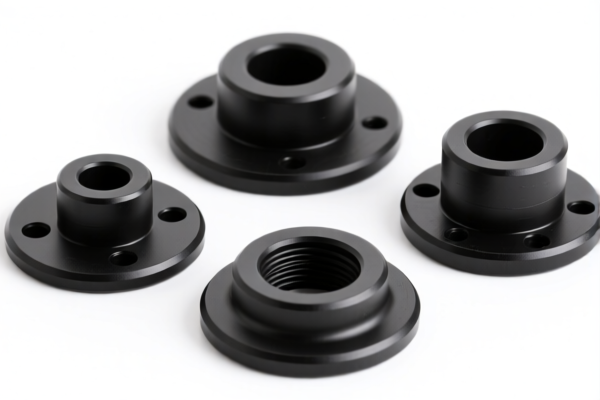
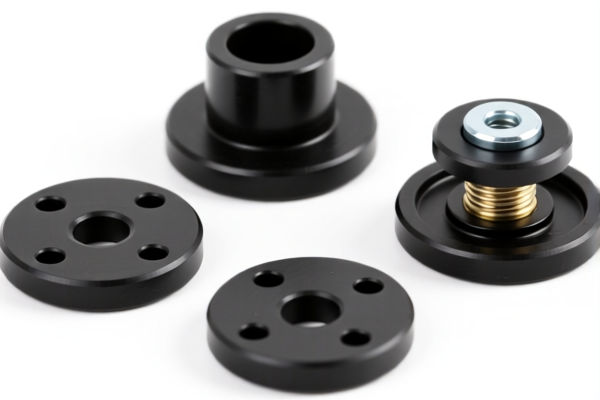
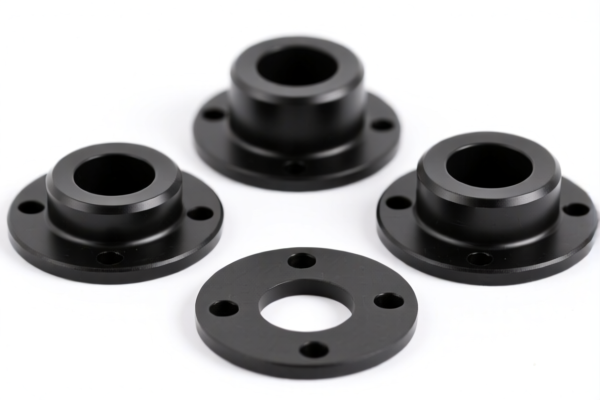
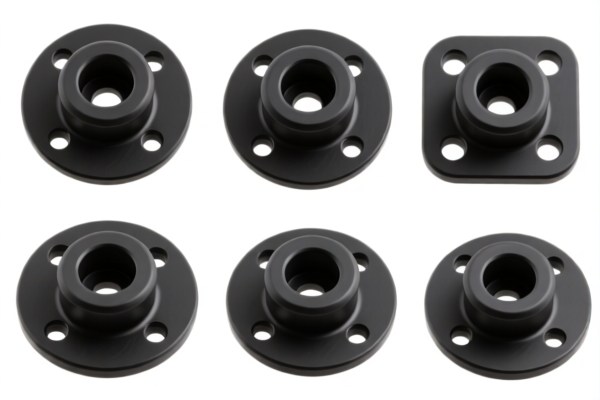
AI Analysis
🛡️ Other Vulcanized Rubber Shock Mounts (Other Vulcanized Rubber Shock Absorbers)
🌐 HS Code Reference & Customs Clearance Guide | 2026 Latest Tariff Analysis | Professional Clearance Strategy
📌 1. Product Definition & Classification: Do You Really Understand "Rubber Shock Mounts"?
Rubber shock mounts are critical damping components used in machinery, vehicles, and industrial equipment to absorb vibrations and reduce noise. In international trade, their classification depends heavily on material composition and functional integration.
Key Distinction Points: - Mechanical Components (Chapter 84): If the shock mount is considered a specific part of machinery (e.g., specific mechanical suspension parts) and does not primarily fall under general rubber goods, it may be classified under 8487.90. - Rubber Products (Chapter 40): If the product is primarily defined by its rubber material and general application (e.g., vehicle damping), it falls under 4016.99. - ⚠️ Critical Warning: Misclassification can lead to significant duty disparities (from 35% to 88.9%). The distinction often lies in whether the item is viewed as a "mechanical part" (8487) or a "general rubber article" (4016), and specific material exemptions.
📦 2. HS Code Classification Details (2026 Latest Tariff Authority)
| HS Code | Product Description | Applicable Scenario | Material/Feature Note |
|---|---|---|---|
8487.90.00.40 |
Shock mounts, classified as mechanical damping components | Specific mechanical parts, fits mechanical parts classification logic | Viewed as a mechanical component; No steel/aluminum/copper |
8487.90.00.80 |
Shock mounts, parts of mechanical assemblies | Mechanical assembly components, no electrical elements involved | High Risk: May trigger 50% if containing steel, aluminum, or copper components |
4016.99.30.00 |
Rubber shock mounts, material: rubber, use: vehicle damping | General rubber articles, vehicle suspension products | Pure rubber focus; Base Tariff: 0% |
4016.99.55.00 |
Rubber shock mounts, material: vulcanized rubber, use: vehicle damping control | Specific vulcanized rubber articles for vehicle control | Base Tariff: 2.5% |
🔍 Key Insight: - 8487.90.00.40 and 8487.90.00.80 are classified under Chapter 84 (Machinery), but they are subject to heavy Section 301 and IEEPA tariffs. - 4016.99.30.00 and 4016.99.55.00 are classified under Chapter 40 (Rubber), which often allows for lower base tariffs but still incurs high additional duties on Chinese goods.
💰 3. 2026 Latest Tariff Rate Breakdown (Including Additional Taxes)
✅ Applicable Country: United States (US)
✅ Country of Origin: China (CN)
✅ Effective Date: From 2025-11-10 onwards
🎯 1. 8487.90.00.40 — Mechanical Damping Component (No Metal Core)
| Item | Content |
|---|---|
| Base Tariff | 3.9% (ad valorem) |
| Section 301 Tariff | +25.0% |
| IEEPA Section 122 Tariff | +10.0% |
| Total Tariff | 38.9% |
| Tax Calculation | CIF Value × 38.9% |
| De Minimis Exemption? | ❌ No (deny_de_minimis) |
| Legal Basis Path | USITC:8487.90.00.40 → FOOTNOTE:301 → IEEPA:122 |
📌 Explanation:
- This classification avoids the heavy "Steel/Aluminum/Copper" penalty of 50% because it is defined as a pure mechanical rubber component. - However, it still suffers from the standard 35% combined additional duty (25% + 10%).
🎯 2. 8487.90.00.80 — Mechanical Assembly Part (Risk of Metal Content)
| Item | Content |
|---|---|
| Base Tariff | 3.9% |
| Section 301 Tariff | +25.0% |
| IEEPA Section 122 Tariff | +10.0% |
| Steel/Aluminum/Copper Penalty | +50.0% (If applicable) |
| Total Tariff | 88.9% (If metal content exists) |
| Tax Calculation | CIF Value × 88.9% |
| De Minimis Exemption? | ❌ No (deny_de_minimis) |
| Legal Basis Path | USITC:8487.90.00.80 → FOOTNOTE:301 → IEEPA:122 → Steel/Al/Cu Footnote |
📌 Warning:
- If this shock mount contains any steel, aluminum, or copper components (e.g., metal bolts, sleeves, or washers integrated into the mount), the 50% penalty is triggered. - This results in a catastrophic 88.9% total tariff. - Crucial: Ensure the product is described as "pure rubber" or "rubber-only" in specifications if claiming the lower 38.9% rate under8487.90.00.40.
🎯 3. 4016.99.30.00 — Rubber Article (Vehicle Damping)
| Item | Content |
|---|---|
| Base Tariff | 0.0% |
| Section 301 Tariff | +25.0% |
| IEEPA Section 122 Tariff | +10.0% |
| Total Tariff | 35.0% |
| Tax Calculation | CIF Value × 35.0% |
| De Minimis Exemption? | ❌ No (deny_de_minimis) |
| Legal Basis Path | USITC:4016.99.30.00 → FOOTNOTE:301 → IEEPA:122 |
📌 Advantage:
- Lowest base tariff (0%) among all options. - Best for products clearly defined as "vulcanized rubber articles" for vehicle damping, without complex mechanical classification.
🎯 4. 4016.99.55.00 — Specific Vulcanized Rubber Article
| Item | Content |
|---|---|
| Base Tariff | 2.5% |
| Section 301 Tariff | +25.0% |
| IEEPA Section 122 Tariff | +10.0% |
| Total Tariff | 37.5% |
| Tax Calculation | CIF Value × 37.5% |
| De Minimis Exemption? | ❌ No (deny_de_minimis) |
| Legal Basis Path | USITC:4016.99.55.00 → FOOTNOTE:301 → IEEPA:122 |
📌 Comparison:
- Slightly higher than4016.99.30.00due to the 2.5% base tariff. - Use this code if the product fits specific "vehicle damping control" criteria that distinguish it from general vehicle shock mounts.
🛠️ 4. Customs Clearance Practical Advice (Real-World Pitfall Avoidance)
✅ 1. Document Preparation Checklist
| Document | Required | Explanation |
|---|---|---|
| ✅ Product Specification Sheet | ✔️ | Clearly state: "Vulcanized Rubber," "No Metal Core," "For Vehicle/Machinery Damping" |
| ✅ Material Composition Certificate | ✔️ | Must confirm 0% steel, aluminum, or copper content if claiming 8487.90.00.40 |
| ✅ Product Photos | ✔️ | Clear images of the rubber mount, showing no visible metal parts |
| ✅ Commercial Invoice | ✔️ | Describe as "Vulcanized Rubber Shock Mount, Pure Rubber" |
| ✅ Packing List | ✔️ | List items accurately; avoid mixing with metal hardware |
✅ 2. Declaration Strategy (Key Tips)
🔥 "Pure Rubber is Cheaper, Metal is Expensive! Choose 4016 for Lowest Base, Choose 8487-40 for No Metal Penalty!"
| Scenario | Correct HS Code | Incorrect HS Code | Risk |
|---|---|---|---|
| Shock mount with no metal parts | 8487.90.00.40 (38.9%) or 4016.99.30.00 (35.0%) |
8487.90.00.80 |
If misclassified as 8487.90.00.80, you risk a 50% penalty if customs finds any trace of metal |
| Shock mount with metal inserts | 8487.90.00.80 (88.9%) |
8487.90.00.40 |
Misclassification leads to duty evasion charges and fines |
| General rubber damping pad | 4016.99.30.00 (35.0%) |
8487.90.00.40 |
4016 has a lower base rate (0% vs 3.9%), saving 3.9% on duty |
📌 Recommendation:
- Prioritize4016.99.30.00if the product is primarily a rubber article for vehicle damping. It offers the lowest total tariff (35.0%). - Use8487.90.00.40only if the product is explicitly a mechanical part of machinery and contains zero metal. - Avoid8487.90.00.80unless necessary, due to the 88.9% risk.
✅ 3. Special Handling
| Situation | Advice |
|---|---|
| OEM Custom Mounts | Provide design drawings showing no metal components if claiming 8487.90.00.40 |
| Mounts with Metal Sleeves | Must use 8487.90.00.80 and pay 88.9%, or redesign to remove metal |
| Vehicle vs. Machinery Use | Clearly define end-use. "Vehicle damping" supports 4016.99.30.00 |
🌍 5. Global Market Comparison (2026)
| Country/Region | Recommended HS Code | Total Tariff (China Origin) | Notes |
|---|---|---|---|
| 🇺🇸 USA | 4016.99.30.00 |
35.0% | Lowest rate for pure rubber; 8487-80 is 88.9% |
| 🇨🇳 China | 4016.99.30.00 |
5% | No additional duties |
| 🇪🇺 EU | 4016.99.99 |
0% | No additional duties |
| 🇯🇵 Japan | 4016.99.99 |
5% | No additional duties |
📌 Conclusion:
- USA imposes significant additional duties on all rubber/machinery parts from China. -4016.99.30.00is the most cost-effective option for US imports at 35.0%. - Avoid8487.90.00.80unless you have no choice, due to the 88.9% rate.
📌 6. Common Mistakes & Pitfalls (Lessons Learned)
❌ Mistake 1: Classifying a metal-core shock mount as 8487.90.00.40
👉 Consequence: Customs finds metal → 88.9% duty + penalties
❌ Mistake 2: Declaring "Shock Mounts" without specifying "Vulcanized Rubber"
👉 Consequence: Customs may classify under higher-duty machinery parts → Higher tax
❌ Mistake 3: Assuming "De Minimis" applies
👉 Consequence: All these codes are deny_de_minimis → No exemption for small packages
✅ Correct Approach:
"Vulcanized Rubber Shock Mount, Pure Rubber, No Metal, For Vehicle Damping, Model XYZ"
🎯 7. Conclusion: Professional Declaration, Save Costs!
🎯 Remember:
🔹 "Pure Rubber is King: 4016-30 at 35%!"
🔹 "No Metal in 8487-40: 38.9%! "Metal in 8487-80: 88.9% Disaster!"
🔹 "HS Code Determines Duty, Small Change = Big Savings!"
📌 Pro Tip:
If your shock mounts are originating from Vietnam, Mexico, Thailand, or Malaysia, you may apply for IEEPA exemptions, reducing tariffs to 0%~5%.
👉 Apply for an Advance Ruling before shipment to avoid clearance risks.
📣 Immediate Action:
📞 Contact a professional customs broker + Provide product photos + Apply for HS Code Advance Ruling
🚀 Clear goods smoothly, reduce costs, and maximize profits!
✨ Professional clearance starts with accurate classification!
💼 Every cent of cost deserves precise calculation!
Customer Reviews
About HS Code Classification
The Harmonized System (HS) is an internationally standardized nomenclature developed by the World Customs Organization (WCO) to classify traded products. Over 200 countries use the HS system as the basis for customs tariffs, trade statistics, and import/export regulations.
Each HS code follows a hierarchical structure:
- Chapter (2 digits) — Broad category of goods (e.g., Chapter 84: Machinery and Mechanical Appliances)
- Heading (4 digits) — More specific grouping within the chapter
- Subheading (6 digits) — Internationally standardized breakdown, used by all WCO member countries
- National subdivisions (8-10 digits) — Country-specific extensions for further classification, such as US HTSUS 10-digit codes
Correct HS code classification is essential for smooth customs clearance, accurate duty payment, and compliance with trade regulations. Misclassification can lead to customs delays, overpayment of duties, or penalties.
When importing from CN to US, the applicable tariff rates may include:
- Most-Favored-Nation (MFN) rate — The standard duty rate applied to WTO members
- General rate — Applied to countries without trade agreements
- Trade remedy duties — Additional tariffs such as Section 301 (anti-dumping), Section 232 (national security), or countervailing duties
The information provided on this page is for reference purposes only. For official classification, please consult with your local customs authority or a licensed customs broker.