Other waste paperboard
CN → US| HS Code | Tariff Rate | Origin | Destination | Doc |
|---|---|---|---|---|
| 4707900000 | 35.0% | CN | US | Official Doc |
| 4707200040 | 35.0% | CN | US | Official Doc |
Product Images
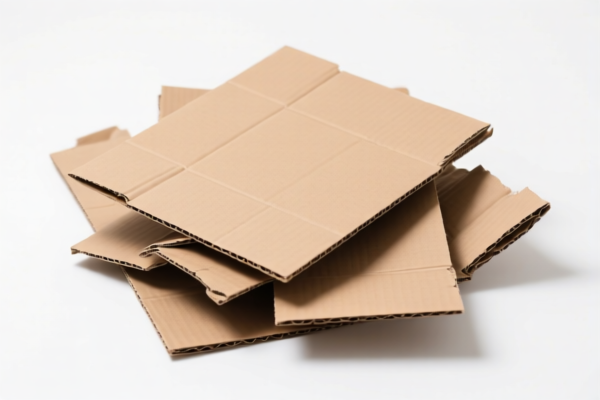
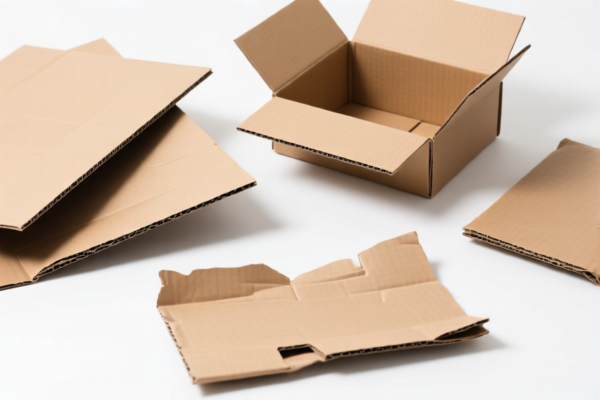
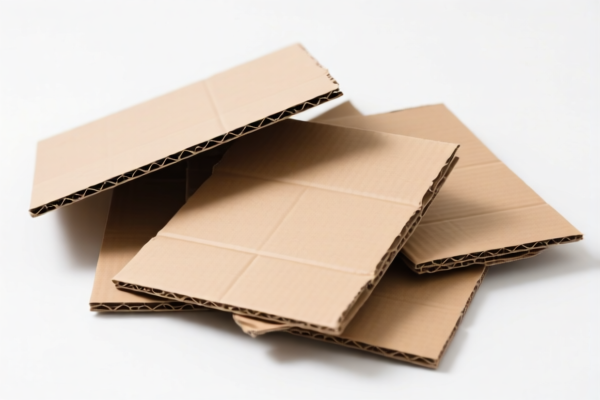
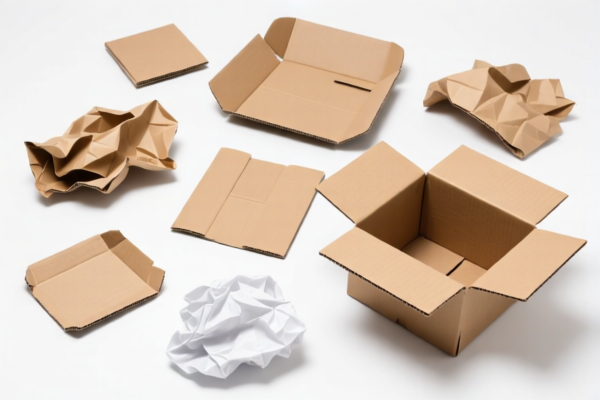
AI Analysis
📜 Recovered (Waste and Scrap) Paper and Paperboard: Other
🌐 HS Code Reference & Customs Clearance Guide | 2026 Latest Tariff Analysis | Professional Entry Strategy
📌 I. Product Definition & Classification: Do You Really Understand "Other Waste Paperboard"?
Recovered (Waste and Scrap) Paper and Paperboard, specifically the "Other" category, is a critical commodity in the global recycling and raw material supply chain. In international trade, it is strictly defined by its state (waste/scrap) and composition.
The data provided highlights two specific classifications under HS Heading 4707:
- Unsorted/General Waste (
4707.90): Mixed paper waste without detailed fiber separation. - Bleached Chemical Pulp Base (
4707.20): Waste paperboard made primarily from bleached chemical pulp, not colored in the mass.
⚠️ Key Distinction Point:
- If the waste is unsorted or mixed (e.g., cardboard, newspapers, office paper mixed together) → Classify under4707.90.00.00.
- If the waste is specifically paperboard made from bleached chemical pulp and is not colored in the mass → Classify under4707.20.00.40.
- Crucial Note: Both categories fall under "Recovered" goods, meaning they are scrap/waste, not virgin paper.
📦 II. HS Code Classification Details (2026 Latest Tariff Authority Cross-Reference)
| HS Code | Product Description | Applicable Scenario | Key Characteristics |
|---|---|---|---|
4707.90.00.00 |
Recovered paper/paperboard: Other (including unsorted waste and scrap) | Mixed recycling bins, general cardboard bales, unsegregated waste paper | ❌ Mixed composition; Unsorted; No specific pulp type dominance specified |
4707.20.00.40 |
Recovered paper/paperboard: Other paper or paperboard, made mainly of bleached chemical pulp, not colored in the mass | High-quality recycled board from bleached sources, industrial waste paper from chemical processes | ✅ Made mainly of bleached chemical pulp; Not colored in the mass; Specific paperboard type |
🔍 Critical Reminder:
- "Other" in HS 4707 generally captures everything not listed in 4707.10-4707.30 (which cover specific types like kraft liner, old corrugated containers, etc.).
- If the waste is unsorted, it must go to4707.90. You cannot split an unsorted bale into sub-categories.
- For4707.20, the pulp must be bleached chemical pulp. If it’s mechanical pulp or unbleached, it may fall elsewhere (e.g., 4707.30 or 4707.10 depending on type).
💰 III. 2026 Latest Tariff Rate Breakdown (Including Additional Taxes & Policy Add-ons)
✅ Applicable Country: United States (US)
✅ Origin: China (CN) (Assumed based on typical 25% additional duty context in examples)
✅ Effective Time: Current US Trade Policy (Section 301)
🎯 1. 4707.90.00.00 —— Recovered Paper/Paperboard: Other (Unsorted/Mixed)
| Item | Content |
|---|---|
| Base Tariff Rate | 0% (ad valorem) |
| Section 301 Additional Duty | +25.0% |
| Total Tax Rate | 25.0% |
| Tax Calculation | CIF Value × 25% |
| De Minimis Exemption | ❌ Not Applicable (Waste paper is generally not eligible for de minimis under current scrutiny, and Section 301 duties apply regardless of value in many cases, though specific thresholds vary. Assume full duty applies.) |
| Legal Basis Path | HTSUS:4707.90.00.00 → USITC Footnote 9903.88.01 (Section 301) |
📌 Explanation:
- Base Rate 0%: The US typically imposes zero base duty on recovered waste paper to encourage recycling and raw material supply for domestic mills.
- Additional Duty 25%: This is the Section 301 tariff imposed on Chinese-origin goods. It applies uniformly to this HS code.
- Total Cost Impact: 25% of the declared value is lost to tariffs. This significantly affects the profitability of exporting low-margin waste paper.
🎯 2. 4707.20.00.40 —— Recovered Paper/Paperboard: Bleached Chemical Pulp Based
| Item | Content |
|---|---|
| Base Tariff Rate | 0% (ad valorem) |
| Section 301 Additional Duty | +25.0% |
| Total Tax Rate | 25.0% |
| Tax Calculation | CIF Value × 25% |
| De Minimis Exemption | ❌ Not Applicable |
| Legal Basis Path | HTSUS:4707.20.00.40 → USITC Footnote 9903.88.01 (Section 301) |
📌 Note:
- Despite being a higher-quality raw material (bleached pulp waste), the tariff structure is identical to unsorted waste.
- The 25% additional duty is the dominant cost factor.
- No preferential treatment is available for bleached pulp waste from China under current US trade policy.
🛠️ IV. Customs Clearance Practical Advice (Battle-Tested Pitfall Avoidance Guide)
✅ 1. Documentation Checklist (Non-Negotiable)
| Document | Mandatory? | Description |
|---|---|---|
| ✅ Commercial Invoice | ✔️ | Must clearly state "Recovered Paper and Paperboard" or "Waste Paper". Do not use vague terms like "Paper Product." |
| ✅ Packing List | ✔️ | Detail the weight, bale size, and material composition (e.g., "Unsorted Mixed Waste" vs. "Bleached Chemical Pulp Board Waste"). |
| ✅ Certificate of Origin | ✔️ | Required to prove origin for Section 301 duty assessment. |
| ✅ Phytosanitary Certificate | ✔️ | CRITICAL: Waste paper is often subject to phytosanitary controls to prevent pest spread. May require fumigation. |
| ✅ Product Description Declaration | ✔️ | Explicitly state: "Unsorted waste" OR "Made mainly of bleached chemical pulp, not colored in mass." |
✅ 2. Classification Tips (Key Mantras)
🔥 “Unsorted goes to .90, Bleached Chemical to .20. Don’t mix up pulp types!”
| Scenario | Correct HS Code | Wrong Classification Risk |
|---|---|---|
| Mixed cardboard, newsprint, office paper in one bale | 4707.90.00.00 |
Misclassifying as 4707.20 → Penalty + Retesting |
| Clean, single-source paperboard waste from bleached pulp | 4707.20.00.40 |
Misclassifying as 4707.90 → Unnecessary hassle, but tax same. However, quality verification is stricter for .20. |
| Virgin Paperboard | NOT 4707 | Must use 4804-4810 series. Wrong HS → High Base Tariff (8-15%) + 25% Sec 301 |
| Plastic-coated paper waste | NOT 4707 | May fall under 3907 or 3921 depending on plastic content. Wrong HS → Misdeclaration |
✅ 3. Special Case Handling
| Scenario | Handling Advice |
|---|---|
| Contaminated Waste | If waste contains plastic, metal, or non-paper contaminants > X%, it may be rejected by customs or classified differently (e.g., as MSW or plastic waste). Ensure clean sorting. |
| Phytosanitary Inspection | Bales must be fumigated or heat-treated if originating from regions with known pest risks (e.g., pine wood pests in cardboard pallets). Attach Fumigation Certificate. |
| Value Declaration | Waste paper values fluctuate. Ensure CIF value reflects current market rates. Under-invoicing can trigger audits and penalties. |
| Destination Restrictions | Some US states or ports may have additional environmental restrictions on imported waste. Check local regulations. |
🌍 V. Global Main Market Clearance Comparison (2026 Latest)
| Country/Region | Recommended HS Code | Tariff (China Origin) | Certification Requirements | Notes |
|---|---|---|---|---|
| 🇺🇸 USA | 4707.90.00.00 / 4707.20.00.40 |
25% (Total) | Phytosanitary Certificate, Fumigation Proof | Base rate 0% + 25% Sec 301. Strict on contamination. |
| 🇨🇳 China | 4707.10-4707.90 |
0% | None (Internal recycling) | China is a major importer of such waste. |
| 🇪🇺 EU | 4707.10-4707.90 |
0% (Most) | WEEE/EPR compliance, Phytosanitary | EU has strict rules on plastic contamination in paper waste. |
| 🇬🇧 UK | 4707.10-4707.90 |
0% (Most) | Phytosanitary | Post-Brexit rules mirror EU but separate certification. |
📌 Conclusion:
- USA is the most expensive market for imported waste paper due to the 25% Section 301 duty.
- Base tariff is 0%, so the entire tax burden comes from political tariffs.
- No duty savings are available for bleached pulp waste.
- Phytosanitary controls are universal and critical for clearance.
📌 VI. Common Errors & Pitfall Guide (Blood-Tested Lessons)
❌ Error 1: Calling "Unsorted Waste" "Bleached Chemical Pulp Waste"
👉 Consequence: Customs may reject the declaration, demand re-inspection, or impose penalties for misclassification.
👉 Fix: Be honest. If mixed, use 4707.90.
❌ Error 2: Ignoring Phytosanitary Requirements
👉 Consequence: Goods held in port, fumigation costs applied, or re-exported/destroyed.
👉 Fix: Obtain Fumigation Certificate from origin country before shipment.
❌ Error 3: Under-declaring Value to Save on 25% Duty
👉 Consequence: Audit, back taxes, fines, and blacklisting.
👉 Fix: Declare true CIF value. Market prices are transparent.
❌ Error 4: Confusing "Recovered" with "Virgin" Paper
👉 Consequence: Wrong HS code (e.g., using 4804 instead of 4707). Base tariff may be higher, and Section 301 still applies.
👉 Fix: Clearly mark bales as "WASTE" or "RECOVERED".
✅ Correct Practice:
"Recovered Waste Paper and Paperboard, Unsorted, Mixed Bales, Fumigated, CIF Value $X, Origin: China"
🎯 VII. Conclusion: Precise Classification Saves Money and Time!
🎯 Remember the Mantra:
🔹 "Unsorted = 4707.90, Bleached Chemical = 4707.20. Base 0%, Sec 301 25%. Total 25%!"
🔹 "Phytosanitary is King! Fumigate or Get Rejected!"
🔹 "Don’t Mix Types! Honesty Prevents Penalties!"
📌 Pro Tip:
If your waste paper is originally from Vietnam, Mexico, or Thailand, you may avoid the 25% Section 301 duty entirely (if rules of origin are met).
Strategy: Consider supply chain diversification if volume is high. The 25% saving is significant for low-margin waste paper.
📣 Immediate Action Required:
📞 Consult a Customs Broker + Verify Pulp Composition + Get Fumigation Certificate
🚀 Clear Customs Smoothly, Avoid Delays, Maximize Recycled Material Profits!
✨ Professional Clearance Starts with Accurate Classification!
💼 Every 25% Counts in the Waste Paper Trade!
Customer Reviews
About HS Code Classification
The Harmonized System (HS) is an internationally standardized nomenclature developed by the World Customs Organization (WCO) to classify traded products. Over 200 countries use the HS system as the basis for customs tariffs, trade statistics, and import/export regulations.
Each HS code follows a hierarchical structure:
- Chapter (2 digits) — Broad category of goods (e.g., Chapter 84: Machinery and Mechanical Appliances)
- Heading (4 digits) — More specific grouping within the chapter
- Subheading (6 digits) — Internationally standardized breakdown, used by all WCO member countries
- National subdivisions (8-10 digits) — Country-specific extensions for further classification, such as US HTSUS 10-digit codes
Correct HS code classification is essential for smooth customs clearance, accurate duty payment, and compliance with trade regulations. Misclassification can lead to customs delays, overpayment of duties, or penalties.
When importing from CN to US, the applicable tariff rates may include:
- Most-Favored-Nation (MFN) rate — The standard duty rate applied to WTO members
- General rate — Applied to countries without trade agreements
- Trade remedy duties — Additional tariffs such as Section 301 (anti-dumping), Section 232 (national security), or countervailing duties
The information provided on this page is for reference purposes only. For official classification, please consult with your local customs authority or a licensed customs broker.