Other wood inlays
CN → US| HS Code | Tariff Rate | Origin | Destination | Doc |
|---|---|---|---|---|
| 4419199000 | 13.2% | CN | US | Official Doc |
| 4421999880 | 38.3% | CN | US | Official Doc |
| 4421919880 | 38.3% | CN | US | Official Doc |
| 4420908000 | 38.2% | CN | US | Official Doc |
| 4420190000 | 13.2% | CN | US | Official Doc |
Product Images
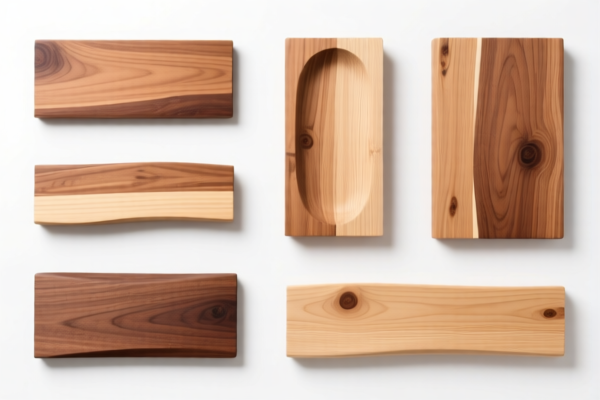
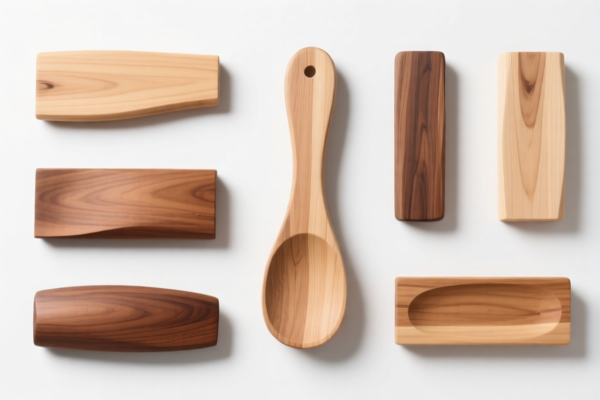
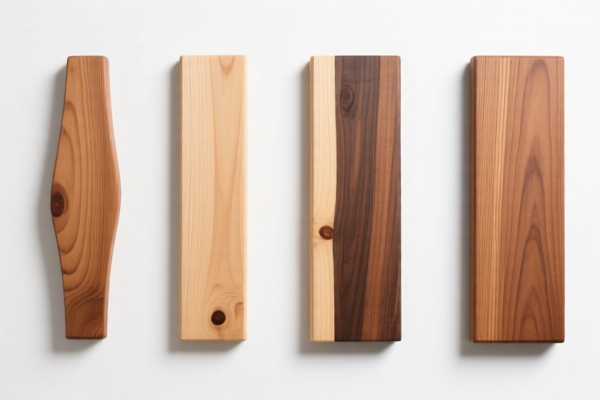
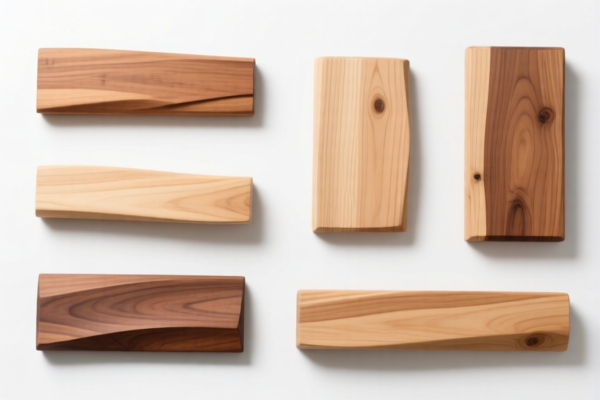
AI Analysis
🪵 Inlays (Wood, Other)
🌐 HS Code Reference & Customs Clearance Guide | 2026 Latest Tariff Analysis | Strategic Compliance for Wooden Products
📌 I. Product Definition & Classification: What are "Other Wood Inlays"?
Wood inlays are decorative elements crafted from wood, used to adorn surfaces of furniture, musical instruments, musical boxes, or other wooden articles. In international trade, they are primarily classified under Chapter 44 (Wood and Articles of Wood).
Key Distinction:
The term "Other" in "Other wood inlays" typically refers to inlays that do not fall into specific sub-categories (such as those made of specific types of wood like bamboo, or those intended for specific musical instruments that might have their own codes). They are essentially general-purpose wooden decorative inserts.
⚠️ Critical Classification Points:
- Material: Must be wood (natural or processed). If inlaid with metal, stone, or plastic, the classification may shift significantly (e.g., to Chapter 71 or 39).
- Form: Usually small, flat, or shaped pieces designed to be embedded into another surface.
- Purpose: Decorative, not structural.
📦 II. HS Code Classification Details (2026 Latest Tariff Alignment)
Based on the provided data, the following HS Codes are potential matches for "Other wood inlays". The choice depends on the specific sub-category definition within Chapter 44.
| HS Code | Product Description | Key Match Criteria | Total Tax Rate (China Origin → US) |
|---|---|---|---|
| 4419.19.90.00 | Tableware and kitchenware, of wood, other | • Material: Wood • Category: "Other" fits the generic nature. • Summary: Matches "other wooden products" with no material conflict. |
13.2% |
| 4421.99.98.80 | Other articles of wood, other | • Exact Match: Product name "Other wood inlays" aligns perfectly with "Other wood products." • Material: Wood. • Category: "Other"兜底 (catch-all). |
38.3% |
| 4421.91.98.80 | Other articles of wood, other | • Core Material: Wood matches perfectly. • Sub-category: Falls under "Other remaining items" in this subsection. |
38.3% |
| 4420.90.80.00 | Wooden statuettes and other ornamental articles, other | • Material: Wood matches. • Logic: "Other" is a catch-all category. If inlays are considered ornamental, this fits. |
38.2% |
| 4420.19.00.00 | Wooden statuettes and other ornamental articles, other | • Material: Wood matches. • Category: "Other" fits the "Other wood products" definition. No material or form conflict. |
13.2% |
🔍 Key Insight:
The tax rates vary significantly (13.2% vs. 38.3%) based on whether the inlay is classified under Chapter 4419 (Tableware/Kitchenware - less likely for inlays unless decorative table accessories) or Chapter 4420/4421 (Wooden articles/statuettes/other).
- 13.2% Codes: 4419.19.90.00 and 4420.19.00.00
- 38.3% Codes: 4421.99.98.80 and 4421.91.98.80
- 38.2% Code: 4420.90.80.00
💰 III. 2026 Latest Tariff Rate Breakdown (Detailed Tax Clause Explanation)
✅ Applicable Country: United States (US)
✅ Country of Origin: China (CN)
✅ Effective Date: November 10, 2025 (and subsequent imports)
🎯 1. Low-Tier Codes: 4419.19.90.00 & 4420.19.00.00 (13.2% Total)
| Item | Content |
|---|---|
| Base Tariff | 3.2% (ad valorem) |
| Section 301 Tariff | 0.0% (Note: Some 44xx codes may have 0% Section 301, but verify specific footnote) |
| IEEPA Tariff (122 Clause) | +10% |
| Total Tax Rate | 13.2% |
| Tax Calculation | CIF Value × 13.2% |
| De Minimis Exemption? | ❌ No (Not eligible for Section 321 $800 exemption if declared as commercial entry; check specific broker guidance) |
| Legal Path | IEEPA:9903.01.25 → USITC:4419.19.90.00 / 4420.19.00.00 |
📌 Explanation:
- Base Tariff (3.2%): Standard MFN rate for certain wooden articles.
- Section 301 (0.0%): Important: Unlike many electronics, some wooden goods under specific sub-headings may be exempt from the 25% Section 301 tariff, but they are still subject to the IEEPA 10% tariff.
- IEEPA 10%: This is the Section 122 tariff (or similar IEEPA provision) applied to Chinese goods.
- Total: 3.2% + 0% + 10% = 13.2%.
🎯 2. High-Tier Codes: 4421.99.98.80, 4421.91.98.80, 4420.90.80.00 (38.2% - 38.3%)
| Item | Content |
|---|---|
| Base Tariff | 3.2% or 3.3% (ad valorem) |
| Section 301 Tariff | +25.0% |
| IEEPA Tariff (122 Clause) | +10% |
| Total Tax Rate | 38.2% or 38.3% |
| Tax Calculation | CIF Value × 38.2%/38.3% |
| De Minimis Exemption? | ❌ No |
| Legal Path | IEEPA:9903.01.25 → IEEPA:9903.01.24 → USITC:4421.99.98.80 / 4420.90.80.00 → FOOTNOTE:9903.88.01 |
📌 Explanation:
- Base Tariff (~3.2-3.3%): Standard rate for "Other wooden articles."
- Section 301 (+25%): Crucial Difference! These codes are subject to the 25% Section 301 tariff. This is the biggest cost driver.
- IEEPA (+10%): Additional 10% tariff under IEEPA.
- Total: ~3.3% + 25% + 10% = ~38.3%.
- Risk: If your inlays are classified here, the duty cost is nearly 3x higher than if classified under 4419.
🛠️ IV. Customs Clearance Practical Advice (Pitfall Avoidance Guide)
✅ 1. Documentation Checklist (Mandatory)
| Document | Required | Notes |
|---|---|---|
| ✅ Product Specifications | ✔️ | Must detail material (wood type), dimensions, and finish. |
| ✅ Product Photos | ✔️ | Show the inlay clearly. Is it raw wood? Varnished? Attached to a backing? |
| ✅ Commercial Invoice | ✔️ | Use precise description: "Wooden Inlays, Decorative, No Musical Instrument Purpose" |
| ✅ Packing List | ✔️ | List quantities and weights accurately. |
| ✅ Origin Certificate | ✔️ | Confirm China origin. |
| ✅ Declaration of Non-Use | ✔️ | If claiming 4419/4420 (lower tax), declare they are NOT for tableware or specific exempted items if applicable. |
✅ 2. Declaration Strategy (Key Mnemonic)
🔥 "Define Purpose, Check Section 301, Avoid 38% Penalty!"
| Scenario | Correct HS Code | Tax Rate | Why? |
|---|---|---|---|
| Inlays for general decoration (furniture, crafts) | 4421.99.98.80 or 4420.90.80.00 | 38.3% | Most common for "other wood products." Subject to 301. |
| Inlays for tableware (e.g., decorative cutting boards) | 4419.19.90.00 | 13.2% | Only if they meet the definition of "tableware/kitchenware." |
| Inlays for musical instruments | Check Ch. 92 | Variable | If for pianos/guitars, may fall under Ch 92. Check specifically. |
| Inlays with non-wood materials (metal/stone) | Ch 71 or 39 | Variable | Material change shifts classification. |
📌 Warning:
- Do not misdeclare "Wooden Inlays" as "Tableware" (4419) if they are not. This is fraud and can lead to penalties.
- If the inlays are part of a larger set (e.g., a wooden box with inlays), the entire set is classified by the principal character of the box.
✅ 3. Special Case Handling
| Situation | Advice |
|---|---|
| OEM Custom Inlays | Provide design files to prove the product is not a standard tableware item. |
| Inlays with Glue/Backing | If the inlay is already attached to a substrate, it may be classified as the substrate article (e.g., if attached to a wooden panel, it's a wooden panel). |
| Bulk vs. Retail | Bulk inlays for further processing may have different duty implications than finished decorative pieces. |
🌍 V. Global Market Clearance Comparison (2026)
| Country/Region | Recommended HS Code | Tariff | Certification | Notes |
|---|---|---|---|---|
| 🇺🇸 USA | 4421.99.98.80 |
38.3% | None (standard) | High duty due to Section 301 + IEEPA. |
| 🇺🇸 USA | 4419.19.90.00 |
13.2% | None | Only if truly tableware. Risky classification. |
| 🇨🇳 China | 4421.99.98.80 |
5-8% | None | Lower base duty. No Section 301. |
| 🇪🇺 EU | 4421.99.99 |
0-6.5% | FSC/PEFC (Voluntary) | Generally low duty. Check specific wood species restrictions. |
| 🇬🇧 UK | 4421.99.99 |
0-6.5% | UKCA (if applicable) | Post-Brexit rules apply. |
📌 Conclusion:
- US Market: High duty risk. Ensure accurate classification to avoid overpaying or facing penalties.
- EU/UK: Lower duty rates. Focus on sustainable wood sourcing (FSC) for better market access.
📌 VI. Common Errors & Pitfall Guide (Lessons Learned)
❌ Error 1: Misclassifying "Wooden Inlays" as "Tableware" to save duty.
👉 Consequence: Customs audit → Back taxes + Penalties + Potential seizure.
👉 Fix: Only use 4419 if the product is explicitly tableware.
❌ Error 2: Ignoring Section 301 on wooden goods.
👉 Consequence: Unexpected 25% tax bill upon arrival.
👉 Fix: Verify Section 301 applicability for the specific HS code.
❌ Error 3: Declaring "Other Wood Products" without detail.
👉 Consequence: Customs holds shipment for clarification.
👉 Fix: Provide clear product descriptions and photos.
❌ Error 4: Assuming all wood products have the same duty.
👉 Consequence: Budget miscalculation.
👉 Fix: Check each HS code individually for tax rates.
✅ Correct Approach:
"Wooden Inlays, Decorative, Unfinished, for Furniture Manufacturing, Model XYZ, China Origin"
🎯 VII. Conclusion: Professional Classification Saves Money!
🎯 Remember:
🔹 "Wood Inlays: Check Section 301, Verify 13% vs 38%, Don't Fraud!"
🔹 "HS Code is Key, Tax Differs by 25%, Wrong Class Costs You Plenty!"
📌 Tip:
If your inlays are for musical instruments, check Chapter 92. If for jewelry boxes, check 4420.
Consider Advance Ruling from US Customs to confirm the correct HS Code before shipment.
📣 Immediate Action:
📞 Consult a licensed customs broker.
🚀 Provide detailed product specs.
✅ Secure the correct HS Code to optimize cost and compliance.
✨ Professional Clearance Starts with Accurate Classification!
💼 Every Dollar of Duty Counted, Every Shipment Smooth!
Customer Reviews
About HS Code Classification
The Harmonized System (HS) is an internationally standardized nomenclature developed by the World Customs Organization (WCO) to classify traded products. Over 200 countries use the HS system as the basis for customs tariffs, trade statistics, and import/export regulations.
Each HS code follows a hierarchical structure:
- Chapter (2 digits) — Broad category of goods (e.g., Chapter 84: Machinery and Mechanical Appliances)
- Heading (4 digits) — More specific grouping within the chapter
- Subheading (6 digits) — Internationally standardized breakdown, used by all WCO member countries
- National subdivisions (8-10 digits) — Country-specific extensions for further classification, such as US HTSUS 10-digit codes
Correct HS code classification is essential for smooth customs clearance, accurate duty payment, and compliance with trade regulations. Misclassification can lead to customs delays, overpayment of duties, or penalties.
When importing from CN to US, the applicable tariff rates may include:
- Most-Favored-Nation (MFN) rate — The standard duty rate applied to WTO members
- General rate — Applied to countries without trade agreements
- Trade remedy duties — Additional tariffs such as Section 301 (anti-dumping), Section 232 (national security), or countervailing duties
The information provided on this page is for reference purposes only. For official classification, please consult with your local customs authority or a licensed customs broker.