Outdoor Bushing
CN → US| HS Code | Tariff Rate | Origin | Destination | Doc |
|---|---|---|---|---|
| 8547104000 | 38.0% | CN | US | Official Doc |
| 8547108000 | 38.0% | CN | US | Official Doc |
| 3926909987 | 22.8% | CN | US | Official Doc |
| 3926909989 | 22.8% | CN | US | Official Doc |
| 8483308070 | 39.5% | CN | US | Official Doc |
| 8483308090 | 39.5% | CN | US | Official Doc |
Product Images
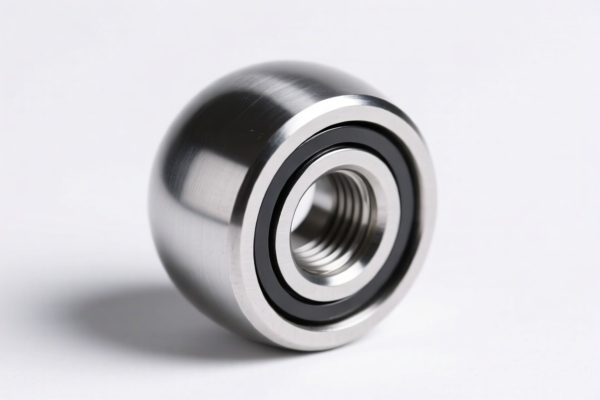
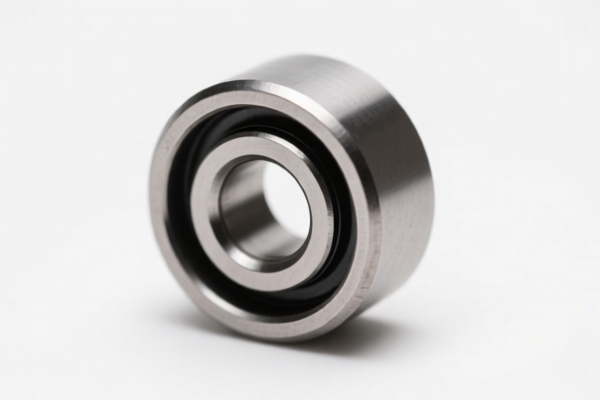
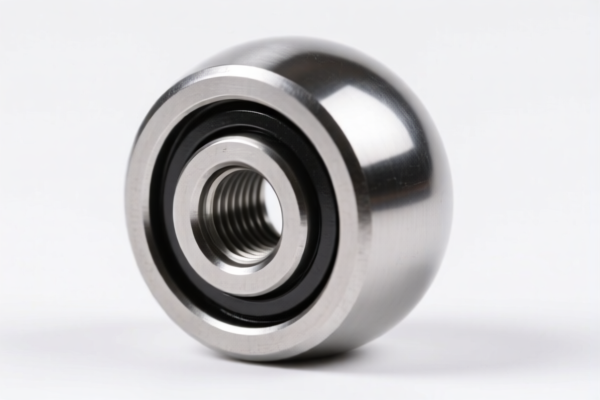

AI Analysis
🔌 Outdoor Bushings (衬套/套管)
🌐 HS Code Reference & Customs Clearance Guide | 2026 Latest Tariff Analysis | Professional-Level Strategy
📌 I. Product Definition & Classification: Do You Really Understand "Outdoor Bushings"?
Bushings, in the context of industrial and electrical components, are generally classified as mechanical parts or insulating components. The term "outdoor" implies exposure to environmental elements, suggesting materials must be durable (e.g., rubber, metal, or composite). In international trade, they are typically categorized based on material composition:
- Rubber/Plastic Bushings: Used for vibration isolation, sealing, or insulation in mechanical/electrical assemblies.
- Metal Bushings: Used as bearings, liners, or connectors in heavy machinery or structural applications.
⚠️ Key Distinction:
- If made of rubber (especially vulcanized) → Classified under Chapter 40 (Rubber Articles).
- If made of copper/brass (tubes/pipes/connectors) → Classified under Chapter 74 (Copper Articles).
- Misclassification Risk: Declaring a rubber bushing as metal (or vice versa) triggers severe customs penalties due to vastly different tariff rates.
📦 II. HS Code Classification Details (2026 Latest Tariff Authority Cross-Reference)
| HS Code | Product Description | Application Scenario | Material Assumption | Tax Rate (US/China) |
|---|---|---|---|---|
4016.99.60.10 |
Rubber bushings, parts of machinery, vulcanized rubber | Vibration dampers, suspension components, electrical insulators | Vulcanized Rubber | 37.5% |
4016.99.60.50 |
Other rubber parts, unspecified material but matched to rubber | General mechanical spares, seals, gaskets | Rubber/Composite | 37.5% |
7412.20.00.45 |
Copper pipe fittings, threaded/union joints | Fluid/gas transmission systems, plumbing infrastructure | Copper/Brass | 88.0% |
7412.20.00.90 |
Other copper pipe fittings, spare parts | Structural connectors, non-plumbing copper bushings | Copper/Brass | 88.0% |
🔍 Critical Reminder:
- Rubber Bushings fall under 4016.99.60.xx with a 37.5% total tariff.
- Copper Bushings/Fittings fall under 7412.20.00.xx with an 88.0% total tariff.
- Do NOT misdeclare rubber as copper to save taxes; customs will inspect material composition (density, hardness, chemical tests).
- Do NOT declare copper as rubber; this is fraud. Copper bushings are significantly more expensive due to high tariffs.
💰 III. 2026 Latest Tariff Rate Breakdown (Including Surcharges & Policy Add-ons)
✅ Applicable Country: United States (US)
✅ Origin: China (CN)
✅ Effective Date: From November 10, 2025 (and subsequent imports)
🎯 1. 4016.99.60.10 / 4016.99.60.50 —— Rubber Bushings & Parts
| Item | Content |
|---|---|
| Base Tariff | 2.5% (ad valorem) |
| Section 301 Surcharge | +25.0% (USITC Footnote 9903.88.01) |
| IEEPA Surcharge | +10.0% (For Chinese/HK products, effective from Nov 10, 2025) |
| Total Tariff | 37.5% |
| Tax Calculation | CIF Value × 37.5% |
| De Minimis Eligibility | ❌ Not Eligible (deny_de_minimis) |
| Legal Basis Path | IEEPA:9903.01.25 → IEEPA:9903.01.24 → USITC:4016.99.60.10 → FOOTNOTE:9903.88.01 |
📌 Explanation:
- "Section 301 Surcharge 25%": From U.S. Trade Law Section 301 against China.
- "IEEPA 10%": International Emergency Economic Powers Act surcharge on Chinese goods.
- Total 37.5%: High tariff for rubber parts. Must be anticipated in cost calculations.
🎯 2. 7412.20.00.45 / 7412.20.00.90 —— Copper Bushings & Fittings
| Item | Content |
|---|---|
| Base Tariff | 3.0% (ad valorem) |
| Section 301 Surcharge | +25.0% (USITC Footnote 9903.88.01) |
| IEEPA Surcharge | +10.0% (For Chinese/HK products, effective from Nov 10, 2025) |
| Steel/Aluminum/Copper Surtax | +50.0% (Specific surcharge for copper/steel/aluminum articles under specific clauses) |
| Total Tariff | 88.0% |
| Tax Calculation | CIF Value × 88.0% |
| De Minimis Eligibility | ❌ Not Eligible (deny_de_minimis) |
| Legal Basis Path | IEEPA:9903.01.25 → IEEPA:9903.01.24 → USITC:7412.20.00.45 → FOOTNOTE:9903.88.01 → Special Copper Surcharge |
📌 Note:
- Copper bushings are subject to an additional 50% surtax on top of the standard 37.5% (3% base + 25% Section 301 + 10% IEEPA).
- Total 88% is extremely high. This applies to copper tubes, fittings, and bushings.
- Even if declared as "spare parts," the material (copper) dictates the high tariff.
🛠️ IV. Customs Clearance Practical Advice (Avoid Pitfalls Guide)
✅ 1. Required Documents Checklist (All Mandatory)
| Document | Must Provide | Description |
|---|---|---|
| ✅ Product Specification Sheet | ✔️ | Dimensions, tolerance, hardness (for rubber), alloy composition (for copper) |
| ✅ Material Declaration | ✔️ | Explicitly state "Vulcanized Rubber" or "Brass/Copper Alloy" |
| ✅ Product Photos (with Labels) | ✔️ | Show part number, material stamp, and usage context |
| ✅ Third-Party Test Report | ✔️ | ASTM/ISO standards for rubber hardness; ASTM for copper alloy composition |
| ✅ Commercial Invoice | ✔️ | Clearly describe as "Rubber Bushing" or "Copper Pipe Fitting" |
| ✅ Packing List | ✔️ | Indicate if bushings are assembled or loose |
✅ 2. Declaration Tips (Key Mantras)
🔥 “Material First, Function Second, Name Accurate, Tax Correct!”
| Scenario | Correct Declaration | Incorrect Practice |
|---|---|---|
| Rubber Bushing | 4016.99.60.10 "Rubber Bushing for Suspension" |
Misdeclare as "Plastic Part" → 0% Base (but high risk of audit) |
| Copper Bushing | 7412.20.00.90 "Copper Bushing for Plumbing" |
Misdeclare as "Steel Part" → 37.5% (but material mismatch detected) |
| Mixed Shipment | Split declaration by material | Combined declaration → Customs seizes entire shipment |
| Unspecified Material | Provide material analysis | "Bushing, unspecified" → Customs assigns highest possible rate |
✅ 3. Special Case Handling
| Situation | Handling Advice |
|---|---|
| OEM Custom Bushings | Provide customer order + engineering drawings to prove specific use |
| Rubber-Metal Composite Bushings | Declare based on principal material (if rubber > 50%, use Chapter 40; if metal > 50%, use Chapter 74/84) |
| Bushings in Electrical Equipment | If part of a larger machine, declare as part of the machine (HS 85 or 84) if assembled; otherwise, declare as spare parts |
| Small Quantities for Testing | Still subject to full tariffs; no de minimis exemption for these HS codes |
🌍 V. Global Market Clearance Comparison (2026 Latest)
| Country/Region | Recommended HS Code | Tariff (China Origin) | Certification Requirements | Notes |
|---|---|---|---|---|
| 🇺🇸 USA | 4016.99.60.10 (Rubber) |
37.5% | ISO 9001, RoHS (if electrical) | 88.0% for Copper |
| 🇨🇳 China | 4016.99.60.10 |
5% (Rubber) / 5% (Copper) | CCC (if electrical) | Lower tariffs, no surcharges |
| 🇪🇺 EU | 4016.99.90 (Rubber) |
6.5% (Rubber) / 5.0% (Copper) | CE, REACH | No Section 301 or IEEPA surcharges |
| 🇦🇺 Australia | 4016.99.90 (Rubber) |
5% (Rubber) / 5% (Copper) | RCM | No surcharges |
| 🇯🇵 Japan | 4016.99.90 (Rubber) |
6.0% (Rubber) / 5.5% (Copper) | PSE (if electrical) | No surcharges |
📌 Conclusion:
- USA is the most expensive market due to Section 301 and IEEPA surcharges.
- Copper bushings face nearly double the tariff of rubber bushings in the US (88% vs 37.5%).
- Consider supply chain diversification (e.g., Vietnam, Mexico) for copper bushings to avoid 88% tariff.
📌 VI. Common Errors & Pitfalls Guide (Blood & Tears Lessons)
❌ Error 1: Declaring copper bushings as "metal parts" without specifying copper
👉 Consequence: Customs demands material test; if confirmed copper, applies 88% tariff + penalties.
❌ Error 2: Declaring rubber bushings as "plastic parts" (HS 39)
👉 Consequence: Base tariff may be lower, but customs will reject due to material mismatch; shipment delayed.
❌ Error 3: Using vague terms like "Bushing" without material specification
👉 Consequence: Customs assigns highest possible rate (88%) for uncertainty.
❌ Error 4: Failing to declare "Outdoors" usage
👉 Consequence: If material is UV-resistant rubber, failure to specify may lead to quality disputes, but not directly tax-related. However, accuracy in description prevents audits.
✅ Correct Practice:
"Rubber Bushing, UV-Resistant, Vulcanized, Part No. XYZ, for Outdoor Suspension System"
OR
"Copper Bushing, Brass Alloy, Pipe Fitting, Part No. ABC, for Plumbing System"
🎯 VII. Conclusion: Precise Declaration Saves Costs!
🎯 Remember the Mantra:
🔹 "Rubber 37.5, Copper 88, Don't Lie, Don't Hide!"
🔹 "HS Code Determines Cost, Error Costs Thousands, Declare Right, Profit Stays!"
📌 Pro Tip:
If your bushings are originally from Vietnam, Mexico, Thailand, or Malaysia, you may apply for IEEPA Exemptions, reducing tariffs to 0%~5%.
Recommend applying for Advance Rulings (Pre-classification) to avoid clearance risks.
📣 Immediate Action:
📞 Contact Professional Customs Broker + Provide Material Spec + Apply for HS Code Advance Ruling
🚀 Let your bushings clear smoothly, export efficiently, and maximize profits!
✨ Professional Customs Clearance Starts with Accurate Classification!
💼 Every Dollar of Cost Deserves Precise Calculation!
Customer Reviews
About HS Code Classification
The Harmonized System (HS) is an internationally standardized nomenclature developed by the World Customs Organization (WCO) to classify traded products. Over 200 countries use the HS system as the basis for customs tariffs, trade statistics, and import/export regulations.
Each HS code follows a hierarchical structure:
- Chapter (2 digits) — Broad category of goods (e.g., Chapter 84: Machinery and Mechanical Appliances)
- Heading (4 digits) — More specific grouping within the chapter
- Subheading (6 digits) — Internationally standardized breakdown, used by all WCO member countries
- National subdivisions (8-10 digits) — Country-specific extensions for further classification, such as US HTSUS 10-digit codes
Correct HS code classification is essential for smooth customs clearance, accurate duty payment, and compliance with trade regulations. Misclassification can lead to customs delays, overpayment of duties, or penalties.
When importing from CN to US, the applicable tariff rates may include:
- Most-Favored-Nation (MFN) rate — The standard duty rate applied to WTO members
- General rate — Applied to countries without trade agreements
- Trade remedy duties — Additional tariffs such as Section 301 (anti-dumping), Section 232 (national security), or countervailing duties
The information provided on this page is for reference purposes only. For official classification, please consult with your local customs authority or a licensed customs broker.