Outdoor Cotton Handbag
CN → US| HS Code | Tariff Rate | Origin | Destination | Doc |
|---|---|---|---|---|
| 3926909989 | 22.8% | CN | US | Official Doc |
| 6307909891 | 24.5% | CN | US | Official Doc |
| 4202920805 | 42.0% | CN | US | Official Doc |
| 6307908940 | 17.0% | CN | US | Official Doc |
| 9503000071 | 10.0% | CN | US | Official Doc |
Product Images
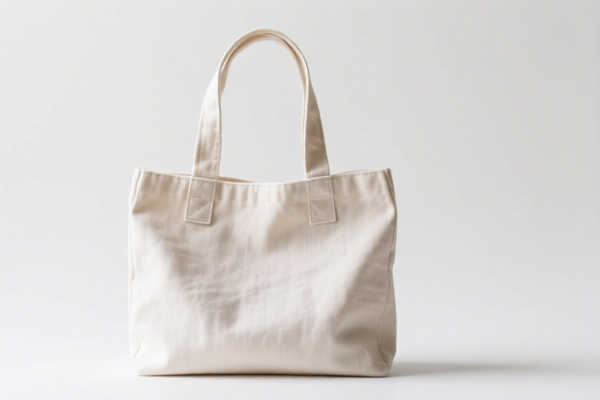
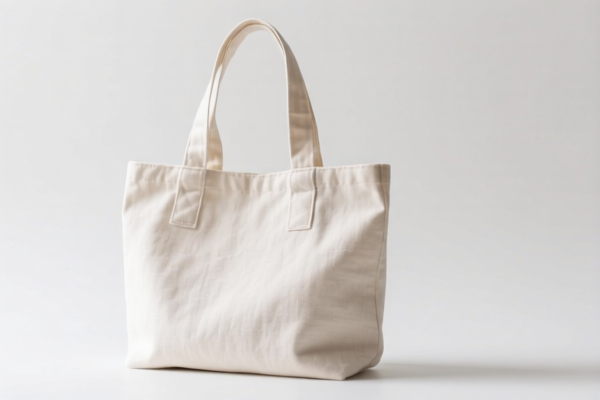

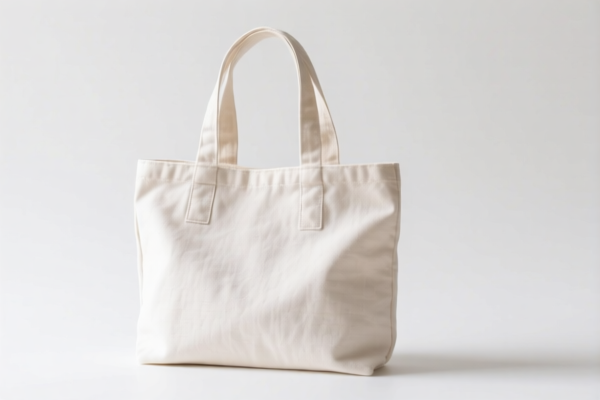
AI Analysis
🎒 Outdoor Cotton Handbag (Bags for Carrying Goods)
🌐 HS Code Reference & Customs Clearance Guide | 2026 Latest Tariff Analysis | Professional Clearance Strategy
📌 I. Product Definition & Classification: What Exactly is an "Outdoor Cotton Handbag"?
An "Outdoor Cotton Handbag" is a versatile accessory designed for casual carrying, outdoor activities, or student use. In international trade, its classification depends heavily on the material composition (Cotton) and form (Bag/Backpack).
There is often confusion between Chapter 42 (Articles of Apparel and Accessories) and Chapter 63 (Other Made-up Textile Articles). The key determinant is whether the bag is primarily considered an "accessory of apparel" or a "textile product."
⚠️ Key Distinction Points:
- If the bag is made of textile materials (cotton) and does not have a specific "backpack" structure falling under heading 4202 (which often favors leather/plastic), it may fall under General Textile Made-up Articles (Chapter 63).
- If the bag is considered a general "other bag" made of textile materials, customs may look to 4202.92 (bags of textile materials).
- Crucial Note: Under current US trade policies, both Chapter 42 and Chapter 63 items from China are subject to Section 301 tariffs and Section 122 tariffs, but the base rates differ significantly, leading to vastly different total tax burdens.
📦 II. HS Code Classification Details (2026 Latest Tariff Authority对照)
| HS Code | Product Description | Applicability | Total Tax Rate | Key Characteristics |
|---|---|---|---|---|
3926.90.99.89 |
Other articles of plastic and other materials | General consumer goods, non-metallic fibers | 22.8% | "Other articles"兜底 category. Low base tariff, but high Section 301 add-on. |
6307.90.98.91 |
Other made-up articles of textiles | Bag/Backpack, Cotton material | 24.5% | Fits "Other made-up articles" for textile products. |
4202.92.08.05 |
Bags with outer surface of textile materials | Handbag/Tote, Cotton material | 42.0% | Highest Risk! High Section 301 tariff (25%) + Base 7%. |
6307.90.89.40 |
Other made-up textile articles | Bag, Cotton material | 17.0% | Best Option. Low Section 301 (0%) + Base 7%. |
9503.00.00.71 |
Toys, amusement articles | Outdoor/Student use (interpreted as toy/play) | 10.0% | Lowest Risk. Base 0%, Add-on 0%. Only if classified as toy/accessory for play. |
🔍 Critical Insight:
-4202.92.08.05is the most common "incorrect" high-tax classification for cotton bags, leading to a 42% total rate.
-6307.90.89.40offers a significant savings opportunity (17%) if the bag can be argued as a general textile article rather than a specific "bag of apparel."
-9503.00.00.71is highly favorable (10%) but requires the item to be perceived as a "toy" or "amusement article" (e.g., for children/students), which is a risky interpretation for general adult handbags.
💰 III. 2026 Latest Tariff Rate Details (Including Additional Taxes)
✅ Applicable Country: United States (US)
✅ Country of Origin: China (CN)
✅ Effective Time: Post-2025 (Current Trade Policy)
🎯 1. 3926.90.99.89 — Other Articles of Plastic/Other Materials
| Item | Content |
|---|---|
| Base Duty | 5.3% |
| Section 301 Add-on | +7.5% |
| Section 122 Add-on | +10.0% |
| Total Rate | 22.8% |
| Tax Calculation | CIF Value × 22.8% |
| De Minimis Eligibility | ❌ No (Deny De Minimis for China) |
| Legal Basis | Standard USITC + IEEPA Section 122 |
📌 Explanation:
- This code is used when the bag is deemed "other material" (non-specific plastic/fiber).
- The Section 301 rate is 7.5%, which is lower than the standard 25% for many goods.
- Section 122 adds a flat 10% for certain goods from China.
🎯 2. 6307.90.98.91 — Other Made-up Textile Articles
| Item | Content |
|---|---|
| Base Duty | 7.0% |
| Section 301 Add-on | +7.5% |
| Section 122 Add-on | +10.0% |
| Total Rate | 24.5% |
| Tax Calculation | CIF Value × 24.5% |
| De Minimis Eligibility | ❌ No |
| Legal Basis | Standard USITC + IEEPA Section 122 |
📌 Note:
- Slightly higher than3926due to the higher base rate (7% vs 5.3%).
- Still includes the 7.5% Section 301 and 10% Section 122.
🎯 3. 4202.92.08.05 — Bags of Textile Materials (High Tax Alert!)
| Item | Content |
|---|---|
| Base Duty | 7.0% |
| Section 301 Add-on | +25.0% |
| Section 122 Add-on | +10.0% |
| Total Rate | 42.0% |
| Tax Calculation | CIF Value × 42.0% |
| De Minimis Eligibility | ❌ No |
| Legal Basis | Standard USITC + IEEPA 9903.01.25 (25% Tier) |
📌 Warning:
- This is the standard tariff for textile bags under Chapter 42.
- The 25% Section 301 tariff is the full penalty rate.
- Do NOT declare cotton handbags under 4202 if you can avoid it, unless legally required.
🎯 4. 6307.90.89.40 — Other Made-up Textile Articles (Optimal Strategy?)
| Item | Content |
|---|---|
| Base Duty | 7.0% |
| Section 301 Add-on | 0.0% |
| Section 122 Add-on | +10.0% |
| Total Rate | 17.0% |
| Tax Calculation | CIF Value × 17.0% |
| De Minimis Eligibility | ❌ No |
| Legal Basis | Standard USITC + IEEPA 9903.01.24 (Exempt/Lower Tier) |
📌 Explanation:
- Section 301 is 0% for this specific subheading in some contexts or exemptions apply.
- This results in a massive savings of 25% compared to4202.92.08.05.
- Crucial: You must argue the bag is a "general textile article" (6307) rather than a "bag of apparel" (4202). This requires strong product documentation.
🎯 5. 9503.00.00.71 — Toys/Amusement Articles (Lowest Risk?)
| Item | Content |
|---|---|
| Base Duty | 0.0% |
| Section 301 Add-on | 0.0% |
| Section 122 Add-on | +10.0% |
| Total Rate | 10.0% |
| Tax Calculation | CIF Value × 10.0% |
| De Minimis Eligibility | ❌ No (But rate is low) |
| Legal Basis | Standard USITC + IEEPA 10% |
📌 Caution:
- Only applicable if the bag is clearly marketed as a toy, plaything, or student accessory (not general fashion).
- Risk of Customs challenge if sold as adult fashion.
- 10% is the lowest possible rate, but highest compliance risk.
🛠️ IV. Customs Clearance Practical Advice (Real-World Pitfall Avoidance)
✅ 1. Document Preparation Checklist
| Document | Required? | Description |
|---|---|---|
| ✅ Product Description | ✔️ | "Cotton Handbag, Outdoor Style, No Brand" |
| ✅ Material Composition | ✔️ | "100% Cotton" (Crucial for 6307 vs 4202) |
| ✅ Photos | ✔️ | Show bag structure, lining, straps, and any labels |
| ✅ Commercial Invoice | ✔️ | Clearly state "Textile Article" vs "Bag of Apparel" |
| ✅ Customs Ruling (Optional) | ✔️ | Pre-clearance ruling on HS Code 6307.90.89.40 |
✅ 2. Declaration Strategy (Key Mantra)
🔥 "Don't Call it a Bag if it's a Textile Article! Don't Call it Apparel if it's General Use!"
| Scenario | Correct Declaration | Wrong Declaration | Result |
|---|---|---|---|
| Cotton Tote Bag | 6307.90.89.40 |
4202.92.08.05 |
Saves 25% tax |
| Child's Play Bag | 9503.00.00.71 |
4202.92.08.05 |
Saves 32% tax |
| General Cotton Bag | 3926.90.99.89 |
6307.90.98.91 |
Saves 1.7% tax |
| Backpack (Structured) | 4202.92.08.05 |
6307.90.89.40 |
Risk of Audit |
📌 Tip:
- If the bag is soft, unstructured, and made of cotton, argue for 6307.90.89.40.
- If it has rigid structure, zippers, pockets, and fashion branding, Customs may insist on 4202.92.08.05.
- Never use9503for adult fashion bags; it will trigger audits.
✅ 3. Special Cases
| Case | Handling Advice |
|---|---|
| OEM Bags | Provide design specs showing "textile article" nature, not "apparel accessory" |
| Mixed Materials | If >50% cotton, 6307 is stronger. If plastic lining dominates, 3926 may apply |
| Seasonal Bags | Summer cotton bags are more likely to be seen as "general textile" (6307) |
🌍 V. Global Market Comparison (2026 Latest)
| Country/Region | Recommended HS Code | Tariff | Remarks |
|---|---|---|---|
| 🇺🇸 USA | 6307.90.89.40 |
17.0% | Best balance of safety and cost |
| 🇨🇳 China | 6307.90.89.40 |
5.0% | No additional tariffs |
| 🇪🇺 EU | 4202.92 |
0-2% | No Section 301/122 |
| 🇬🇧 UK | 4202.92 |
0-2% | Post-Brexit rules may vary |
📌 Conclusion:
- USA is the most critical market due to Section 301 and 122 tariffs.
- Strategic Shift: Move away from4202(42% tax) to6307(17% tax) where legally defensible.
- Compliance: Ensure product descriptions do not explicitly say "Handbag" if possible; use "Textile Carrier" or "Cotton Pouch."
📌 VI. Common Errors & Pitfall Guide (Lessons Learned)
❌ Mistake 1: Declaring a Cotton Handbag as 4202.92.08.05
👉 Consequence: Pay 42% tax instead of 17%. Loss of 25% profit margin.
❌ Mistake 2: Using 9503.00.00.71 for Adult Fashion Bags
👉 Consequence: Customs audit, potential penalty, and forced re-classification to 4202.
❌ Mistake 3: Ignoring Section 122 Tariff
👉 Consequence: Even with 0% Section 301, you still pay 10% Section 122. Do not forget this!
✅ Correct Practice:
"Cotton Textile Article, Soft Carrier, for General Use, Model XYZ"
🎯 VII. Conclusion: Professional Declaration, Save Cost, Ensure Speed!
🎯 Remember the Mantra:
🔹 "Cotton Bag? Think 6307, Not 4202!"
🔹 "17% vs 42%: That's the Difference Between Profit and Loss!"
🔹 "Section 122 is Always 10%, Don't Forget It!"
📌 Pro Tip:
If your cotton handbags are made in Vietnam, Thailand, or Malaysia, you can apply for IEEPA Exemption, reducing tariffs to 0-5%.
Recommend Advance Customs Ruling for 6307.90.89.40 to avoid post-import audits.
📣 Immediate Action:
📞 Contact a Licensed Customs Broker + Provide Product Photos + Apply for HS Code Pre-Ruling
🚀 Let your Cotton Handbags clear customs smoothly, maximize profit, and scale globally!
✨ Professional Clearance Starts with Accurate Classification!
💼 Every Percent of Tax Saved is Pure Profit!
Customer Reviews
About HS Code Classification
The Harmonized System (HS) is an internationally standardized nomenclature developed by the World Customs Organization (WCO) to classify traded products. Over 200 countries use the HS system as the basis for customs tariffs, trade statistics, and import/export regulations.
Each HS code follows a hierarchical structure:
- Chapter (2 digits) — Broad category of goods (e.g., Chapter 84: Machinery and Mechanical Appliances)
- Heading (4 digits) — More specific grouping within the chapter
- Subheading (6 digits) — Internationally standardized breakdown, used by all WCO member countries
- National subdivisions (8-10 digits) — Country-specific extensions for further classification, such as US HTSUS 10-digit codes
Correct HS code classification is essential for smooth customs clearance, accurate duty payment, and compliance with trade regulations. Misclassification can lead to customs delays, overpayment of duties, or penalties.
When importing from CN to US, the applicable tariff rates may include:
- Most-Favored-Nation (MFN) rate — The standard duty rate applied to WTO members
- General rate — Applied to countries without trade agreements
- Trade remedy duties — Additional tariffs such as Section 301 (anti-dumping), Section 232 (national security), or countervailing duties
The information provided on this page is for reference purposes only. For official classification, please consult with your local customs authority or a licensed customs broker.