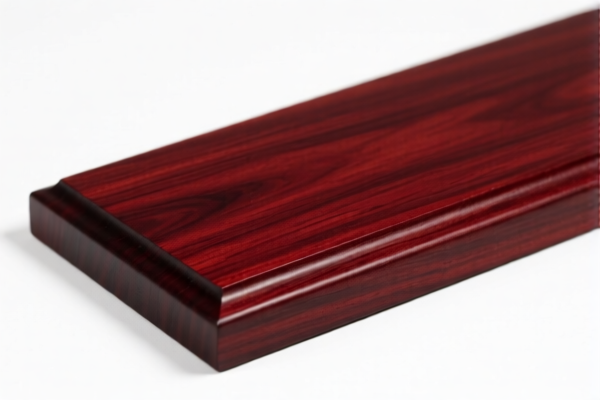
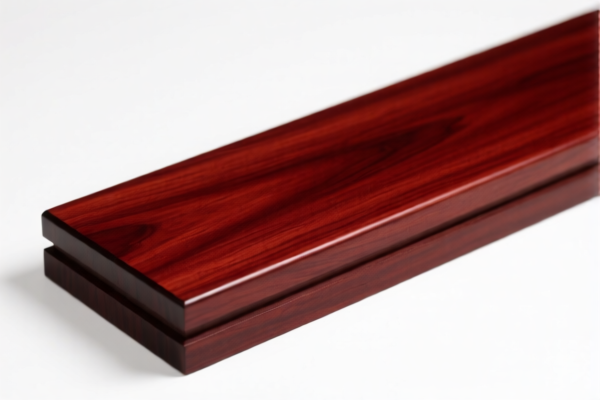
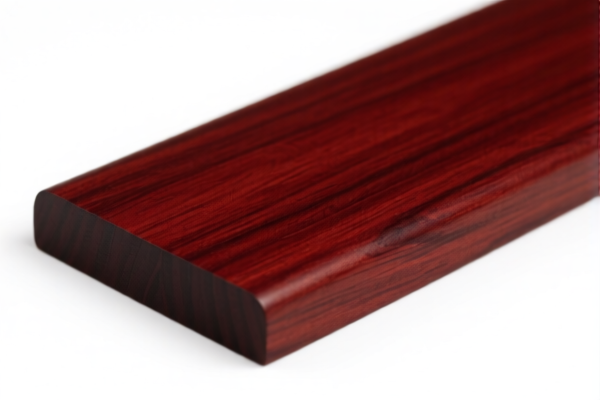
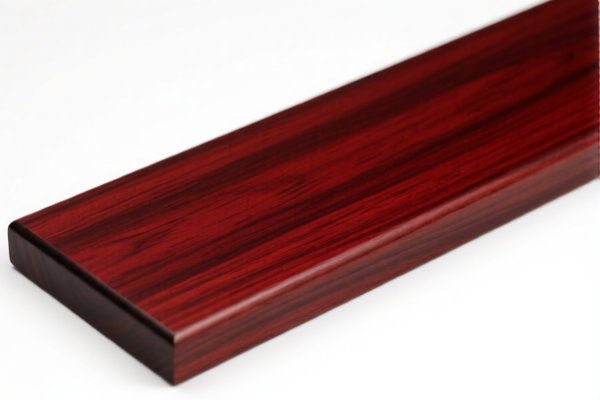
Outdoor Deep Red Mahogany
CN → US| HS Code | Tariff Rate | Origin | Destination | Doc |
|---|---|---|---|---|
| 4407290206 | 35.0% | CN | US | Official Doc |
| 4418110000 | 38.2% | CN | US | Official Doc |
| 9403509080 | 35.0% | CN | US | Official Doc |
| 4418214000 | 39.8% | CN | US | Official Doc |
| 4403490200 | 35.0% | CN | US | Official Doc |
Product Images
AI Analysis
🌳 Outdoor Deep Red Mahogany (Tropical Hardwood)
🌐 HS Code Reference & Customs Clearance Guide | 2026 Latest Tariff Analysis | Professional Clearance Strategy
📌 I. Product Definition & Classification: What is "Outdoor Deep Red Mahogany"?
"Outdoor Deep Red Mahogany" refers to high-quality tropical hardwoods (typically species from the Swietenia or Khaya genera) processed for exterior use. In international trade, these materials are classified based on their processing level and final application. They are not a single commodity but a category of wood products ranging from raw logs to finished architectural components.
Key Classification Logic: * Raw/Prepared Wood: If the wood is merely sawn, planed, or treated but not assembled into a specific structure, it falls under Chapter 44 (Wood and Articles of Wood) as raw materials. * Built-up Construction Materials: If the wood is part of a pre-assembled building component (like a window frame or door), it may be classified under Chapter 44 subheading 4418. * Furniture/Decor: If the wood is used to make standalone furniture or decorative items, it falls under Furniture classifications.
⚠️ Critical Distinction:
- Is it a raw timber board/plank? → Likely4403or4407.
- Is it a built-up window frame? → Likely4418.
- Is it a finished table or chair? → Likely9403.
📦 II. HS Code Classification Details (2026 Latest Tariff Authority Match)
Based on the provided data, here are the specific HS Codes associated with "Outdoor Deep Red Mahogany" depending on its use case.
| HS Code | Product Description | Application Scenario | Tax Rate Summary |
|---|---|---|---|
4407.29.02.06 |
Deep Red Mahogany, for outdoor use, matching tropical wood material, classified under other categories. | Sawn wood, planks, or blocks intended for outdoor construction/landscaping where specific sub-codes for "other" tropical woods apply. | 35.0% |
4418.11.00.00 |
Deep Red Mahogany, for outdoor use, conforming to building installation parts such as windows, frames. | Pre-assembled or semi-assembled wooden window frames, door frames, or architectural joinery. | 38.2% |
9403.50.90.80 |
Deep Red Mahogany, for outdoor use, conforming to wooden furniture or products usage scenarios. | Outdoor furniture (chairs, tables, benches) made primarily of wood. | 35.0% |
4418.21.40.00 |
Deep Red Mahogany, for outdoor use, conforming to tropical wood architectural woodwork characteristics. | Built-up structures for buildings, such as complex wooden cladding, shutters, or structural architectural elements. | 39.8% |
4403.49.02.00 |
Dark Red Mahogany, tropical wood material, conforming to HS code requirements. | Rough sawn wood, logs, or unprocessed timber specifically identified as "Dark Red Mahogany" (often used interchangeably with Deep Red in trade). | 35.0% |
🔍 Key Insight:
- The same material (Deep Red Mahogany) faces different tax rates (35.0% vs. 39.8%) depending on whether it is shipped as raw timber (4403/4407) or as a finished architectural component (4418). - Furniture (9403) often shares the same rate as raw timber (35.0%) in this specific dataset, highlighting that the form matters less than the duty structure for these specific sub-headings.
💰 III. 2026 Latest Tariff Rate Detailed Explanation (Including Surcharges & Policy Add-ons)
✅ Applicable Country: United States (US)
✅ Origin: China (CN) (Implied by "122 Clause" and typical surcharge structures for Chinese tropical wood)
✅ Effective Time: Current 2025/2026 Tariff Regime
🎯 1. Raw & Prepared Timber: 4403.49.02.00 & 4407.29.02.06 & 9403.50.90.80
| Item | Content |
|---|---|
| Base Tariff | 0.0% (Ad Valorem) |
| USITC Surcharge | +25.0% (Section 301 Duties) |
| Section 122 Tariff | +10.0% (Trade Enforcement/Reciprocal Measures) |
| Total Tariff Rate | 35.0% |
| Tax Calculation | CIF Value × 35% |
| De Minimis Exemption | ❌ Not Available (High risk of audit) |
| Legal Basis Path | USITC:4403/4407/9403 → Section 301: Footnote 9903.88 → Section 122: Trade Enforcement |
📌 Explanation:
- Base Tariff (0%): Many wooden articles have low base MFN tariffs, making them attractive targets for retaliatory or protective tariffs. - Section 301 (+25%): This is the standard "Trump/Biden" tariff on Chinese goods. - Section 122 (+10%): This specific "122 Clause" tariff is a newer or specific enforcement measure often applied to strategic raw materials or goods affecting national trade balance. - Total 35%: This is a high-duty item. Importers must factor this into their landed cost significantly.
🎯 2. Architectural Components: 4418.11.00.00 (Windows/Frames)
| Item | Content |
|---|---|
| Base Tariff | 3.2% |
| USITC Surcharge | +25.0% |
| Section 122 Tariff | +10.0% |
| Total Tariff Rate | 38.2% |
| Tax Calculation | CIF Value × 38.2% |
| De Minimis Exemption | ❌ Not Available |
| Legal Basis Path | USITC:4418.11 → Section 301 → Section 122 |
📌 Explanation:
- The higher base rate (3.2%) reflects that finished building components are considered more processed and valuable than raw timber. - The total rate of 38.2% is the highest among the timber categories in the provided data. - Strategy: If you are exporting window frames, expect a 3.2% higher total duty compared to exporting the same wood as planks.
🎯 3. High-End Architectural Woodwork: 4418.21.40.00
| Item | Content |
|---|---|
| Base Tariff | 4.8% |
| USITC Surcharge | +25.0% |
| Section 122 Tariff | +10.0% |
| Total Tariff Rate | 39.8% |
| Tax Calculation | CIF Value × 39.8% |
| De Minimis Exemption | ❌ Not Available |
| Legal Basis Path | USITC:4418.21 → Section 301 → Section 122 |
📌 Explanation:
- This is the most expensive classification in the dataset. - 4.8% Base Tariff indicates a highly specific, likely pre-fabricated, or complex architectural wood product. - 39.8% Total Duty can severely impact profit margins for outdoor luxury decking or cladding systems.
🛠️ IV. Customs Clearance Practical Advice (Field Pitfall Avoidance Guide)
✅ 1. Documentation Checklist (Essential)
| Document | Required | Note |
|---|---|---|
| ✅ Commercial Invoice | ✔️ | Must clearly state "Deep Red Mahogany" and HS Code. Avoid vague terms like "Wood". |
| ✅ Packing List | ✔️ | Detail dimensions, volume (CBM), and weight. Tropical wood is dense; weight discrepancies cause delays. |
| ✅ Phytosanitary Certificate | ✔️ | Mandatory for all wood. Must show heat treatment (HT) or fumigation. |
| ✅ Wood Species Declaration | ✔️ | Explicitly state species (e.g., Swietenia mahagoni) to justify "Mahogany" classification. |
| ✅ ISPM 15 Mark | ✔️ | If pallets/containers are wood, they must be treated and marked. |
| ✅ Proof of Outdoor Treatment | ✔️ | If claiming "Outdoor Use" for specific sub-codes, provide treatment records (e.g., pressure-treated, sealed). |
✅ 2. Classification Strategy (Key Rules)
🔥 "Process Level Determines Duty: Raw is 35%, Frames are 39.8%!"
| Scenario | Correct HS Code | Duty Rate | Error Consequence |
|---|---|---|---|
| Sawn Planks for Decks | 4407.29.02.06 or 4403.49.02.00 |
35.0% | Misclassifying as 4418 (Frames) → +4.8% extra cost |
| Pre-assembled Window Frames | 4418.11.00.00 |
38.2% | Misclassifying as 4407 (Raw) → Underpayment, Penalties, Seizure |
| Outdoor Furniture Set | 9403.50.90.80 |
35.0% | Misclassifying as 4418 (Architecture) → +3.2% extra cost |
| Complex Cladding Systems | 4418.21.40.00 |
39.8% | Misclassifying as 9403 (Furniture) → Underpayment, Penalties |
✅ 3. Special Handling for "Outdoor" Claims
- Tropical Wood Regulations: Ensure the wood is CITES-compliant if it is Swietenia (genuine Mahogany). Some species require export permits from the country of origin.
- Fungal/Termination Treatment: For "Outdoor" classification, customs may inspect for preservatives. Ensure the wood is treated against rot and insects if declared for exterior use, as this affects the "use case" description.
- "122 Clause" Specifics: The 10% surcharge is aggressive. Ensure your Country of Origin is correctly declared. If the wood is processed in a third country (e.g., Vietnam or Mexico) with substantial transformation, you might claim a different origin, but simple assembly in China usually retains CN origin.
🌍 V. Global Market Comparison (2026 Latest)
| Country/Region | Recommended HS Code | Tariff (CN Origin) | Certification Required | Note |
|---|---|---|---|---|
| 🇺🇸 USA | 4403.49.02.00 / 4418.21.40.00 |
35.0% - 39.8% | Phytosanitary + CITES (if applicable) | Highest duty due to Section 301 + 122 |
| 🇨🇳 China | 4403.49.02.00 |
Varies (5-15%) | None | Importing raw timber for re-export |
| 🇪🇺 EU | 4407.99 / 9403.50 |
0-10% | FSC/PEFC (Sustainability) | Strong preference for certified sustainable wood |
| 🇬🇧 UK | 4407.99 |
0-10% | UKCA + Sustainable Sourcing | Post-Brexit rules align with EU on sustainability |
📌 Conclusion:
- The US is the most challenging market for Deep Red Mahogany due to the 35-40% effective duty rate. - Margin Erosion: A 4.8% difference between raw wood (35%) and architectural components (39.8%) can decide the profitability of a project. - Certification is Key: In EU/UK, sustainable sourcing (FSC) is often more critical for market access than in the US, where cost/duty dominates.
📌 VI. Common Mistakes & Pitfall Guide (Lessons Learned)
❌ Mistake 1: Calling all mahogany "Rosewood" or generic "Tropical Hardwood"
👉 Consequence: Customs may reclassify to a higher duty rate or demand additional botanical verification → Delay.
❌ Mistake 2: Shipping window frames as "Raw Wood" to avoid the higher 4418 rate
👉 Consequence: Customs Audit. If frames are found in a shipment declared as planks, you face penalties + back taxes for misdeclaration.
❌ Mistake 3: Ignoring the "122 Clause" (10% Surcharge)
👉 Consequence: Budgeting errors. If you budget for 25% (Section 301) only, you will be short 10% of the expected duty payment.
❌ Mistake 4: Missing Phytosanitary Certificate
👉 Consequence: Shipment Rejected or Destroyed. Wood without pest control certification is banned entry.
✅ Correct Practice:
"Deep Red Mahogany Sawn Timber, Heat Treated, for Outdoor Decking, HS 4407.29.02.06, CITES Compliant, US Origin Duty: 35% (Base 0% + Sec 301 25% + Sec 122 10%)"
🎯 VII. Conclusion: Professional Declaration, Cost Control, Efficiency!
🎯 Remember the Rules:
🔹 "Raw Wood: 35%. Frames: 38.2%. Complex Architecture: 39.8%."
🔹 "One Size Does Not Fit All: Classify by Function, Not Just Material."
🔹 "The 122 Clause is Real: Add 10% to your Section 301 Budget!"
📌 Pro Tip:
If you are exporting finished outdoor furniture, use 9403.50.90.80 (35.0%).
If you are exporting raw timber, use 4403.49.02.00 (35.0%).
Optimization: For maximum flexibility, consider shipping as semi-finished (if possible) to stay at 35%, but never misdeclare finished frames as raw wood.
📣 Immediate Action:
📞 Verify Species with Local Forestry Agency
📋 Prepare Phytosanitary & CITES Documents
💻 Calculate Landed Cost with 35-39.8% Duty
🚀 Smooth Clearance, Maximized Profit!
✨ Professional Customs Clearance Starts with Precise Classification!
💼 Every Percent in Duty is Directly Lost Profit!
Customer Reviews
About HS Code Classification
The Harmonized System (HS) is an internationally standardized nomenclature developed by the World Customs Organization (WCO) to classify traded products. Over 200 countries use the HS system as the basis for customs tariffs, trade statistics, and import/export regulations.
Each HS code follows a hierarchical structure:
- Chapter (2 digits) — Broad category of goods (e.g., Chapter 84: Machinery and Mechanical Appliances)
- Heading (4 digits) — More specific grouping within the chapter
- Subheading (6 digits) — Internationally standardized breakdown, used by all WCO member countries
- National subdivisions (8-10 digits) — Country-specific extensions for further classification, such as US HTSUS 10-digit codes
Correct HS code classification is essential for smooth customs clearance, accurate duty payment, and compliance with trade regulations. Misclassification can lead to customs delays, overpayment of duties, or penalties.
When importing from CN to US, the applicable tariff rates may include:
- Most-Favored-Nation (MFN) rate — The standard duty rate applied to WTO members
- General rate — Applied to countries without trade agreements
- Trade remedy duties — Additional tariffs such as Section 301 (anti-dumping), Section 232 (national security), or countervailing duties
The information provided on this page is for reference purposes only. For official classification, please consult with your local customs authority or a licensed customs broker.