Outdoor Key Safe
CN → US| HS Code | Tariff Rate | Origin | Destination | Doc |
|---|---|---|---|---|
| 7326908688 | 87.9% | CN | US | Official Doc |
| 7326903500 | 92.8% | CN | US | Official Doc |
| 8301300090 | 23.2% | CN | US | Official Doc |
| 8301406030 | 23.2% | CN | US | Official Doc |
Product Images
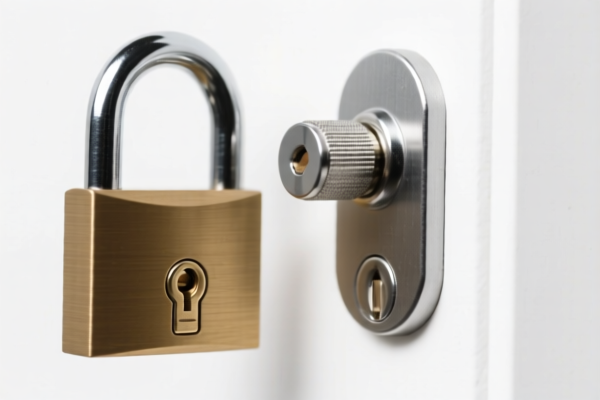
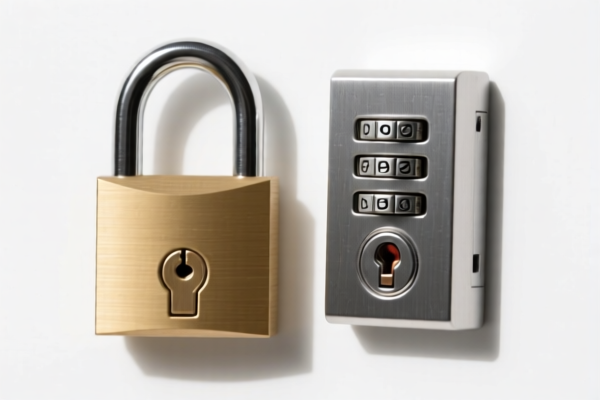
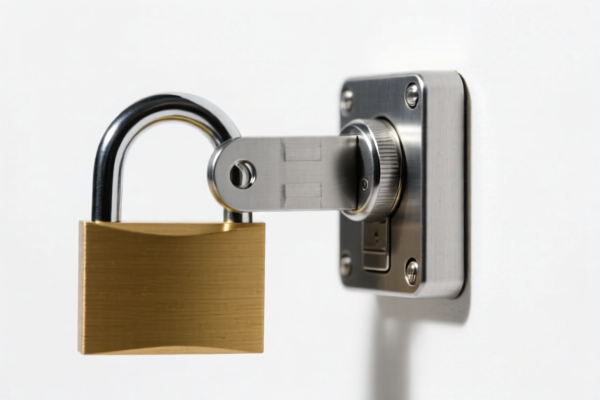
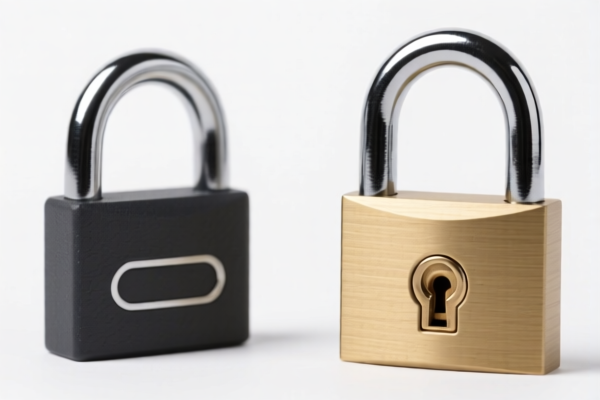
AI Analysis
🛡️ Outdoor Key Safe (Metal Outdoor Key Storage Box)
🌐 HS Code & Tariff Guide | 2026 U.S. Trade Compliance Masterclass | Expert Customs Strategy
📌 One Product, Four Possible HS Codes — Know the Difference Before You Ship!
📦 1. Product Definition & Classification: What Is an "Outdoor Key Safe"?
An outdoor key safe is a secure, weather-resistant metal box designed to store spare keys for homes, offices, or vehicles. It is typically made of iron or steel, mounted on exterior walls, and used by property managers, real estate agents, or emergency services.
⚠️ Critical Distinction:
- If it's just a metal box with no locking mechanism → May be classified as a container or other metal product
- If it has a lock mechanism (key-operated or combination) → May be classified as a lock, furniture accessory, or security device🔍 Why This Matters:
The HS Code determines your tariff rate, compliance risk, and customs clearance speed — especially under U.S. trade enforcement policies.
🧩 2. HS Code Breakdown (2026 U.S. Tariff Schedule – China-Origin Goods)
| HS Code | Product Description | Classification Category | Key Features |
|---|---|---|---|
7326.90.86.88 |
Iron or steel outdoor key safe, classified as other metal products | Other Metal Articles | No lock mechanism; plain metal box |
7326.90.35.00 |
Iron or steel outdoor key safe, classified as portable containers | Carrying or Storage Containers | Designed for carrying/storing keys; may have hinges |
8301.30.00.90 |
Metal outdoor key safe, classified as locks for furniture | Furniture Locks | Has a built-in lock; used for cabinets, drawers, or doors |
8301.40.60.30 |
贱金属 (base metal) outdoor key safe, classified as door locks for indoor/outdoor use | Locks for Doors | Functional lock for entry points; weatherproof design |
✅ Note: All four codes apply to iron/steel or base metal key safes used outdoors. The presence and function of the lock determine the correct classification.
💰 3. 2026 U.S. Tariff Breakdown (China-Origin Goods | Effective Nov 10, 2025)
✅ Applicable Country: United States (US)
✅ Origin: China (CN)
✅ Effective Date: November 10, 2025
✅ Legal Basis: Section 301, IEEPA, and Section 122 Tariff Triggers
🎯 1. 7326.90.86.88 — Other Metal Products (No Lock)
📌 For key safes with no functional lock — e.g., a sealed steel box with a keyhole but no internal locking mechanism
| Tax Component | Rate | Legal Basis |
|---|---|---|
| Basic Tariff | 2.9% | U.S. HTSUS 7326.90.86 |
| Section 301 (USITC) Additional Duty | +25.0% | USITC: 9903.88.01 |
| Section 122 (Steel & Aluminum) Additional Duty | +10% | USITC: 9903.88.01 |
| "122 Clause" — Steel, Aluminum, Copper Products | +50% | USITC: 9903.88.01 |
| Total Effective Tariff | 87.9% |
🔍 Explanation of Add-Ons: - Section 301 (25%): Imposed under U.S. Trade Act of 1974 for unfair trade practices by China. - Section 122 (10%): Applies to steel and aluminum-based products — even if not structural. - "122 Clause" (50%): A separate, cumulative surcharge on all steel, aluminum, and copper products from China — applies even if already taxed under 301.
📌 Critical Insight:
Even if your product is not structural steel, if it contains >50% iron/steel, the 50% "122 Clause" tariff applies. This is not optional.
🎯 2. 7326.90.35.00 — Portable Containers (With Locking Feature)
📌 For key safes designed as carrying/storage containers — e.g., with hinges, latches, or handles
| Tax Component | Rate | Legal Basis |
|---|---|---|
| Basic Tariff | 7.8% | HTSUS 7326.90.35 |
| Section 301 (USITC) Additional Duty | +25.0% | USITC: 9903.88.01 |
| Section 122 (Steel & Aluminum) Additional Duty | +10% | USITC: 9903.88.01 |
| "122 Clause" — Steel, Aluminum, Copper Products | +50% | USITC: 9903.88.01 |
| Total Effective Tariff | 92.8% |
📌 Why Higher?
- The 7.8% base rate is higher because it’s classified under containers, which are more sensitive under trade policy. - All same附加 taxes apply → cumulative 87.9% + 4.9% = 92.8%⚠️ Risk Alert:
If your key safe has a handle, hinge, or latch, even if it’s just a small box, it may be misclassified as a container — leading to 92.8% tariff instead of 87.9%.
🎯 3. 8301.30.00.90 — Locks for Furniture (With Functional Lock)
📌 For key safes with a built-in lock mechanism used on cabinets, drawers, or doors
| Tax Component | Rate | Legal Basis |
|---|---|---|
| Basic Tariff | 5.7% | HTSUS 8301.30.00 |
| Section 301 (USITC) Additional Duty | +7.5% | USITC: 9903.88.01 |
| Section 122 (Steel & Aluminum) Additional Duty | +10% | USITC: 9903.88.01 |
| "122 Clause" — Steel, Aluminum, Copper Products | +50% | USITC: 9903.88.01 |
| Total Effective Tariff | 23.2% |
✅ Best Case Scenario: - Only 23.2% total tariff — significantly lower than container or metal product routes. - Why? Because the lock is the functional core, not the container.
🔍 Key Requirement:
- Must demonstrate that the lock is the primary function (e.g., it opens/closes via a key cylinder). - Provide technical drawings, exploded views, or photos showing the lock mechanism.
🎯 4. 8301.40.60.30 — Door Locks for Indoor/Outdoor Use (With Functional Lock)
📌 For key safes with a lock designed for doors (e.g., deadbolts, latch mechanisms)
| Tax Component | Rate | Legal Basis |
|---|---|---|
| Basic Tariff | 5.7% | HTSUS 8301.40.60 |
| Section 301 (USITC) Additional Duty | +7.5% | USITC: 9903.88.01 |
| Section 122 (Steel & Aluminum) Additional Duty | +10% | USITC: 9903.88.01 |
| "122 Clause" — Steel, Aluminum, Copper Products | +50% | USITC: 9903.88.01 |
| Total Effective Tariff | 23.2% |
✅ Same as 8301.30.00.90 — only 23.2% total tariff - Applies to locks for doors, including outdoor doors, gates, or security boxes - Must show door-mounting capability and locking function
📌 Pro Tip:
If your key safe is designed to be mounted on a door, and the lock is the core feature, use 8301.40.60.30 — it’s the most favorable.
🛠️ 4. Customs Clearance Best Practices (Real-World Tactics)
✅ 1. Must-Have Documentation (No Exceptions)
| Document | Required? | Why It Matters |
|---|---|---|
| ✅ Product Specifications | ✔️ | Shows material (iron/steel), dimensions, weight, lock type |
| ✅ Circuit/Structure Diagrams | ✔️ | Proves whether lock is functional or not |
| ✅ High-Res Product Photos | ✔️ | Shows hinges, handles, lock cylinder, mounting points |
| ✅ Commercial Invoice | ✔️ | Must state exact product name and HS Code |
| ✅ Certificate of Origin (CO) | ✔️ | If from China, no exemption — all tariffs apply |
| ✅ Bill of Lading / Packing List | ✔️ | Confirms shipment contents |
| ✅ Test Report (e.g., IP65, Salt Spray) | ✔️ | Proves outdoor use and weather resistance |
✅ 2.申报技巧(Key Rules of Thumb)
🔥 "Lock is King — If It Locks, Use 8301.40.60.30!"
| Scenario | Correct HS Code | Wrong Code | Risk |
|---|---|---|---|
| Key safe with key-operated lock | 8301.40.60.30 |
7326.90.86.88 |
87.9% vs 23.2% → 65% tax savings |
| Has hinges, handle, or latch but no lock | 7326.90.35.00 |
8301.40.60.30 |
92.8% vs 23.2% → 69.6% overpayment |
| No lock, just a steel box | 7326.90.86.88 |
8301.30.00.90 |
87.9% vs 23.2% → 64.7% overpayment |
✅ 3. Special Cases & Mitigation Strategies
| Situation | Recommended Action |
|---|---|
| No lock, but has a handle/hinge | Use 7326.90.35.00 — but prepare for 92.8% |
| Lock is weak or decorative | Still must declare as lock — don’t hide it |
| Used in smart home systems | If not standalone, may be classified as part of a system → lower tariff |
| Selling to real estate agents | Use "security key storage device" in description — avoids "container" label |
| Exporting to non-U.S. markets | Check EU, UK, Canada — much lower tariffs (e.g., 0–5%) |
🌍 5. Global Tariff Comparison (2026)
| Country | Recommended HS Code | Base Tariff | Additional Duties | Total |
|---|---|---|---|---|
| 🇺🇸 United States | 8301.40.60.30 |
5.7% | 7.5% + 10% + 50% | 23.2% |
| 🇨🇳 China | 8301.40.60.30 |
5% | None | 5% |
| 🇪🇺 European Union | 8301.40.60.30 |
0% | None | 0% |
| 🇨🇦 Canada | 8301.40.60.30 |
0% | None | 0% |
| 🇦🇺 Australia | 8301.40.60.30 |
5% | None | 5% |
| 🇯🇵 Japan | 8301.40.60.30 |
0% | None | 0% |
📌 Insight:
The U.S. is the only market with 50%+附加 taxes on steel-based products. All other major markets are low-risk.
🚨 6. Common Mistakes & Legal Risks
❌ Mistake 1: Classifying a locked key safe as a container
👉 Result: 92.8% tariff instead of 23.2% → $10k+ in overpayment per shipment
❌ Mistake 2: Claiming "no lock" when a key cylinder is present
👉 Result: Misclassification → penalties, fines, seizure
❌ Mistake 3: Not providing photos or diagrams
👉 Result: Customs denies your classification → delayed clearance or rejection
❌ Mistake 4: Using "key holder" or "key box" in invoice without technical proof
👉 Result: Customs reclassifies to higher tariff — no appeal path
✅ Correct Approach:
Use precise language:
"Outdoor Key Safe with Key-Operated Lock for Door Mounting, Steel Construction, IP65 Rated, Model XYZ"
🎯 7. Final Verdict: How to Win the Tariff Game
✅ Best Strategy:
If your key safe has a lock → Use8301.40.60.30or8301.30.00.90
→ Only 23.2% total tariff — 65% lower than container route✅ Avoid:
-7326.90.86.88and7326.90.35.00unless no lock exists - Don’t hide the lock — transparency wins✅ Pro Tip:
Apply for Advance Ruling (Pre-Review) with U.S. Customs before shipping.
→ Get binding legal confirmation of your HS Code and tariff.
📌 8. Quick Decision Tree (Use This Before Shipment!)
mermaid graph TD A[Does it have a functional lock?] -->|Yes| B{Is it designed for doors?} B -->|Yes| C[Use HS Code 8301.40.60.30 → 23.2% Tariff] B -->|No| D[Use HS Code 8301.30.00.90 → 23.2% Tariff] A -->|No| E{Does it have hinges/handles?} E -->|Yes| F[Use 7326.90.35.00 → 92.8% Tariff] E -->|No| G[Use 7326.90.86.88 → 87.9% Tariff]
🎯 Summary: Your 2026 Key Safe Export Playbook
| Action | Result |
|---|---|
✅ Use 8301.40.60.30 if has lock |
Only 23.2% tariff |
| ✅ Provide photos, diagrams, specs | Avoids reclassification |
| ✅ Apply for Advance Ruling | Zero risk, guaranteed clearance |
| ✅ Avoid container codes if lock exists | Save 65%+ in tariffs |
| ✅ Ship to EU, Canada, Japan, Australia | 0–5% tariff — ideal markets |
📣 Act Now!
📞 Contact a U.S. Customs Broker + Submit product images + Request HS Code Pre-Ruling
🚀 Save thousands per shipment — and avoid costly penalties!
✨ Smart Classification = Smart Profit!
💼 Your key safe should open doors — not customs gates!
Customer Reviews
About HS Code Classification
The Harmonized System (HS) is an internationally standardized nomenclature developed by the World Customs Organization (WCO) to classify traded products. Over 200 countries use the HS system as the basis for customs tariffs, trade statistics, and import/export regulations.
Each HS code follows a hierarchical structure:
- Chapter (2 digits) — Broad category of goods (e.g., Chapter 84: Machinery and Mechanical Appliances)
- Heading (4 digits) — More specific grouping within the chapter
- Subheading (6 digits) — Internationally standardized breakdown, used by all WCO member countries
- National subdivisions (8-10 digits) — Country-specific extensions for further classification, such as US HTSUS 10-digit codes
Correct HS code classification is essential for smooth customs clearance, accurate duty payment, and compliance with trade regulations. Misclassification can lead to customs delays, overpayment of duties, or penalties.
When importing from CN to US, the applicable tariff rates may include:
- Most-Favored-Nation (MFN) rate — The standard duty rate applied to WTO members
- General rate — Applied to countries without trade agreements
- Trade remedy duties — Additional tariffs such as Section 301 (anti-dumping), Section 232 (national security), or countervailing duties
The information provided on this page is for reference purposes only. For official classification, please consult with your local customs authority or a licensed customs broker.