Outdoor Natural Grass Mat
CN → US| HS Code | Tariff Rate | Origin | Destination | Doc |
|---|---|---|---|---|
| 4602191800 | 39.5% | CN | US | Official Doc |
| 5705002090 | 38.3% | CN | US | Official Doc |
| 5705001000 | 35.0% | CN | US | Official Doc |
| 4602198000 | 37.3% | CN | US | Official Doc |
Product Images
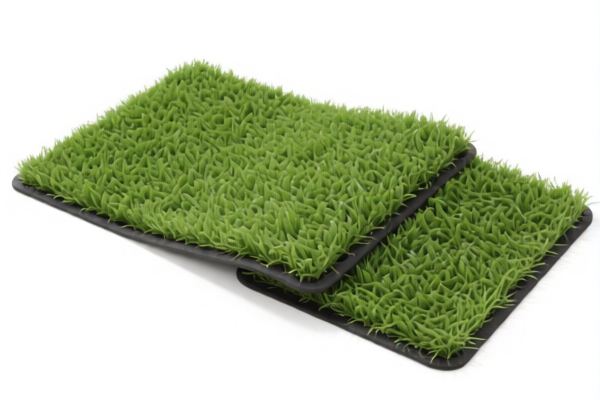
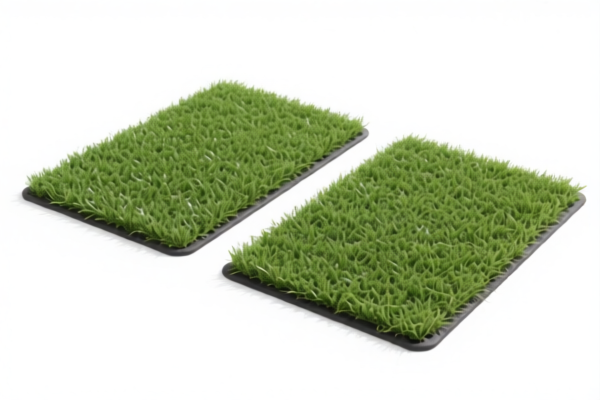
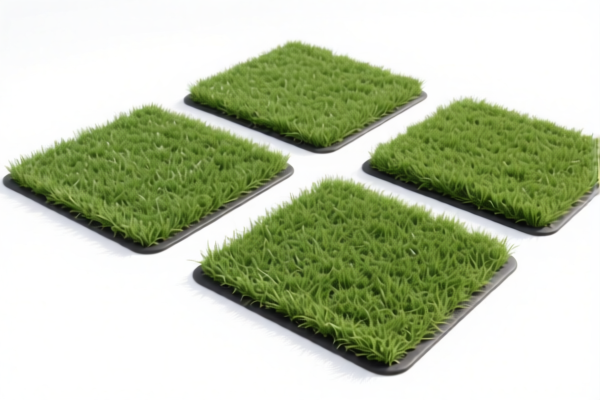

AI Analysis
🌿 Outdoor Natural Grass Mat (Round / Circular)
🌐 HS Code Reference & Customs Clearance Guide | 2026 Latest Tariff Analysis | Professional Strategy for US Imports
📌 I. Product Definition & Classification: What Exactly Is a "Natural Grass Mat"?
An Outdoor Natural Grass Mat is typically a decorative or functional floor covering made from dried natural plant fibers (such as seagrass, sisal, jute, or synthetic-looking natural materials) woven or tufted into a circular or round shape.
In international trade, the classification depends heavily on whether it is viewed as a woven craft article or a carpet/floor covering. This distinction significantly impacts the tariff rate.
⚠️ Key Distinction Point:
- If classified as a woven basketry/article of plaiting materials → It falls under Chapter 46 (Higher Base Duty).
- If classified as a carpet, rug, or floor covering of textile/plant fibers → It falls under Chapter 57 (Lower Base Duty).
- Note: Despite the name "Grass," if the material is natural plant fiber, Chapter 57 is often more favorable for base duty, but all these HS codes attract significant additional US tariffs due to trade policies.
📦 II. HS Code Classification Matrix (2026 Latest Customs Tariff)
Based on the provided data, here are the four possible HS Code classifications for the "Round Natural Grass Mat," along with their total tax implications.
| HS Code | Product Description & Category | Base Duty | Additional Taxes (US) | Total Tax Rate | Classification Logic |
|---|---|---|---|---|---|
| 4602.19.18.00 | Woven product made of natural grass, shaped as a mat. Classified as "Woven Articles." | 4.5% | 25% (Section 301) + 10% (Section 122/IEEPA) | 39.5% | Viewed as a craft/basketry item rather than a carpet. |
| 5705.00.20.90 | Round natural grass mat, classified as "Other Carpets/Floor Coverings." | 3.3% | 25% (Section 301) + 10% (Section 122/IEEPA) | 38.3% | Viewed as a general floor covering/rug. Best base duty. |
| 5705.00.10.00 | Floor covering made of plant fibers (natural grass). | 0.0% | 25% (Section 301) + 10% (Section 122/IEEPA) | 35.0% | Lowest Total Duty. Classified specifically under "Other Carpets... of Vegetable Textile Fibers." |
| 4602.19.80.00 | Other woven products and articles of plaiting materials, not elsewhere specified. | 2.3% | 25% (Section 301) + 10% (Section 122/IEEPA) | 37.3% | General basketry category. Lower base than 4602.19.18, but higher total than Chapter 57. |
🔍 Critical Insight:
- Chapter 57 (5705.00.xxxx) consistently offers a lower total tax rate (35%–38.3%) compared to Chapter 46 (4602.xxxx) (37.3%–39.5%).
- The 35.0% rate under5705.00.10.00is the most cost-effective option, assuming the product qualifies as a "carpet/floor covering" made of vegetable textile fibers.
- All these codes are subject to US Additional Tariffs:
- 25% under Section 301 (Trade Act of 1974,针对中国产商品).
- 10% under Section 122 (or IEEPA provisions, often applied to specific Chinese goods).
- Base Duty varies (0%–4.5%).
💰 III. Detailed Tariff Breakdown & Legal Basis
✅ Applicable Market: United States (US)
✅ Origin: China (CN)
✅ Effective Date: Current US Trade Policies (2025–2026)
🎯 1. 5705.00.10.00 — Best Option: 35.0% Total Duty
Category: Carpets of Vegetable Textile Fibers
| Item | Detail |
|---|---|
| Base Tariff | 0.0% (Ad Valorem) |
| Section 301 Tariff | +25.0% (USITC Footnote, China Origin) |
| Section 122/IEEPA | +10.0% (Specific China-related add-on) |
| Total Effective Rate | 35.0% |
| Calculation | CIF Value × 35.0% |
| De Minimis Exemption | ❌ Not Eligible (Value > $800 threshold triggers full duty) |
📌 Why this is best:
The base duty is 0%. Even with the 35% additional taxes, it is cheaper than the 39.5% under4602.19.18.00. To qualify, the product must be clearly described as a "Floor Covering" or "Carpet" made of vegetable fibers (e.g., grass, sisal), not just a "woven basket."
🎯 2. 5705.00.20.90 — Runner-Up: 38.3% Total Duty
Category: Other Carpets, Not Elsewhere Specified
| Item | Detail |
|---|---|
| Base Tariff | 3.3% |
| Section 301 Tariff | +25.0% |
| Section 122/IEEPA | +10.0% |
| Total Effective Rate | 38.3% |
| Calculation | CIF Value × 38.3% |
📌 Note:
This is the "catch-all" for carpets that don't fit specific fiber subcategories. It is slightly more expensive than5705.00.10.00due to the 3.3% base duty.
🎯 3. 4602.19.80.00 — Alternative: 37.3% Total Duty
Category: Other Woven Articles of Plaiting Materials
| Item | Detail |
|---|---|
| Base Tariff | 2.3% |
| Section 301 Tariff | +25.0% |
| Section 122/IEEPA | +10.0% |
| Total Effective Rate | 37.3% |
| Calculation | CIF Value × 37.3% |
📌 Note:
If customs authorities reject the "carpet" classification and insist on "woven basketry," this is the better option within Chapter 46. It is cheaper than4602.19.18.00.
🎯 4. 4602.19.18.00 — Highest Duty: 39.5% Total Duty
Category: Woven Baskets/Basketry Articles
| Item | Detail |
|---|---|
| Base Tariff | 4.5% |
| Section 301 Tariff | +25.0% |
| Section 122/IEEPA | +10.0% |
| Total Effective Rate | 39.5% |
| Calculation | CIF Value × 39.5% |
📌 Note:
This is the least favorable option. It classifies the mat as a general woven article rather than a floor covering. Avoid this classification if possible.
🛠️ IV. Customs Clearance Strategy & Recommendations
✅ 1. Documentation Checklist (Essential for Smooth Clearance)
| Document | Requirement | Purpose |
|---|---|---|
| Commercial Invoice | Must state: "Round Natural Grass Floor Mat, 100% Natural Plant Fiber, Woven" | Avoids vague terms like "Grass" which may trigger Chapter 46. |
| Product Photos | High-res images showing the underbacking (if any) and texture | Proves it is a floor covering (carpet) rather than a basket. |
| Material Composition Statement | Explicitly state: "100% Vegetable Textile Fibers (e.g., Seagrass/Sisal)" | Supports classification under Chapter 57 (Carpet) vs. Chapter 46 (Basketry). |
| Packing List | List net/gross weight accurately | Prevents delays in weighing checks. |
| ISF (10+2) Filing | Must be filed 24 hours before vessel departure | Critical for US imports. Late filing = $5,000+ fines. |
✅ 2. Classification Strategy (How to Argue for 35.0%)
🔥 Key Argument:
"This is a floor covering, not a basket."
| Argument | Support |
|---|---|
| Primary Use | Describe the product as used for floor decoration/protection in homes/offices. |
| Structure | Emphasize the woven/plaited structure typical of rugs/carpet (Chapter 57 Note 2). |
| Material | Highlight that the fiber is a textile vegetable fiber (not just raw grass). |
| Avoid | Do NOT use words like "Basket," "Container," or "Storage" in marketing materials. |
✅ 3. Common Pitfalls & Solutions
| Mistake | Consequence | Solution |
|---|---|---|
| Misclassifying as "Plastic" or "Synthetic" | May fall under different HTS with different duties | Clearly label as "Natural Plant Fiber" |
| Using "Grass Mat" without context | Customs may guess Chapter 46 (Basketry) | Use "Natural Grass Floor Carpet/Rug" in description |
| Ignoring Section 301/122 | Underpaying duties → Penalties | Budget for 35%–39.5% total duty in your cost model |
| Splitting Shipment | Risk of ISF errors | Ensure one consolidated shipment with accurate data |
🌍 V. Global Market Comparison (Quick Reference)
| Country | Recommended HS Code | Total Duty (Approx.) | Notes |
|---|---|---|---|
| 🇺🇸 USA | 5705.00.10.00 |
35.0% | Best option. Subject to 301 & 122 tariffs. |
| 🇨🇳 China | 5705.00.10.00 |
~5–10% | Lower duties. Check latest Chinese tariff schedule. |
| 🇪🇺 EU | 5705.00.10.00 |
~4–6% | No Section 301 tariffs. Standard EU duty. |
| 🇨🇦 Canada | 5705.00.10.00 |
~5% | No significant additional tariffs for China origin. |
📌 Conclusion:
For US Imports, the difference between 35.0% (5705.00.10.00) and 39.5% (4602.19.18.00) is 4.5%.
On a $100,000 shipment, this is a $4,500 savings.
Always aim for5705.00.10.00by clearly defining the product as a floor covering/carpet.
📌 VI. Final Checklist for Importers
- Confirm Material: Is it 100% natural vegetable fiber? (Yes → Chapter 57).
- Confirm Use: Is it primarily for floor covering? (Yes → Chapter 57).
- File ISF: 24 hours before load.
- Declare Correctly: Use "Natural Grass Floor Carpet, Round, Woven, Vegetable Fiber."
- Budget for Tariffs: Include 35%–39.5% in landed cost calculations.
🎯 Pro Tip:
If the product has a rubber or plastic backing, it may still qualify as a carpet (
5705.00) if the backing is incidental. If the backing is substantial, it might shift to a different category. Consult a customs broker if unsure.
📣 Action Required:
📞 Engage a licensed customs broker to file a Pre-Ruling Request with CBP for
5705.00.10.00to ensure compliance and avoid post-import audits.
📄 Update all marketing materials to avoid terms like "basket" or "container."
✨ Precision Classification = Lower Duties = Higher Profit!
💼 Don’t let misclassification cost you 4.5% on every dollar!
Customer Reviews
About HS Code Classification
The Harmonized System (HS) is an internationally standardized nomenclature developed by the World Customs Organization (WCO) to classify traded products. Over 200 countries use the HS system as the basis for customs tariffs, trade statistics, and import/export regulations.
Each HS code follows a hierarchical structure:
- Chapter (2 digits) — Broad category of goods (e.g., Chapter 84: Machinery and Mechanical Appliances)
- Heading (4 digits) — More specific grouping within the chapter
- Subheading (6 digits) — Internationally standardized breakdown, used by all WCO member countries
- National subdivisions (8-10 digits) — Country-specific extensions for further classification, such as US HTSUS 10-digit codes
Correct HS code classification is essential for smooth customs clearance, accurate duty payment, and compliance with trade regulations. Misclassification can lead to customs delays, overpayment of duties, or penalties.
When importing from CN to US, the applicable tariff rates may include:
- Most-Favored-Nation (MFN) rate — The standard duty rate applied to WTO members
- General rate — Applied to countries without trade agreements
- Trade remedy duties — Additional tariffs such as Section 301 (anti-dumping), Section 232 (national security), or countervailing duties
The information provided on this page is for reference purposes only. For official classification, please consult with your local customs authority or a licensed customs broker.