Outdoor Rattan Floor Mats
CN → US| HS Code | Tariff Rate | Origin | Destination | Doc |
|---|---|---|---|---|
| 5705002090 | 38.3% | CN | US | Official Doc |
| 4602124500 | 41.6% | CN | US | Official Doc |
| 4602123500 | 35.0% | CN | US | Official Doc |
| 4601228000 | 35.0% | CN | US | Official Doc |
| 4601224000 | 38.3% | CN | US | Official Doc |
Product Images
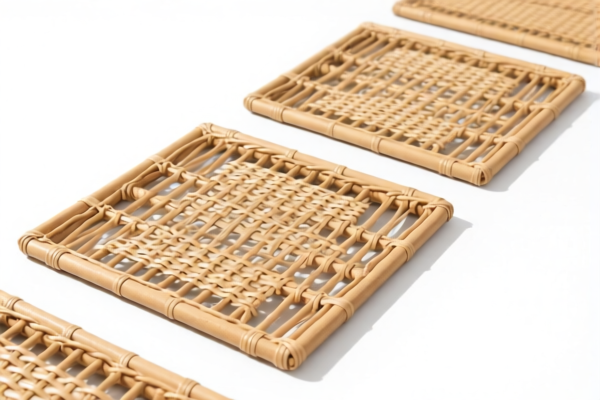
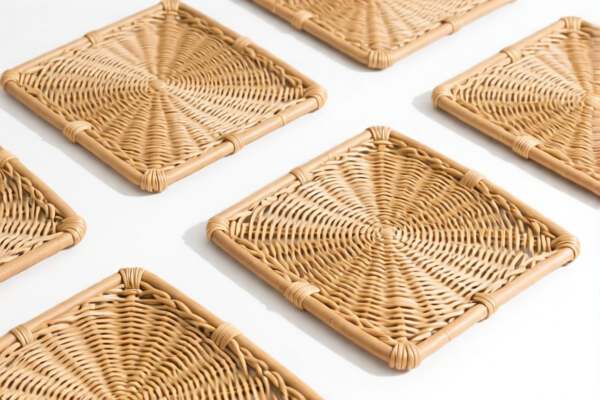
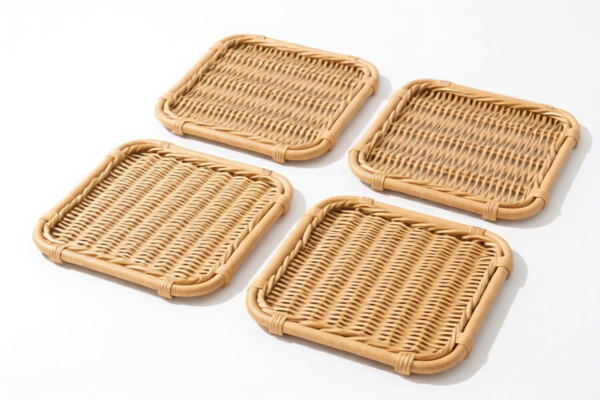
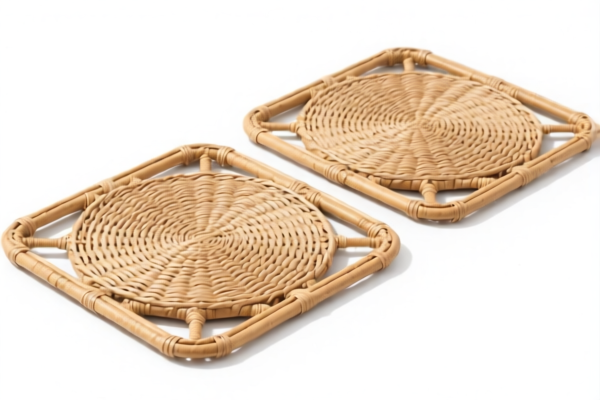
AI Analysis
🌿 Outdoor Rattan Floor Mats (Woven Flooring & Decor)
🌐 HS Code Reference & Customs Clearance Guide | 2026 Latest Tariff Analysis | Professional Entry Strategy
📌 I. Product Definition & Classification: What Exactly is "Outdoor Rattan"?
Outdoor Rattan Floor Mats represent a unique intersection of home decor and functional flooring. In international trade, they are rarely classified simply as "furniture" or "textiles." Instead, their classification depends heavily on material composition (natural rattan vs. synthetic blend) and manufacturing method (woven vs. knotted).
Key Distinctions for Importers: * Natural Fiber Woven Products (Chapter 46): Mats made primarily from natural rattan vines, bamboo, or similar plant fibers, woven into mats, mats of plaiting materials. * Textile Floor Coverings (Chapter 57): If the "rattan" is a synthetic imitation (e.g., PE rattan) woven on a textile backing, or if the construction method aligns more with tufted/knotted rugs rather than stiff woven plaiting, it may fall under general textile floor coverings.
⚠️ Critical Classification Point:
- If the product is strictly woven plaiting material using natural vines → Chapter 46.
- If the product is a soft textile rug with a rattan-look or synthetic fiber backing → Chapter 57.
- Misclassification Risk: Declaring a natural woven mat as a "carpet" (Ch 57) can lead to significant duty discrepancies due to the different tariff structures for 301/122 Clause tariffs.
📦 II. HS Code Classification Details (2026 Latest Tariff Concordance)
Based on the provided data, here are the specific HS Codes applicable to Outdoor Rattan Floor Mats, categorized by material and structure:
| HS Code | Product Description | Application Scenario | Material/Structure Note |
|---|---|---|---|
5705.00.20.90 |
Woven Rattan-like Carpets | Synthetic rattan mats, textile-based floor coverings | Chapter 57 (Textiles): Best for synthetic/PE rattan or mixed fabric bases. |
4602.12.45.00 |
Woven Rattan Articles | Heavy-duty outdoor mats, rigid woven structures | Chapter 46 (Vegetable Plaiting): Natural rattan vines, stiff woven form. |
4602.12.35.00 |
Rattan Woven Articles | Standard natural rattan mats | Chapter 46: Pure natural fiber, woven classification. |
4601.22.80.00 |
Rattan Mats & Floor Coverings | Natural rattan floor coverings | Chapter 46: Specifically designated for floor coverings made of plaiting materials. |
4601.22.40.00 |
Rattan Mats & Mats (Outdoor) | Outdoor-specific rattan mats | Chapter 46: Explicitly noted for outdoor use/rigid mats. |
🔍 Key Insight:
- Chapter 46 Codes (4602...,4601...) generally apply to natural rattan or vegetable material that is plaited. These are considered "articles of plaiting materials."
- Chapter 57 Code (5705...) applies if the product is technically a "carpet" or "textile floor covering," often used when the material is synthetic or the construction is closer to textile weaving rather than rigid plaiting.
- Tariff Impact: The total tax rates differ slightly (35.0% vs 38.3%), but both suffer from high additional tariffs.
💰 III. 2026 Latest Tariff Rate Breakdown (Including Surcharges & Policy Add-ons)
✅ Applicable Market: United States (US)
✅ Country of Origin: China (CN)
✅ Effective Time: Current trade war tariffs (Section 301, Section 232, Section 122) apply.
🎯 1. 5705.00.20.90 —— Woven Rattan-like Carpets (Textile Category)
| Item | Content |
|---|---|
| Base Tariff | 3.3% |
| Section 301 Surcharge | +25.0% |
| Section 122 Surcharge | +10.0% |
| Total Effective Rate | 38.3% |
| Tax Calculation | CIF Value × 38.3% |
| De Minimis Exemption | ❌ Denied (deny_de_minimis) |
| Legal Basis Path | Section 301 → Section 122 → USITC:5705.00.20.90 |
📌 Explanation:
- Even though this falls under Textiles (Ch 57), it is not exempt from the heavy trade war surcharges.
- The 38.3% rate is steep. Importers must ensure the product is indeed classified here and not wrongly under Ch 46, or vice versa, as both are heavily taxed.
🎯 2. 4602.12.45.00 —— Woven Rattan Articles (Natural/Plaiting)
| Item | Content |
|---|---|
| Base Tariff | 6.6% |
| Section 301 Surcharge | +25.0% |
| Section 122 Surcharge | +10.0% |
| Total Effective Rate | 41.6% |
| Tax Calculation | CIF Value × 41.6% |
| De Minimis Exemption | ❌ Denied |
| Legal Basis Path | Section 301 → Section 122 → USITC:4602.12.45.00 |
📌 Note:
- While the base tariff (6.6%) is higher than Ch 57, the total rate is higher (41.6%) due to the same surcharges.
- This code is for natural woven rattan. If your "outdoor mat" is natural vine, this is likely the correct code, but expect the highest total tax in the list.
🎯 3. 4602.12.35.00 & 4601.22.80.00 —— Rattan Woven Articles / Mats
| Item | Content |
|---|---|
| Base Tariff | 0.0% |
| Section 301 Surcharge | +25.0% |
| Section 122 Surcharge | +10.0% |
| Total Effective Rate | 35.0% |
| Tax Calculation | CIF Value × 35.0% |
| De Minimis Exemption | ❌ Denied |
| Legal Basis Path | Section 301 → Section 122 → USITC:460x.xx.xx.xx |
📌 Explanation:
- These codes have a 0% base tariff, making them the most tax-efficient options among the listed codes.
- However, they are strictly for natural rattan/plaiting materials. If your product uses synthetic "rattan" (PE plastic), using these codes may lead to customs detention for misclassification.
- 35.0% is the lowest total rate, but the risk of misclassification must be managed.
🎯 4. 4601.22.40.00 —— Rattan Mats (Outdoor)
| Item | Content |
|---|---|
| Base Tariff | 3.3% |
| Section 301 Surcharge | +25.0% |
| Section 122 Surcharge | +10.0% |
| Total Effective Rate | 38.3% |
| Tax Calculation | CIF Value × 38.3% |
| De Minimis Exemption | ❌ Denied |
| Legal Basis Path | Section 301 → Section 122 → USITC:4601.22.40.00 |
📌 Note:
- Specific to outdoor mats. Total tax is 38.3%, same as the textile category but under the natural plaiting chapter.
- Use this if the product is explicitly marketed and constructed as an outdoor mat made of natural plaiting materials.
🛠️ IV. Customs Clearance Practical Advice (Real-World Pitfall Guide)
✅ 1. Required Documentation Checklist (None are optional)
| Document | Mandatory? | Explanation |
|---|---|---|
| ✅ Product Specifications | ✔️ | Must detail: Material (Natural Rattan vs. PE/Rattan), Dimensions, Weight, Weaving Density. |
| ✅ Material Composition Proof | ✔️ | Supplier declaration stating % of natural fibers vs. synthetic. Crucial for Ch 46 vs. Ch 57. |
| ✅ Product Photos | ✔️ | Close-ups of the weave, underside (backing material), and overall structure. |
| ✅ Commercial Invoice | ✔️ | Clear description: "Natural Rattan Woven Outdoor Mat" or "Synthetic Rattan Floor Covering." |
| ✅ Packing List | ✔️ | Accurate weight and volume to calculate CIF accurately. |
| ✅ Bill of Lading/Air Waybill | ✔️ | Standard shipping docs. |
✅ 2. Declaration Tips (Key Mnemonics)
🔥 “Natural is Ch46, Synthetic is Ch57. Misclassify, Pay More & Wait!”
| Scenario | Correct Declaration | Incorrect Action |
|---|---|---|
| Natural Vine Mat | 4601.22.40.00 or 4602.12.35.00 (35.0% total) |
Declare as "Carpet" → Potential fine for misclassification |
| PE/Synthetic Rattan Mat | 5705.00.20.90 (38.3% total) |
Declare as "Natural Rattan" → HIGH RISK OF DETENTION |
| Mixed Material (Rattan Frame + Textile Bottom) | Analyze dominant character. Usually 4601/4602 if rattan is structural. |
Split declaration → Customs may consolidate and reassess |
| Small Samples < $800 | ❌ No De Minimis | Assume it’s tax-free → Shipment Confiscated |
✅ 3. Special Cases & Risk Management
| Situation | Handling Advice |
|---|---|
| PE "Rattan" (Plastic) | Must classify under Chapter 57 or Chapter 39/48 depending on base. Never use 460x codes. Use 5705.00.20.90. |
| Natural Rattan with Rubber Backing | If backing is minor, still Ch 46. If backing is substantial, may shift to Ch 57. Provide proof. |
| Customs Audit for Natural Origin | Be ready to provide botanical samples or supplier affidavits confirming natural vine origin. |
| Section 122 Specifics | Section 122 tariffs are often applied to steel/aluminum, but recent enforcement has broadened to certain consumer goods. Ensure your HS Code is checked against the latest USTR Exclusions List (none currently exclude rattan mats). |
🌍 V. Global Market Comparison (2026 Snapshot)
| Country/Region | Recommended HS Code | Est. Total Tariff | Certification Needed | Notes |
|---|---|---|---|---|
| 🇺🇸 USA | 4601.22.40.00 or 5705.00.20.90 |
35.0% - 41.6% | None specific, but CO required | Section 301 + 122 apply. No exemptions. |
| 🇨🇳 China | 4601.22.40.00 |
~0-5% | None | Export from China, duties vary by destination. |
| 🇪🇺 EU | 4601.22.00 or 4602.12.00 |
0-4% | CE (if applicable), No 122/301 | Much more favorable. Consider transshipment? (Risky) |
| 🇬🇧 UK | 4601.22.00 or 4602.12.00 |
0-4% | UKCA (if applicable) | Post-Brexit tariffs similar to EU. |
| 🇦🇺 Australia | 4601.22.00 |
0-5% | None | Preferential rates may apply under AChFTA. |
📌 Conclusion:
- USA is the most expensive market for rattan mats due to layered tariffs.
- EU/UK/AU offer significantly lower rates (0-5%).
- Caution: Transshipment through third countries (e.g., Vietnam) to avoid US tariffs is illegal without substantial transformation. Ensure Country of Origin is correctly declared.
📌 VI. Common Errors & Pitfalls (Lessons Learned)
❌ Mistake 1: Using 460x codes for PE Plastic Rattan
👉 Consequence: Customs flags for "Natural Material Misdeclaration." Goods held, fines issued, possible fraud investigation.
Fix: Use 5705.00.20.90 for synthetic textiles/carpet-like mats.
❌ Mistake 2: Assuming De Minimis ($800) applies
👉 Consequence: Package seized.
Fix: All these HS codes are excluded from de minimis. Calculate duties into Landed Cost.
❌ Mistake 3: Ignoring Section 122
👉 Consequence: Underpayment of 10%.
Fix: Always add 10% on top of Section 301 (25%) + Base Rate.
❌ Mistake 4: Vague Description "Rattan Mat"
👉 Consequence: Customs officer uses discretion, likely assigning highest duty code.
Fix: Use precise description: "Natural Rattan Woven Outdoor Floor Mat, Dimensions 3x5ft, 100% Natural Vine"
✅ Best Practice:
"Natural Rattan Woven Mat, Floor Covering, Outdoor Use, Model XYZ, 100% Natural Fiber, HS 4601.22.40.00"
🎯 VII. Conclusion: Professional Declaration, Cost Control
🎯 Remember the Mnemonic:
🔹 "Natural is Ch46, Synthetic is Ch57. Total Tax = Base + 25% + 10%. No De Minimis!"
🔹 "35% for Natural (Ch46), 38.3% for Synthetic (Ch57). 41.6% for Woven Rattan (Ch46 specific)."
🔹 "Declare correctly, or pay double!"
📌 Pro Tip:
If your supply chain allows, consider shifting production to non-tariffed regions (e.g., Vietnam, Indonesia) for the EU/UK markets. For the US market, the tariffs are entrenched. Consider absorbing the 35-41% cost or raising prices significantly.
📣 Immediate Action:
📞 Verify Material: Is it Natural or PE?
📄 Prepare Docs: Spec Sheet, Photo, Invoice
📊 Calculate Cost: CIF + 35~41% Duty
🚀 Avoid Clearance Delays: Accurate HS Code = Smooth Customs!
✨ Professional Customs Clearance Starts with Precise Classification!
💼 Your Bottom Line Depends on the First 8 Digits!
Customer Reviews
About HS Code Classification
The Harmonized System (HS) is an internationally standardized nomenclature developed by the World Customs Organization (WCO) to classify traded products. Over 200 countries use the HS system as the basis for customs tariffs, trade statistics, and import/export regulations.
Each HS code follows a hierarchical structure:
- Chapter (2 digits) — Broad category of goods (e.g., Chapter 84: Machinery and Mechanical Appliances)
- Heading (4 digits) — More specific grouping within the chapter
- Subheading (6 digits) — Internationally standardized breakdown, used by all WCO member countries
- National subdivisions (8-10 digits) — Country-specific extensions for further classification, such as US HTSUS 10-digit codes
Correct HS code classification is essential for smooth customs clearance, accurate duty payment, and compliance with trade regulations. Misclassification can lead to customs delays, overpayment of duties, or penalties.
When importing from CN to US, the applicable tariff rates may include:
- Most-Favored-Nation (MFN) rate — The standard duty rate applied to WTO members
- General rate — Applied to countries without trade agreements
- Trade remedy duties — Additional tariffs such as Section 301 (anti-dumping), Section 232 (national security), or countervailing duties
The information provided on this page is for reference purposes only. For official classification, please consult with your local customs authority or a licensed customs broker.