Outdoor Reflectorized Plastic Sheet
CN → US| HS Code | Tariff Rate | Origin | Destination | Doc |
|---|---|---|---|---|
| 3926909989 | 22.8% | CN | US | Official Doc |
| 8708295160 | 0.0% | CN | US | Official Doc |
| 8708295110 | 0.0% | CN | US | Official Doc |
Product Images
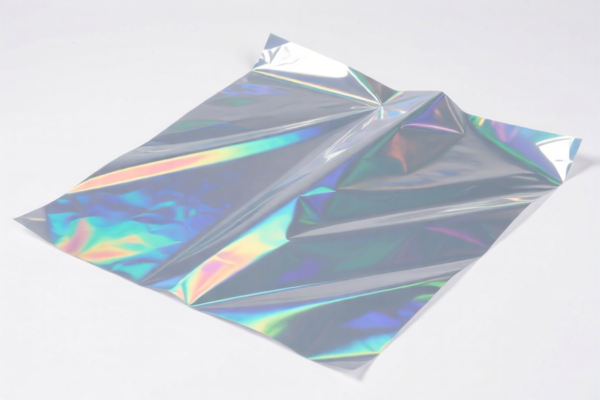
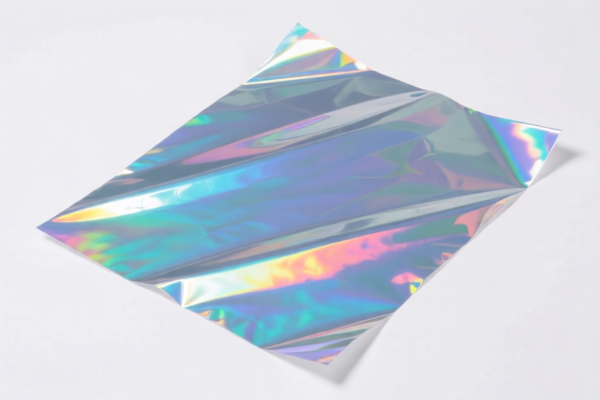


AI Analysis
🏷️ Outdoor Reflectorized Plastic Sheet
🌐 HS Code Reference & Customs Clearance Guide | 2026 Latest Tariff Analysis | Strategic Compliance Strategy
📌 I. Product Definition & Classification: What Exactly Is It?
An "Outdoor Reflectorized Plastic Sheet" is a specialized material used in traffic safety, advertising, and vehicle markings. In international trade, its classification depends heavily on its primary use and physical form.
It is broadly categorized into two distinct paths based on the provided data:
- Advertising/Signage Material: Used for outdoor billboards, posters, or signage. It is treated as a generic plastic product.
- Key Indicator: No specific automotive function, used for static display or advertising.
- Automotive Body Part: Used for vehicle decoration, safety markings, or body kits. It is treated as a car accessory/part.
- Key Indicator: Specifically designed for installation on vehicles (cars, trucks, trailers).
⚠️ Critical Distinction:
- If the sheet is for billboards, signs, or general advertising → Classified under 3926.90.99.89.
- If the sheet is for vehicle body parts/decorations → Classified under 8708.29.51.10 or 8708.29.51.60.
- Do not mix these categories. Misclassification leads to severe penalties due to the massive difference in tariff rates (22.8% vs. 87.5%).
📦 II. HS Code Classification Details (2026 Latest Tariff Authority Comparison)
| HS Code | Product Description | Application Scenario | Primary Use |
|---|---|---|---|
3926.90.99.89 |
Other Plastic Articles: Outdoor Reflective Advertising Film/Membrane | Outdoor billboards, advertising posters, non-automotive signage | ✅ Advertising/General Use |
8708.29.51.60 |
Vehicle Body Parts: Reflective Plastic Body Sheets | Vehicle exterior decoration, safety markings, custom body kits | ✅ Automotive Parts |
8708.29.51.10 |
Other Vehicle Parts/Accessories: Reflective Plastic Sheets | Other automotive accessories, interior/exterior reflective trim | ✅ Automotive Accessories |
🔍 Key Reminder:
-3926.90.99.89is for "Plastic Articles" that are not specifically identifiable as automotive parts. This is the safest route for pure advertising films. -8708.29.51.60and8708.29.51.10are for items intended for motor vehicles. Note the difference in the "Section 301" add-on tariff (see below).
💰 III. 2026 Latest Tariff Rate Breakdown (Including Additional Taxes & Policy Add-ons)
✅ Applicable Country: United States (US)
✅ Origin: China (CN)
✅ Effective Time: Current rates apply (including Section 301 and Section 232 impacts where noted)
🎯 1. 3926.90.99.89 —— Outdoor Reflective Advertising Film (Plastic Article)
This classification treats the product as a generic plastic good, not an auto part.
| Item | Content |
|---|---|
| Base Tariff (MFN) | 5.3% |
| Section 301 Add-on (4th List/Other) | 7.5% |
| Section 122 Tariff (Specific China Add-on) | 10.0% |
| Total Tariff Rate | 22.8% |
| Tax Calculation | CIF Value × 22.8% |
| De Minimis Eligibility | ❌ No (Generally subject to full duty for commercial shipments) |
| Legal Basis Path | HTS:3926.90.99.89 → Section 301 Footnote → Section 122 Rule |
📌 Explanation:
- The 7.5% is the standard Section 301 tariff for this category. - The 10% is the additional "Section 122" tariff, which applies to certain Chinese imports regardless of Section 301 status. - Total 22.8% is significantly lower than the auto-part classification.
🎯 2. 8708.29.51.60 —— Reflective Plastic Body Sheets (Auto Part)
This classification treats the product as an automotive body part. Note the specific note regarding steel, aluminum, and copper products.
| Item | Content |
|---|---|
| Base Tariff (MFN) | 2.5% |
| Section 301 Add-on | 25.0% |
| Section 122 Tariff | 10.0% |
| Section 232 Tariff (Steel/Aluminum/Copper) | +50% (If material contains these metals, e.g., reflective backing) |
| Total Tariff Rate | 87.5% (Standard) OR 137.5% (If Section 232 applies) |
| Tax Calculation | CIF Value × (2.5% + 25% + 10% [+50%]) |
| De Minimis Eligibility | ❌ No |
| Legal Basis Path | HTS:8708.29.51.60 → Section 301 → Section 122 → Section 232 (if applicable) |
📌 Crucial Warning:
- The entry explicitly states: "Steel, Aluminum, Copper Products Add-on Tariff: 50%".
- Many reflective sheets have a metalized backing (aluminum coating) for reflectivity. If customs determines the product is primarily a "metal product" or contains significant metal content, the 50% Section 232 tariff may apply. - Even without Section 232, the base rate is 87.5% (2.5% + 25% + 10%).
🎯 3. 8708.29.51.10 —— Other Vehicle Parts (Reflective Plastic Sheet)
Similar to 8708.29.51.60 but for "other" automotive accessories.
| Item | Content |
|---|---|
| Base Tariff (MFN) | 2.5% |
| Section 301 Add-on | 25.0% |
| Section 122 Tariff | 10.0% |
| Total Tariff Rate | 37.5% |
| Tax Calculation | CIF Value × 37.5% |
| De Minimis Eligibility | ❌ No |
| Legal Basis Path | HTS:8708.29.51.10 → Section 301 → Section 122 |
📌 Note:
- This rate (37.5%) is lower than8708.29.51.60(87.5%) but still much higher than3926.90.99.89(22.8%). - Use this only if the product is clearly an "accessory" but not a "body part" as defined by 8708.29.51.60.
🛠️ IV. Customs Clearance Practical Advice (Real-World Pitfall Guide)
✅ 1. Preparation Checklist (Non-negotiable)
| Document | Required | Explanation |
|---|---|---|
| ✅ Product Specification Sheet | ✔️ | Must detail: Material composition (Plastic vs. Metalized), Reflectivity coefficient, Adhesive type, Intended Use (Auto vs. Signage). |
| ✅ Product Photos | ✔️ | Clear shots of the sheet, packaging, and any labeling indicating "For Vehicle Use" or "For Signage". |
| ✅ Commercial Invoice | ✔️ | Must clearly state: "Outdoor Reflective Plastic Film for Advertising" OR "Reflective Trim for Automotive Body". Do not use vague terms like "Plastic Sheet". |
| ✅ Material Safety Data Sheet (MSDS) | ✔️ | To prove no hazardous materials. |
| ✅ Certificate of Origin | ✔️ | For potential FTAA benefits (if not from China, though data implies CN origin). |
✅ 2. Classification Strategy (Key Mantra)
🔥 "Define Use First! Advertising is Cheap, Auto Parts are Expensive!"
| Scenario | Correct HS Code | Total Tax | Wrong Classification Risk |
|---|---|---|---|
| Selling to Sign Companies | 3926.90.99.89 |
22.8% | Misclassifying as Auto Part → 37.5% - 87.5% |
| Selling to Car Detailers | 8708.29.51.60 |
87.5% (or 137.5%) | Misclassifying as General Plastic → 22.8% (Risky, may be penalized for misdeclaration) |
| Selling as Trim/Accessories | 8708.29.51.10 |
37.5% | Misclassifying as General Plastic → 22.8% (Lower risk, but still non-compliant if clearly auto-use) |
✅ 3. Special Considerations
| Situation | Handling Advice |
|---|---|
| Metalized Backing (Aluminum) | ⚠️ High Risk for Section 232. If using 8708.29.51.60, be prepared for the potential +50% tariff if customs deems it a "steel/aluminum product". Consider proving it is primarily plastic. |
| OEM vs. Aftermarket | Ensure the invoice matches the end-user. If sold to a car manufacturer (OEM), it might be classified differently. If sold to consumers (aftermarket), it is likely a part/accessory. |
| Advertising vs. Safety Markings | If the product is for road signs (not vehicle body), classify as 3926.90.99.89. If for vehicle taillights/reflectors, it might fall under 9405 (Lighting) or 8708 (Parts). Check specific HTS for lighting components. |
🌍 V. Global Market Comparison (2026 Latest)
| Country/Region | Recommended HS Code | Tariff (China Origin) | Certification | Notes |
|---|---|---|---|---|
| 🇺🇸 USA | 3926.90.99.89 |
22.8% | FDA/Prop65 (if applicable) | Best Rate. Avoid 8708 unless necessary. |
| 🇺🇸 USA | 8708.29.51.60 |
87.5% - 137.5% | FMVSS (if auto-certified) | Expensive. Only use if legally required. |
| 🇨🇳 China | 3926.90.99.89 |
5% - 10% | CCC (if auto part) | Lower duties, but focus on domestic market. |
| 🇪🇺 EU | 3926.90.99.89 |
6.5% | CE/REACH | No Section 301/122. Much cheaper than US. |
| 🇲🇽 Mexico | 3926.90.99.89 |
0% - 5% (T-MEC) | NOM | Check T-MEC eligibility for duty-free entry. |
📌 Conclusion:
- The USA imposes the highest barriers on Chinese plastic and auto parts. -3926.90.99.89is the optimal classification for most reflective films unless they are strictly defined as vehicle parts. - Avoid8708.29.51.60unless you are certain the product is a "body part" and can absorb the 87.5% tariff, or risk Section 232 escalation.
📌 VI. Common Mistakes & Pitfall Guide (Lessons Learned)
❌ Mistake 1: Calling all reflective sheets "Auto Parts"
👉 Consequence: Paying 87.5% instead of 22.8%.
👉 Fix: Use "Advertising Film" if used for signs.
❌ Mistake 2: Ignoring the "Metalized" aspect in 8708.29.51.60
👉 Consequence: Getting hit with an additional 50% Section 232 tariff.
👉 Fix: Provide material proof that the base is plastic, and metal is only a thin reflective coating (if possible).
❌ Mistake 3: Vague Invoice Description ("Plastic Sheet")
👉 Consequence: Customs delays, audits, and potential re-classification to higher duty rates.
👉 Fix: Be explicit: "Outdoor Reflective PVC Film for Billboard Use".
✅ Correct Approach:
"Reflective PVC Outdoor Advertising Film, Non-Automotive Use, Model XYZ, 3M/3A Grade"
🎯 VII. Conclusion: Professional Declaration, Save Money, Ensure Smooth Clearance!
🎯 Remember the Mantra:
🔹 "Advertising is Plastic (22.8%), Auto Parts are Heavy (87.5%+)."
🔹 "Don't call an auto part a general good if it's clearly for cars, but don't over-classify advertising film as an auto part!"
🔹 "HS Code dictates your profit margin. Choose wisely."
📌 Pro Tip:
If your reflective sheets are used for vehicle decoration but sold as aftermarket accessories, consider 8708.29.51.10 (37.5%) as a middle ground, but ensure they are not defined as "body parts" under 8708.29.51.60.
For pure advertising, stick to 3926.90.99.89 (22.8%) to minimize costs.
📣 Immediate Action:
📞 Contact a licensed customs broker + Provide product photos + Request Pre-ruling for your specific product.
🚀 Let your reflective sheets clear customs smoothly, reduce costs, and boost your international profits!
✨ Professional Customs Clearance Starts with Accurate Classification!
💼 Every cent of your cost deserves precise calculation!
Customer Reviews
About HS Code Classification
The Harmonized System (HS) is an internationally standardized nomenclature developed by the World Customs Organization (WCO) to classify traded products. Over 200 countries use the HS system as the basis for customs tariffs, trade statistics, and import/export regulations.
Each HS code follows a hierarchical structure:
- Chapter (2 digits) — Broad category of goods (e.g., Chapter 84: Machinery and Mechanical Appliances)
- Heading (4 digits) — More specific grouping within the chapter
- Subheading (6 digits) — Internationally standardized breakdown, used by all WCO member countries
- National subdivisions (8-10 digits) — Country-specific extensions for further classification, such as US HTSUS 10-digit codes
Correct HS code classification is essential for smooth customs clearance, accurate duty payment, and compliance with trade regulations. Misclassification can lead to customs delays, overpayment of duties, or penalties.
When importing from CN to US, the applicable tariff rates may include:
- Most-Favored-Nation (MFN) rate — The standard duty rate applied to WTO members
- General rate — Applied to countries without trade agreements
- Trade remedy duties — Additional tariffs such as Section 301 (anti-dumping), Section 232 (national security), or countervailing duties
The information provided on this page is for reference purposes only. For official classification, please consult with your local customs authority or a licensed customs broker.