Outdoor String Lights
CN → US| HS Code | Tariff Rate | Origin | Destination | Doc |
|---|---|---|---|---|
| 8539291000 | 15.8% | CN | US | Official Doc |
| 9405310040 | 43.0% | CN | US | Official Doc |
| 8539228030 | 12.6% | CN | US | Official Doc |
Product Images
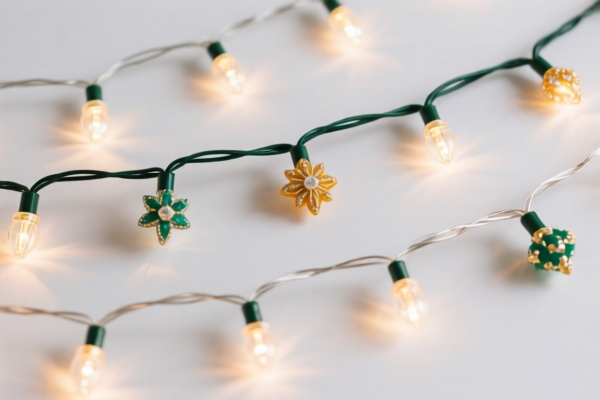
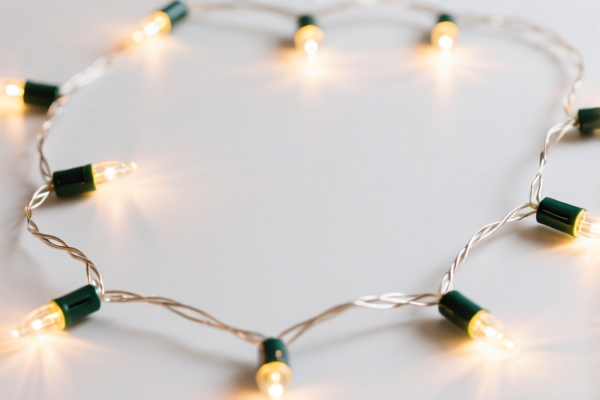
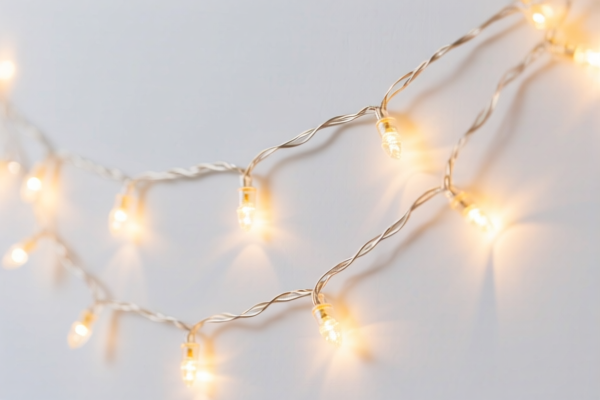
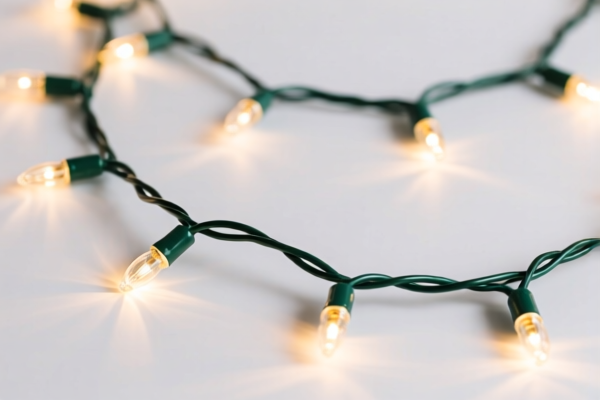
AI Analysis
🌟 Outdoor String Lights (Christmas/Decorative LEDs)
🌐 HS Code Reference & Customs Clearance Guide | 2026 Latest Tariff Analysis | Professional Entry Strategies
📌 I. Product Definition & Classification: Do You Really Understand "String Lights"?
Outdoor string lights are widely used for festive decoration, landscape lighting, and architectural accentuation. In international trade, their classification hinges on form factor (LED filament vs. general lighting device) and application scope (pure illumination vs. decorative accessory).
Key Classification Criteria: 1. LED Filament/Source Type: If classified as a light source itself (bulb-style), it falls under Chapter 85. 2. Lighting Fixture Type: If classified as a complete lighting apparatus with wiring/fixture structure, it may fall under Chapter 94. 3. Voltage & Power: Standard low-voltage decorative strings often have different duty treatments compared to high-power industrial lighting.
⚠️ Critical Distinction:
- If the item is primarily a decorative light string consisting of multiple LED bulbs connected by wire → Often classified under 9405.31 (Chandeliers/Other Light Fittings).
- If the item is identified as LED filaments/bulbs intended for installation → Classified under 8539 (Electric Filament/Discharge Lamps).
- Do NOT confuse with general household lamps; these are specifically for outdoor/decorative use.
📦 II. HS Code Classification Details (2026 Latest Tariff Authority Alignment)
Based on the provided data, three potential HS Codes are identified for Outdoor String Lights. Each has significantly different tax implications.
| HS Code | Product Description (Summary) | Key Classification Basis | Total Tax Rate |
|---|---|---|---|
8539.29.10.00 |
LED Filament/Source: Decorative lighting, fits definition of Christmas tree lights/voltage/utility scope. | Classified as Light Source (LED Filament form). Focus on voltage/utility range. | 15.8% |
9405.31.00.40 |
Lighting Fixture: LED lighting apparatus, fits "Other" category in "Other Luminaires & Lighting Accessories". | Classified as Complete Fixture/Apparatus. Focus on form/usage as a decorative unit. | 43.0% |
8539.22.80.30 |
LED Filament: Decorative use, power/voltage specs within covered range. | Classified as Light Source (LED Filament). Lower base duty. | 12.6% |
🔍 Key Insight:
-8539Codes (12.6% - 15.8%): Treat the string lights as LED components/sources. This is generally more favorable for duty purposes.
-9405Code (43.0%): Treats the string lights as finished lighting fixtures/apparatus. This incurs significantly higher duties, especially with additional surcharges.
- Decision Factor: Does the customs broker view the product as a bulb/source or a complete fixture? Documentation must support the chosen classification.
💰 III. 2026 Latest Tariff Rate Breakdown (Detailed Analysis)
✅ Applicable Country: United States (US)
✅ Origin: China (CN) (Implied by "122 Clause" and high surtax context)
✅ Effective Date: Current 2026 Trade Policies
🎯 1. 8539.29.10.00 — LED Filament/Source (Decorative)
| Item | Details |
|---|---|
| Base Tariff | 5.8% |
| Additional Tariff (301) | 0.0% |
| 122 Clause Tariff | +10.0% |
| Total Effective Rate | 15.8% |
| Calculation | CIF Value × 15.8% |
| De Minimis Eligibility | ❌ No (Section 321/De Minimis usually exempt from base but NOT from 301/122 surtaxes on Chinese goods). |
| Legal Basis | Section 301 (if applicable) + Section 122 (Emergency Action) |
📌 Explanation:
- 122 Clause Tariff: This is a specific emergency duty often applied to certain goods under Section 122 of the Trade Act. Here, it adds a flat 10% on top of the base.
- No 301 Surcharge: This code is uniquely exempt from the typical 25% Section 301 tariff on Chinese electronics, making it the most cost-effective option if justified.
🎯 2. 9405.31.00.40 — Lighting Fixture/Apparatus
| Item | Details |
|---|---|
| Base Tariff | 8.0% |
| Additional Tariff (301) | +25.0% |
| 122 Clause Tariff | +10.0% |
| Total Effective Rate | 43.0% |
| Calculation | CIF Value × 43.0% |
| De Minimis Eligibility | ❌ No |
| Legal Basis | IEEPA:9903.01.25 → Section 301 → Section 122 |
📌 Warning:
- This classification incurs the full 25% Section 301 tariff PLUS the 10% Section 122 tariff.
- Total 43% makes this highly expensive. Avoid this classification unless the product is definitively a "fixture" and not a "source."
🎯 3. 8539.22.80.30 — LED Filament (Low Base Duty)
| Item | Details |
|---|---|
| Base Tariff | 2.6% |
| Additional Tariff (301) | 0.0% |
| 122 Clause Tariff | +10.0% |
| Total Effective Rate | 12.6% |
| Calculation | CIF Value × 12.6% |
| De Minimis Eligibility | ❌ No |
| Legal Basis | Section 122 only |
📌 Advantage:
- Lowest Total Duty (12.6%).
- Like the first code, it is exempt from Section 301.
- Requires strong justification that the product is an LED filament/bulb rather than a complete string fixture.
🛠️ IV. Customs Clearance Practical Advice (Risk Avoidance Guide)
✅ 1. Required Documentation Checklist
| Document | Must Provide | Purpose |
|---|---|---|
| Product Specifications | ✔️ | Detail voltage, wattage, LED type (Filament vs. SMD), IP rating (for outdoor use). |
| Technical Diagram | ✔️ | Show if the product is sold as bulbs only or pre-wired strings. |
| Photos (Label & Product) | ✔️ | Clear view of model number, voltage input, and any "CE/UL" marks. |
| Bill of Materials (BOM) | ✔️ | Prove whether wires/connectors are integral (fixture) or replaceable (source). |
| Commercial Invoice | ✔️ | Accurate description: e.g., "LED Filament Bulbs for Outdoor Decor" vs. "Outdoor LED Light String". |
| Certificate of Origin | ✔️ | Critical for proving Chinese origin to apply correct surtaxes. |
✅ 2. Declaration Strategy (Key Tips)
🔥 "Source vs. Fixture: Choose Wisely, Save Big!"
| Scenario | Recommended HS Code | Reason |
|---|---|---|
| Selling LED Filament Bulbs (customer strings them) | 8539.22.80.30 |
Lowest duty (12.6%). Classify as light source. |
| Selling Pre-Wired Decorative Strings (firmly classified as source) | 8539.29.10.00 |
Moderate duty (15.8%). Justify as "decorative light source." |
| Selling Complete Decorative Fixtures (integrated housing, non-replaceable) | 9405.31.00.40 |
High duty (43%). Only if legally required as a "fixture." |
| Mixed Package (Bulbs + Controller + Cable) | Consult Broker | Risk of reclassification. May default to 43% if viewed as one unit. |
⚠️ Critical Warning:
- Do NOT misdeclare a complete fixture as bulbs to avoid taxes. Customs can inspect and reclassify, leading to penalties, fines, and delayed clearance.
- If the product is a complete string with fixed wiring, customs may still push for9405. You must argue it is a "light source unit" under 8539 based on technical definitions in the Harmonized Tariff Schedule.
✅ 3. Special Considerations for Outdoor Lights
| Issue | Advice |
|---|---|
| IP Rating | Ensure specs clearly state IP44/IP65 (outdoor rated). This supports "decorative/outdoor" use but doesn't change HS code directly. |
| Voltage | Specify input voltage (e.g., 120V AC vs. 12V DC). Low-voltage strings are more likely to be seen as "components" (8539). |
| Packaging | If shipped in bulk (unplugged), it looks more like a "source." If sold as "plug-and-play" kits, it looks like a "fixture." |
| 122 Clause | Be aware that 10% additional duty applies to ALL three codes. This is a non-negotiable surcharge for Chinese origin goods under this specific clause. |
🌍 V. Global Market Comparison (2026)
| Market | Recommended HS Code | Est. Duty (China Origin) | Key Certifications |
|---|---|---|---|
| 🇺🇸 USA | 8539.22.80.30 |
12.6% | UL/ETL, FCC (if electronic driver) |
| 🇪🇺 EU | 9405.40.99 |
0% (if CE marked) | CE, RoHS, WEEE |
| 🇨🇦 Canada | 9405.42.00 |
0% (if CUSMA eligible) | CSA, ICES |
| 🇬🇧 UK | 9405.42.90 |
0% (if GSP/UK-GSP) | UKCA, CE |
📌 Conclusion for US Market:
- The USA is the most complex market due to Section 122 (10%) and Section 301 (0% or 25%) surtaxes.
- Optimization Goal: Aim for8539codes to avoid the 25% Section 301 tariff.
- Savings Potential: Choosing8539.22.80.30(12.6%) vs.9405.31.00.40(43%) saves 30.4% on duty.
📌 VI. Common Mistakes & Pitfalls (Lessons Learned)
❌ Mistake 1: Declaring "Outdoor Lights" vaguely.
👉 Result: Customs assigns default HS code (often 9405), triggering 43% duty.
✅ Fix: Specify "LED Filament Light Source" or "Decorative LED String."
❌ Mistake 2: Ignoring the "122 Clause."
👉 Result: Underquoting taxes. You pay base + 301, but forget the 10% 122 surcharge.
✅ Fix: Always add 10% to your landed cost calculation for Chinese-origin goods under this clause.
❌ Mistake 3: Mixing "Fixture" and "Source" documentation.
👉 Result: Audit risk. If you declare as 8539 but ship complete fixtures, you face fraud penalties.
✅ Fix: Ensure product photos, BOM, and description align with the HS code chosen.
🎯 VII. Final Recommendation
🎯 Strategy for Importers:
1. Design for Classification: If possible, market products as "LED Filament Bulbs for Outdoor Decor" rather than "Complete Light Strings." This supports 8539 classification.
2. Verify 122 Applicability: Confirm with your broker that the 10% Section 122 tariff applies to your specific shipment date and origin.
3. Pre-Ruling: Consider applying for an Advance Ruling from US Customs (CBP) to lock in the 12.6% or 15.8% rate and avoid surprises.
📣 Action Item:
📞 Contact your customs broker immediately with:
1. Product photos (showing LED filament style).
2. Technical datasheet (highlighting voltage/power).
3. Request classification under8539.22.80.30or8539.29.10.00to minimize duty to 12.6%-15.8%.
🚀 Avoid the 43% trap!
✨ Professional Clearance Starts with Precise Classification!
💼 Save 30%+ Duty by Choosing the Right HS Code!
Customer Reviews
About HS Code Classification
The Harmonized System (HS) is an internationally standardized nomenclature developed by the World Customs Organization (WCO) to classify traded products. Over 200 countries use the HS system as the basis for customs tariffs, trade statistics, and import/export regulations.
Each HS code follows a hierarchical structure:
- Chapter (2 digits) — Broad category of goods (e.g., Chapter 84: Machinery and Mechanical Appliances)
- Heading (4 digits) — More specific grouping within the chapter
- Subheading (6 digits) — Internationally standardized breakdown, used by all WCO member countries
- National subdivisions (8-10 digits) — Country-specific extensions for further classification, such as US HTSUS 10-digit codes
Correct HS code classification is essential for smooth customs clearance, accurate duty payment, and compliance with trade regulations. Misclassification can lead to customs delays, overpayment of duties, or penalties.
When importing from CN to US, the applicable tariff rates may include:
- Most-Favored-Nation (MFN) rate — The standard duty rate applied to WTO members
- General rate — Applied to countries without trade agreements
- Trade remedy duties — Additional tariffs such as Section 301 (anti-dumping), Section 232 (national security), or countervailing duties
The information provided on this page is for reference purposes only. For official classification, please consult with your local customs authority or a licensed customs broker.