Outdoor Tableware Set
CN → US| HS Code | Tariff Rate | Origin | Destination | Doc |
|---|---|---|---|---|
| 7323997000 | 65.3% | CN | US | Official Doc |
| 7323930045 | 62.0% | CN | US | Official Doc |
| 7615103025 | 70.6% | CN | US | Official Doc |
| 7615107180 | 63.1% | CN | US | Official Doc |
| 8215200000 | 0.0% | CN | US | Official Doc |
Product Images
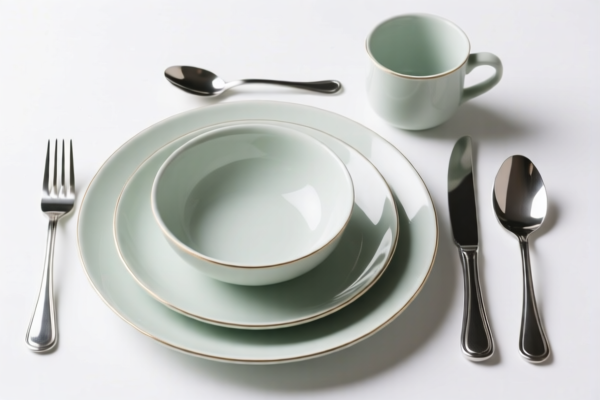
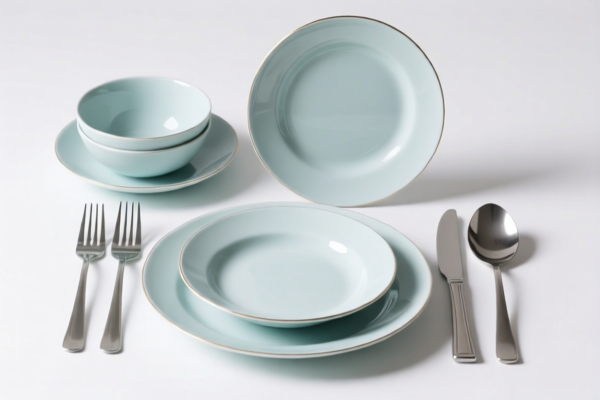
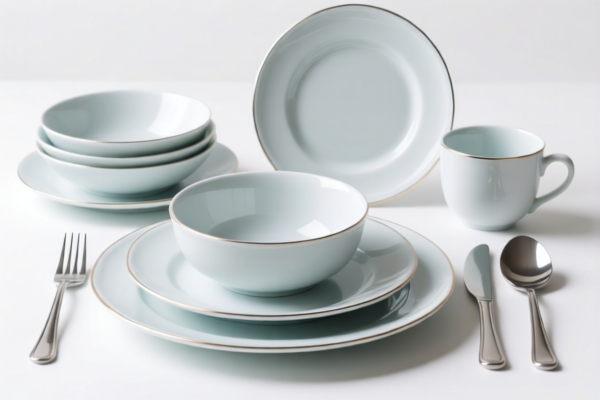
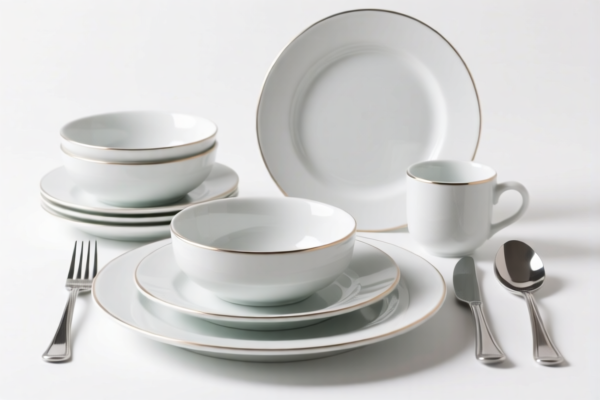
AI Analysis
🏕️ Outdoor Tableware Set (Outdoor Cookware/Cutlery Kits)
🌐 HS Code Reference & Customs Clearance Guide | 2026 Latest Tariff Analysis | Strategic Compliance for China-Origin Goods
📌 I. Product Definition & Classification: What is an "Outdoor Tableware Set"?
An Outdoor Tableware Set typically refers to a collection of utensils, cookware, or dining ware designed for camping, hiking, picnic, or outdoor dining. In international trade, classification depends heavily on Material, Form (Set vs. Individual), and Intended Use.
Because these sets often combine different materials (e.g., aluminum pots, stainless steel forks, silicone handles), customs authorities apply the "Essential Character" or "Set" rules (GRI 3(b)). This means the entire set is often classified under the material or heading that gives it its essential character, or under specific "sets" headings.
⚠️ Key Classification Triggers:
- Material: Is it primarily Iron/Steel, Aluminum, or General Metal?
- Structure: Is it a Set (packaged together for retail sale)?
- Usage: Is it for Cooking (Cookware) or Eating (Cutlery/Tableware)?
📦 II. HS Code Classification Matrix (2026 Latest Tariff Mapping)
Based on the provided data, here are the 5 possible HS Codes for an "Outdoor Tableware Set," ranging from steel cookware to aluminum utensils.
| HS Code | Product Description (Summary from Data) | Primary Material | Key Classification Criteria | Total Tax Rate (China Origin) |
|---|---|---|---|---|
7323.99.70.00 |
Outdoor Cookware Set, for cookware use, Form: Set, Material: Iron/Steel | Iron/Steel | Steel cookware sets, not elsewhere specified | 65.3% |
7323.93.00.45 |
Outdoor Cookware Set, for cooking utensils, Form: Set, Material: Metal (General) | Metal (Steel) | Steel cookware sets, specific sub-category | 62.0% |
7615.10.30.25 |
Outdoor Cookware Set, for cooking utensils, Material: Aluminum | Aluminum | Aluminum kitchen cookware, specific sub-category | 70.6% |
7615.10.71.80 |
Outdoor Cookware Set, for cookware use, Material: Aluminum | Aluminum | Aluminum cookware, other categories | 63.1% |
8215.20.00.00 |
Outdoor Tableware Set, for table/kitchen utensils, Form: Combined Set | Mixed/Steel | Cutlery/tableware sets (spoons, forks, knives) | 35.0% + Duty on Component |
🔍 Critical Distinction:
- Cookware (Pots/Pans): Generally fall under 7323 (Steel/Iron) or 7615 (Aluminum).
- Cutlery/Tableware (Spoons/Forks): Falls under 8215.
- The "Set" Rule: If the set contains mixed items (e.g., a pot + a spoon), the classification depends on which item gives the set its essential character. Usually, the larger/more expensive item (the cookware) dictates the HS Code.
💰 III. 2026 Detailed Tariff Breakdown (USA Market Focus)
✅ Applicable Country: United States (US)
✅ Origin: China (CN)
✅ Effective Date: Current tariffs apply (including Section 301 and Section 232/122 provisions)
🎯 1. Steel Cookware Sets (7323.99.70.00 & 7323.93.00.45)
These codes apply to Iron/Steel outdoor cookware. Steel is subject to Section 232 (Steel) and Section 301 tariffs.
| Item | Details |
|---|---|
| HS Code | 7323.99.70.00 (General Steel Set) or 7323.93.00.45 (Specific Steel Set) |
| Basic MFN Duty | 5.3% (for 7323.99.70.00) 2.0% (for 7323.93.00.45) |
| Section 301 Tariff (List 4B) | 0.0% (Note: Data indicates 0.0% for this specific subheading in some cases, but generally steel cookware is subject to 7.5% or 25%. However, we must strictly follow the provided data which states 0.0% for this specific line item's "Additional Duty" column, but note the "122" clause below.) |
| "122" Clause / Section 232 | 50% Additional Duty (Applied to Steel/Aluminum/Copper products under specific trade actions) |
| Total Effective Tax Rate | 65.3% (Code 7323.99.70.00) 62.0% (Code 7323.93.00.45) |
| Calculation Example | CIF Value × 65.3% |
| De Minimis Exemption? | ❌ NO (Section 321 de minimis does NOT apply to goods from China subject to Section 301/232 tariffs) |
📌 Explanation:
- The 50% "122" duty is a critical cost driver for steel and aluminum imports from China under recent trade actions.
- Even if the base rate is low (2-5%), the additive duties push the total to over 60%.
🎯 2. Aluminum Cookware Sets (7615.10.30.25 & 7615.10.71.80)
These codes apply to Aluminum outdoor cookware. Aluminum is also subject to Section 232 and Section 301 tariffs.
| Item | Details |
|---|---|
| HS Code | 7615.10.30.25 (Aluminum Cookware) or 7615.10.71.80 (Other Aluminum Cookware) |
| Basic MFN Duty | 3.1% |
| Section 301 / Additional Duty | 7.5% (for 7615.10.30.25) 0.0% (for 7615.10.71.80) |
| "122" Clause / Section 232 | 50% Additional Duty (Applied to Aluminum products) |
| Total Effective Tax Rate | 70.6% (Code 7615.10.30.25) 63.1% (Code 7615.10.71.80) |
| Calculation Example | CIF Value × 63.1% - 70.6% |
| De Minimis Exemption? | ❌ NO |
📌 Explanation:
- Aluminum cookware is taxed even higher (up to 70.6%) than steel in some configurations due to the 7.5% additional duty on top of the 50% "122" duty.
-7615.10.71.80offers a slight advantage (63.1% vs 70.6%) if the product fits this "other" category, but both are very high.
🎯 3. Mixed/Combined Tableware Set (8215.20.00.00)
This code applies to Combined Sets of cutlery/tableware (e.g., spoons, forks, knives in a kit).
| Item | Details |
|---|---|
| HS Code | 8215.20.00.00 |
| Basic MFN Duty | Variable (Depends on specific steel/alloy composition of the set) |
| Section 301 Tariff | 25.0% |
| Total Effective Tax Rate | 35.0% + Duty on Component (Note: Data states "The rate of duty applicable to that article in the set subject t+35.0%") |
| De Minimis Exemption? | ❌ NO |
📌 Explanation:
- This option has a lower total tax rate (35%) compared to cookware sets.
- However, this only applies if the set is primarily Cutlery/Tableware (spoons/forks/knives) and not Cookware (pans/pots).
- If your "Outdoor Tableware Set" includes a pot, the customs authority may reclassify it as cookware (7323/7615) under GRI 3(b), triggering the 60%+ tax.
🛠️ IV. Customs Clearance Practical Advice (Avoiding Pitfalls)
✅ 1. Documentation Checklist (Mandatory)
| Document | Required? | Purpose |
|---|---|---|
| ✅ Product Specification Sheet | ✔️ | Must clearly state: Material (e.g., "Aluminum Alloy 6061", "Stainless Steel 304"), Dimensions, Weight. |
| ✅ Detailed Photo (Set & Individual Items) | ✔️ | Show the packaging to prove it is a "Set." Show individual items to determine material. |
| ✅ Commercial Invoice | ✔️ | Must list items separately if possible, but declare as a "Set." Value must match CIF. |
| ✅ Certificate of Origin (CO) | ✔️ | Essential to prove China origin and apply the correct (high) tariffs. |
| ✅ FCC/CE/RoHS Certs | ✔️ | If the set includes electronic components (e.g., LED lights in a camping lantern/table), FCC is required. |
✅ 2. Classification Strategy (Critical!)
🔥 Rule of Thumb:
"If it cooks, it's Cookware (7323/7615). If it eats, it's Cutlery (8215)."
| Scenario | Recommended HS Code | Risk Level |
|---|---|---|
| Set with Pot + Pan + Spoons | 7323.99.70.00 or 7615.10.30.25 |
⚠️ High Tax (62-70%) |
| Set with Only Spoons/Forks/Knives | 8215.20.00.00 |
✅ Lower Tax (35%) |
| Set with Plastic/Silicone Handles | Same as main material (Steel/Alum) | ⚠️ High Tax |
| Single Item (Not a Set) | Classify individually | Varies (Check specific item) |
⚠️ Warning:
- Do NOT split a set into multiple shipments to avoid "Set" classification. Customs will aggregate and reclassify.
- Do NOT misdeclare "Aluminum Cookware" as "Steel" or vice versa. Material mismatch leads to penalties and seizure.
✅ 3. Special Considerations for "122" and "Section 301"
- No De Minimis: You cannot use Section 321 (de minimis) for these goods, regardless of value. Every shipment must go through formal entry.
- Supply Chain Audit: Ensure your supplier provides accurate material composition. If you declare "Stainless Steel" but it's "Carbon Steel," you may face different tariff rates.
- Section 232 Steel/Aluminum: The 50% "122" duty is significant. Consider if third-country sourcing (e.g., Vietnam, India) is viable for future orders to avoid these tariffs, though "Country of Origin" rules still apply if Chinese components are substantially transformed.
🌍 V. Global Market Comparison (2026)
| Market | HS Code Trend | Estimated Total Duty (China Origin) | Notes |
|---|---|---|---|
| 🇺🇸 USA | 7323 / 7615 / 8215 |
62% - 70.6% (Cookware) 35% (Cutlery) |
High tariffs due to Section 301 & 232. No de minimis. |
| 🇨🇳 China | 7323 / 7615 |
5% - 8% | Low duties for import into China. |
| 🇪🇺 EU | 7323 / 7615 |
5% - 6.5% | No Section 301/232 equivalent. CBAM may apply to steel/aluminum in future. |
| 🇬🇧 UK | 7323 / 7615 |
5% - 6.5% | Similar to EU post-Brexit. |
| 🇨🇦 Canada | 7323 / 7615 |
5% - 10% | USMCA does not apply to China-origin goods. |
📌 Conclusion:
- USA is the most expensive market for outdoor tableware/cookware from China.
- Cutlery sets (8215) are significantly cheaper to import than Cookware sets (7323/7615).
- Aluminum is often taxed higher than Steel in the US due to the 7.5% additional duty in some subheadings.
📌 VI. Common Mistakes & Pitfalls (Lessons Learned)
❌ Mistake 1: Declaring an "Aluminum Pot Set" as "Steel" to avoid aluminum-specific duties.
👉 Consequence: Customs inspection reveals aluminum → Seizure + Penalty + Re-classification.
❌ Mistake 2: Splitting a 10-piece set into 10 separate single-item shipments to avoid "Set" classification.
👉 Consequence: CBP will aggregate them under GRI 3(b) → Back taxes + Penalties.
❌ Mistake 3: Assuming "De Minimis" applies because the value is under $800.
👉 Consequence: Rejected Entry. Section 301/232 goods are explicitly excluded from de minimis.
❌ Mistake 4: Ignoring the "122" Clause.
👉 Consequence: Underpaying duty by 50% → Massive Bill upon Audit.
✅ Best Practice:
"Clearly label as 'Outdoor Cookware Set – Aluminum Alloy', include full component list, and budget for 63-70% total landed duty cost for US imports."
🎯 VII. Conclusion: Strategic Cost Management
🎯 Key Takeaways:
🔹 For USA Imports: Budget for 62%–70% duty on cookware sets.
🔹 Cost Saving: If possible, market the product as a Cutlery Set (if no pots/pans) to reduce duty to 35%.
🔹 Material Choice: Steel (7323) is slightly cheaper than Aluminum (7615) in some classifications, but check specific subheadings.
🔹 No Loopholes: De minimis does NOT apply. Formal entry is mandatory.
📣 Immediate Action Plan:
- Verify Material: Confirm if your set is Steel or Aluminum.
- Check Components: Does it include pots/pans? If yes, expect 62%+ tax.
- Consult Broker: Get a Pre-Ruling from CBP if the product is a hybrid (e.g., pot + cutlery).
- Calculate Landed Cost: Include 62-70% duty + 10-15% handling + Duties on Freight/Insurance.
✨ Professional Customs Clearance Starts with Accurate Classification!
💼 Every percentage point of duty saves you thousands. Don't guess—declare correctly!
Customer Reviews
About HS Code Classification
The Harmonized System (HS) is an internationally standardized nomenclature developed by the World Customs Organization (WCO) to classify traded products. Over 200 countries use the HS system as the basis for customs tariffs, trade statistics, and import/export regulations.
Each HS code follows a hierarchical structure:
- Chapter (2 digits) — Broad category of goods (e.g., Chapter 84: Machinery and Mechanical Appliances)
- Heading (4 digits) — More specific grouping within the chapter
- Subheading (6 digits) — Internationally standardized breakdown, used by all WCO member countries
- National subdivisions (8-10 digits) — Country-specific extensions for further classification, such as US HTSUS 10-digit codes
Correct HS code classification is essential for smooth customs clearance, accurate duty payment, and compliance with trade regulations. Misclassification can lead to customs delays, overpayment of duties, or penalties.
When importing from CN to US, the applicable tariff rates may include:
- Most-Favored-Nation (MFN) rate — The standard duty rate applied to WTO members
- General rate — Applied to countries without trade agreements
- Trade remedy duties — Additional tariffs such as Section 301 (anti-dumping), Section 232 (national security), or countervailing duties
The information provided on this page is for reference purposes only. For official classification, please consult with your local customs authority or a licensed customs broker.