Oven Mat
CN → US| HS Code | Tariff Rate | Origin | Destination | Doc |
|---|---|---|---|---|
| 3924104000 | 13.4% | CN | US | Official Doc |
| 3926100000 | 15.3% | CN | US | Official Doc |
| 3924901050 | 13.3% | CN | US | Official Doc |
| 3926909989 | 22.8% | CN | US | Official Doc |
| 7013495090 | 25.0% | CN | US | Official Doc |
| 3923290000 | 38.0% | CN | US | Official Doc |
Product Images
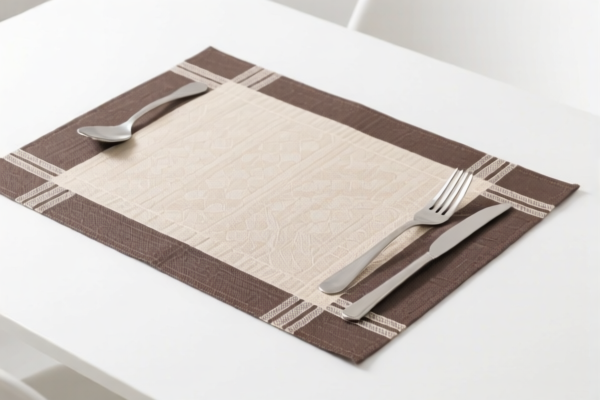
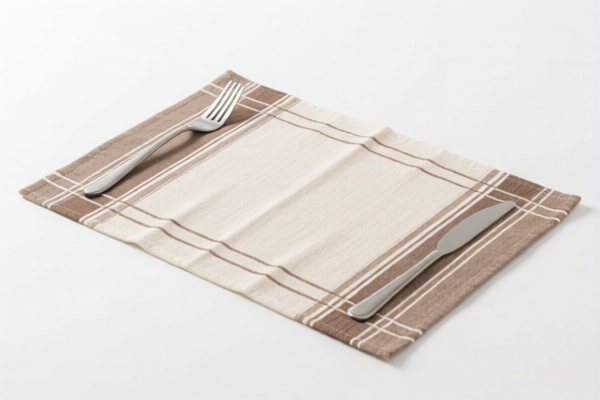
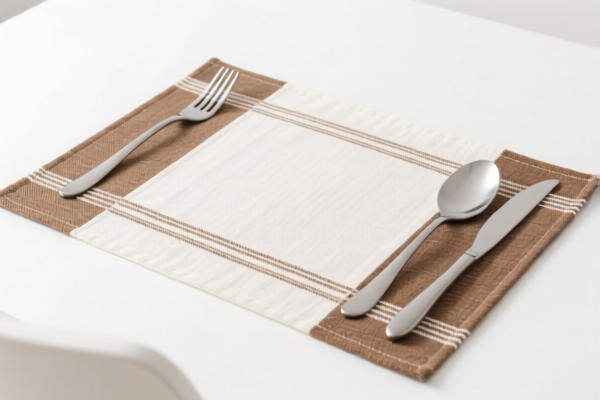
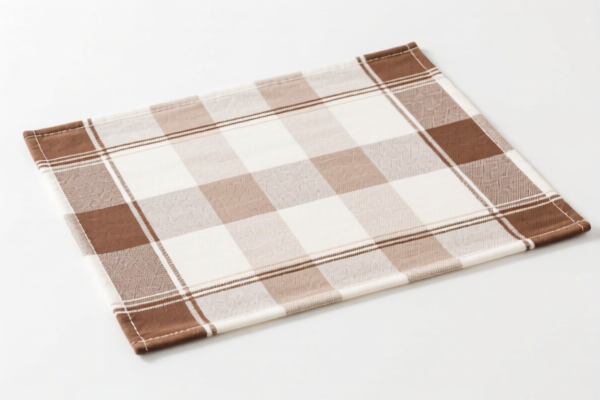
AI Analysis
🔥 Oven Mat (Heat-Resistant Kitchen Mats & Liners)
🌐 HS Code Reference & Customs Clearance Guide | 2026 Latest Tariff Analysis | Professional Compliance Strategy
📌 Part 1: Product Definition & Classification: Do You Really Understand "Oven Mats"?
Oven mats, also known as silicone baking mats, oven liners, or heat-resistant table pads, are essential kitchen accessories designed to protect surfaces and aid in cooking. In international trade, their classification hinges on two critical factors: Material Composition (Silicone vs. Plastic vs. Glass) and Primary Use (Baking/Cooking vs. General Household).
⚠️ Key Classification Point:
- If the item is primarily used for food preparation/baking (non-stick surface, heat resistant up to 230°C+): It often falls under Tableware/Cookware (Chapter 39.24) or specific Glassware (Chapter 70).
- If the item is primarily a protective pad/table mat (decorative or general protection, not necessarily direct food contact): It may fall under Other Plastic Articles (Chapter 39.26) or Plastic Packaging/Containers (Chapter 39.23).
- Crucial Distinction: Direct food-contact silicone mats are often grouped with "tableware" or "kitchen utensils," whereas general-purpose heat-resistant pads might be classified as "other plastic articles" or "packaging."
📦 Part 2: HS Code Classification Details (2026 Latest Tariff Authority对照)
Based on the inferred material (Silicone/Plastic/Glass) and usage, here are the potential HS Codes derived from the provided data:
| HS Code | Product Description | Inferred Material & Form | Primary Use Logic |
|---|---|---|---|
3924.10.40.00 |
Plastic Tableware/Cookware | Plastic/Silicone | Direct kitchen use; considered "other household articles" or "cooking aids." |
3926.10.00.00 |
Other Plastic Articles | Plastic (Silicone-like) | General household item; not strictly tableware but a plastic artifact for office/school/home. |
3924.90.10.50 |
Table Mats/Pads | Plastic/Silicone | Specifically identified as "table mats/pads"; fits within "other household articles." |
3926.90.99.89 |
Other Plastic Articles (Misc) | Silicone/Teflon (Synthetic) | General plastic制品; no specific category for the unique shape/material combination. |
7013.49.50.90 |
Glass Tableware/Kitchen Items | Glass or Heat-Resistant Silicone | If material is glass or glass-like heat-resistant ceramic; kitchen use. |
3923.29.00.00 |
Plastic Bags/Conveyances | Plastic/Synthetic Rubber | Interpreted as "bag/pouch" or "pad" for packaging/transport purposes. |
🔍 Key Reminder:
- Food Contact vs. Non-Food Contact: If the mat is explicitly for baking cookies or roasting vegetables, customs may lean toward 3924.10.40.00 (Tableware/Cookware).
- Material Ambiguity: If the material is not clearly labeled as "100% Platinum Silicone," customs may treat it as generic Plastic (3926) or Packaging (3923), leading to different tariff rates.
- Shape Matters: A flat mat used on a table is distinct from a contoured baking sheet liner.
💰 Part 3: 2026 Latest Tariff Rate Breakdown (Including Additional Duties & Policy Surcharges)
✅ Applicable Country: United States (US)
✅ Origin: China (CN)
✅ Effective Time: Post-2025 Policy Implementation (Includes 122 Clause & Section 301/IEEPA Surcharges)
🎯 1. 3924.10.40.00 —— Plastic Tableware/Cookware (Most Common for Silicone Mats)
| Item | Details |
|---|---|
| Base Tariff Rate | 3.4% |
| Additional Surcharge (Section 301/IEEPA) | 0.0% (Base rate is low, but note below) |
| Section 122 Clause Surcharge | 10% |
| Total Tariff Rate | 13.4% |
| Tax Calculation | CIF Value × 13.4% |
| De Minimis Exemption | ❌ Not Applicable (High risk of audit for silicone products) |
| Legal Path | HTSUS:3924.10.40.00 → Section 122:10% |
📌 Explanation:
- This is often the most favorable rate for genuine silicone baking mats if they are clearly classified as "tableware" or "kitchen utensils."
- The 10% Section 122 surcharge is a recent policy addition targeting specific Chinese-origin goods, applied here on top of the base 3.4%.
- Why 3924? Because silicone mats are frequently viewed as modern equivalents to traditional non-stick bakeware or table accessories.
🎯 2. 3926.10.00.00 —— Other Plastic Articles (General Household)
| Item | Details |
|---|---|
| Base Tariff Rate | 5.3% |
| Additional Surcharge (Section 301/IEEPA) | 0.0% |
| Section 122 Clause Surcharge | 10% |
| Total Tariff Rate | 15.3% |
| Tax Calculation | CIF Value × 15.3% |
| De Minimis Exemption | ❌ Not Applicable |
| Legal Path | HTSUS:3926.10.00.00 → Section 122:10% |
📌 Note:
- If customs determines the mat is not tableware (e.g., a decorative pad or office item), it falls here.
- The rate is higher than 3924 due to the higher base rate (5.3% vs 3.4%).
- Risk: Misclassification as "general plastic" can increase costs by ~2% compared to the tableware classification.
🎯 3. 3924.90.10.50 —— Table Mats/Pads (Specific Household Item)
| Item | Details |
|---|---|
| Base Tariff Rate | 3.3% |
| Additional Surcharge (Section 301/IEEPA) | 0.0% |
| Section 122 Clause Surcharge | 10% |
| Total Tariff Rate | 13.3% |
| Tax Calculation | CIF Value × 13.3% |
| De Minimis Exemption | ❌ Not Applicable |
| Legal Path | HTSUS:3924.90.10.50 → Section 122:10% |
📌 Key Insight:
- This is the lowest total tariff rate (13.3%) among the plastic options.
- It specifically targets "mats/pads" for household use.
- Condition: The item must be clearly marketed and described as a "table mat" or "kitchen pad," not a general "plastic sheet."
🎯 4. 3926.90.99.89 —— Other Plastic Articles (Miscellaneous)
| Item | Details |
|---|---|
| Base Tariff Rate | 5.3% |
| Additional Surcharge (Section 301) | 7.5% |
| Section 122 Clause Surcharge | 10% |
| Total Tariff Rate | 22.8% |
| Tax Calculation | CIF Value × 22.8% |
| De Minimis Exemption | ❌ Not Applicable |
| Legal Path | HTSUS:3926.90.99.89 → Section 301:7.5% → Section 122:10% |
📌 Warning:
- This category is for "catch-all" plastic items that don't fit other specific subheadings.
- It includes the 7.5% Section 301 tariff, making it significantly more expensive.
- Avoid this classification if possible; it suggests a lack of clear product definition.
🎯 5. 7013.49.50.90 —— Glass Tableware/Kitchen Items
| Item | Details |
|---|---|
| Base Tariff Rate | 15.0% |
| Additional Surcharge (Section 301/IEEPA) | 0.0% |
| Section 122 Clause Surcharge | 10% |
| Total Tariff Rate | 25.0% |
| Tax Calculation | CIF Value × 25.0% |
| De Minimis Exemption | ❌ Not Applicable |
| Legal Path | HTSUS:7013.49.50.90 → Section 122:10% |
📌 Note:
- Applies if the mat is made of heat-resistant glass or a glass-like ceramic composite.
- High base rate (15%) makes this the most expensive plastic-free option.
- Only choose this if the material is explicitly Glass.
🎯 6. 3923.29.00.00 —— Plastic Bags/Conveyances (Packaging)
| Item | Details |
|---|---|
| Base Tariff Rate | 3.0% |
| Additional Surcharge (Section 301) | 25.0% |
| Section 122 Clause Surcharge | 10% |
| Total Tariff Rate | 38.0% |
| Tax Calculation | CIF Value × 38.0% |
| De Minimis Exemption | ❌ Not Applicable |
| Legal Path | HTSUS:3923.29.00.00 → Section 301:25% → Section 122:10% |
📌 Critical Warning:
- This is the highest tariff rate (38%).
- It applies if customs views the mat as a plastic bag, pouch, or packaging material (e.g., a silicone bag for storage).
- Do NOT classify a baking mat here unless it is explicitly a storage pouch with a seal. Misclassification here is a common and costly error.
🛠️ Part 4: Customs Clearance Practical Advice (Actionable Pitfall Guide)
✅ 1. Preparation Checklist (Non-Negotiable)
| Document | Required | Purpose |
|---|---|---|
| ✅ Product Spec Sheet | ✔️ | Must state material (e.g., "100% Platinum Silicone"), temperature range (-40°F to 450°F), and food-contact status. |
| ✅ High-Res Photos | ✔️ | Show the mat in use (on a counter, in an oven) to prove its function. |
| ✅ Commercial Invoice | ✔️ | Description must be precise: "Food-Grade Silicone Baking Mat" NOT "Plastic Sheet." |
| ✅ Material Test Report | ✔️ | FDA LFGB or BPA-Free certification to support "Food Contact" classification. |
| ✅ Packaging Photos | ✔️ | Show if it’s rolled, folded, or packaged in a way that suggests "packaging" vs. "product." |
✅ 2. Declaration Strategy (Critical Keywords)
🔥 Golden Rule: "Food Contact = Tableware (3924); General Pad = Other (3926/3924.90); Bag = Packaging (3923 - AVOID)"
| Scenario | Recommended Description | Avoid |
|---|---|---|
| Baking Mat | "Food-Grade Silicone Baking Mat, Non-Stick, Heat Resistant to 450°F, FDA Compliant" | "Plastic Sheet," "Rubber Pad" |
| Counter Protector | "Silicone Table Mat, Heat Resistant Kitchen Liner, Decorative Pad" | "Plastic Bag," "Packaging Material" |
| Storage Pouch | "Silicone Food Storage Bag, Sealable, Reusable" | "Baking Mat" (if it’s actually a bag) |
✅ 3. Special Scenarios & Handling
| Situation | Advice |
|---|---|
| Mixed Materials | If the mat has a non-silicone backing (e.g., felt or PVC), declare the primary material (Silicone) and mention the backing in details. Risk: Customs may split the classification. |
| OEM/Custom Shapes | Provide design drawings. Custom shapes may fall under "Other" (3926) if they don’t fit standard tableware definitions. |
| Gift Sets | If the mat is part of a set (e.g., with utensils), declare the principal use. If the mat is the main item, use 3924. |
| Small Value Shipments | Even if under $800, ensure the HS Code is correct. Incorrect HS Codes on de minimis shipments can trigger audits for future entries. |
🌍 Part 5: Global Market Comparison (2026 Latest)
| Market | Recommended HS Code | Estimated Total Tax (China Origin) | Key Requirement |
|---|---|---|---|
| 🇺🇸 USA | 3924.10.40.00 or 3924.90.10.50 |
13.3% - 13.4% | FDA Food Contact Statement |
| 🇨🇳 China | 3924.10.40.00 |
0% - 10% | CCC (if applicable), Quality Standard |
| 🇪🇺 EU | 3924.10.10 or 3924.90 |
3.7% | LFGB or EC 1935/2004 Compliance |
| 🇬🇧 UK | 3924.10.00 |
3.7% | UKCA Marking (post-Brexit) |
| 🇦🇺 Australia | 3924.10.00 |
5% | Australian Competition & Consumer Commission (ACCC) Standards |
📌 Conclusion:
- The USA has the most complex tariff structure due to Section 122 (10%) and potential Section 301 surcharges.
- Correct Classification is Critical: Choosing3924.10.40.00(13.4%) vs.3926.90.99.89(22.8%) saves you 9.4% on every shipment.
- EU/UK rates are lower but have strict food contact migration tests.
📌 Part 6: Common Errors & Pitfall Guide (Blood Lessons)
❌ Error 1: Declaring a Baking Mat as a "Plastic Bag" (3923.29.00.00)
👉 Consequence: Tariff jumps to 38.0%. Customs will reject this unless it’s a resealable pouch.
❌ Error 2: Declaring a Table Pad as "Cookware" (3924.10.40.00)
👉 Consequence: Minor risk. If it’s clearly decorative, it might be reclassified to 3926.10.00.00 (15.3%), increasing cost slightly.
❌ Error 3: Missing Material Declaration
👉 Consequence: Customs assumes "Plastic" (generic) → Falls under 3926 or 3923 → Higher tariffs and potential FDA holds for food-contact items.
❌ Error 4: Using "Silicone" in title but shipping PVC
👉 Consequence: Illegal. PVC is restricted in many food-contact applications. Lead to seizure, fines, and destruction.
✅ Correct Practice:
"100% Platinum Silicone Baking Mat, Non-Stick, Heat Resistant, FDA Compliant, Model XYZ"
🎯 Part 7: Conclusion: Precise Classification, Maximizing Profit!
🎯 Remember the Mantra:
🔹 "Food Contact = 3924 (Low Tax); General Pad = 3926/3924.90 (Med Tax); Bag = 3923 (High Tax - AVOID!)"
🔹 "Material Matters: Silicone is King, Plastic is Risk, Glass is Expensive."
🔹 "13.4% vs 38.0%: A 24.6% Difference Can Make or Break Your Margin!"
📌 Pro Tip:
If you are exporting to the USA, always include a Letter of Guarantee stating the material is FDA-compliant for food contact. This supports the 3924 classification and prevents customs from downgrading it to 3926 or 3923.
📣 Immediate Action:
📞 Contact Your Customs Broker with the following:
1. Product Photos
2. Material Safety Data Sheet (MSDS)
3. Clear Intended Use Statement
🚀 Get a Pre-Ruling (Advance Ruling) from CBP if shipping large volumes. This locks in your HS Code and protects you from future audits.
✨ Professional Customs Clearance Starts with Accurate Classification!
💼 Every Percent Saved in Tariffs is Pure Profit!
Customer Reviews
About HS Code Classification
The Harmonized System (HS) is an internationally standardized nomenclature developed by the World Customs Organization (WCO) to classify traded products. Over 200 countries use the HS system as the basis for customs tariffs, trade statistics, and import/export regulations.
Each HS code follows a hierarchical structure:
- Chapter (2 digits) — Broad category of goods (e.g., Chapter 84: Machinery and Mechanical Appliances)
- Heading (4 digits) — More specific grouping within the chapter
- Subheading (6 digits) — Internationally standardized breakdown, used by all WCO member countries
- National subdivisions (8-10 digits) — Country-specific extensions for further classification, such as US HTSUS 10-digit codes
Correct HS code classification is essential for smooth customs clearance, accurate duty payment, and compliance with trade regulations. Misclassification can lead to customs delays, overpayment of duties, or penalties.
When importing from CN to US, the applicable tariff rates may include:
- Most-Favored-Nation (MFN) rate — The standard duty rate applied to WTO members
- General rate — Applied to countries without trade agreements
- Trade remedy duties — Additional tariffs such as Section 301 (anti-dumping), Section 232 (national security), or countervailing duties
The information provided on this page is for reference purposes only. For official classification, please consult with your local customs authority or a licensed customs broker.