Oven Protection Mat
CN → US| HS Code | Tariff Rate | Origin | Destination | Doc |
|---|---|---|---|---|
| 3926909989 | 22.8% | CN | US | Official Doc |
| 4016996050 | 37.5% | CN | US | Official Doc |
| 6304920000 | 23.8% | CN | US | Official Doc |
| 6304910170 | 23.3% | CN | US | Official Doc |
| 4016990500 | 20.9% | CN | US | Official Doc |
Product Images
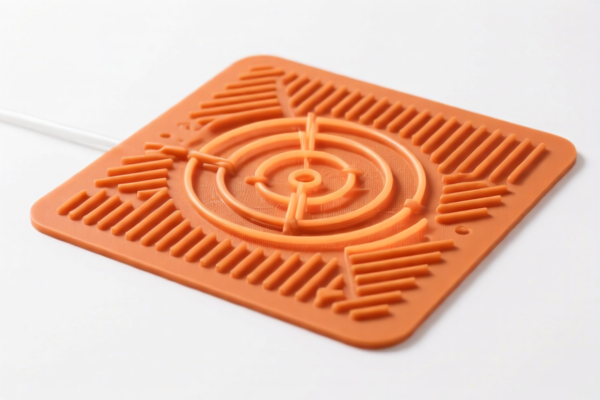
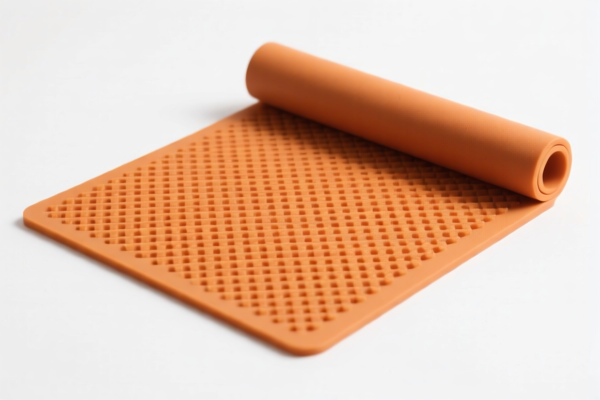
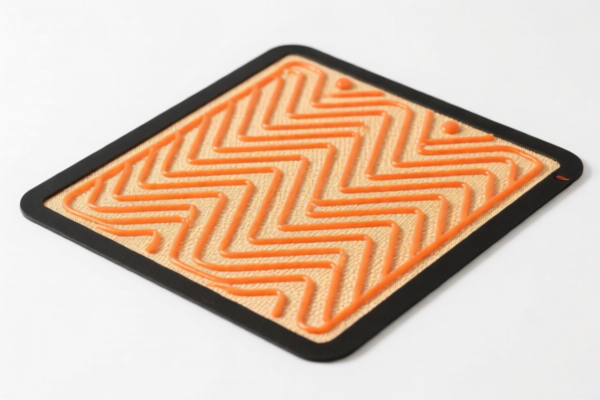

AI Analysis
🍳 Oven Protection Mat (Stove Guard / Cooktop Protector)
🌐 HS Code Reference & Customs Clearance Guide | 2026 Latest Tariff Analysis | Professional Clearance Strategy
📌 I. Product Definition & Classification: Do You Really Know What an "Oven Protection Mat" Is?
An Oven Protection Mat (also known as a Stove Guard, Cooktop Protector, or Oven Liner) is a kitchen accessory designed to protect stove tops, oven floors, and countertops from spills, grease, scratches, and heat damage. In international trade, its classification is highly dependent on the material composition. It is not a single HS code product but falls into distinct categories based on whether it is made of rubber, plastic, or textile.
Key Classification Drivers: * Rubber-Based: If the mat is made primarily of vulcanized rubber (even with textile backing), it falls under Chapter 40 (Rubber Articles). * Plastic-Based: If it is a solid plastic sheet or molded plastic, it falls under Chapter 39 (Plastics and Articles Thereof). * Textile/Cotton-Based: If it is a pad made of cotton, woven fabric, or knitted material, it falls under Chapter 63 (Other Made-Up Textile Articles).
⚠️ Critical Distinction Point:
- If the product is thick, rubbery, and heat-resistant → Chapter 40 (Rubber).
- If the product is thin, flexible, plastic sheet → Chapter 39 (Plastic).
- If the product is fabric-based, woven, or knitted (like a quilted pad) → Chapter 63 (Textile).
📦 II. HS Code Classification Details (2026 Latest Tariff Authority Reference)
Based on the specific material composition, here are the precise HS Codes and their corresponding tax implications for imports into the United States from China.
| HS Code | Material Basis | Product Description | Tax Rate (Total) | Tax Breakdown |
|---|---|---|---|---|
3926.90.99.89 |
Plastic | Based on plastic or synthetic materials; fits the "catch-all" category for plastic articles and other material goods. | 22.8% | Base: 5.3% + Section 301: 7.5% + Section 232/IEEPA: 10% |
4016.99.60.50 |
Rubber | Based on rubber material; fits the "catch-all" category for other vulcanized rubber articles. | 37.5% | Base: 2.5% + Section 301: 25.0% + Section 232/IEEPA: 10% |
6304.92.00.00 |
Cotton/Textile | Based on cotton or textile padding; fits the description of "other furnishing articles" (e.g., textile pads). | 23.8% | Base: 6.3% + Section 301: 7.5% + Section 232/IEEPA: 10% |
6304.91.01.70 |
Knitted Textile | Based on furniture/decor; fits the "catch-all" category for other knitted or crocheted furnishing articles. | 23.3% | Base: 5.8% + Section 301: 7.5% + Section 232/IEEPA: 10% |
4016.99.05.00 |
Rubber/Plastic Hybrid | Based on rubber or plastic; fits "other vulcanized rubber articles" with household/general protective attributes. | 20.9% | Base: 3.4% + Section 301: 7.5% + Section 232/IEEPA: 10% |
🔍 Key Takeaway:
- Rubber mats are the most expensive to import due to the 25% Section 301 tariff (4016.99.60.50).
- Plastic and Textile mats have lower Section 301 rates (7.5%), making them more cost-effective from a tariff perspective.
- Hybrid/General Use Rubber (4016.99.05.00) offers a lower total rate (20.9%) if it can be classified as a general protective item rather than a specific industrial rubber good.
💰 III. 2026 Latest Tariff Rate Details (Including Surtaxes & Policy Add-ons)
✅ Applicable Country: United States (US)
✅ Country of Origin: China (CN)
✅ Effective Time: 2025/2026 (Current Trade War Policies)
🎯 1. 3926.90.99.89 —— Plastic-Based Oven Mat
| Item | Detail |
|---|---|
| Base Tariff | 5.3% |
| Section 301 Surtax | +7.5% |
| IEEPA/Section 232 Surtax | +10% |
| Total Rate | 22.8% |
| Calculation | CIF Value × 22.8% |
| De Minimis Exemption | ❌ Not Applicable (Section 301 tariffs apply to all shipments regardless of value) |
| Legal Basis | HTSUS: 3926.90.99.89 → USTR: Section 301 → IEEPA: Section 232 |
📌 Explanation:
- Plastic oven mats are classified as "Other articles of plastics."
- The 7.5% Section 301 is specific to Chinese plastic goods.
- The 10% IEEPA tariff applies broadly to Chinese imports under emergency powers.
🎯 2. 4016.99.60.50 —— Rubber-Based Oven Mat (High Tariff Risk)
| Item | Detail |
|---|---|
| Base Tariff | 2.5% |
| Section 301 Surtax | +25.0% |
| IEEPA/Section 232 Surtax | +10% |
| Total Rate | 37.5% |
| Calculation | CIF Value × 37.5% |
| De Minimis Exemption | ❌ Not Applicable |
| Legal Basis | HTSUS: 4016.99.60.50 → USTR: Section 301 → IEEPA: Section 232 |
📌 Warning:
- This is the highest tax category for oven mats.
- The 25% Section 301 surtax makes rubber mats significantly less competitive.
- Strategy: Avoid this classification if possible by using plastic or textile alternatives.
🎯 3. 6304.92.00.00 / 6304.91.01.70 —— Textile/Cotton Oven Mat
| Item | Detail |
|---|---|
| Base Tariff | 6.3% (Cotton) / 5.8% (Knitted) |
| Section 301 Surtax | +7.5% |
| IEEPA/Section 232 Surtax | +10% |
| Total Rate | 23.8% (Cotton) / 23.3% (Knitted) |
| Calculation | CIF Value × 23.8% or 23.3% |
| De Minimis Exemption | ❌ Not Applicable |
| Legal Basis | HTSUS: 6304.92.00.00 / 6304.91.01.70 → USTR: Section 301 → IEEPA: Section 232 |
📌 Explanation:
- Textile oven mats (e.g., quilted cotton pads) are classified as "Furnishing Articles."
- The tariff structure is moderate and predictable.
- Advantage: Lower Section 301 impact (7.5%) compared to rubber (25%).
🎯 4. 4016.99.05.00 —— General Protective Rubber/Plastic Mat
| Item | Detail |
|---|---|
| Base Tariff | 3.4% |
| Section 301 Surtax | +7.5% |
| IEEPA/Section 232 Surtax | +10% |
| Total Rate | 20.9% |
| Calculation | CIF Value × 20.9% |
| De Minimis Exemption | ❌ Not Applicable |
| Legal Basis | HTSUS: 4016.99.05.00 → USTR: Section 301 → IEEPA: Section 232 |
📌 Explanation:
- This code is used for general-purpose protective items made of rubber/plastic, not specialized industrial parts.
- It offers the lowest total tax rate (20.9%) if the product can be justified as a "household/protection item" rather than a specific rubber good.
🛠️ IV. Customs Clearance Practical Advice (Avoiding Pitfalls)
✅ 1. Preparation Checklist (Mandatory Documents)
| Document | Required? | Notes |
|---|---|---|
| ✅ Product Specification Sheet | ✔️ | Must specify material (e.g., "100% Silicone Rubber" vs. "Glass Fiber with Silicone Coating"). |
| ✅ Material Composition Proof | ✔️ | Certificate of Analysis or Bill of Materials (BOM) to prove % of rubber/plastic/textile. |
| ✅ Product Photos | ✔️ | Clear images of the mat, texture, and packaging. |
| ✅ Commercial Invoice | ✔️ | Clearly state "Oven Protection Mat" and material type. |
| ✅ Customs Ruling (if available) | ✔️ | Pre-clearance ruling from CBP strengthens the declared HS Code. |
✅ 2. Declaration Strategy (Key Mantras)
🔥 "Material Defines Code, Description Defines Tax!"
| Scenario | Correct Declaration | Risk if Incorrect |
|---|---|---|
| Rubber Mat | 4016.99.05.00 (General Protective) |
Declaring as 4016.99.60.50 (Other Rubber) → Tax jumps from 20.9% to 37.5% |
| Plastic Mat | 3926.90.99.89 |
Declaring as 4016 → Misclassification penalty + tax dispute |
| Textile Mat | 6304.92.00.00 |
Declaring as 3926 → Unnecessary complexity, same tax |
| Silicone Mat | Often 4016.99.05.00 or 3926.90.99.89 |
Silicone is a rubber-like plastic; clarify with CBP |
✅ 3. Special Case Handling
| Case | Handling Suggestion |
|---|---|
| Silicone Mats | Silicone is technically a synthetic rubber. Try to classify under 4016.99.05.00 (20.9%) rather than 4016.99.60.50 (37.5%) by emphasizing "general protective use." |
| Multi-Layer Mats | If made of fabric + rubber backing, classification may be contested. Provide layer-by-layer breakdown. |
| Custom Printed Mats | Ensure the design doesn't push it into "Household Goods" or "Advertising Material" categories incorrectly. |
🌍 V. Global Market Comparison (2026 Update)
| Country/Region | Recommended HS Code | Est. Total Tariff | Notes |
|---|---|---|---|
| 🇺🇸 USA (China Origin) | 4016.99.05.00 |
20.9% | Best rate for rubber/plastic. Avoid 4016.99.60.50. |
| 🇺🇸 USA (China Origin) | 3926.90.99.89 |
22.8% | Good alternative for plastic mats. |
| 🇺🇸 USA (China Origin) | 6304.92.00.00 |
23.8% | For textile/cotton mats. |
| 🇪🇺 EU | Various | 0-4% | No Section 301 tariffs. Standard MFN rates apply. |
| 🇨🇳 China (Import) | Various | 5-10% | Low base tariffs. No surcharges. |
📌 Conclusion:
- The US market is the highest cost jurisdiction due to Section 301 and IEEPA tariffs.
- Rubber mats are the most expensive due to the 25% Section 301 surtax.
- Plastic and Textile options are more tariff-efficient (20-23% total).
📌 VI. Common Errors & Pitfalls (Lessons Learned)
❌ Error 1: Declaring a Rubber Mat as 4016.99.60.50 ("Other Rubber Articles")
👉 Consequence: Tax rate of 37.5% instead of 20.9%.
💡 Fix: Argue for 4016.99.05.00 by emphasizing its use as a general household protective item rather than an industrial rubber part.
❌ Error 2: Misidentifying Silicone as Plastic
👉 Consequence: CBP may reclassify and apply different inspection standards.
💡 Fix: Clearly state "Silicone Rubber" and use the appropriate rubber code (4016.99.05.00).
❌ Error 3: Ignoring Section 301 Applicability
👉 Consequence: De Minimis (de minimis) exemption does not apply to Section 301 goods.
💡 Fix: All shipments from China are subject to surtax, regardless of value.
✅ Correct Declaration Example:
"Oven Protection Mat, Silicone Rubber, General Household Use, Heat Resistant, Model XYZ, Made in China."
HS Code:4016.99.05.00
Tax Rate: 20.9%
🎯 VII. Conclusion: Smart Classification, Cost Savings!
🎯 Remember the Key Rule:
🔹 "Rubber is Risky (37.5%)! Plastic/Textile is Safer (20-23%). Hybrid is Best (20.9%)."
🔹 "Silicone can be classified as 'General Protective' to save 16% in tariffs!"
📌 Pro Tip:
If your product is Silicone-based, work with your customs broker to justify classification under 4016.99.05.00 rather than 4016.99.60.50. This simple change can save you 16.6% in total tariffs.
📣 Immediate Action:
📞 Consult a Customs Broker for a Pre-Ruling on your specific material composition.
🚀 Optimize your BOM to align with lower-tariff HS codes.
💼 Your profit margin depends on accurate classification!
✨ Professional Customs Clearance, Starting with Precise Classification!
💼 Every Percent Saved is Pure Profit!
Customer Reviews
About HS Code Classification
The Harmonized System (HS) is an internationally standardized nomenclature developed by the World Customs Organization (WCO) to classify traded products. Over 200 countries use the HS system as the basis for customs tariffs, trade statistics, and import/export regulations.
Each HS code follows a hierarchical structure:
- Chapter (2 digits) — Broad category of goods (e.g., Chapter 84: Machinery and Mechanical Appliances)
- Heading (4 digits) — More specific grouping within the chapter
- Subheading (6 digits) — Internationally standardized breakdown, used by all WCO member countries
- National subdivisions (8-10 digits) — Country-specific extensions for further classification, such as US HTSUS 10-digit codes
Correct HS code classification is essential for smooth customs clearance, accurate duty payment, and compliance with trade regulations. Misclassification can lead to customs delays, overpayment of duties, or penalties.
When importing from CN to US, the applicable tariff rates may include:
- Most-Favored-Nation (MFN) rate — The standard duty rate applied to WTO members
- General rate — Applied to countries without trade agreements
- Trade remedy duties — Additional tariffs such as Section 301 (anti-dumping), Section 232 (national security), or countervailing duties
The information provided on this page is for reference purposes only. For official classification, please consult with your local customs authority or a licensed customs broker.