O形圈
CN → US| HS Code | Tariff Rate | Origin | Destination | Doc |
|---|---|---|---|---|
| 4016935010 | 37.5% | CN | US | Official Doc |
| 4016931010 | 37.5% | CN | US | Official Doc |
| 3926904510 | 38.5% | CN | US | Official Doc |
| 3926904510 | 38.5% | CN | US | Official Doc |
| 3926904510 | 38.5% | CN | US | Official Doc |
Product Images


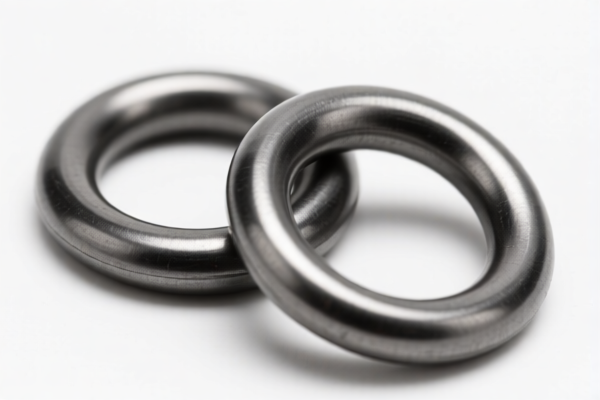
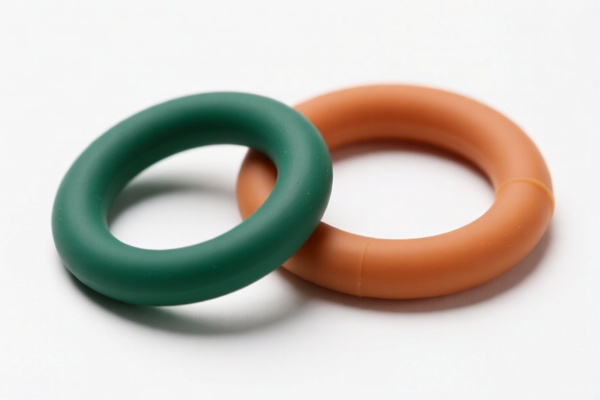
AI Analysis
🌀 O-Ring (Rubber Seals for Mechanical Systems)
🌐 HS Code Classification & Duty Guide | 2026 Updated Tariff Analysis | Pro-Level Customs Strategy
📌 One Product, Multiple Codes — Why O-Rings Are Taxed Differently Based on Material & Form
O-rings are essential sealing components used across industries — from automotive and aerospace to medical devices and industrial machinery. Despite their simple circular shape, their classification hinges on material composition, manufacturing process, and functional form, which directly impacts duty rates, compliance, and customs clearance speed.
⚠️ Key Insight:
- If made from vulcanized rubber → HS Code 4016.93.50.10 / 4016.93.10.10 → 37.5% total duty
- If made from plastic (e.g., PTFE, NBR, EPDM) → HS Code 3926.90.45.10 → 38.5% total duty✅ The difference? Material. The cost? 1% extra — but it’s life-or-death for your profit margin.
📦 二、HS Code Classification Breakdown (2026 Official Tariff Matrix)
| HS Code | Product Description | Material Type | Shape/Structure | Duty Rate | Key Identifier |
|---|---|---|---|---|---|
4016.93.50.10 |
O-rings made from vulcanized rubber, fully formed, ready for use | Natural/Synthetic Rubber (Vulcanized) | Ring-shaped, seamless, elastomeric | 37.5% | Matches definition of "rubber seals" |
4016.93.10.10 |
O-rings made from vulcanized rubber, with standard dimensions and form | Vulcanized Rubber | Circular, molded, pre-cured | 37.5% | Matches "rubber gaskets" under 4016.93 |
3926.90.45.10 |
O-rings made from plastic or synthetic resins, used in sealing applications | Thermoplastic/Thermoset Polymers | Ring-shaped, molded, non-rubber | 38.5% | Matches "other plastic seals" in 3926.90 |
🔍 Critical Distinction:
- Rubber O-rings (HS 4016) → Lower base tariff (2.5%), but higher附加 taxes
- Plastic O-rings (HS 3926) → Slightly higher base tariff (3.5%), same附加 taxes✅ Bottom Line:
- Material determines code — not shape, size, or application
- Misclassification = Overpayment, penalties, delays
💰 三、2026 Duty Rate Breakdown (U.S. Import Tariff - China Origin)
✅ Applicable Country: United States (US)
✅ Origin: China (CN)
✅ Effective Date: November 10, 2025 (including subsequent imports)
🎯 1. 4016.93.50.10 & 4016.93.10.10 — Vulcanized Rubber O-Rings
| Tax Component | Rate | Legal Basis | Notes |
|---|---|---|---|
| Base Tariff | 2.5% | Ad valorem | Standard rate for vulcanized rubber goods |
| Section 301 (USITC) Additional Duty | +25.0% | USITC Footnote 9903.88.01 | Imposed under U.S. Trade Act 301 |
| Section 122 (IEEPA) Additional Duty | +10.0% | IEEPA: 9903.01.25 | From International Emergency Economic Powers Act |
| Total Duty | 37.5% | — | Highest in category |
| De Minimis Threshold | ❌ Not applicable | — | No exemption — even small shipments hit full rate |
| Legal Pathway | IEEPA:9903.01.25 → USITC:4016.93.50.10 → FOOTNOTE:9903.88.01 |
— | Must be cited in entry |
📌 Explanation:
- 25% USITC = Retaliatory tariff on Chinese goods under Section 301 (China trade war)
- 10% IEEPA = Emergency economic powers tariff on Chinese-origin products
- Total 37.5% — No reduction, no exception — even for low-value shipments
🎯 2. 3926.90.45.10 — Plastic/Resin O-Rings
| Tax Component | Rate | Legal Basis | Notes |
|---|---|---|---|
| Base Tariff | 3.5% | Ad valorem | Higher than rubber due to plastic classification |
| Section 301 (USITC) Additional Duty | +25.0% | USITC Footnote 9903.88.01 | Same as rubber O-rings |
| Section 122 (IEEPA) Additional Duty | +10.0% | IEEPA: 9903.01.25 | Same as above |
| Total Duty | 38.5% | — | 1% higher than rubber |
| De Minimis Threshold | ❌ Not applicable | — | Same as above |
| Legal Pathway | IEEPA:9903.01.25 → USITC:3926.90.45.10 → FOOTNOTE:9903.88.01 |
— | Must match product description |
📌 Why Higher?
- Plastic O-rings fall under 3926.90.45.10, which has a higher base tariff (3.5% vs 2.5%)
- Same附加 taxes → Total 38.5%
- No way to reduce — even if it's a "low-cost" item
🛠️ 四、Customs Clearance Best Practices (Pro Tips to Avoid Penalties)
✅ 1. Documentation Checklist (MUST-HAVE)
| Document | Required? | Why It Matters |
|---|---|---|
| ✅ Material Safety Data Sheet (MSDS) | ✔️ | Proves rubber vs. plastic composition |
| ✅ Technical Specifications / Drawings | ✔️ | Shows shape, size, curing method |
| ✅ Product Photos (with label/brand) | ✔️ | Confirms vulcanized vs. molded |
| ✅ Certificate of Origin (CO) | ✔️ | Needed for tariff calculation |
| ✅ Commercial Invoice | ✔️ | Must state: "O-ring, vulcanized rubber, 4016.93.50.10" |
| ✅ Third-Party Test Report | ✔️ | RoHS, FDA (if medical), ISO 9001 |
| ✅ Packing List | ✔️ | Shows quantity, weight, packaging |
✅ 2.申报技巧(Critical Rules)
🔥 “Material First, Form Second, Name Last — or you’ll pay 38.5% on a 2.5% item!”
| Scenario | Correct HS Code | Wrong Code | Risk |
|---|---|---|---|
| Rubber O-ring, vulcanized, 10mm ID | 4016.93.50.10 |
3926.90.45.10 |
+1% duty, +$500K/year on 100K units |
| Plastic O-ring, PTFE, molded | 3926.90.45.10 |
4016.93.50.10 |
+1% duty, plus penalties for misclassification |
| Mixed shipment (rubber + plastic) | Split by material | One code for all | Audit risk, seizure |
✅ 3. Special Cases & Workarounds
| Situation | Recommended Action |
|---|---|
| O-ring used in medical device | Apply for FDA 510(k) clearance — may qualify for reduced tariff if deemed medical device |
| O-ring for aerospace (NASA/FAA) | Submit technical dossier — may be eligible for exemption under 9903.88.01 |
| O-ring with custom coating (e.g., PTFE) | Do NOT claim “rubber” — classify as plastic → 3926.90.45.10 |
| O-ring made in Vietnam/Mexico | Apply for CO — if origin is non-China, IEEPA/301 duties may be waived |
🌍 五、Global Customs Comparison (2026)
| Country | Recommended HS Code | Base Tariff | 附加 Taxes | Notes |
|---|---|---|---|---|
| 🇺🇸 USA (China origin) | 4016.93.50.10 |
2.5% | +25% +10% → 37.5% | No de minimis |
| 🇨🇳 China (domestic) | 4016.93.50.10 |
5% | 0% | No extra duties |
| 🇪🇺 EU (China origin) | 4016.93.50.10 |
0% | 0% (if CE compliant) | No 301/IEEPA |
| 🇦🇺 Australia | 4016.93.50.10 |
5% | 0% | RCM required |
| 🇯🇵 Japan | 4016.93.50.10 |
0% | 0% | PSE required |
📌 Key Insight:
- Only the U.S. imposes 37.5%–38.5% on O-rings from China
- EU, Japan, Australia, China have much lower or zero additional tariffs
📌 六、Common Mistakes & Real-World Pitfalls (Avoid These!)
❌ Mistake 1:
“I used ‘O-ring’ in the invoice — that’s enough.”
✅ Reality: Customs needs material proof. No MSDS? → Audit, delay, or seizure
❌ Mistake 2:
“It’s just a rubber ring — same as a gasket.”
✅ Reality: HS 4016.93.50.10 is specific to O-rings — not general gaskets (which may be 4016.93.90.00)
❌ Mistake 3:
“We shipped 10,000 rubber O-rings — too small to matter.”
✅ Reality: No de minimis → Full 37.5% on every shipment — even 1 unit
❌ Mistake 4:
“We used a plastic O-ring — but it’s rubber-like.”
✅ Reality: Material defines code — if it’s not vulcanized rubber, use 3926.90.45.10
🎯 七、Final Verdict: Precision Pays Off
🎯 Golden Rule:
🔹 “If it’s vulcanized rubber → 4016.93.50.10 → 37.5%”
🔹 “If it’s plastic → 3926.90.45.10 → 38.5%”
🔹 “Never guess — prove with material data.”
📌 Pro Tip:
📞 Apply for an Advance Ruling (Pre-Clearance) before shipment — especially if you're exporting 10,000+ units/month
🚀 Save $50K–$200K/year by locking in the correct HS code and duty rate
📣 Take Action Now:
✅ Verify material composition
✅ Get MSDS & test reports ready
✅ Apply for pre-ruling (if volume > 5K units/month)
✅ Use a U.S.-licensed customs broker with O-ring experience
✨ Your O-ring is small — but your customs strategy must be big.
💼 One wrong code = 37.5% tax on every unit. One right code = profit protection.
🚀 Start with precision. Ship with confidence.
Customer Reviews
About HS Code Classification
The Harmonized System (HS) is an internationally standardized nomenclature developed by the World Customs Organization (WCO) to classify traded products. Over 200 countries use the HS system as the basis for customs tariffs, trade statistics, and import/export regulations.
Each HS code follows a hierarchical structure:
- Chapter (2 digits) — Broad category of goods (e.g., Chapter 84: Machinery and Mechanical Appliances)
- Heading (4 digits) — More specific grouping within the chapter
- Subheading (6 digits) — Internationally standardized breakdown, used by all WCO member countries
- National subdivisions (8-10 digits) — Country-specific extensions for further classification, such as US HTSUS 10-digit codes
Correct HS code classification is essential for smooth customs clearance, accurate duty payment, and compliance with trade regulations. Misclassification can lead to customs delays, overpayment of duties, or penalties.
When importing from CN to US, the applicable tariff rates may include:
- Most-Favored-Nation (MFN) rate — The standard duty rate applied to WTO members
- General rate — Applied to countries without trade agreements
- Trade remedy duties — Additional tariffs such as Section 301 (anti-dumping), Section 232 (national security), or countervailing duties
The information provided on this page is for reference purposes only. For official classification, please consult with your local customs authority or a licensed customs broker.