PB Connector
CN → US| HS Code | Tariff Rate | Origin | Destination | Doc |
|---|---|---|---|---|
| 8536509031 | 35.0% | CN | US | Official Doc |
| 8536509032 | 35.0% | CN | US | Official Doc |
Product Images
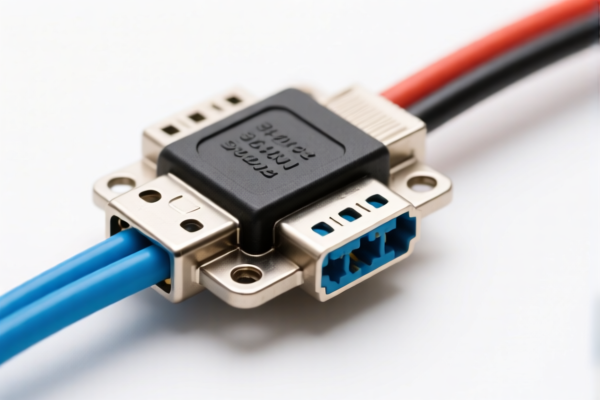
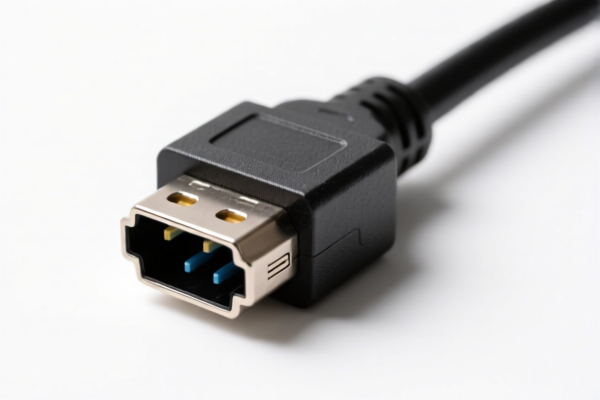
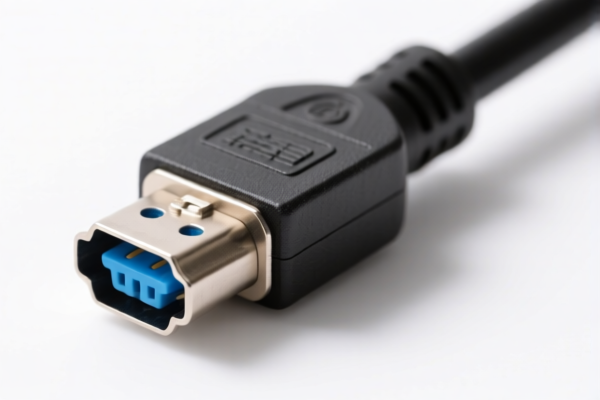

AI Analysis
🔌 Push-Button & Gang Switches (PB Connectors)
🌐 HS Code Reference & Customs Clearance Guide | 2026 Latest Tariff Analysis | Professional Clearance Strategy
📌 I. Product Definition & Classification: What is a "PB Connector"?
In the context of electrical apparatus, "PB Connector" is a common industry shorthand for Push-Button Switches and associated Gang Switches used to control electrical circuits. These devices fall under Chapter 85 of the Harmonized System, specifically dealing with electrical machinery and equipment.
The core classification depends on the voltage rating, current rating, and operation type (momentary vs. maintained). Based on the provided data, these items are strictly categorized as:
- Electrical Apparatus for Switching: Devices that make or break connections in electrical circuits.
- Voltage Limit: Not exceeding 1,000 V.
- Specific Types: Push-buttons and Gang switches.
- Current Rating: Rated at not over 5 A.
⚠️ Key Distinction:
- If the switch is momentary (returns to original position when released), it falls under specific sub-headings.
- If it is a gang switch (multiple switches operated by one handle or unit), it has a separate sub-heading.
- Critical Constraint: Both categories listed in the data have a maximum current rating of 5 A.
📦 II. HS Code Classification Details (Authoritative 2026 Tariff Alignment)
Based on the provided <DATA>, there are two distinct HS Codes for this product category. Please select the one that matches your specific product feature.
| HS Code | Product Description | Application Scenario | Key Feature |
|---|---|---|---|
8536.50.90.31 |
Other Switches: Push-button, Momentary contact Rated at not over 5 A |
Industrial control panels, home appliances, consumer electronics where a "click" action is needed (e.g., keyboard switches, reset buttons, start/stop buttons). | ✅ Momentary Contact (Self-returning) |
8536.50.90.32 |
Other Switches: Other Push-button... Gang switches Rated at not over 5 A |
Multi-channel control units, lighting control panels, industrial machinery where multiple circuits are switched simultaneously or as a single unit. | ✅ Gang Switch (Multiple poles/stages) |
🔍 Identification Guide:
- Scenario A: You have a single button that toggles on and off, or presses to activate temporarily? → Likely8536.50.90.31.
- Scenario B: You have a panel with two or three switches operated together, or a complex multi-pole push-button unit classified as a "gang"? → Likely8536.50.90.32.
- Voltage Check: Ensure the rated voltage is ≤ 1,000 V. If it exceeds 1,000 V, these codes are invalid.
💰 III. 2026 Latest Tariff Rate Details (Detailed Tax Breakdown)
✅ Applicable Jurisdiction: United States (US)
✅ Origin: China (CN) (Implied by the specific 25% additional tariff structure common in US-China trade contexts for this HS chapter)
✅ Effective Time: Current 2026 Tariff Schedule
Both HS Codes provided in the data carry identical tax structures.
🎯 1. 8536.50.90.31 —— Push-Button Switch (Momentary, ≤5 A)
| Item | Content |
|---|---|
| Base Tariff Rate | 0.0% (Ad Valorem) |
| Additional Tariff (Section 301) | +25.0% |
| Total Tax Rate | 25.0% |
| Tax Calculation | CIF Value × 25.0% |
| Legal Basis | USITC Harmonized Tariff Schedule (HTSUS) 2026 |
📌 Explanation:
- The Base Rate is 0% because electrical switches under 1,000V generally enjoy low base duties to facilitate trade.
- The 25% Additional Tariff is applied under Section 301 of the Trade Act of 1974, targeting specific Chinese imports.
- Total Liability: For every $1,000 of goods, you pay $250 in duties.
🎯 2. 8536.50.90.32 —— Gang Switch / Other Push-Button (≤5 A)
| Item | Content |
|---|---|
| Base Tariff Rate | 0.0% (Ad Valorem) |
| Additional Tariff (Section 301) | +25.0% |
| Total Tax Rate | 25.0% |
| Tax Calculation | CIF Value × 25.0% |
| Legal Basis | USITC Harmonized Tariff Schedule (HTSUS) 2026 |
📌 Explanation:
- Identical tax treatment to the momentary push-button.
- No De Minimis Exemption: These goods cannot utilize the $800 de minimis exemption if shipped as commercial cargo; they are subject to full duty declaration.
🛠️ IV. Customs Clearance Practical Advice (Real-World Pitfall Avoidance)
✅ 1. Documentation Checklist (Mandatory)
| Document | Required? | Description |
|---|---|---|
| ✅ Commercial Invoice | ✔️ | Must clearly state "Electrical Switch" and specify "Push-Button" or "Gang Switch". |
| ✅ Product Specification Sheet | ✔️ | Must include: Voltage (≤1000V), Current (≤5A), Contact Type (Momentary/ maintained). |
| ✅ Circuit Diagram / Schematic | ✔️ | To prove it is an electrical switching device and not a mechanical component. |
| ✅ Photos of Label | ✔️ | Clear view of technical ratings (V/A/W). |
| ✅ Origin Certificate | ✔️ | If claiming any potential exemptions (note: Section 301 tariffs are hard to exempt without specific exclusions). |
✅ 2. Declaration Tips (Key Mantra)
🔥 "Voltage Under 1K, Current Under 5A, Push Button is the Key!"
| Situation | Correct Declaration | Incorrect Action |
|---|---|---|
| Single Momentary Button | 8536.50.90.31 |
Misdeclaring as "Connector" → Risk of reclassification & penalty. |
| Multi-Pole Switch Unit | 8536.50.90.32 |
Misdeclaring as "Relay" → Different tax code (Relays may have different tariffs). |
| Voltage > 1,000 V | NOT APPLICABLE | Attempting to use these codes for high-voltage switches → Rejection/Seizure. |
| Current > 5 A | NOT APPLICABLE | Attempting to use these codes for high-current switches → Rejection/Seizure. |
✅ 3. Special Handling
| Situation | Handling Advice |
|---|---|
| OEM/Custom Parts | Provide customer PO and technical drawings to justify "Push-Button" vs. generic "Switch". |
| Mixed Containers | If mixing with relays or fuses, declare separately. Do not lump under one HS code if they differ. |
| Section 301 Exclusions | Check if the specific product model was ever granted a Section 301 Exclusion. If yes, attach the exclusion letter. |
🌍 V. Global Market Comparison (2026 Latest)
| Country/Region | Recommended HS Code | Tariff (China Origin) | Certification Requirements | Notes |
|---|---|---|---|---|
| 🇺🇸 USA | 8536.50.90.31 / .32 |
25.0% (Total) | UL, cUL, FCC (if applicable) | 25% additional tariff is strict. |
| 🇨🇳 China | 8536.50.90.31 / .32 |
0% - 5% | CCC, CQC | Lower domestic tax rate. |
| 🇪🇺 EU | 8536.50.90 |
0% - 2.7% | CE, RoHS, REACH | No additional punitive tariffs. |
| 🇯🇵 Japan | 8536.50.90 |
0% - 3% | PSE, JIS | Standard low tariff. |
📌 Conclusion:
- USA is the only major market imposing the 25% Additional Tariff.
- For US-bound shipments, the 25% cost must be factored into your pricing strategy.
- Consider Supply Chain Diversification (e.g., manufacturing in Vietnam or Mexico) if the 25% tariff erodes margins, as goods from these countries may be exempt from Section 301.
📌 VI. Common Errors & Pitfall Guide (Lessons Learned)
❌ Error 1: Describing the product as "Plastic Connector" or "Cable Accessory"
👉 Consequence: Customs may reclassify under "Parts" (higher tariff) or suspect misdeclaration.
✅ Fix: Always use "Electrical Switch" or "Push-Button Switch".
❌ Error 2: Ignoring the 5A Current Limit
👉 Consequence: If your switch is rated 10A, these HS codes are invalid. You will face heavy fines and duty reassessment.
✅ Fix: Verify nameplate data. If >5A, search for other 8536 subheadings (e.g., 8536.50.40 or 8536.50.80).
❌ Error 3: Confusing Momentary vs. Maintained
👉 Consequence: Misclassification between .31 and .32 (or other subheadings).
✅ Fix: Clearly state "Momentary Contact" for .31 and "Gang/Multi-Pole" for .32.
🎯 VII. Conclusion: Precise Classification Saves Money!
🎯 Remember the Mantra:
🔹 "Voltage < 1000V, Current < 5A, Push Button is Key!"
🔹 "HS Code 8536.50.90.31 for Momentary, .32 for Gang – Don't Mix Them!"
🔹 "25% Tax in the US is Real – Plan Ahead!"
📌 Pro Tip:
If your PB connectors are part of a larger assembly (e.g., a control panel), ensure the principal function determines the classification of the whole unit, or declare switches separately for clarity.
📣 Immediate Action:
📞 Verify Technical Specs: Check Voltage (≤1000V) and Current (≤5A).
📄 Choose Correct Code:.31(Momentary) or.32(Gang).
🚀 Calculate Landed Cost: Include the 25% Additional Tariff in your US pricing.
✨ Professional Clearance, Start with Accurate HS Codes!
💼 Your Profit Margin Depends on Correct Classification!
Customer Reviews
About HS Code Classification
The Harmonized System (HS) is an internationally standardized nomenclature developed by the World Customs Organization (WCO) to classify traded products. Over 200 countries use the HS system as the basis for customs tariffs, trade statistics, and import/export regulations.
Each HS code follows a hierarchical structure:
- Chapter (2 digits) — Broad category of goods (e.g., Chapter 84: Machinery and Mechanical Appliances)
- Heading (4 digits) — More specific grouping within the chapter
- Subheading (6 digits) — Internationally standardized breakdown, used by all WCO member countries
- National subdivisions (8-10 digits) — Country-specific extensions for further classification, such as US HTSUS 10-digit codes
Correct HS code classification is essential for smooth customs clearance, accurate duty payment, and compliance with trade regulations. Misclassification can lead to customs delays, overpayment of duties, or penalties.
When importing from CN to US, the applicable tariff rates may include:
- Most-Favored-Nation (MFN) rate — The standard duty rate applied to WTO members
- General rate — Applied to countries without trade agreements
- Trade remedy duties — Additional tariffs such as Section 301 (anti-dumping), Section 232 (national security), or countervailing duties
The information provided on this page is for reference purposes only. For official classification, please consult with your local customs authority or a licensed customs broker.