PBT Resin for Automotive Parts
CN → US| HS Code | Tariff Rate | Origin | Destination | Doc |
|---|---|---|---|---|
| 3907995010 | 41.5% | CN | US | Official Doc |
| 3907995050 | 41.5% | CN | US | Official Doc |
| 3911902500 | 41.1% | CN | US | Official Doc |
| 3911901110 | 0.0% | CN | US | Official Doc |
Product Images
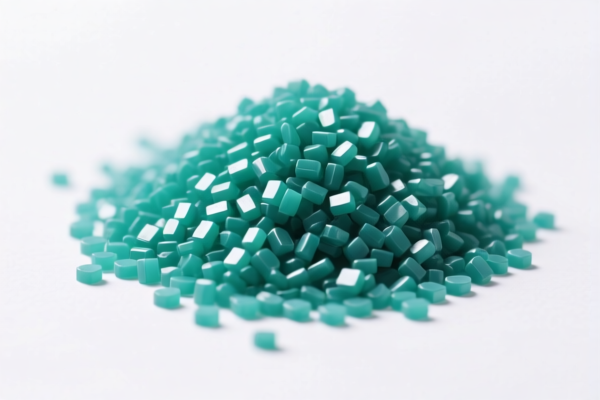
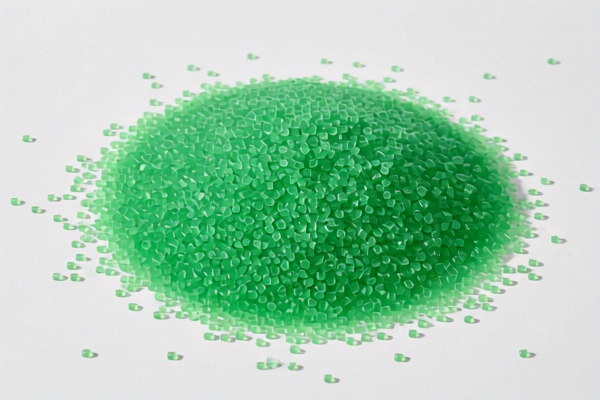
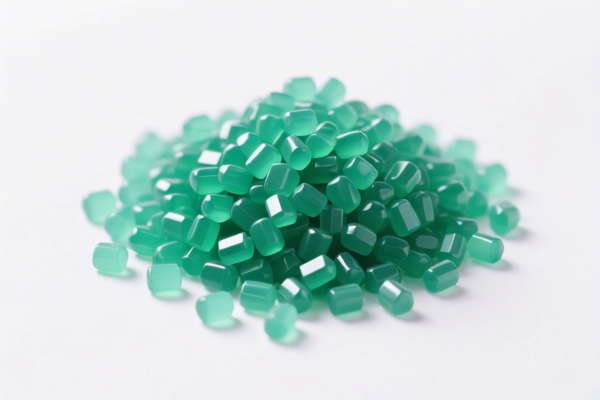
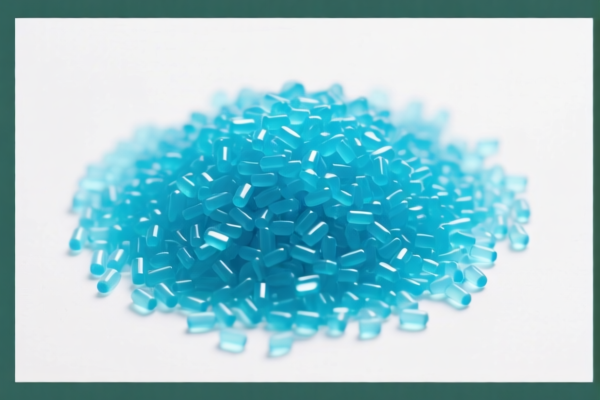
AI Analysis
🚗 PBT Resin for Automotive Parts (Polybutylene Terephthalate)
🌐 HS Code Reference & Customs Clearance Guide | 2026 Latest Tariff Analysis | Professional Compliance Strategy
📌 I. Product Definition & Classification: Is Your "PBT" Really Just Polyester?
Polybutylene Terephthalate (PBT) is a semi-crystalline thermoplastic polyester widely used in the automotive industry for connectors, housings, engine components, and electrical parts due to its heat resistance, chemical stability, and dimensional stability.
In international trade, PBT is classified under Chapter 39 (Plastics and Articles Thereof), specifically as a Polyester. However, a critical distinction must be made between pure PBT and modified PBT.
Key Distinction: * Pure PBT / Unmodified PBT: Belongs to the subheading for "Polybutylene terephthalate". * Modified PBT / Blended PBT: If the resin is modified with glass fibers, carbon fibers, or other fillers, or if it is a blend with other polymers (e.g., PC/ABS), it may fall under the general "Other polyesters" category.
⚠️ Critical Warning for Customs:
- If your product is labeled "PBT" but contains >20% glass fiber or other additives, customs may reject the specific "Polybutylene terephthalate" code and reclassify it under "Other polyesters".
- Misclassification leads to significant duty differences and potential penalties.
📦 II. HS Code Classification Details (2026 Latest Tariff Authority)
Based on the provided data, here are the two most relevant HS Codes for PBT Resin imports, assuming origin is China and destination is the US (subject to Section 301 tariffs).
| HS Code | Product Description | Application Scenario | Tariff Status |
|---|---|---|---|
3907.99.50.10 |
Other polyesters: Other Polybutylene terephthalate | Pure PBT resin, unmodified, primary forms (pellets/granules) | 🎯 Target Code |
3907.99.50.50 |
Other polyesters: Other | Modified PBT, PBT blends, PBT with additives, non-PBT polyesters | 🎯 Alternative Code |
🔍 Detailed Breakdown:
-3907.99.50.10: Specifically for Polybutylene terephthalate. Use this ONLY if the resin is chemically pure PBT or minimally modified such that it retains its primary identity as PBT.
-3907.99.50.50: A catch-all for "Other polyesters" not specifically listed as PBT, PET, or PCT. This includes glass-filled PBT, flame-retardant PBT blends, or PBT/PET mixtures.
💰 III. 2026 Latest Tariff Rate Breakdown (Including Add-on Taxes)
✅ Applicable Country: United States (US)
✅ Country of Origin: China (CN)
✅ Effective Date: Current Section 301 Tariffs Apply
🎯 1. 3907.99.50.10 —— Pure Polybutylene Terephthalate (PBT)
| Item | Content |
|---|---|
| Base Tariff (MFN) | 6.5% (ad valorem) |
| Section 301 Additional Tariff | +25% (List 3/4 items) |
| Total Tariff Rate | 31.5% |
| Tax Calculation | CIF Value × 31.5% |
| De Minimis Eligibility | ❌ Not Eligible (Value must be declared fully; no $800 exemption for bulk resin) |
| Legal Authority | HTSUS 3907.99.50.10 + USITC Section 301 Footnotes |
📌 Explanation:
- The 6.5% is the standard Most Favored Nation (MFN) duty for synthetic polymers.
- The +25% is the punitive tariff imposed under Section 301 of the Trade Act of 1974 on Chinese goods.
- Total Effective Duty: 31.5%. This is a significant cost factor for automotive suppliers sourcing from China.
🎯 2. 3907.99.50.50 —— Other Polyesters (Modified PBT/Blends)
| Item | Content |
|---|---|
| Base Tariff (MFN) | 6.5% (ad valorem) |
| Section 301 Additional Tariff | +25% (List 3/4 items) |
| Total Tariff Rate | 31.5% |
| Tax Calculation | CIF Value × 31.5% |
| De Minimis Eligibility | ❌ Not Eligible |
| Legal Authority | HTSUS 3907.99.50.50 + USITC Section 301 Footnotes |
📌 Note:
- Despite being a different HS Code, the tariff rate is identical (31.5%).
- Risk: Using3907.99.50.50for pure PBT may lead to audits if the importer claims it's "other" without justification. Using3907.99.50.10for modified PBT is also risky if the product doesn't fit the definition of pure PBT.
🛠️ IV. Customs Clearance Practical Advice (Avoiding Pitfalls)
✅ 1. Required Documentation Checklist
| Document | Mandatory? | Description |
|---|---|---|
| ✅ Technical Data Sheet (TDS) | ✔️ | Must specify chemical name (e.g., "Polybutylene Terephthalate"), melt flow index, and filler content (%). |
| ✅ Certificate of Composition | ✔️ | Explicitly state if the product is 100% PBT or PBT + Glass Fiber + Additives. |
| ✅ Commercial Invoice | ✔️ | Clearly state "PBT Resin Pellets for Automotive Parts" and correct HS Code. |
| ✅ Packing List | ✔️ | Net weight, gross weight, and packaging type. |
| ✅ Bill of Lading/Air Waybill | ✔️ | Original or electronic copy. |
✅ 2. Declaration Tips (Key Phrases)
🔥 "Be Specific: PBT vs. Modified PBT"
| Scenario | Correct Declaration | Incorrect Declaration |
|---|---|---|
| Pure PBT | 3907.99.50.10 - "Polybutylene terephthalate resin, pellets" |
"Plastic resin" or "Polyester" |
| Glass-Filled PBT | 3907.99.50.50 - "Modified polybutylene terephthalate, 30% glass fiber" |
"PBT Resin" (Too vague) |
| PBT Blend | 3907.99.50.50 - "PBT/PC blend resin" |
"PBT Resin" |
📌 Critical Advice:
- If your PBT contains >10% glass fiber, do NOT use3907.99.50.10. Use3907.99.50.50.
- Customs officers frequently check filler content to distinguish between pure and modified resins.
- Labeling: Ensure the packaging clearly states the composition.
✅ 3. Special Cases
| Situation | Recommendation |
|---|---|
| OEM Custom Resin | Provide the customer’s technical specification sheet proving the exact polymer type. |
| Recycled PBT | If it's recycled, it may still fall under Chapter 39, but ensure it meets "primary forms" definition. If it's waste/scrap, it may fall under Chapter 39.03 or 39.04, with different tariffs. |
| Sample Shipments | Even samples are subject to duty if value exceeds $800 (de minimis). For bulk resin, always declare full value. |
🌍 V. Global Market Comparison (2026 Update)
| Country/Region | Recommended HS Code | Tariff Rate (China Origin) | Certification | Notes |
|---|---|---|---|---|
| 🇺🇸 USA | 3907.99.50.10 / .50 |
31.5% (6.5% + 25%) | N/A | High duty due to Section 301 |
| 🇨🇳 China | 3907.99.50.10 / .50 |
0% (Most Favored Nation) | N/A | Import tariff is low; focus on export compliance |
| 🇪🇺 EU | 3907.40.90 |
6.5% | REACH Registration | No Section 301 equivalent; REACH is key |
| 🇯🇵 Japan | 3907.40.00 |
6.0% | Japan Customs | Standard tariff for polyesters |
📌 Conclusion:
- The US market is the most expensive for Chinese PBT resin due to the 31.5% total duty.
- For US imports, consider supply chain diversification (e.g., sourcing from Southeast Asia or using Duty Drawback programs if eligible).
- EU and Japan are more tariff-friendly, but REACH compliance is critical for the EU.
📌 VI. Common Mistakes & Pitfalls (Lessons Learned)
❌ Mistake 1: Declaring "Glass-Filled PBT" as 3907.99.50.10 (Pure PBT)
👉 Consequence: Customs reclassifies to .50, charges 31.5%, and may issue a penalty for misdeclaration.
✅ Fix: Always declare filler content. If >10% filler, use .50.
❌ Mistake 2: Using "Plastic Pellets" as the commodity name
👉 Consequence: Customs request additional info, delaying clearance by 7-14 days.
✅ Fix: Use specific chemical names: "Polybutylene Terephthalate Resin."
❌ Mistake 3: Ignoring Section 301 Tariffs
👉 Consequence: Underpayment of duties, leading to back taxes + interest.
✅ Fix: Budget for 31.5% duty for all China-origin polyester imports to the US.
🎯 VII. Conclusion: Precision is Profit
🎯 Remember:
🔹 "Pure PBT is
.10, Modified is.50."
🔹 "31.5% Duty in the US – Plan Ahead."
🔹 "Filler content defines the code – Don’t guess!"
📌 Pro Tip:
For large-volume imports to the US, consider applying for a Binding Tariff Information (BTI) or Advance Ruling from CBP to lock in the correct HS Code and avoid post-audit surprises.
📣 Immediate Action:
📞 Consult your customs broker with the Technical Data Sheet (TDS) of your PBT resin.
🚀 Verify filler content to select the correct HS Code (3907.99.50.10vs..50).
💼 Accurate classification saves you 31.5% in unexpected duties!
✨ Professional Customs Clearance Starts with Precise Classification!
💼 Your Cost Efficiency Depends on It!
Customer Reviews
About HS Code Classification
The Harmonized System (HS) is an internationally standardized nomenclature developed by the World Customs Organization (WCO) to classify traded products. Over 200 countries use the HS system as the basis for customs tariffs, trade statistics, and import/export regulations.
Each HS code follows a hierarchical structure:
- Chapter (2 digits) — Broad category of goods (e.g., Chapter 84: Machinery and Mechanical Appliances)
- Heading (4 digits) — More specific grouping within the chapter
- Subheading (6 digits) — Internationally standardized breakdown, used by all WCO member countries
- National subdivisions (8-10 digits) — Country-specific extensions for further classification, such as US HTSUS 10-digit codes
Correct HS code classification is essential for smooth customs clearance, accurate duty payment, and compliance with trade regulations. Misclassification can lead to customs delays, overpayment of duties, or penalties.
When importing from CN to US, the applicable tariff rates may include:
- Most-Favored-Nation (MFN) rate — The standard duty rate applied to WTO members
- General rate — Applied to countries without trade agreements
- Trade remedy duties — Additional tariffs such as Section 301 (anti-dumping), Section 232 (national security), or countervailing duties
The information provided on this page is for reference purposes only. For official classification, please consult with your local customs authority or a licensed customs broker.