PBT Resin for Packaging Materials
CN → US| HS Code | Tariff Rate | Origin | Destination | Doc |
|---|---|---|---|---|
| 3907995050 | 41.5% | CN | US | Official Doc |
| 3907995010 | 41.5% | CN | US | Official Doc |
| 3903190000 | 41.5% | CN | US | Official Doc |
| 3903110000 | 41.5% | CN | US | Official Doc |
| 3901105010 | 41.5% | CN | US | Official Doc |
Product Images
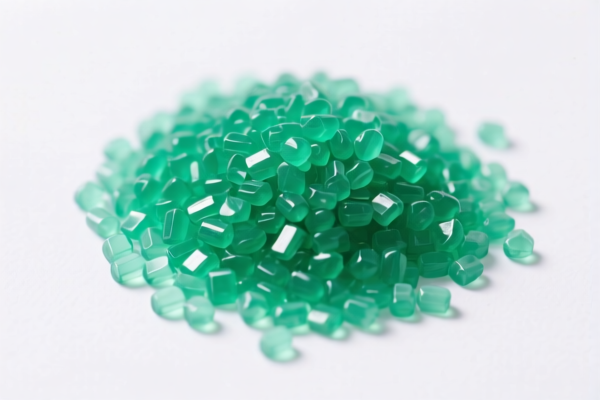
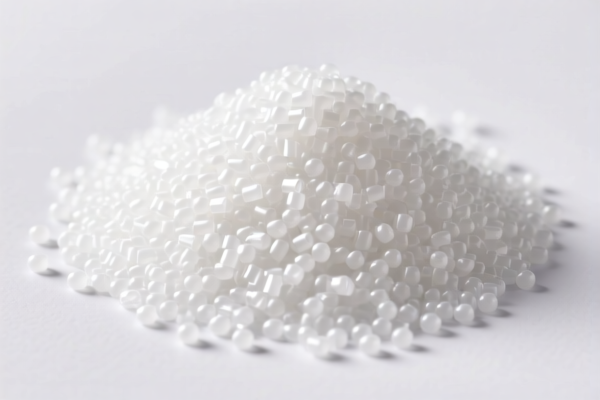
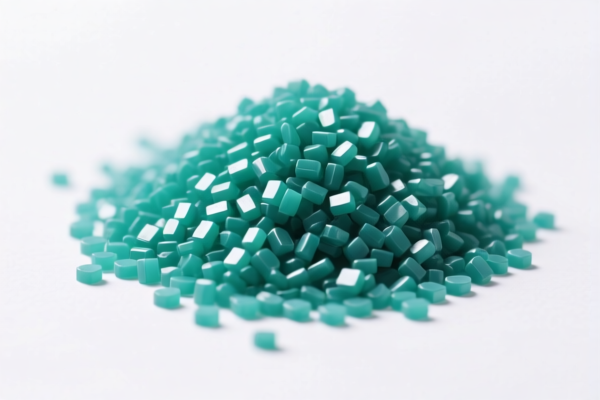
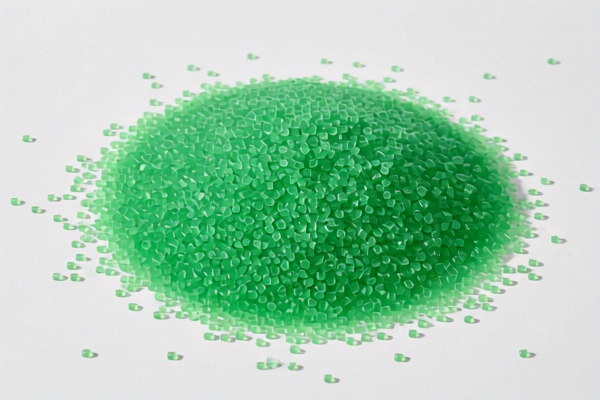
AI Analysis
🧪 PBT Resin (Polybutylene Terephthalate) for Packaging Materials
🌐 HS Code Reference & Customs Clearance Guide | 2026 Tariff Analysis | Professional Compliance Strategy
📌 I. Product Definition & Classification: Is It Really Just "Resin"?
PBT Resin is a semi-crystalline thermoplastic polyester. In international trade, even though it is intended for packaging materials (such as food containers, bottles, or films), the form of the goods determines its classification.
Key Distinction: * Resin (Primary Shape): Raw pellets, beads, or granules imported as raw material. → Classified under Chapter 39 (Plastics and Articles Thereof). * Finished Articles: Pre-formed bottles, caps, or rigid packaging containers. → Classified under Chapter 39 (other headings) or Chapter 38/85 depending on specifics, but NOT as raw resin.
⚠️ Critical Clarification:
Since the input specifies "PBT Resin", we classify it as raw material (primary shape), not as finished packaging. The end-use (packaging) does not change the HS Code for raw resin.
📦 II. HS Code Classification Details (2026 Latest Tariff)
Based on the provided , PBT Resin falls under Polyesters. PBT (Polybutylene Terephthalate) is a specific type of polyester.
| HS Code | Product Description | Application Scenario | Material Logic |
|---|---|---|---|
3907.99.50.50 |
Other Polyesters (PBT Resin) | Raw material for injection molding, extrusion for packaging | ✅ PBT is a polyester, not specified in other subheadings |
3907.99.50.10 |
Other Polyesters (PBT Resin) | Specific category for PBT in primary shape | ✅ Matches specific material requirement for PBT |
🔍 Note on Exclusions:
-3903.19.00.00/3903.11.00.00: These are for Polystyrene (PS). Do NOT use these for PBT.
-3901.10.50.10: This is for Polyethylene (PE). Do NOT use these for PBT.
- PBT is chemically a Polyester, so it belongs in heading 3907 (Polyesters in primary forms).
💰 III. 2026 Latest Tariff Rate Breakdown (With Surcharges & Policy Add-ons)
✅ Applicable Country: United States (US)
✅ Origin: China (CN)
✅ Effective Date: 2025/2026 Period
🎯 1. 3907.99.50.50 & 3907.99.50.10 —— PBT Resin (Polyesters, Other)
Both HS Codes carry the exact same tax structure based on the provided.
| Item | Content |
|---|---|
| Base Duty Rate | 6.5% (Standard MFN Rate for Polyesters) |
| Section 301 Surcharge | +25.0% (USITC Footnote related to Section 301) |
| Section 122 Tariff | +10.0% (Specific statutory add-on for certain plastics/polymers) |
| Total Tax Rate | 41.5% |
| Tax Calculation | CIF Value × 41.5% |
| De Minimis Eligibility | ❌ No (Deny de minimis for these codes from CN) |
| Legal Basis Path | HTSUS:3907.99.50.50/10 → SECTION_301:25% → SECTION_122:10% |
📌 Explanation:
- The 6.5% is the standard import duty for "Other Polyesters" in primary forms.
- The 25% is the widely known "Section 301" tariff on Chinese goods, which applies to most plastic resins.
- The 10% is an additional statutory tariff (often referred to as "Section 122" or specific plastic-related surcharges in certain trade contexts).
- Total: 41.5% is a high-cost entry for raw materials. Profit margins must account for this.
🛠️ IV. Customs Clearance Practical Advice (Risk Mitigation)
✅ 1. Required Documentation Checklist
| Document | Required? | Explanation |
|---|---|---|
| ✅ Commercial Invoice | ✔️ | Must state: "PBT Resin (Polybutylene Terephthalate), Raw Material, Primary Shape" |
| ✅ Packing List | ✔️ | Clear weight/volume, no finished goods mixed |
| ✅ Certificate of Origin (CO) | ✔️ | To prove origin (if any trade agreement applies, though unlikely for CN-US now) |
| ✅ Material Safety Data Sheet (MSDS) | ✔️ | Required for chemical handling and customs inspection |
| ✅ Product Specification Sheet | ✔️ | Must confirm chemical composition (Polyester/PBT) and physical form (Pellets/Resin) |
| ✅ Is It Really PBT? | ✔️ | CRITICAL: If the supplier labels it "PE" or "PS" but it is PBT, this is fraud. Ensure specs match 3907 not 3901/3903. |
✅ 2. Declaration Tips (Key Phrases)
🔥 "Resin is Resin, Not Finished Goods!"
| Scenario | Correct Declaration | Incorrect Declaration |
|---|---|---|
| Raw PBT Pellets | 3907.99.50.50 - "PBT Resin, Primary Shape" |
"Plastic Packaging Material" → May be flagged for inspection |
| PBT Bottles (Finished) | Different HS Code (likely 3923 or 3926) | Using Resin Code → Smuggling/Undervaluation Risk |
| Mixed Containers | Separate line items for Resin vs. Finished Goods | "Mixed Plastics" → High risk of audit |
⚠️ Warning:
Do NOT use the HS Codes for Polystyrene (3903) or Polyethylene (3901) just because they are also used in packaging.
- PBT = Polyester = 3907
- PS = Polystyrene = 3903
- PE = Polyethylene = 3901
Using the wrong code leads to immediate audits, back-taxes, and penalties.
✅ 3. Special Considerations for "Packaging" Use
- Food Contact: If PBT resin is for food-grade packaging, ensure you have FDA Compliance documentation. Customs may ask for proof of non-toxicity.
- End-Use: Declare it as "Raw Material" not "Packaging".
- Why? "Packaging" implies finished goods. Raw resin is a chemical intermediate.
- Customs Logic: A bag of pellets is not a bag. A bottle is a bottle. A sheet is a sheet. Only the raw resin gets the
3907code.
🌍 V. Global Market Comparison (2026)
| Country/Region | Recommended HS Code | Duty (China Origin) | Certification | Notes |
|---|---|---|---|---|
| 🇺🇸 USA | 3907.99.50.50/10 |
41.5% | FDA (if food contact) | High tariff; plan for cost |
| 🇨🇳 China | 3907.99.50 |
0%~6.5% | CCC (if applicable) | Lower import barrier |
| 🇪🇺 EU | 3907.40 (Approx.) |
0%~5% | REACH | No major surcharges |
| 🇬🇧 UK | 3907.40 |
0%~5% | UKCA | Post-Brexit rules |
📌 Conclusion:
- The USA imposes the highest cost (41.5%) due to Section 301 and Section 122 tariffs.
- EU/UK have lower or zero duties for raw polyesters, but strict REACH chemical registration is required.
📌 VI. Common Mistakes & Pitfalls (Lessons Learned)
❌ Mistake 1: Using 3901.10.50.10 (PE) or 3903.11.00.00 (PS) for PBT Resin
👉 Consequence: Misclassification. Customs will audit, demand back-taxes, and impose penalties. PBT is a Polyester, not PE or PS.
❌ Mistake 2: Declaring as "Packaging" instead of "Resin"
👉 Consequence: May trigger different inspection protocols or require different licenses. Always declare as Raw Material.
❌ Mistake 3: Ignoring the 10% Section 122 Tariff
👉 Consequence: Underpayment. The total tax is 41.5%, not just 25% or 31.5%. Budget accordingly!
✅ Correct Action:
"PBT Resin (Polybutylene Terephthalate), Primary Shape, Pellets, For Use in Manufacturing Food Packaging, HS Code 3907.99.50.50"
🎯 VII. Conclusion: Professional Classification Saves Money!
🎯 Remember the Rule:
🔹 "Form Dictates Code: Resin = 3907, Not 3901/3903."
🔹 "Total Tax is 41.5%: 6.5% Base + 25% Sec 301 + 10% Sec 122."
🔹 "Declare as Raw Material, Not Finished Packaging."
📌 Pro Tip:
If your PBT resin is critical for food packaging, ensure you have FDA 21 CFR compliance documents ready. Customs may request proof that the resin is food-grade to prevent health hazards.
📣 Immediate Action:
📞 Verify your supplier’s Chemical Abstracts Service (CAS) Number for PBT.
🚀 Confirm the physical form is pellets/resin (not pre-made items).
💼 Accurate HS Code = Accurate Duty = Smooth Clearance.
✨ Precise Classification, Predictable Costs!
💼 Don’t Let a 41.5% Tariff Surprise You!
Customer Reviews
About HS Code Classification
The Harmonized System (HS) is an internationally standardized nomenclature developed by the World Customs Organization (WCO) to classify traded products. Over 200 countries use the HS system as the basis for customs tariffs, trade statistics, and import/export regulations.
Each HS code follows a hierarchical structure:
- Chapter (2 digits) — Broad category of goods (e.g., Chapter 84: Machinery and Mechanical Appliances)
- Heading (4 digits) — More specific grouping within the chapter
- Subheading (6 digits) — Internationally standardized breakdown, used by all WCO member countries
- National subdivisions (8-10 digits) — Country-specific extensions for further classification, such as US HTSUS 10-digit codes
Correct HS code classification is essential for smooth customs clearance, accurate duty payment, and compliance with trade regulations. Misclassification can lead to customs delays, overpayment of duties, or penalties.
When importing from CN to US, the applicable tariff rates may include:
- Most-Favored-Nation (MFN) rate — The standard duty rate applied to WTO members
- General rate — Applied to countries without trade agreements
- Trade remedy duties — Additional tariffs such as Section 301 (anti-dumping), Section 232 (national security), or countervailing duties
The information provided on this page is for reference purposes only. For official classification, please consult with your local customs authority or a licensed customs broker.