PCB
CN → US| HS Code | Tariff Rate | Origin | Destination | Doc |
|---|---|---|---|---|
| 8534000020 | 35.0% | CN | US | Official Doc |
| 8534000080 | 35.0% | CN | US | Official Doc |
| 8543906500 | 35.0% | CN | US | Official Doc |
| 8543906800 | 35.0% | CN | US | Official Doc |
Product Images
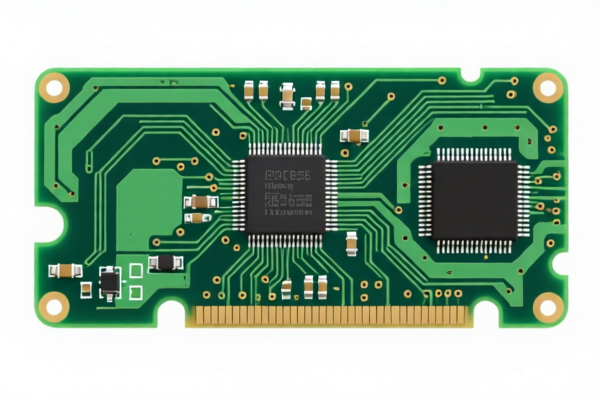


AI Analysis
🧠 PCB (Printed Circuit Boards) | The Backbone of Modern Electronics
🌐 HS Code Reference & Clearance Guide | 2026 Latest Tariff Analysis | Professional Strategy
📌 I. Product Definition: What Exactly is a PCB?
The Printed Circuit Board (PCB) is not just a "board"; it is the foundational substrate that provides mechanical support and electrical connections for electronic components. In international trade, PCBs are critical intermediate goods used in everything from smartphones to automotive electronics.
⚠️ Key Classification Principle:
Since the Harmonized System (HS) does not always have a specific, unique code for every type of PCB, classifiers often rely on "Residual Clauses" (fallback categories) or match them to "Parts/Components" of other specific devices.
- If it’s a bare board → Often falls under 8534.00 (Printed Circuits).
- If it’s part of a larger assembly → May be classified under 8543.90 (Parts of electrical machines).
📦 II. HS Code Classification Details (Based on Provided Data)
Based on the provided dataset, here are the four potential HS Codes for PCBs, along with the logical reasoning for each classification.
| HS Code | Summary / Reasoning | Tax Rate |
|---|---|---|
| 8534.00.00.20 | Bottom-Up Classification: Matched to the residual category for "Printed Circuits" (印制电路). | 35.0% |
| 8534.00.00.80 | Definition Match: Fits the definition of "Printed Circuit Boards" (印制电路板). Uses the residual rule for determination. | 35.0% |
| 8543.90.65.00 | Part of Machine: Matches "Printed Circuit Assemblies" based on the default principle for parts/components (部件类默认匹配). | 35.0% |
| 8543.90.68.00 | Functional Identity: PCBs share the same form and purpose as "Printed Circuit Assemblies." No material conflict. | 35.0% |
🔍 Critical Insight:
- 8534 vs. 8543: The distinction lies in whether the PCB is sold as a standalone "printed circuit" (8534) or as a functional part of an electrical machine/device (8543).
- Why Multiple Codes?: Different customs authorities may interpret the "nature of the good" differently. If the PCB is bare, 8534 is common. If it has components mounted (assembly), 8543 is often used as the "parts" category.
💰 III. 2026 Latest Tariff Rate Breakdown
✅ Applicable Country: United States (US)
✅ Origin: China (CN)
✅ Effective Time: Ongoing (including 122 Clause)
🎯 Universal Tax Structure for All Listed HS Codes
| Item | Content |
|---|---|
| Base Tariff | 0.0% (ad valorem) |
| Section 301 Additional Tariff | +25.0% (25% surcharge) |
| Section 122 Tariff Clause | +10.0% (Specific 122 Clause) |
| Total Tax Rate | 35.0% |
| Tax Calculation | CIF Value × 35% |
| De Minimis Exemption | ❌ Not Applicable |
| Legal Path | USITC (Base) → Section 301 (25%) → 122 Clause (10%) |
📌 Detailed Explanation:
- Base 0%: PCBs generally have low base tariffs under standard MFN rates.
- +25% Section 301: This is the significant trade war tariff on Chinese electronics components.
- +10% 122 Clause: This is a specific additional levy applicable to certain electrical equipment and components imported from China.
- Total 35%: This is a high-cost burden. Importers must factor this into their landed cost calculations. There is no de minimis exemption for these codes when originating from China, meaning even small shipments are subject to this tax.
🛠️ IV. Clearance Practical Advice (Avoid Pitfalls)
✅ 1. Documentation Checklist (Mandatory)
| Document | Required | Description |
|---|---|---|
| ✅ Product Spec Sheet | ✔️ | Must detail: Layers, substrate material (FR-4, etc.), copper thickness, surface finish (HASL, ENIG). |
| ✅ Circuit Diagram / Schematic | ✔️ | Crucial for customs to determine if it's a "bare board" (8534) or an "assembly" (8543). |
| ✅ Clear Photos | ✔️ | Show front/back side, any mounted components, and labeling. |
| ✅ Commercial Invoice | ✔️ | Must clearly state "Printed Circuit Board" or "PCB Assembly." Avoid vague terms like "Electronic Part." |
| ✅ Country of Origin Certificate | ✔️ | Proves CN origin to trigger/confirm the 35% tariff. |
| ✅ Packing List | ✔️ | Separate lists for bare boards vs. assembled boards if mixed in one shipment. |
✅ 2. Classification Strategy (Key Mantra)
🔥 “Bare is 8534, Assembled is 8543. Be Precise, Avoid 35% Surprises!”
| Scenario | Recommended HS Code | Risk if Wrong |
|---|---|---|
| Bare PCB (No components) | 8534.00.00.20 / .80 |
Misclassifying as assembly may lead to delays in defining "parts." |
| PCBA (With components) | 8543.90.65.00 / .68 |
Misclassifying as bare board may be seen as undervaluing the goods. |
| Mixed Shipment | Separate lines for 8534 and 8543 | Mixing codes in one line item → Customs Hold & Audit |
✅ 3. Special Handling Tips
| Situation | Advice |
|---|---|
| High-Frequency PCBs / Rigid-Flex | Provide detailed technical specs. Customs may ask if it fits under specialized telecom equipment codes. |
| PCBs for Automotive | Ensure you have IATF 16949 certification docs ready; customs may verify end-use for duty drawback possibilities. |
| Small Sample Shipments | Even for samples, declare accurately. The 35% tax applies regardless of value (no de minimis). |
| Re-exported Materials | If PCBs are imported for re-export (e.g., into a FTZ), consider using TIR Carnet or FTZ procedures to defer duties. |
🌍 V. Global Market Comparison (2026)
| Country/Region | Recommended HS Code | Est. Tariff (China Origin) | Key Requirements |
|---|---|---|---|
| 🇺🇸 USA | 8534.00.00 or 8543.90.6x |
35% (0% Base + 25% + 10%) | FCC (if functional), Detailed Specs |
| 🇨🇳 China | 8534.00.00 |
0% | Standard Import Procedures |
| 🇪🇺 EU | 8534.00.00 |
0% | CE Marking (if assembly), RoHS Compliance |
| 🇬🇧 UK | 8534.00.00 |
0% | UKCA Marking (if assembly) |
📌 Conclusion:
- USA is the most challenging market due to the 35% effective tariff.
- EU and China remain tariff-friendly for PCBs, focusing instead on environmental compliance (RoHS/REACH) rather than duties.
📌 VI. Common Errors & Pitfalls (Lessons Learned)
❌ Error 1: Declaring a PCBA (with components) as a "Bare PCB"
👉 Consequence: Customs may reclassify it, leading to misdeclaration penalties and potential seizure if intent is deemed fraudulent.
❌ Error 2: Vague Description ("Electronic Board")
👉 Consequence: Customs officer uses "Residual Class" (often higher tax or stricter scrutiny). Always specify "PCB" or "PCBA".
❌ Error 3: Ignoring the 122 Clause
👉 Consequence: Underpaying duty by 10%. This leads to post-entry audits and back-taxes + interest.
❌ Error 4: Mixing Bare Boards and Assemblies in One Line Item
👉 Consequence: Customs Hold. You must separate them in the invoice and declaration.
✅ Correct Practice:
"Printed Circuit Board (PCB), Bare, FR-4, 4-Layer, Surface Finish: HASL, Model: ABC-123, For Use in Consumer Electronics."
🎯 VII. Conclusion: Smart Classification, Cost Control
🎯 Remember the Mantra:
🔹 "Bare = 8534, Assembled = 8543. USA = 35%, Rest = 0%."
🔹 "Accuracy Saves Dollars. Vague Descriptions Cost Millions."
📌 Pro Tip:
If your PCBs are part of a larger finished product (e.g., a smartphone or router), the finished product is usually declared, not the individual PCB. Only declare the PCB separately if it is imported standalone or as a module/component.
📣 Immediate Action:
📞 Consult a Customs Broker for an Advance Ruling if your PCBs are complex (e.g., flexible-rigid, high-frequency).
🚀 Optimize Supply Chain: Consider sourcing PCBs from Vietnam, Malaysia, or Mexico to avoid the US 35% tariff, if feasible.
✨ Professional Clearance Starts with Precise Classification!
💼 Every percent of tax saved is pure profit!
Customer Reviews
About HS Code Classification
The Harmonized System (HS) is an internationally standardized nomenclature developed by the World Customs Organization (WCO) to classify traded products. Over 200 countries use the HS system as the basis for customs tariffs, trade statistics, and import/export regulations.
Each HS code follows a hierarchical structure:
- Chapter (2 digits) — Broad category of goods (e.g., Chapter 84: Machinery and Mechanical Appliances)
- Heading (4 digits) — More specific grouping within the chapter
- Subheading (6 digits) — Internationally standardized breakdown, used by all WCO member countries
- National subdivisions (8-10 digits) — Country-specific extensions for further classification, such as US HTSUS 10-digit codes
Correct HS code classification is essential for smooth customs clearance, accurate duty payment, and compliance with trade regulations. Misclassification can lead to customs delays, overpayment of duties, or penalties.
When importing from CN to US, the applicable tariff rates may include:
- Most-Favored-Nation (MFN) rate — The standard duty rate applied to WTO members
- General rate — Applied to countries without trade agreements
- Trade remedy duties — Additional tariffs such as Section 301 (anti-dumping), Section 232 (national security), or countervailing duties
The information provided on this page is for reference purposes only. For official classification, please consult with your local customs authority or a licensed customs broker.