PCB Stripper
CN → US| HS Code | Tariff Rate | Origin | Destination | Doc |
|---|---|---|---|---|
| 8205593080 | 35.0% | CN | US | Official Doc |
| 8203206030 | 0.0% | CN | US | Official Doc |
| 8203202000 | 39.0% | CN | US | Official Doc |
| 8205598000 | 38.7% | CN | US | Official Doc |
| 8203206030 | 0.0% | CN | US | Official Doc |
Product Images
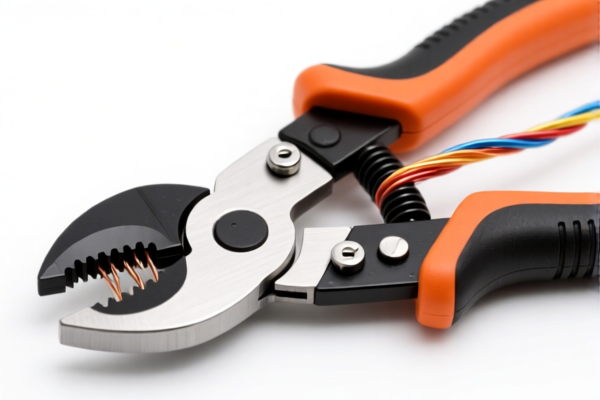
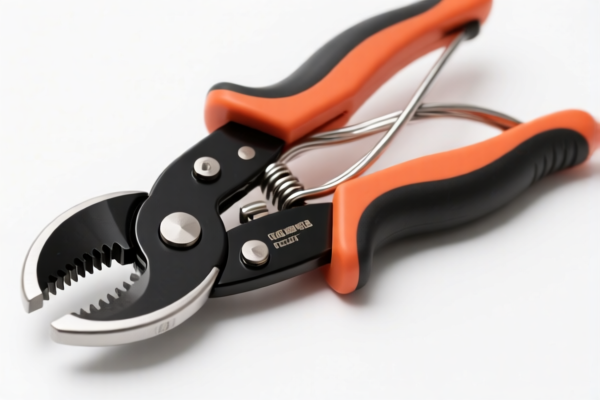
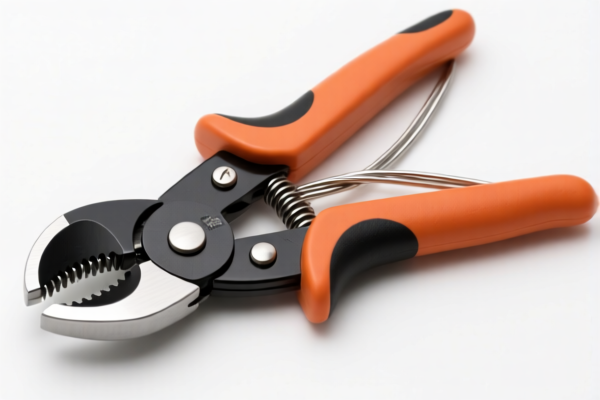
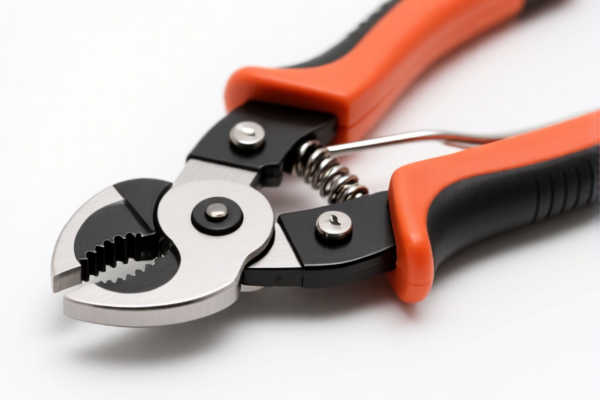
AI Analysis
✂️ PCB Stripper (Wiring Strippers / Cable Stripping Pliers)
🌐 HS Code Reference & Customs Clearance Guide | 2026 Latest Tariff Analysis | Professional Level Strategy
📌 Part 1: Product Definition & Classification: Do You Really Understand "PCB Stripper"?
A PCB Stripper (often technically classified as a Wiring Stripper or Cable Stripping Plier) is a precision hand tool used to remove insulation from wires, cables, or PCB traces without damaging the underlying metal conductor.
In international trade, it falls under the broader category of Hand Tools. However, precise classification depends on its specific mechanical design and material composition. Based on common industry standards and the provided data, it is primarily categorized as a Plier-Type Hand Tool.
⚠️ Key Distinction:
- If it is a manual plier with jaws for gripping/cutting/stripping → Chapter 82 (Tools, Implements, Cutlery);
- If it is an electric/pneumatic automated machine → Chapter 84 (Machinery);
- Note: The following analysis focuses on standard manual PCB/Wire Stripper tools.
📦 Part 2: HS Code Classification Details (2026 Latest Tariff Authoritative Comparison)
| HS Code | Product Description | Applicable Scenario | Material Conflict? |
|---|---|---|---|
8203.20.60.30 |
Pliers, including combination pliers, side cutters, diagonal cutters, etc. | Most Common: Manual wire stripping pliers, diagonal cutters, combination pliers. Metal construction. | ❌ No (Base metal tools) |
8203.20.20.00 |
Other pliers, nippers, pincers, tinners' squares and the like | Alternative: Specific types of pliers not listed in 8203.20.60. | ❌ No |
8205.59.30.80 |
Other hand tools (not elsewhere specified) | Fallback: If the tool does not fit the strict definition of "pliers" (e.g., specialized non-plier strippers). | ❌ No (Metal inferred) |
8205.59.80.00 |
Other hand tools (not elsewhere specified) | Alternative Fallback: Another classification for unspecified hand tools. | ❌ No |
🔍 Critical Insight:
- The most accurate classification for standard manual PCB/Wire Stripper is8203.20.60.30because it is mechanically a "Plier" (钳子).
-8205categories are generally "Other hand tools" and are used only if the tool does not fit the specific sub-headings of 8203 (Pliers/Nippers).
- Material Note: All these codes assume a base metal construction (steel/chrome-vanadium), which is standard for PCB strippers.
💰 Part 3: 2026 Latest Tariff Rate Detailed Explanation (Including Surtaxes & Policy Surcharges)
✅ Applicable Country: USA (US)
✅ Country of Origin: China (CN)
✅ Effective Time: 2025/2026 (Post-Trade War Tariffs)
🎯 1. 8203.20.60.30 —— Pliers, including Combination Pliers, Side Cutters, etc. (Most Recommended)
| Item | Content |
|---|---|
| Base Tariff | 12¢/doz. + 5.5% (Specific + Ad Valorem) |
| Section 301 Surcharge (USITC) | +25% (On top of ad valorem component) |
| Section 122 / IEEPA Surcharge | +10% (Targeted surcharge on Chinese goods) |
| Total Effective Rate | ~40.5% + 12¢/doz. (Note: Data source cites "12¢/doz. + 5.5% + 35.0%" total, where 35% likely combines 25%+10% surcharges on the ad valorem part) |
| Tax Calculation | (CIF Value × 5.5%) + 25% surcharge on (CIF × 5.5%) + 10% surcharge + Specific Fee (12¢ per dozen) |
| De Minimis Eligibility | ❌ No (Subject to full tariff scrutiny) |
| Legal Basis Path | USITC: 8203.20.60.30 → Section 301: Footnote 9903.88.01 → IEEPA/Section 122: +10% |
📌 Explanation:
- This is the standard classification for plier-type tools.
- The 5.5% is the base duty.
- The 25% is the Trump/Biden-era Section 301 tariff.
- The 10% is the additional Section 122 or IEEPA tariff (depending on current enforcement).
- Total Burden: Significant. High-volume importers must calculate the per-dozen specific fee carefully.
🎯 2. 8203.20.20.00 —— Other Pliers
| Item | Content |
|---|---|
| Base Tariff | 4.0% |
| Section 301 Surcharge | +25% |
| Section 122 / IEEPA Surcharge | +10% |
| Total Rate | 39.0% |
| Tax Calculation | CIF Value × 39.0% |
| De Minimis Eligibility | ❌ No |
| Legal Basis Path | USITC: 8203.20.20.00 → Section 301 → IEEPA/122 |
📌 Note:
- Slightly lower base rate (4%) compared to 8203.20.60.30 (5.5%), but no specific fee.
- Total effective rate is similar (~39%).
- Used if customs officers determine the tool doesn't fit the "combination/diagonal" definition of 8203.20.60.
🎯 3. 8205.59.30.80 & 8205.59.80.00 —— Other Hand Tools
| Item | Content |
|---|---|
| Base Tariff | 3.7% (for 8205.59.80.00) or 0.0% (for 8205.59.30.80, depending on specific sub-subheading interpretation) |
| Section 301 Surcharge | +25% |
| Section 122 / IEEPA Surcharge | +10% |
| Total Rate | 35.0% (for 8205.59.30.80) or 38.7% (for 8205.59.80.00) |
| Tax Calculation | CIF Value × Total Rate |
| De Minimis Eligibility | ❌ No |
📌 Risk Warning:
- While8205.59.30.80shows a lower total (35%), it is a less precise classification for plier-based strippers.
- Using "Other Hand Tools" for a tool that clearly resembles a plier may trigger customs audits for misclassification.
- Recommendation: Stick to8203series if possible for accuracy, unless the tool is uniquely non-plier (e.g., a rotary puller).
🛠️ Part 4: Customs Clearance Practical Advice (Battle-Tested Pitfall Avoidance)
✅ 1. Required Documentation Checklist (No Exceptions)
| Document | Mandatory? | Description |
|---|---|---|
| ✅ Product Specifications | ✔️ | Must specify: "Manual Wire Stripping Plier," Material (Steel/Chrome-Vanadium), Jaw Type (Blade, Hook, etc.). |
| ✅ Photos (Labeled) | ✔️ | Clear image of the tool in use or static. Highlight the "Plier" hinge structure to justify 8203. |
| ✅ HS Code Pre-Ruling | ✔️ | Highly recommended for 8203.20.60.30 vs 8205.59.30.80. |
| ✅ Commercial Invoice | ✔️ | Description: "Manual PCB Stripper / Wire Stripping Pliers, Steel, Model XYZ." |
| ✅ Packing List | ✔️ | Must match invoice exactly. |
| ✅ Origin Certificate | ✔️ | To prove CN origin for surcharge calculation. |
✅ 2. Classification Strategy (Key Mantra)
🔥 "Pliers go to 8203, Other Tools to 8205. Be Specific, Be Safe!"
| Scenario | Recommended HS Code | Reason |
|---|---|---|
| Standard Plier Strippers (Jaw-based) | 8203.20.60.30 |
Mechanically a plier. Most accurate. |
| Diagonal Cutters + Stripper Combo | 8203.20.60.30 |
Falls under "Pliers, including combination pliers." |
| Rotary/Cable Puller (Non-Plier) | 8205.59.30.80 |
Not a plier. Use "Other Hand Tools." |
| Electric/Pneumatic Stripper | 8467 or 8479 |
⚠️ Different Chapter! Not covered in this data. |
✅ 3. Special Case Handling
| Situation | Advice |
|---|---|
| Misclassification Risk | If you declare 8205 (Other) for a plier-like tool, CBP may reclassify to 8203, resulting in back taxes + penalties. |
| Small Quantity (De Minimis) | ❌ Not Eligible. All codes listed above are subject to full duties and surcharges. Do not use 80A/86A exemptions. |
| Material Declaration | Always state "Steel" or "Metal". If declared as "Plastic," it will be rejected or misclassified. |
| Kit Contents | If the stripper is sold with a case, declare the stripper as primary. Case is incidental. |
🌍 Part 5: Global Market Comparison (2026 Latest)
| Country/Region | Recommended HS Code | Base Tariff | Surcharges (China) | Total Est. | Notes |
|---|---|---|---|---|---|
| 🇺🇸 USA | 8203.20.60.30 |
5.5% + 12¢/doz | +35% (25%+10%) | ~40.5% + Fee | High duty. Plan pricing accordingly. |
| 🇨🇳 China | 8203.20.60.30 |
6% - 8% | None | ~7% | Import tax only. |
| 🇪🇺 EU | 8203.20.00 |
0% | None | 0% | No Section 301/122. |
| 🇬🇧 UK | 8203.20.00 |
4.5% | None | 4.5% | Post-Brexit standard. |
| 🇯🇵 Japan | 8203.20.00 |
3.5% | None | 3.5% | Stable. |
📌 Conclusion:
- USA is the most expensive market due to 301/122 surcharges.
- EU/UK/JP are much more favorable. Consider diversifying if US margins are tight.
📌 Part 6: Common Mistakes & Pitfalls (Lessons Learned)
❌ Mistake 1: Declaring PCB Stripper as "Tool" (8205) without justification.
👉 Risk: Customs may audit and reclassify to 8203, causing delays.
❌ Mistake 2: Ignoring the 12¢/doz specific duty in 8203.20.60.30.
👉 Risk: Underpayment for high-volume small-item imports. (12¢ x 1,000 pairs = $120 extra).
❌ Mistake 3: Claiming De Minimis (Section 321) for shipments < $800.
👉 Risk: Denied. Hand tools from China are explicitly excluded from de minimis relief when surcharges apply.
❌ Mistake 4: Vague Description: "Hand Tool."
👉 Risk: CBP requests additional info, causing port delays.
👉 Fix: Use "Manual Wire Stripping Pliers, Chrome Vanadium Steel."
✅ Correct Practice:
"Manual PCB Cable Stripper Pliers, Steel Jaw, Model STR-100, Net Weight 0.5kg, CN Origin"
🎯 Part 7: Conclusion: Precision in Classification, Profit in Clearance!
🎯 Remember the Mantra:
🔹 "Plier Structure? Use 8203.20.60.30!"
🔹 "Don't Hide the 12¢/Doz, or You'll Pay Twice!"
🔹 "35-40% Duty is Real, Price Your Goods Accordingly!"
📌 Pro Tip:
If you import high volumes, consider Section 301 Exclusions (if currently available) or tariff engineering (modifying tool design slightly to fit a different subheading).
Always apply for a US CBP Advance Ruling before your first shipment to lock in your HS Code.
📣 Immediate Action:
📞 Verify your tool's hinge/jaw design.
📝 Use8203.20.60.30as your default.
🚀 Clear Customs Smoothly, Protect Your Margins!
✨ Professional Clearance Starts with Accurate Classification!
💼 Every Percent Counts in the Age of Trade Wars!
Customer Reviews
About HS Code Classification
The Harmonized System (HS) is an internationally standardized nomenclature developed by the World Customs Organization (WCO) to classify traded products. Over 200 countries use the HS system as the basis for customs tariffs, trade statistics, and import/export regulations.
Each HS code follows a hierarchical structure:
- Chapter (2 digits) — Broad category of goods (e.g., Chapter 84: Machinery and Mechanical Appliances)
- Heading (4 digits) — More specific grouping within the chapter
- Subheading (6 digits) — Internationally standardized breakdown, used by all WCO member countries
- National subdivisions (8-10 digits) — Country-specific extensions for further classification, such as US HTSUS 10-digit codes
Correct HS code classification is essential for smooth customs clearance, accurate duty payment, and compliance with trade regulations. Misclassification can lead to customs delays, overpayment of duties, or penalties.
When importing from CN to US, the applicable tariff rates may include:
- Most-Favored-Nation (MFN) rate — The standard duty rate applied to WTO members
- General rate — Applied to countries without trade agreements
- Trade remedy duties — Additional tariffs such as Section 301 (anti-dumping), Section 232 (national security), or countervailing duties
The information provided on this page is for reference purposes only. For official classification, please consult with your local customs authority or a licensed customs broker.