PE Coated Paper
CN → USProduct Images
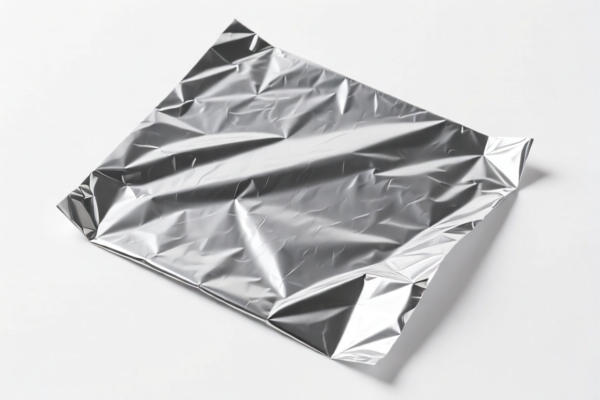

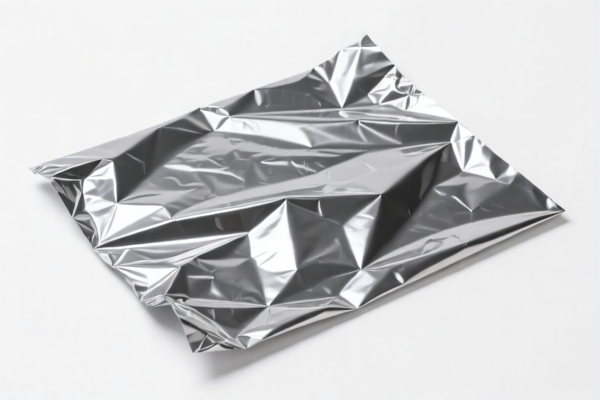
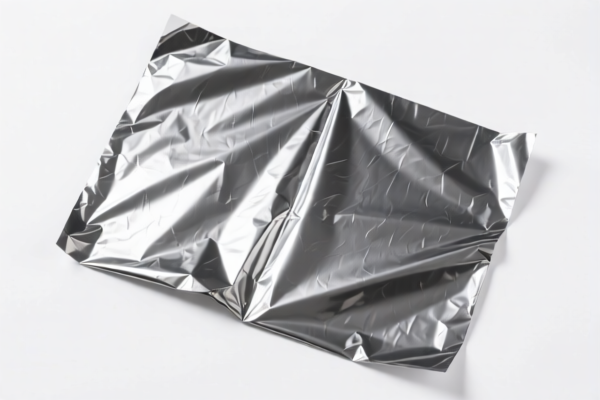
AI Analysis
📄 PE Coated Paper (Polyethylene Coated Paper)
🌐 HS Code Reference & Customs Clearance Guide | 2026 Latest Tariff Analysis | Professional Clearance Strategy
📌 I. Product Definition & Classification: What Exactly is "PE Coated Paper"?
PE Coated Paper is a composite material consisting of paper or paperboard coated with one or both sides with polyethylene (PE) plastic. It is primarily used for liquid-tight packaging, food storage, and disposable containers.
In international trade, it is strictly distinguished based on function and substrate:
- Paper Packaging Articles (Finished Goods): If the PE coating is applied to create a specific container (e.g., milk cartons, coffee cups, pizza boxes), it may fall under Chapter 48 (Paper packaging) or Chapter 39 (Plastic articles), depending on the essential character.
- Paper Products (Raw Material/Intermediate): If it is supplied as rolls, sheets, or reels intended for further processing (e.g., making bags, labels, or cartons), it is classified under Chapter 48 as "Coated Paper."
- Plastic Laminates: In some specific contexts, if the plastic layer is predominant and the paper serves merely as reinforcement, it might be argued under Chapter 39, but customs authorities overwhelmingly classify standard PE-coated paper for packaging under Chapter 48.
⚠️ Key Distinction Point:
- If it is a finished container (like a sealed milk carton) → Chapter 48 or 39.
- If it is raw material (sheets/rolls of coated paper) → Chapter 48.
- Most common import scenario: Raw PE-coated paper sheets/rolls → HS Code 4811.90.
📦 II. HS Code Classification Details (2026 Latest Tariff Authority Comparison)
| HS Code | Product Description | Application Scenario | PE Coating Thickness/Type |
|---|---|---|---|
4811.90.00.00 |
Other paper, paperboard, cellulose wadding and webs of cellulose fibers, coated, covered, impregnated, etc. | PE-Coated Paper (Sheets, Rolls, Reels) used for bags, labels, or further converting | ✅ Standard PE (LDPE/HDPE) |
4811.40.00.00 |
Paper, etc., corrugated | Corrugated Paper (Not PE coated, but often confused) | ❌ No |
4811.51.00.00 |
Paper, etc., in rolls or sheets, of a width > 36 cm, coated with plastics (other than PE) | PVC-coated, Aluminum foil laminated | ❌ Not PE |
3923.21.00.00 |
Sacks and bags, of polymers of ethylene | Finished PE bags | ❌ Finished Good |
4823.90.90.00 |
Other articles of paper | Finished paper cups, plates | ❌ Finished Good |
🔍 Important Reminder:
- PE Coated Paper is almost always classified under4811.90.00.00(Other coated paper) when imported as raw material. - Do not confuse it with "Plastic-coated paper" where the plastic is not PE (e.g., PVC, PP) which may have different sub-codes. - If the product is pre-cut into specific shapes (e.g., cup blanks), it might still be4811.90, but if it is a finished cup, it goes to4823.90.
💰 III. 2026 Latest Tariff Rate Breakdown (Including Surcharges & Policy Add-ons)
✅ Applicable Country: United States (US)
✅ Origin: China (CN)
✅ Effective Date: November 10, 2025 onwards (including subsequent imports)
🎯 1. 4811.90.00.00 —— PE Coated Paper (Raw Material/Sheets)
| Item | Content |
|---|---|
| Base Rate | 6.4% (Ad valorem) |
| USITC Surcharge (Section 301) | +7.5% (Standard rate for many paper products, check specific footnote) |
| IEEPA Surcharge | +10% (For China/HK products, effective Nov 10, 2025) |
| Total Effective Rate | ~23.9% (Base + 301 + IEEPA) |
| Tax Calculation | CIF Value × 23.9% |
| De Minimis Eligibility | ❌ Not Eligible (Deny de minimis for paper products from China under specific trade actions) |
| Legal Authority Path | IEEPA:9903.01.25 → USITC:4811.90.00.00 |
📌 Explanation:
- "Base 6.4%": Standard Most Favored Nation (MFN) rate for other coated paper. - "Section 301 (+7.5%)": Many paper products are subject to Section 301 tariffs. Note: Some paper products may be excluded or have different rates; verify specific HTS exclusion list. - "IEEPA +10%": The new surcharge effective Nov 10, 2025. - Total ~23.9%: This is a high-cost item. Profit margins must account for this.
🎯 2. Alternative: 4823.90.90.00 —— Finished Paper Cups/Plates (If applicable)
| Item | Content |
|---|---|
| Base Rate | 3.5% - 5.7% (Varies) |
| USITC Surcharge | +7.5% (Often applicable) |
| IEEPA Surcharge | +10% |
| Total Effective Rate | ~21% - 23.2% |
| De Minimis Eligibility | ❌ Not Eligible |
📌 Note: If you are importing finished cups, the rate is slightly lower but still significant. Most imports are raw sheets → stick to
4811.90.
🛠️ IV. Customs Clearance Practical Advice (Battle-Tested Pitfall Guide)
✅ 1. Required Document Checklist (Non-negotiable)
| Document | Must Provide | Description |
|---|---|---|
| ✅ Product Specification | ✔️ | Include: Paper weight (gsm), PE thickness (microns/mil), type of PE (LDPE/HDPE), coating side (single/double) |
| ✅ CoA (Certificate of Analysis) | ✔️ | From manufacturer confirming PE content and compliance with food safety standards (FDA 21 CFR) if for food use |
| ✅ Product Photos | ✔️ | Show roll/reel, cross-section (if possible), labeling, and any FDA logos |
| ✅ Commercial Invoice | ✔️ | Clearly state "PE Coated Paper Sheets/Rolls" – Do not say "Plastic Bags" |
| ✅ Packing List | ✔️ | Net weight vs. Gross weight. Paper products are heavy; ensure accurate G.W. |
| ✅ FCC/CE Reports (If Electronic) | ❌ | Not applicable for paper. But if part of a larger machine, include. |
✅ 2. Declaration Tips (Critical Mantra)
🔥 "Specify Gsm and PE Thickness, Avoid 'Plastic' Labels, Claim FDA if Food-Grade"
| Scenario | Correct Declaration | Wrong Practice |
|---|---|---|
| Raw PE-Coated Paper Rolls | 4811.90.00.00 |
Misdeclaring as "Plastic Film" → Chapter 39 → Higher scrutiny |
| Finished Paper Cups | 4823.90.90.00 |
Misdeclaring as "Paper Sheets" → Wrong HS, Penalty |
| Food-Grade PE Coating | Mention "FDA 21 CFR 176.170 Compliant" | Not mentioning food safety → Potential rejection by FDA |
| Recycled Paper Content | Specify % Recycled Content | Not specifying → May miss eco-credits or face restrictions |
✅ 3. Special Cases
| Case | Handling Advice |
|---|---|
| Food Contact | Must include FDA declaration. PE coating must comply with FDA 21 CFR 176.170. |
| Recycled Paper | If >50% recycled, may qualify for different environmental labels but not tariff reduction. |
| Bleached vs. Unbleached | Unbleached may have slightly different base rates, but IEEPA/301 still apply. |
| Laminated with Aluminum | If aluminum is dominant, it may shift to Chapter 4891 or 4811.60. Consult expert. |
🌍 V. Global Major Market Clearance Comparison (2026 Latest)
| Country/Region | Recommended HS Code | Tariff Rate (China Origin) | Certification Requirements | Remarks |
|---|---|---|---|---|
| 🇺🇸 USA | 4811.90.00.00 |
~23.9% (6.4% + 7.5% + 10%) | FDA (if food), TSCA | High tariffs due to IEEPA |
| 🇨🇳 China | 4811.90.00.00 |
6.4% - 8% | CCC (if applicable) | No surcharge |
| 🇪🇺 EU | 4811.90.00.00 |
0% - 6.5% (Varies) | REACH, LFGB (Germany) | No IEEPA, but strict chemical rules |
| 🇬🇧 UK | 4811.90.00.00 |
0% - 6.5% | UKCA | Post-Brexit rules apply |
| 🇯🇵 Japan | 4811.90.00.00 |
3.2% - 5% | JAS (Food) | Low base rate, no surcharge |
📌 Conclusion:
- USA is the most expensive market due to IEEPA + Section 301.
- EU and Japan are more favorable tariff-wise, but REACH (EU) and LFGB (Germany) are strictly enforced for PE coatings (plasticizers, heavy metals).
📌 VI. Common Mistakes & Pitfall Guide (Lessons Learned)
❌ Mistake 1: Declaring as "Plastic Film" (Chapter 39)
👉 Consequence: Customs may reject because paper is the essential character. Penalty + Misdeclaration Fee.
❌ Mistake 2: Omitting "PE Coating" in Description
👉 Consequence: Customs may classify as plain paper (lower rate) and later audit for underpayment → Back Duties + Fines.
❌ Mistake 3: Not Specifying Food-Grade Status
👉 Consequence: If for food use, failure to declare FDA compliance → FDA Hold/Refusal.
❌ Mistake 4: Incorrect Weight Declaration
👉 Consequence: Paper products are heavy. Under-declaring G.W. leads to Seizure or Heavy Fines.
✅ Correct Practice:
"PE Coated Paper, Unbleached, 200gsm, Single Side LDPE Coated, 10 Micron, Rolls, 1000mm Width, FDA Compliant for Food Contact, Model PC-200, No Plasticizer Added"
🎯 VII. Conclusion: Professional Declaration, Save Time, Reduce Cost!
🎯 Remember the Mantra:
🔹 "Paper is Essential, PE is Coating, 4811 is King, FDA is King too!"
🔹 "HS Code 4811.90, Tariff ~24%, Declare Clearly, Avoid FDA Hold!"
📌 Tips:
- If your PE Coated Paper is recycled, ensure you have documentation for the recycled content percentage.
- For USA imports, consider supply chain diversification (e.g., Vietnam, Thailand) to avoid IEEPA surcharge.
- Always request CoA (Certificate of Analysis) from the supplier for PE content and heavy metal limits.
📣 Immediate Action:
📞 Consult Customs Broker + Provide Product Specs + Verify FDA Status
🚀 Let your PE Coated Paper, Clear Customs Smoothly, Enter US Market Efficiently, Boost Profit!
✨ Professional Clearance Starts with Accurate Classification!
💼 Every Cent of Tariff is Worth Calculating Precisely!
Customer Reviews
About HS Code Classification
The Harmonized System (HS) is an internationally standardized nomenclature developed by the World Customs Organization (WCO) to classify traded products. Over 200 countries use the HS system as the basis for customs tariffs, trade statistics, and import/export regulations.
Each HS code follows a hierarchical structure:
- Chapter (2 digits) — Broad category of goods (e.g., Chapter 84: Machinery and Mechanical Appliances)
- Heading (4 digits) — More specific grouping within the chapter
- Subheading (6 digits) — Internationally standardized breakdown, used by all WCO member countries
- National subdivisions (8-10 digits) — Country-specific extensions for further classification, such as US HTSUS 10-digit codes
Correct HS code classification is essential for smooth customs clearance, accurate duty payment, and compliance with trade regulations. Misclassification can lead to customs delays, overpayment of duties, or penalties.
When importing from CN to US, the applicable tariff rates may include:
- Most-Favored-Nation (MFN) rate — The standard duty rate applied to WTO members
- General rate — Applied to countries without trade agreements
- Trade remedy duties — Additional tariffs such as Section 301 (anti-dumping), Section 232 (national security), or countervailing duties
The information provided on this page is for reference purposes only. For official classification, please consult with your local customs authority or a licensed customs broker.