PET Aluminum Coated Anti Fog Film
CN → US| HS Code | Tariff Rate | Origin | Destination | Doc |
|---|---|---|---|---|
| 7607205000 | 17.5% | CN | US | Official Doc |
| 7607201000 | 13.7% | CN | US | Official Doc |
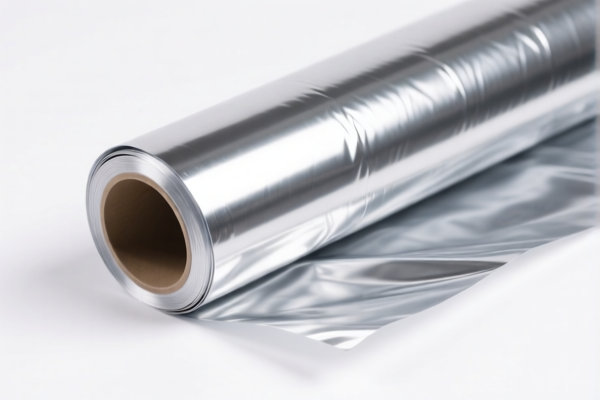
Product Images



AI Analysis
🛍️ PET Aluminum Coated Anti Fog Film (Aluminum Foil Backed Products)
🌐 HS Code Reference & Customs Clearance Guide | 2026 Latest Tariff Analysis | Professional Entry Strategy
📌 I. Product Definition & Classification: Do You Understand "Aluminum Foil"?
PET Aluminum Coated Anti Fog Film is a composite material widely used in agriculture (greenhouses), construction, and packaging. In international trade, it is not classified as a plastic film or a textile, but rather as Aluminum Foil based on its primary structural component and thickness.
According to Chapter 76 of the Harmonized System (HS), if the product consists of aluminum foil (thickness ≤ 0.2 mm) backed with paper, plastic, or other materials, it falls under heading 7607.
The key distinction lies in the surface treatment: * Plain/Functional Backing: If the aluminum surface is standard (silver/metallic) and primarily functional (heat insulation, anti-fog barrier), it is classified as "Other." * Decorative/Printed Backing: If the aluminum surface features printed characters, designs, fancy effects, or patterns (intended for aesthetics or branding), it is classified as "Covered or decorated."
⚠️ Critical Distinction Point:
- If the film has no visible print/design on the aluminum side → Classified as7607.20.50.00
- If the film has printed patterns, logos, or decorative colors on the aluminum side → Classified as7607.20.10.00
📦 II. HS Code Classification Details (2026 Latest Tariff Authority Comparison)
| HS Code | Product Description | Application Scenario | Key Identification Feature |
|---|---|---|---|
7607.20.50.00 |
Aluminum foil (thickness ≤ 0.2 mm), Backed: Other | Standard greenhouse film, industrial insulation, anti-fog barrier rolls | ✅ No decorative print/design on aluminum surface |
7607.20.10.00 |
Aluminum foil (thickness ≤ 0.2 mm), Backed: Covered or decorated with a character, design, fancy effect or pattern | Decorative packaging, branded anti-fog films, promotional materials | ✅ Yes (Printed/design visible on aluminum layer) |
🔍 Key Reminder:
- The backing material (PET, plastic, paper) does not change the chapter; it remains Chapter 76 (Aluminum). - The thickness must be ≤ 0.2 mm. If thicker, it falls under different headings (e.g., sheets/plates). - Anti-fog treatment is considered a functional coating and does not alter the classification unless it involves a specific chemical composition that redefines the product entirely (rare for standard coated films).
💰 III. 2026 Latest Tariff Rate Breakdown (Including Surcharges & Policy Add-ons)
✅ Applicable Country: United States (US)
✅ Origin: China (CN)
✅ Effective Date: 2025–2026 (Current Policy)
🎯 1. 7607.20.50.00 —— Aluminum Foil, Backed: Other
| Item | Content |
|---|---|
| Base Tariff | 0.0% (ad valorem) |
| Section 301 / Additional Tariff | +7.5% (Specific to this HS Code under current trade measures) |
| Total Tariff Rate | 7.5% |
| Tax Calculation | CIF Value × 7.5% |
| De Minimis Exemption | ❌ Not Applicable (Generally, Section 301 items are excluded from de minimis) |
| Legal Basis Path | HTSUS:7607.20.50.00 → Section 301 Footnote |
📌 Explanation:
- Although the base duty is 0%, the 7.5% additional tariff applies due to ongoing trade policies targeting specific aluminum products from China. - This is a fixed rate, not subject to complex IEEPA/USITC multi-layer calculations like electronics. - Total Cost Impact: Moderate. Ensure your CIF declaration is accurate to avoid over/under-payment.
🎯 2. 7607.20.10.00 —— Aluminum Foil, Backed: Decorated/Printed
| Item | Content |
|---|---|
| Base Tariff | 0.0% (ad valorem) |
| Section 301 / Additional Tariff | 0.0% (Exempt from additional surcharges under current scope) |
| Total Tariff Rate | 0.0% |
| Tax Calculation | No Duty |
| De Minimis Exemption | ⚠️ Check Specifics (May apply if value < $800 and not on exclusion list) |
| Legal Basis Path | HTSUS:7607.20.10.00 |
📌 Explanation:
- 0% Total Duty makes this code highly attractive for compliant imports. - Crucial Condition: The product MUST have visible decoration, print, or design on the aluminum surface. - Risk: Misclassifying a printed item as "Other" (7607.20.50.00) could lead to underpayment and penalties. Conversely, classifying a plain item as "Decorated" might trigger scrutiny for lack of evidence.
🛠️ IV. Customs Clearance Practical Advice (Battle-Tested Pitfall Avoidance)
✅ 1. Documentation Checklist (Non-Negotiable)
| Document | Required | Description |
|---|---|---|
| ✅ Product Specification Sheet | ✔️ | Must state: Aluminum thickness (≤0.2mm), Backing material (PET/Plastic), Function (Anti-fog/Insulation) |
| ✅ High-Resolution Product Photos | ✔️ | Front (Aluminum side) and Back (PET side). Must clearly show presence or absence of print/design. |
| ✅ Commercial Invoice | ✔️ | Clearly describe as "PET Aluminum Coated Anti-Fog Film" or similar. Avoid vague terms like "Aluminum Sheet." |
| ✅ Packing List | ✔️ | Include roll dimensions, weight, and quantity. |
| ✅ Proof of Decoration (If claiming 0%) | ✔️ | If using 7607.20.10.00, provide sample photos showing the print/design. |
✅ 2. Declaration Strategy (Key Rules)
🔥 "Thickness < 0.2mm, Backing Matters, Print = 0%, No Print = 7.5%!"
| Scenario | Correct HS Code | Incorrect Action | Consequence |
|---|---|---|---|
| Plain Silver Film (No print) | 7607.20.50.00 |
Declare as 7607.20.10.00 |
Audit Risk: Customs will demand proof of decoration. If none found, back duty + penalty. |
| Printed/Branded Film | 7607.20.10.00 |
Declare as 7607.20.50.00 |
Overpayment: You pay 7.5% unnecessarily. Can file for refund, but complex. |
| Thick Foil (>0.2mm) | Wrong Chapter | Declare under 7607 | Rejection: Must move to Chapter 76 (Sheets/Plates) or 6306 (Tarps), depending on use. |
✅ 3. Special Case Handling
| Situation | Handling Advice |
|---|---|
| Multi-Layer Lamination | If the aluminum is sandwiched between two PET layers, it is still Aluminum Foil if aluminum is the primary component. Ensure thickness is declared correctly. |
| Anti-Fog Coating | If the anti-fog layer is on the PET side (not aluminum), it doesn’t change HS code. If it’s a chemical treatment on the aluminum, still 7607. |
| Re-Export / Bonded Warehouse | If importing into a bonded zone for re-export, ensure HS code is pre-approved to avoid duty accrual. |
🌍 V. Global Market Comparison (2026 Latest)
| Country/Region | Recommended HS Code | Tariff (China Origin) | Certification | Notes |
|---|---|---|---|---|
| 🇺🇸 USA | 7607.20.50.00 / 7607.20.10.00 |
7.5% / 0.0% | None | Critical: Print status determines duty. |
| 🇪🇺 EU | 7607.20.10 / 7607.20.90 | 0.0% (Most) | CE (if applicable) | Generally low duty for aluminum foil. |
| 🇨🇳 China | 7607.20.10 / 7607.20.90 | 5.0% – 10.0% | None | Import duty varies by backing material. |
| 🇯🇵 Japan | 7607.20.00 | 0.0% – 3.0% | None | Minimal barriers. |
📌 Conclusion:
- USA is the only major market with significant additional tariffs on this product, and only on non-decorated items. - Strategic Tip: If your product allows for branding or decorative printing, classify under7607.20.10.00to achieve 0% duty in the US, provided the design is integral to the product.
📌 VI. Common Mistakes & Pitfall Guide (Lessons Learned)
❌ Mistake 1: Declaring "Plastic Film" because the backing is PET.
👉 Result: Misclassification. Aluminum layer dominates the product identity. Duty may be higher or rejected.
❌ Mistake 2: Ignoring the "Printed" requirement for 7607.20.10.00.
👉 Result: Customs rejects the 0% rate, demands 7.5% + penalties for misdeclaration.
❌ Mistake 3: Not specifying thickness in the description.
👉 Result: Ambiguity. Customs may assign a default higher tariff code. Always state: "Thickness: 0.15mm".
✅ Correct Description Example:
"Aluminum Foil, Thickness 0.18mm, Backed with PET, Anti-Fog Coated, Unprinted/Silver Surface" →
7607.20.50.00
"Aluminum Foil, Thickness 0.18mm, Backed with PET, Printed with Company Logo & Pattern" →7607.20.10.00
🎯 VII. Conclusion: Professional Declaration, Cost Optimization!
🎯 Remember the Rule:
🔹 "Plain Film = 7.5% Duty"
🔹 "Printed/Decorated Film = 0% Duty"
🔹 "Thickness < 0.2mm is Non-Negotiable!"
📌 Pro Tip:
If you are exporting to the US, consider adding minimal decorative printing (e.g., branding, warning labels) to the aluminum side to qualify for 7607.20.10.00 and save 7.5% in duties. This is a common and compliant cost-saving strategy in aluminum foil trade.
📣 Immediate Action:
📞 Verify your product’s surface with the US Customs Border Protection (CBP) via a Binding Ruling if uncertain.
🚀 Accurate HS Code = Accurate Cost = Smooth Clearance!
✨ Professional Clearance Starts with Precise Classification!
💼 Your 7.5% Savings are Worth the Attention to Detail!
Customer Reviews
About HS Code Classification
The Harmonized System (HS) is an internationally standardized nomenclature developed by the World Customs Organization (WCO) to classify traded products. Over 200 countries use the HS system as the basis for customs tariffs, trade statistics, and import/export regulations.
Each HS code follows a hierarchical structure:
- Chapter (2 digits) — Broad category of goods (e.g., Chapter 84: Machinery and Mechanical Appliances)
- Heading (4 digits) — More specific grouping within the chapter
- Subheading (6 digits) — Internationally standardized breakdown, used by all WCO member countries
- National subdivisions (8-10 digits) — Country-specific extensions for further classification, such as US HTSUS 10-digit codes
Correct HS code classification is essential for smooth customs clearance, accurate duty payment, and compliance with trade regulations. Misclassification can lead to customs delays, overpayment of duties, or penalties.
When importing from CN to US, the applicable tariff rates may include:
- Most-Favored-Nation (MFN) rate — The standard duty rate applied to WTO members
- General rate — Applied to countries without trade agreements
- Trade remedy duties — Additional tariffs such as Section 301 (anti-dumping), Section 232 (national security), or countervailing duties
The information provided on this page is for reference purposes only. For official classification, please consult with your local customs authority or a licensed customs broker.