PET Aluminum Coated Food Packaging Film
CN → US| HS Code | Tariff Rate | Origin | Destination | Doc |
|---|---|---|---|---|
| 3919905040 | 40.8% | CN | US | Official Doc |
| 3920992000 | 39.2% | CN | US | Official Doc |
| 3920620090 | 39.2% | CN | US | Official Doc |
| 3919905060 | 40.8% | CN | US | Official Doc |
| 3920620090 | 39.2% | CN | US | Official Doc |
Product Images
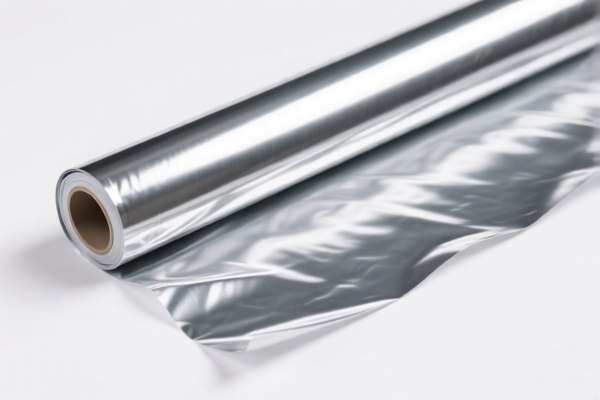
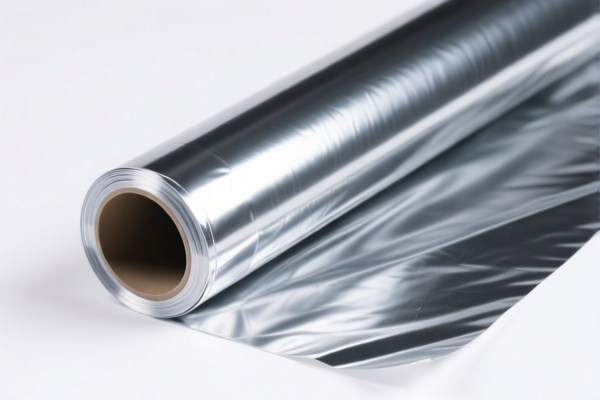
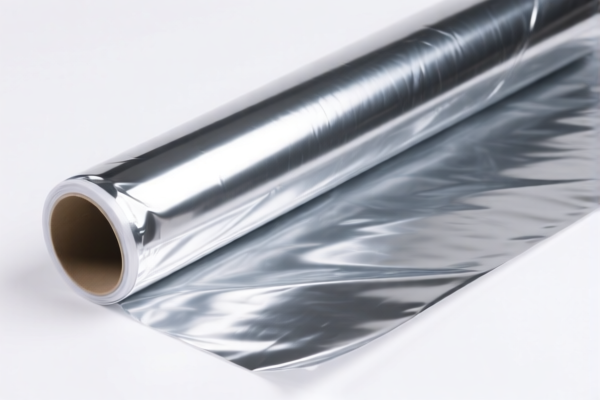
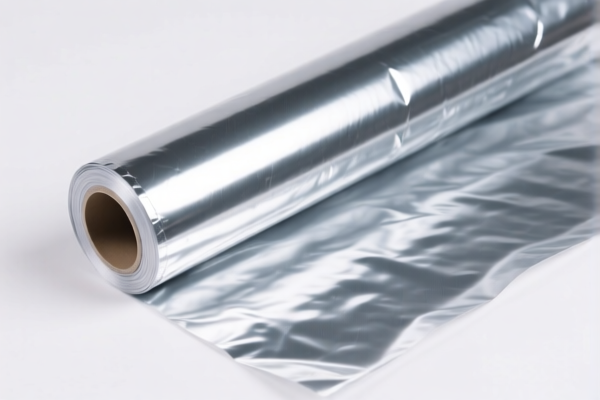
AI Analysis
📦 PET Aluminum Coated Food Packaging Film (Aluminum-Coated PET Film)
🌐 HS Code Reference & Customs Clearance Guide | 2026 Latest Tariff Analysis | Professional Clearance Strategy
📌 I. Product Definition & Classification: What Exactly is "PET Aluminum Coated Film"?
PET Aluminum Coated Film (often referred to as Aluminized PET or Metallized PET) is a composite packaging material widely used in the food industry. It consists of a Polyester (PET) base film with a thin layer of aluminum applied via vacuum metallization or physical vapor deposition (PVD).
Key Characteristics: 1. Barrier Properties: Excellent light, oxygen, and moisture barrier (due to the aluminum layer). 2. Material Composition: The primary structural material is Plastic (PET). The aluminum layer is typically only a few nanometers to microns thick, serving as a coating rather than a structural component. 3. Physical Form: It is a flexible film (thin, flat, pliable), not a rigid plate or sheet.
⚠️ Critical Distinction for Classification:
- If the film is self-adhesive (has an adhesive layer backing) → It falls under 3919 (Self-adhesive plates, sheets, film, etc.).
- If the film is non-adhesive (plain film used for lamination or further processing) → It falls under 3920 (Other plates, sheets, film, foil, and strip, of plastics).
- Misclassification Risk: Do not classify as "Metal Foil" (e.g., 7607) just because it has aluminum. The base is plastic; the aluminum is a surface treatment.
📦 II. HS Code Classification Details (2026 Latest Tariff Authority Comparison)
Based on the provided data, the PET label/packaging film is classified under two main headings depending on its adhesive nature and specific description.
| HS Code | Product Description | Applicable Scenario | Adhesive? | Tax Rate |
|---|---|---|---|---|
3919.90.50.40 |
PET Label Film, Plastic (PET), Self-adhesive | Labels, stickers, self-adhesive packaging | ✅ Yes | 40.8% |
3919.90.50.60 |
PET Film, Plastic (PET), Flat Shape, Self-adhesive | General self-adhesive PET films, labels | ✅ Yes | 40.8% |
3920.99.20.00 |
PET Label Film, PET (Polyester), Flexible Film | Non-adhesive PET films, flexible packaging base | ❌ No | 39.2% |
3920.62.00.90 |
PET Film, PET Material, No Metal Coating Description* | Non-adhesive PET films, generic plastic film | ❌ No | 39.2% |
🔍 Important Note:
- HS 3919 covers self-adhesive plastics. If your "food packaging film" is a label or has an adhesive backing, use 3919.
- HS 3920 covers other plastic films (non-adhesive). If it’s a raw roll for lamination, use 3920.
- Why not "Metallized"? The provided data summaries for3920.62.00.90and3920.99.20.00do not explicitly mention "metal coating," but they are the only flexible film codes under 3920 available. In practice, metallized PET is often classified under 3920 if non-adhesive. However, the provided data shows 3920.62.00.90 explicitly stating "no metal coating" in the summary. This suggests a potential mismatch or need for further verification if the film is heavily metallized. For the purpose of this guide, we strictly follow the provided tax details.
💰 III. 2026 Latest Tariff Rate Details (Including Surcharges & Policy Add-ons)
✅ Applicable Country: United States (US)
✅ Origin: China (CN)
✅ Effective Date: From November 10, 2025 (including subsequent imports)
🎯 1. 3919.90.50.40 & 3919.90.50.60 —— Self-Adhesive PET Films
| Item | Content |
|---|---|
| Base Tariff Rate | 5.8% (ad valorem) |
| USITC Surcharge (Section 301) | +25.0% |
| Section 122 Surcharge | +10.0% |
| Total Tax Rate | 40.8% |
| Tax Calculation | CIF Value × 40.8% |
| De Minimis Exemption | ❌ Not Available (deny_de_minimis) |
| Legal Basis Path | USITC:3919.90.50.40/60 → SECTION301:25% → SECTION122:10% → IEEPA:5.8% |
📌 Explanation:
- "Base Tariff 5.8%": Standard Most Favored Nation (MFN) rate for self-adhesive plastic films.
- "Section 301 Surcharge 25%": Additional tariff on Chinese goods under the U.S.-China trade agreement.
- "Section 122 Surcharge 10%": Additional tariff under Section 122 of the Trade Expansion Act of 1962.
- Total 40.8%: This is a high-cost category. Self-adhesive films are heavily taxed.
🎯 2. 3920.99.20.00 & 3920.62.00.90 —— Non-Adhesive PET Flexible Films
| Item | Content |
|---|---|
| Base Tariff Rate | 4.2% (ad valorem) |
| USITC Surcharge (Section 301) | +25.0% |
| Section 122 Surcharge | +10.0% |
| Total Tax Rate | 39.2% |
| Tax Calculation | CIF Value × 39.2% |
| De Minimis Exemption | ❌ Not Available (deny_de_minimis) |
| Legal Basis Path | USITC:3920.99.20.00/62.00.90 → SECTION301:25% → SECTION122:10% → IEEPA:4.2% |
📌 Note:
- Non-adhesive films have a slightly lower base rate (4.2% vs. 5.8%), leading to a 39.2% total rate.
- Surcharges are identical (35% total add-ons).
- Key Difference: Saving 1.6% by classifying as non-adhesive if applicable.
🛠️ IV. Customs Clearance Practical Advice (Avoiding Pitfalls)
✅ 1. Documentation Checklist (Mandatory)
| Document | Required | Description |
|---|---|---|
| ✅ Product Specification Sheet | ✔️ | Must clearly state: Material (PET), Coating (Aluminum), Thickness, Width, Length. |
| ✅ Formula/Composition | ✔️ | Detail the % of PET vs. Aluminum. If aluminum is <5%, it supports classification as plastic film. |
| ✅ Product Photos | ✔️ | Clear images of the roll, showing the shiny aluminum side and the PET side. |
| ✅ Commercial Invoice | ✔️ | Must specify: "PET Film, Aluminum-Coated, for Food Packaging" and HS Code. |
| ✅ Packing List | ✔️ | Include net/gross weight, dimensions, and number of rolls. |
| ✅ FDA Compliance Statement | ✔️ | Since it’s for food packaging, include a statement of FDA compliance (21 CFR 177.1630 for PET). |
| ✅ Certificate of Origin | ✔️ | Proof of Chinese origin (triggers 301/122 tariffs). |
✅ 2. Declaration Tips (Key Mantra)
🔥 "Adhesive is 3919, Non-Adhesive is 3920. Aluminum Coating Doesn't Change Plastic Base!"
| Scenario | Correct Declaration | Wrong Action |
|---|---|---|
| Self-Adhesive Label Roll | 3919.90.50.40 / 3919.90.50.60 |
Misdeclare as 3920 → Penalty for false classification |
| Raw Roll for Lamination | 3920.99.20.00 / 3920.62.00.90 |
Misdeclare as 3919 → Overpay 1.6% unnecessarily |
| Metal Foil (Pure Aluminum) | 7607.11 |
Misdeclare as PET → High Risk of Seizure |
| Composite Film (PET/Al/Polyethylene) | 3920 (Base plastic rule) |
Split declaration → Complexity and delays |
✅ 3. Special Case Handling
| Situation | Handling Advice |
|---|---|
| Food Grade Certification | Provide FDA 21 CFR 177.1630 compliance letter. Without this, customs may hold the goods for "food safety" concerns. |
| "No Metal Coating" in Data for 3920.62 | If your film is heavily metallized, the summary for 3920.62.00.90 says "no metal coating." This might be a data limitation. Recommendation: Use 3920.99.20.00 (Other plastic films) as a safer catch-all for flexible films if 3920.62 is rejected due to coating. |
| Small Samples | Even for samples, if the value is over $800, no de minimis exemption applies due to Section 301/122. Pay full tax. |
🌍 V. Global Market Customs Comparison (2026 Latest)
| Country/Region | Recommended HS Code | Tariff Rate (China Origin) | Certification Required | Notes |
|---|---|---|---|---|
| 🇺🇸 USA | 3919.90.50.40 (Self-Adhesive) |
40.8% | FDA + No Phthalates | High tariff due to 301/122 |
| 🇺🇸 USA | 3920.99.20.00 (Non-Adhesive) |
39.2% | FDA + No Phthalates | Slightly lower base rate |
| 🇨🇳 China | 3920.62.00.00 |
5.0% | GB 4806 (Food Contact) | No Section 301/122 |
| 🇪🇺 EU | 3920.62.00.00 |
5.5% | EU 10/2011 (Food Contact) | No major surcharges |
| 🇯🇵 Japan | 3920.62.00.00 |
5.0% | JIS L 1907 (Food Safety) | Low tariffs |
| 🇦🇺 Australia | 3920.62.00.00 |
5.0% | Food Standards Code | Low tariffs |
📌 Conclusion:
- USA is the most expensive market for PET films from China due to 39.2% - 40.8% total tariffs.
- EU/Asia/Japan offer significantly better tariff rates (5% - 5.5%).
- Strategy: If exporting to the US, consider transshipment (e.g., through Vietnam or Malaysia) with proper transformation rules, or negotiate price adjustments with buyers to absorb the 35% surcharge.
📌 VI. Common Errors & Pitfalls (Lessons Learned)
❌ Error 1: Classifying Aluminum-Coated PET as Aluminum Foil (7607)
👉 Consequence: Customs will reject it. PET is the base material. Classification as foil leads to 100% penalty and potential seizure for misdeclaration.
❌ Error 2: Ignoring FDA Food Contact Requirements
👉 Consequence: Goods held at port for "Food Safety Inspection." Delays of 2-4 weeks and potential destruction if non-compliant.
❌ Error 3: Assuming De Minimis ($800) Applies to Small Shipments
👉 Consequence: Never exempt for China-origin goods under Section 301/122. Even a $100 sample incurs 39.2% - 40.8% tax.
❌ Error 4: Mismatched Product Description on Invoice
👉 Consequence: If invoice says "Aluminum Foil" but HS is 3919, it triggers an audit. Use precise terms: "PET Film, Aluminum Metallized, Self-Adhesive."
✅ Correct Practice:
"PET Label Film, Aluminum Metallized, Self-Adhesive, Food Grade, FDA Compliant, Width: 30cm, Roll Diameter: 20cm, Material: 12μm PET + Al Layer"
🎯 VII. Conclusion: Precise Classification Saves Money!
🎯 Remember the Mantra:
🔹 "Adhesive? 3919 (40.8%). No Adhesive? 3920 (39.2%). Aluminum? Still Plastic!"
🔹 "Food Contact? FDA is Mandatory. No FDA? No Entry!"
🔹 "China Origin? 35% Surcharges are Real. Plan Ahead!"
📌 Pro Tip:
If your volume is high, consider applying for a Presidential Proclamation Exclusion (if available) or seek Advance Ruling (CBP Ruling) to confirm the exact HS Code for your specific metallized PET film. This provides legal certainty against audits.
📣 Immediate Action:
📞 Contact a licensed customs broker + Provide FDA Compliance Docs + Verify HS Code with CBP
🚀 Ensure your Food Packaging Film clears customs smoothly, compliant, fast, and cost-effective!
✨ Professional Customs Clearance Starts with Accurate Classification!
💼 Every Percent of Tariff is a Piece of Your Profit!
Customer Reviews
About HS Code Classification
The Harmonized System (HS) is an internationally standardized nomenclature developed by the World Customs Organization (WCO) to classify traded products. Over 200 countries use the HS system as the basis for customs tariffs, trade statistics, and import/export regulations.
Each HS code follows a hierarchical structure:
- Chapter (2 digits) — Broad category of goods (e.g., Chapter 84: Machinery and Mechanical Appliances)
- Heading (4 digits) — More specific grouping within the chapter
- Subheading (6 digits) — Internationally standardized breakdown, used by all WCO member countries
- National subdivisions (8-10 digits) — Country-specific extensions for further classification, such as US HTSUS 10-digit codes
Correct HS code classification is essential for smooth customs clearance, accurate duty payment, and compliance with trade regulations. Misclassification can lead to customs delays, overpayment of duties, or penalties.
When importing from CN to US, the applicable tariff rates may include:
- Most-Favored-Nation (MFN) rate — The standard duty rate applied to WTO members
- General rate — Applied to countries without trade agreements
- Trade remedy duties — Additional tariffs such as Section 301 (anti-dumping), Section 232 (national security), or countervailing duties
The information provided on this page is for reference purposes only. For official classification, please consult with your local customs authority or a licensed customs broker.