PET Backing Fiber Reinforced Tape
CN → US| HS Code | Tariff Rate | Origin | Destination | Doc |
|---|---|---|---|---|
| 3919905020 | 40.8% | CN | US | Official Doc |
| 3926909989 | 22.8% | CN | US | Official Doc |
| 3926905500 | 40.1% | CN | US | Official Doc |
| 3919102010 | 40.8% | CN | US | Official Doc |
| 5603110070 | 35.0% | CN | US | Official Doc |
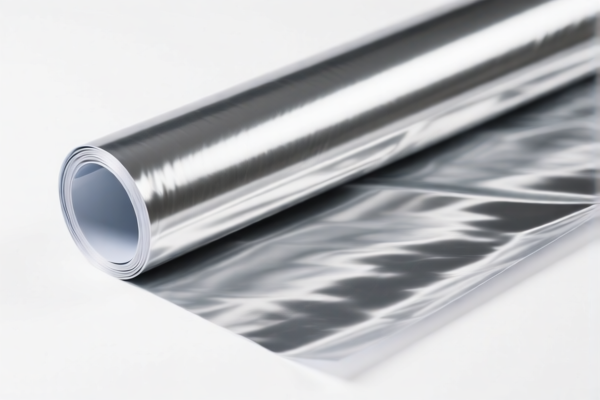
Product Images



AI Analysis
🧶 PET Backing Fiber Reinforced Tape
🌐 HS Code Classification & Customs Clearance Guide | 2026 Latest Tariff Analysis | Strategic Compliance Strategy
📌 1. Product Definition: What is "PET Backing Fiber Reinforced Tape"?
"Fiber Reinforced Tape" refers to a composite adhesive tape where the strength and durability are enhanced by embedded fibers (such as fiberglass, polyester, or aramid). The PET (Polyethylene Terephthalate) backing serves as the structural carrier, providing dimensional stability, heat resistance, and tensile strength, while the adhesive layer bonds the product to surfaces.
In international trade, classification depends heavily on: * Material Composition: Is it primarily plastic/polymer? Or is it considered a textile? * Form: Is it rolled (卷装)? Is it self-adhesive? * Function: Is it for industrial reinforcement, electrical insulation, or general packaging?
⚠️ Key Distinction:
- If the product is primarily a plastic sheet with adhesive and fiber reinforcement → It falls under Chapter 39 (Plastics).
- If the product is primarily a non-woven fabric with plastic coating → It may fall under Chapter 56 (Textiles/Non-wovens).
📦 2. HS Code Classification Details (Based on Provided Data)
| HS Code | Summary Description | Applicability & Logic |
|---|---|---|
3919.90.50.20 |
Fiber-Reinforced Tape, Material & Form Match | Best fit for tapes where plastic/polymer content dominates. Specifically targets fiber-reinforced tapes that don't fit specific sub-categories like masking tape. Matches "material & form." |
3926.90.99.89 |
Plastic & Other Material Articles, Containing Plastic/Polymer | Used when the item is classified as an article made of plastic containing other materials. Suitable if the fiber reinforcement is minor or the primary function is "general plastic article." |
3926.90.55.00 |
Plastic/Other Material Articles Containing Textile Fibers | Critical for PET Backing: If PET is considered a "textile fiber" in this context or if the product is seen as a composite article where textile elements are significant. |
3919.10.20.10 |
Fiber-Reinforced Tape, Rolled Self-Adhesive Feature | Specific for rolled (卷装) and self-adhesive (自粘) tapes. This is the most precise fit if the product is clearly a standard roll of adhesive tape with fiber reinforcement. |
5603.11.00.70 |
Non-Woven Artifacts of Man-Made Filaments/Fibers | Only applicable if the PET backing is treated as a non-woven fabric and the product is primarily classified as a textile non-woven item with plastic coating. |
🔍 Classification Strategy:
- Primary Choice:3919.10.20.10or3919.90.50.20if the product is a standard adhesive tape roll with fiber reinforcement.
- Secondary Choice:3926.90.55.00if customs views the PET/fiber composite as a "textile-containing plastic article."
- Alternative:5603.11.00.70if the product is marketed specifically as a non-woven industrial fabric rather than a "tape."
💰 3. 2026 Latest Tariff Rate Breakdown (US Market)
✅ Applicable Country: United States (US)
✅ Origin: China (CN)
✅ Effective Date: Current applicable rates include Section 301 and IEEPA surcharges.
🎯 1. 3919.90.50.20 – Fiber-Reinforced Tape (Material Match)
| Item | Content |
|---|---|
| Base Tariff | 5.8% |
| Section 301 Surcharge | 25.0% |
| 122 Clause Surcharge | 10.0% |
| Total Effective Rate | 40.8% |
| Calculation Basis | CIF Value × 40.8% |
| De Minimis Exemption | ❌ Not Eligible (Due to Section 301/122) |
| Legal Basis | USITC:3919.90.50.20 → Section 301 → IEEPA Section 122 |
📌 Explanation:
- The 25% is the standard Section 301 tariff for many plastic products from China.
- The 10% is an additional surcharge under Section 122 (or similar specific trade remedy clauses).
- Total Burden: High. Must factor this into landed cost.
🎯 2. 3919.10.20.10 – Fiber-Reinforced Tape, Rolled Self-Adhesive
| Item | Content |
|---|---|
| Base Tariff | 5.8% |
| Section 301 Surcharge | 25.0% |
| 122 Clause Surcharge | 10.0% |
| Total Effective Rate | 40.8% |
| Calculation Basis | CIF Value × 40.8% |
| De Minimis Exemption | ❌ Not Eligible |
| Legal Basis | USITC:3919.10.20.10 → Section 301 → IEEPA Section 122 |
📌 Note:
- This code has the same rate as3919.90.50.20.
- Ensure the product is clearly described as "Rolled" and "Self-Adhesive" to qualify for this more specific code if challenged.
🎯 3. 3926.90.99.89 – Plastic Articles, General Category
| Item | Content |
|---|---|
| Base Tariff | 5.3% |
| Section 301 Surcharge | 7.5% |
| 122 Clause Surcharge | 10.0% |
| Total Effective Rate | 22.8% |
| Calculation Basis | CIF Value × 22.8% |
| De Minimis Exemption | ❌ Not Eligible |
| Legal Basis | USITC:3926.90.99.89 → Section 301 (Reduced Category) → IEEPA Section 122 |
📌 Strategic Opportunity:
- This is the lowest tax rate in the provided data (22.8%).
- Risk: Customs may reject this if the product is clearly a "tape" (Chapter 3919) rather than a "general article."
- Usage: Use only if the product is not primarily a "tape" but a custom plastic component with adhesive.
🎯 4. 3926.90.55.00 – Plastic Articles with Textile Fibers
| Item | Content |
|---|---|
| Base Tariff | 5.1% |
| Section 301 Surcharge | 25.0% |
| 122 Clause Surcharge | 10.0% |
| Total Effective Rate | 40.1% |
| Calculation Basis | CIF Value × 40.1% |
| De Minimis Exemption | ❌ Not Eligible |
| Legal Basis | USITC:3926.90.55.00 → Section 301 → IEEPA Section 122 |
📌 Comparison:
- Slightly lower than3919codes (40.1% vs 40.8%), but still high.
- Use if customs insists the fiber content makes it a "textile-plastic composite."
🎯 5. 5603.11.00.70 – Non-Woven Man-Made Filaments
| Item | Content |
|---|---|
| Base Tariff | 0.0% |
| Section 301 Surcharge | 25.0% |
| 122 Clause Surcharge | 10.0% |
| Total Effective Rate | 35.0% |
| Calculation Basis | CIF Value × 35.0% |
| De Minimis Exemption | ❌ Not Eligible |
| Legal Basis | USITC:5603.11.00.70 → Section 301 → IEEPA Section 122 |
📌 Note:
- Lower base tariff (0%) but high surcharges.
- Only applicable if the product is classified as a non-woven textile rather than a plastic tape.
🛠️ 4. Customs Clearance Practical Advice
✅ 1. Documentation Checklist (Essential)
| Document | Mandatory? | Description |
|---|---|---|
| ✅ Product Specification | ✔️ | Detail: PET backing thickness, fiber type (glass/polyester), adhesive type, tensile strength. |
| ✅ Technical Data Sheet (TDS) | ✔️ | Proves the material composition (Plastic vs. Textile ratio). |
| ✅ Product Photos | ✔️ | Show the roll, adhesive side, and fiber texture. |
| ✅ Commercial Invoice | ✔️ | Clearly state: "PET Backing Fiber Reinforced Adhesive Tape" |
| ✅ Packing List | ✔️ | Net/Gross weight, number of rolls. |
| ✅ Origin Certificate | ✔️ | If claiming any potential exemptions (rare for China origin in these categories). |
✅ 2. Declaration Strategy (Key Tips)
🔥 Golden Rule: "Describe Material, Form, and Function Clearly!"
| Scenario | Recommended Declaration | Risk |
|---|---|---|
| Standard Roll Tape | 3919.10.20.10 or 3919.90.50.20 |
Low risk if correctly described as "tape." |
| Custom Plastic Sheet with Adhesive | 3926.90.99.89 |
Lower tax (22.8%), but high scrutiny. Must prove it's not a "tape." |
| Non-Woven Fabric Roll | 5603.11.00.70 |
Moderate tax (35.0%). Must prove non-woven structure. |
| Composite Textile-Plastic | 3926.90.55.00 |
High tax (40.1%). Use if fiber content is significant. |
📌 Warning:
- Do not simply write "Tape." Use "PET Backing Fiber Reinforced Adhesive Tape" to avoid misclassification.
- If using3926.90.99.89for lower tax, ensure the product is not primarily sold as a "tape" in the market, but as a "plastic component."
✅ 3. Special Cases
| Case | Handling Advice |
|---|---|
| OEM/Custom Order | Provide customer specs to justify classification under 3926 if applicable. |
| Multi-Layer Tape | Provide cross-section diagram to prove PET is the primary structural layer. |
| Electrical Insulation Tape | If used for insulation, still classified under 3919 unless specific electrical codes apply. |
| Small Quantity (De Minimis) | ❌ Not Eligible for Section 301/122 surcharges. All shipments subject to full duties. |
🌍 5. Global Market Comparison (2026)
| Country/Region | Recommended HS Code | Tariff Rate | Certification | Remarks |
|---|---|---|---|---|
| 🇺🇸 USA | 3919.10.20.10 |
40.8% | None specific | High tariff due to Section 301/122. |
| 🇨🇳 China | 3919.10.20.10 |
~5-10% | RoHS (if applicable) | Lower duty, but focus on export compliance. |
| 🇪🇺 EU | 3919.10.20.10 |
0-6.5% | REACH, RoHS | No Section 301. Lower total cost. |
| 🇯🇵 Japan | 3919.10.20.10 |
0-6.5% | PSE (if electrical) | Moderate duty. |
| 🇮🇳 India | 3919.10.20.10 |
~10-20% | BIS (if applicable) | Check specific anti-dumping duties. |
📌 Conclusion:
- USA is the highest-cost market due to additional surcharges.
- EU and Japan offer more favorable tariff environments.
- Supply Chain Strategy: Consider sourcing from non-China origins (e.g., Vietnam, Thailand) to avoid Section 301 and 122 Clause surcharges if shipping to the US.
📌 6. Common Errors & Pitfalls (Lessons Learned)
❌ Error 1: Classifying as 3919.10.20.10 but declaring as "General Adhesive Tape"
👉 Consequence: Customs may reclassify to 3926 with higher scrutiny or reject the claim if "fiber reinforced" is not evident.
❌ Error 2: Using 3926.90.99.89 to save 18% tax without proper justification
👉 Consequence: High risk of audit, penalties, and retroactive duty payments if deemed a "tape."
❌ Error 3: Ignoring Section 122 Clause
👉 Consequence: Underpaying duties by 10%. All shipments from China to US are subject to this.
❌ Error 4: Assuming De Minimis applies
👉 Consequence: Small packages will still incur 25-40% duties. Do not use de minimis for cost savings.
✅ Correct Practice:
"PET Backing, Fiber Reinforced, Self-Adhesive Tape, Rolled, For Industrial Reinforcement"
Use HS Code3919.10.20.10or3919.90.50.20with clear material description.
🎯 7. Conclusion: Professional Classification, Cost Optimization
🎯 Remember:
🔹 "Tape is Chapter 39, Not 56 (Unless Non-Woven)"
🔹 "China to US = Base + 25% + 10% = ~40%"
🔹 "Lower Tax (3926) Needs Strong Justification"
📌 Pro Tip:
If your volume is high, consider Advance Ruling from US CBP to lock in classification and avoid post-clearance audits.
Explore supply chain diversification to mitigate tariff risks.
📣 Immediate Action:
📞 Consult with a licensed customs broker.
📄 Prepare technical data sheets proving material composition.
🚀 Optimize your HS Code selection for compliance and cost efficiency.
✨ Precision in Classification, Profit in Customs!
💼 Every percentage point of duty saved is pure profit!
Customer Reviews
About HS Code Classification
The Harmonized System (HS) is an internationally standardized nomenclature developed by the World Customs Organization (WCO) to classify traded products. Over 200 countries use the HS system as the basis for customs tariffs, trade statistics, and import/export regulations.
Each HS code follows a hierarchical structure:
- Chapter (2 digits) — Broad category of goods (e.g., Chapter 84: Machinery and Mechanical Appliances)
- Heading (4 digits) — More specific grouping within the chapter
- Subheading (6 digits) — Internationally standardized breakdown, used by all WCO member countries
- National subdivisions (8-10 digits) — Country-specific extensions for further classification, such as US HTSUS 10-digit codes
Correct HS code classification is essential for smooth customs clearance, accurate duty payment, and compliance with trade regulations. Misclassification can lead to customs delays, overpayment of duties, or penalties.
When importing from CN to US, the applicable tariff rates may include:
- Most-Favored-Nation (MFN) rate — The standard duty rate applied to WTO members
- General rate — Applied to countries without trade agreements
- Trade remedy duties — Additional tariffs such as Section 301 (anti-dumping), Section 232 (national security), or countervailing duties
The information provided on this page is for reference purposes only. For official classification, please consult with your local customs authority or a licensed customs broker.