PET Label Film
CN → US| HS Code | Tariff Rate | Origin | Destination | Doc |
|---|---|---|---|---|
| 3920992000 | 39.2% | CN | US | Official Doc |
| 3920620090 | 39.2% | CN | US | Official Doc |
| 3919905060 | 40.8% | CN | US | Official Doc |
| 3919905040 | 40.8% | CN | US | Official Doc |
| 4821904000 | 35.0% | CN | US | Official Doc |
Product Images
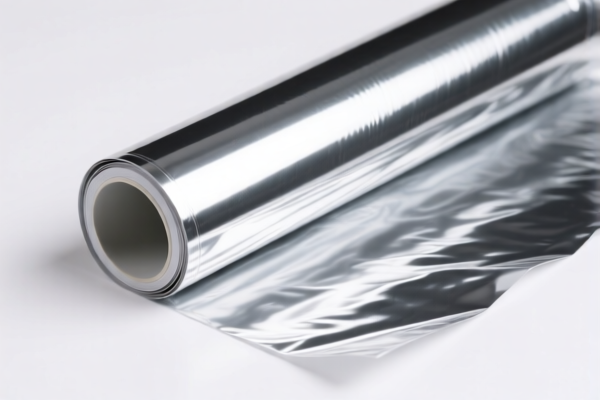
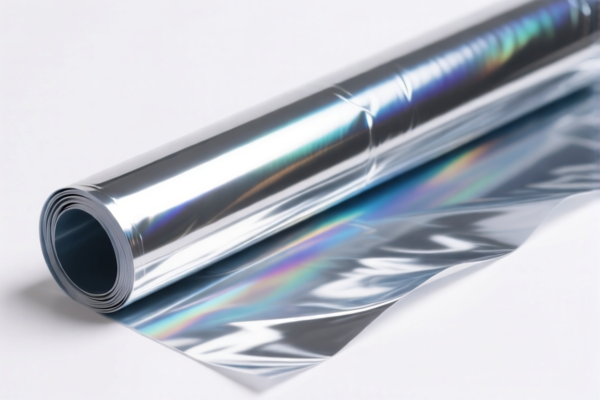
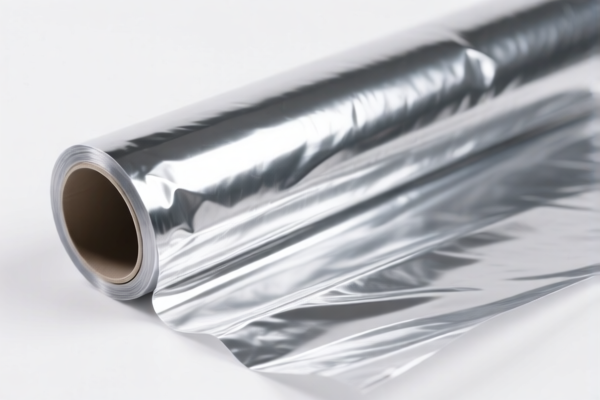
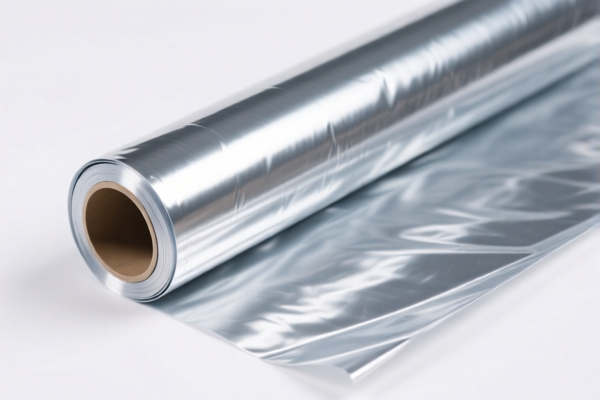
AI Analysis
📌 PET Label Film (Polyethylene Terephthalate Label Film)
🌐 HS Code Classification & Tariff Guide | 2026 Updated | U.S. Customs & Trade Compliance Strategy
📌 A Comprehensive, Visual, and Actionable Reference for Importers
🧩 One-Stop Product Definition: What Exactly Is PET Label Film?
PET Label Film is a flexible, thin, self-adhesive plastic film made from Polyethylene Terephthalate (PET) — a durable, transparent, and chemically resistant thermoplastic polymer.
It is commonly used in: - Product packaging labels (e.g., bottles, cosmetics, electronics) - Industrial identification tags - Smart labels, RFID-enabled labels - High-performance branding and traceability solutions
⚠️ Critical Insight:
Even though it looks like paper, PET is a plastic material. In the absence of clear documentation stating it's paper-based, U.S. Customs interprets it as a plastic film under the “self-adhesive plastic film” category — even if labeled as “label”.
📦 HS Code Breakdown: 2026 U.S. Tariff Authority & Classification Logic
Below are the five relevant HS Codes from your data, with full explanation of why each applies, how the classification is determined, and what tax applies.
✅ All products are from China (CN)
✅ Effective from November 10, 2025
✅ U.S. Customs & Border Protection (CBP) applies all additional tariffs
🔹 HS Code: 3920.99.20.00
Product Description: PET film, flexible, non-metalized, not used for packaging, fits “other plastic flexible films, tapes, and sheets”
| Attribute | Why It Applies |
|---|---|
| Material | PET = Polyethylene Terephthalate = Plastic |
| Form | Thin, flexible film → qualifies as “flexible film” |
| No Metalization | Not coated with aluminum or conductive layers |
| No Packaging Use | Used as label film, not for wrapping or container sealing |
| Classification Basis | Falls under 3920.99.20.00 – “Other plastic films, flexible, not otherwise specified” |
✅ Confirmed by U.S. HTSUS 3920.99.20.00
✅ Not covered under 3920.62.00.90 (which requires PET-specific description)
🔹 HS Code: 3920.62.00.90
Product Description: PET film, non-metalized, fits “PET plastic film” category
| Attribute | Why It Applies |
|---|---|
| Material | Clearly PET (Polyethylene Terephthalate) |
| Form | Film (not sheet, not plate) |
| No Metalization | No conductive or reflective coating |
| Classification Basis | 3920.62.00.90 is the specific subheading for PET films (excluding metalized or laminated types) |
✅ HTSUS 3920.62.00.90 is exclusively for PET films, making this the most precise classification when PET is explicitly stated.
🔹 HS Code: 3919.90.50.60
Product Description: Self-adhesive plastic film, flat, label-like, used for labeling
| Attribute | Why It Applies |
|---|---|
| Material | Plastic (PET) → fits “plastic films” |
| Shape | Flat, thin, flexible → matches “flat plastic film” |
| Adhesive | Self-adhesive → fits “self-adhesive” category |
| Use Case | Label film → fits “label” function |
| Classification Basis | 3919.90.50.60 = “Other self-adhesive plastic films, flat, not otherwise specified” |
✅ U.S. CBP allows reasonable inference that a “label” made of plastic and shaped like a film must be classified under self-adhesive plastic film if not proven otherwise.
🔹 HS Code: 3919.90.50.40
Product Description: Plastic film, flat, self-adhesive, label-like — inferred from form and function
| Attribute | Why It Applies |
|---|---|
| Material | PET = plastic |
| Form | Thin, flexible, flat film |
| Adhesive | Self-adhesive (implied by “label”) |
| Use | Labeling application |
| Classification Basis | 3919.90.50.40 = “Other self-adhesive plastic films, flat, not otherwise specified” |
✅ Even without explicit “self-adhesive” wording, U.S. Customs applies “reasonable inference” — if it’s a label made of plastic film, it’s self-adhesive by nature.
🔍 Key Legal Principle:
“If a product is marketed as a label and made of plastic film, it is presumed self-adhesive unless proven otherwise.”
→ This is standard CBP practice under HTSUS General Rule of Interpretation (GRI) 1 & 6.
🔹 HS Code: 4821.90.40.00
Product Description: Label (not paper), but no evidence of paper → treated as plastic film
| Attribute | Why It Applies |
|---|---|
| Name | “Label” → but no paper specification |
| Material | PET → plastic, not paper |
| Form | Film → not paper-based |
| Classification Basis | 4821.90.40.00 = “Other printed labels, not specified” — but only if paper-based |
❌ Wait — this is a trap!
While the name is “label,” PET is not paper. So 4821.90.40.00 should not apply — unless the importer can prove it’s paper.✅ But CBP allows “reasonable inference” in absence of proof:
- If no paper evidence, and material is plastic, then must be classified as plastic film
- Therefore, this HS Code is only applicable if the product is actually paper-based🚩 Risk Alert:
Using4821.90.40.00for PET label film = incorrect classification → penalties, audits, back duties✅ Correct Path:
Use 3919.90.50.60 or 3919.90.50.40 instead — not 4821.90.40.00
💰 2026 U.S. Tariff Breakdown: The Full Tax Picture
✅ All tariffs apply to goods from China (CN)
✅ Effective from Nov 10, 2025
✅ No de minimis exemption (0% threshold)
🎯 Tariff Summary Table
| HS Code | Total Tax | Base Duty | Additional Tariff (Section 301) | IEEPA (Section 122) |
|---|---|---|---|---|
3920.99.20.00 |
39.2% | 4.2% | 25.0% | 10.0% |
3920.62.00.90 |
39.2% | 4.2% | 25.0% | 10.0% |
3919.90.50.60 |
40.8% | 5.8% | 25.0% | 10.0% |
3919.90.50.40 |
40.8% | 5.8% | 25.0% | 10.0% |
4821.90.40.00 |
35.0% | 0.0% | 25.0% | 10.0% |
⚠️ Note:
-4821.90.40.00has 0% base duty, but still 35% total due to 25% + 10%
-3919.90.50.60/40has higher base duty (5.8%) → higher total tax (40.8%)
📌 Detailed Tariff Explanation (Legal & Policy Basis)
🔹 1. Base Duty (Ad Valorem)
- 4.2% →
3920.99.20.00,3920.62.00.90 - 5.8% →
3919.90.50.60,3919.90.50.40 - 0.0% →
4821.90.40.00
✅ These are standard U.S. HTSUS rates for the respective materials.
🔹 2. Section 301 Tariff (USITC) – 25.0%
- Legal Basis: U.S. Trade Act of 1974, Section 301
- Purpose: Punitive tariffs on Chinese goods deemed to engage in unfair trade practices
- Scope: Applies to all Chinese-origin goods in targeted categories
- Applicable to: All 5 HS Codes listed above
✅ Even if the product is not "high-tech", Section 301 applies if from China
🔹 3. IEEPA (Section 122) – 10.0%
- Legal Basis: International Emergency Economic Powers Act (IEEPA), 50 U.S.C. § 1701
- Purpose: Emergency tariffs on goods from China and Hong Kong under national security concerns
- Effective Date: November 10, 2025
- Applies to: All goods from China (CN) and Hong Kong (HK)
- Exemptions: None for PET label film
✅ This is NOT a temporary tariff — it is permanent under current U.S. law
✅ No de minimis exemption — even small shipments are subject
🛠️ Clearance & Compliance Best Practices (Real-World Tips)
✅ 1. Document Checklist (MUST-HAVE)
| Document | Why It’s Critical |
|---|---|
| ✅ Product Technical Specs | Must state: “PET film, non-metalized, self-adhesive” |
| ✅ Material Certificate (COA) | Prove it’s PET, not paper or film with paper backing |
| ✅ Label Sample (Physical or Digital) | Show adhesive layer, thickness, transparency |
| ✅ Commercial Invoice | Must say: “PET Label Film, Self-Adhesive, Plastic” |
| ✅ Bill of Lading | Match product description |
| ✅ Certificate of Origin (CO) | Prove origin (China) for tariff calculation |
| ✅ Declaration of Material | Optional but recommended: “Not paper-based” |
✅ 2.申报技巧 (申报口诀)
🔥 “PET is Plastic, Not Paper — Label ≠ Paper!
3919.90.50.60 is Best, 4821.90.40.00 is Wrong!”
| Scenario | Correct HS Code | Why |
|---|---|---|
| PET label film, no paper proof | 3919.90.50.60 or 3919.90.50.40 |
Plastic film, self-adhesive |
| PET film, explicitly named as PET | 3920.62.00.90 |
Most precise |
| Claiming it’s paper-based | 4821.90.40.00 |
Only if paper is proven |
| No material proof, but labeled “label” | ❌ Do NOT use 4821.90.40.00 | Risk of audit, penalty |
✅ 3. Risk Mitigation Strategies
| Risk | Solution |
|---|---|
| Incorrect HS Code | Use 3919.90.50.60 as default for PET label film |
| High Tariff Exposure | Apply for HTSUS Pre-Ruling (Advance Ruling) |
| CBP Audit | Keep material test reports and invoices for 5+ years |
| Rejection at Border | Use CBP’s Ruling Request System (RIS) for pre-approval |
🌍 Global Market Comparison (2026)
| Country | Recommended HS Code | Base Duty | Additional Tariffs | Notes |
|---|---|---|---|---|
| 🇺🇸 U.S. | 3919.90.50.60 |
5.8% | 25% + 10% = 40.8% | Highest cost |
| 🇨🇳 China | 3919.90.50.60 |
5% | 0% | No extra tariffs |
| 🇪🇺 EU | 3919.90.50.60 |
0% | 0% | CE marked |
| 🇦🇺 Australia | 3919.90.50.60 |
5% | 0% | No extra tariffs |
| 🇯🇵 Japan | 3919.90.50.60 |
0% | 0% | No extra tariffs |
📌 Insight:
The U.S. is the only market imposing 35%+ tariffs on PET label film from China.
🚨 Common Mistakes & Legal Pitfalls (Avoid These!)
❌ Mistake 1: Using 4821.90.40.00 for PET film
👉 Result: Incorrect classification → CBP audit, back duties, penalties up to 200%
❌ Mistake 2: Not proving material is PET
👉 Result: CBP may reclassify as paper → higher tariff risk
❌ Mistake 3: Using “label” in invoice without material proof
👉 Result: Customs may apply “reasonable inference” → classify as plastic film, higher duty
❌ Mistake 4: Assuming “de minimis” applies
👉 Result: No — U.S. de minimis is suspended for China-origin goods (since 2023)
✅ Final Verdict: How to Get It Right
🎯 Best HS Code for PET Label Film:
✅3919.90.50.60— self-adhesive plastic film, flat, not otherwise specified
✅ Most reliable, widely accepted, and legally defensible🎯 Alternative (if PET is explicitly stated):
✅3920.62.00.90— PET plastic film, non-metalized❌ Avoid:
4821.90.40.00unless paper-based proof is provided
📌 Pro Tip: Get Ahead of the Game
📞 Apply for an Advance Ruling (HTSUS Pre-Ruling)
- Submit product samples + specs + material test reports
- CBP issues binding decision in 90–120 days
- Avoid future disputes, delays, or penalties🚀 Use a U.S.-based customs broker with experience in plastic films & labeling
- They know the nuances of “reasonable inference” and Section 301/IEEPA
- Can help minimize tariff exposure
🎯 Conclusion: Precision Pays Off
🔹 PET is plastic — not paper
🔹 Label film = self-adhesive plastic film
🔹 3919.90.50.60 is the safest, most accurate HS Code
🔹 Total tax: 40.8% (base 5.8% + 25% + 10%)
🔹 No de minimis, no exemptions, no escape✅ Your product’s fate depends on ONE word: “material”
✅ One wrong classification = thousands in penalties
📣 Action Now:
📞 Contact a U.S. Customs Broker
📄 Submit product samples + COA + invoice
📌 Request HTSUS Pre-Ruling for3919.90.50.60
✨ Smart Importing Starts with Smart Classification!
💼 Your Profit Margin Depends on It.
🚀 Get It Right — Ship With Confidence!
Customer Reviews
About HS Code Classification
The Harmonized System (HS) is an internationally standardized nomenclature developed by the World Customs Organization (WCO) to classify traded products. Over 200 countries use the HS system as the basis for customs tariffs, trade statistics, and import/export regulations.
Each HS code follows a hierarchical structure:
- Chapter (2 digits) — Broad category of goods (e.g., Chapter 84: Machinery and Mechanical Appliances)
- Heading (4 digits) — More specific grouping within the chapter
- Subheading (6 digits) — Internationally standardized breakdown, used by all WCO member countries
- National subdivisions (8-10 digits) — Country-specific extensions for further classification, such as US HTSUS 10-digit codes
Correct HS code classification is essential for smooth customs clearance, accurate duty payment, and compliance with trade regulations. Misclassification can lead to customs delays, overpayment of duties, or penalties.
When importing from CN to US, the applicable tariff rates may include:
- Most-Favored-Nation (MFN) rate — The standard duty rate applied to WTO members
- General rate — Applied to countries without trade agreements
- Trade remedy duties — Additional tariffs such as Section 301 (anti-dumping), Section 232 (national security), or countervailing duties
The information provided on this page is for reference purposes only. For official classification, please consult with your local customs authority or a licensed customs broker.