PET Metallized Heat Shrink Film
CN → US| HS Code | Tariff Rate | Origin | Destination | Doc |
|---|---|---|---|---|
| 7607201000 | 13.7% | CN | US | Official Doc |
| 3926909989 | 22.8% | CN | US | Official Doc |
| 7607205000 | 17.5% | CN | US | Official Doc |
| 3926909400 | 35.0% | CN | US | Official Doc |
| 3926909989 | 22.8% | CN | US | Official Doc |
Product Images
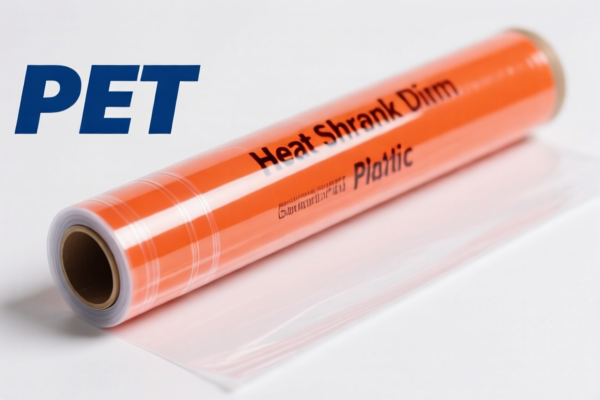
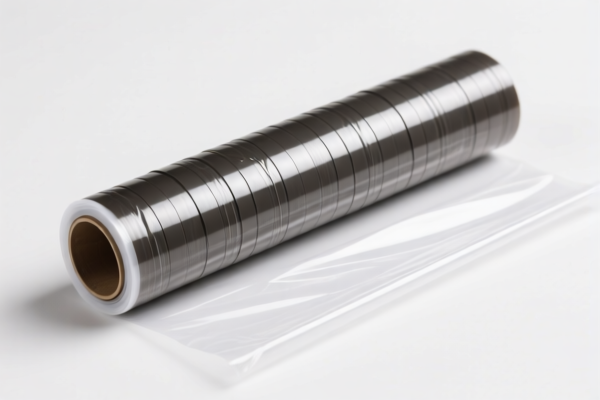
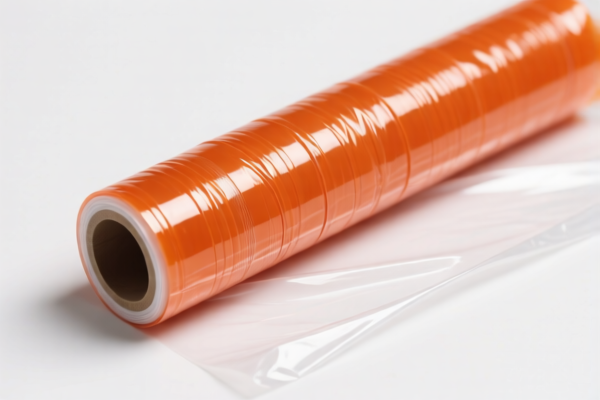
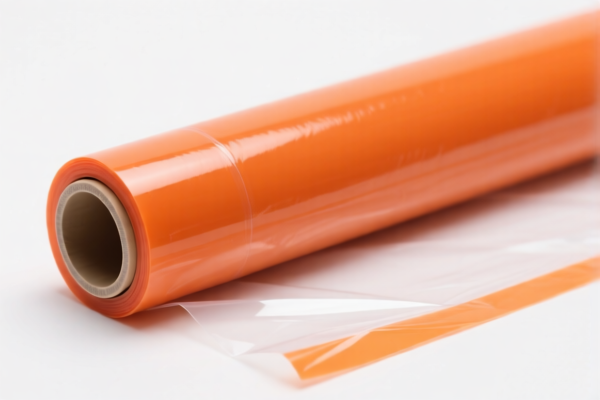
AI Analysis
📦 PET Metallized Heat Shrink Film (PET镀铝热收缩膜)
🌐 HS Code Reference & Customs Clearance Guide | 2026 Latest Tariff Analysis | Professional通关 Strategy
📌 One, Product Definition and Classification: What is "PET Metallized Heat Shrink Film"?
PET Metallized Heat Shrink Film is a high-performance packaging material composed of Polyethylene Terephthalate (PET) with a thin layer of aluminum deposited on its surface, designed to shrink when heated. In international trade, its classification hinges on the primary function and structural composition: - Metal-Backed Aluminum Products: If classified based on the aluminum coating as a functional layer providing barrier properties (often treated as a composite with metal backing). - Plastic Articles: If classified based on the PET substrate as the primary structural material, with metallization considered a surface treatment.
⚠️ Key Distinction Point:
- If the customs authority views the aluminum layer as the essential character providing the "foil-like" barrier → It falls under HS 7607 (Aluminum Foil). - If the PET substrate is viewed as the essential character, with metallization as a minor processing step → It falls under HS 3926 (Other Plastic Articles).
📊 Two, HS Code Classification Details (2026 Latest Tariff Authority Comparison)
| HS Code | Product Description | Application Scenario | Reason for Classification |
|---|---|---|---|
7607.20.10.00 |
Aluminum foil, backed with paper, paperboard, plastics or similar backing materials; thickness > 0.2mm | PET metallized film where the aluminum layer is significant; considered a "plastic-backed aluminum foil" | ✅ Metal-Backed Composite: Views the product primarily as aluminum foil with a plastic backing. |
7607.20.50.00 |
Aluminum foil, backed with plastics; other than those of 7607.20.10 | PET metallized film classified under a different subheading within Aluminum Foils; implies a different thickness or structural interpretation than 7607.20.10 | ✅ Metal-Backed Composite: Another angle on aluminum foil classification, potentially implying different thickness criteria. |
3926.90.99.89 |
Other articles of plastics and articles of other materials of headings 39.01 to 39.14 | General "other plastic articles"; widely used for PET films that are not specifically listed elsewhere; considers the film primarily as a plastic sheet | ✅ Plastic Article: Views the product primarily as a plastic film, with metallization as a surface finish. |
3926.90.94.00 |
Other plastic articles | Plastic sheets/films that do not fit into more specific plastic categories; broader category for plastic films | ✅ Plastic Article: Another category for plastic sheets, potentially used if the film doesn't meet specific "sheet" definitions in other subheadings. |
🔍 Key Reminder:
- HS 7607 classification usually results in lower basic tariffs but is subject to specific Section XX (Metals) rules. - HS 3926 classification results in higher basic tariffs but is subject to Section XV (Plastics) rules. - The Heat Shrink property does not change the HS code; it is a functional characteristic of the PET material.
💰 Three, 2026 Latest Tariff Rate Details (Including Surtaxes, Policy Add-ons)
✅ Applicable Country: United States (US)
✅ Origin: China (CN)
✅ Effective Time: From November 10, 2025 (including subsequent imports)
🎯 1. 7607.20.10.00 —— Aluminum Foil, Backed with Plastics (Thickness > 0.2mm)
| Item | Content |
|---|---|
| Basic Tariff Rate | 3.7% (ad valorem) |
| USITC Surtax (Section 301) | +0.0% (No Section 301 surtax applied to this specific subheading in the provided data) |
| IEEPA Surtax (Section 122) | +10% (Targeting Chinese/ Hong Kong products, effective from Nov 10, 2025) |
| Total Tariff Rate | 13.7% |
| Tax Calculation | CIF Value × 13.7% |
| De Minimis Exemption | ❌ Not Eligible (deny_de_minimis) |
| Legal Basis Path | IEEPA:122 → USITC:7607.20.10.00 → FOOTNOTE:122 |
📌 Explanation:
- "Basic Tariff 3.7%": Standard Most Favored Nation (MFN) rate for aluminum foil with plastic backing. - "IEEPA 10%": The 122 Clause Tariff (Section 122 of the Trade Expansion Act) is applied here. This is a specific surtax distinct from the Section 301 tariffs often seen on other goods. - Total 13.7%: This is the lowest total tariff rate among the provided options, making7607.20.10.00the most cost-effective classification if legally justifiable.
🎯 2. 3926.90.99.89 —— Other Plastic Articles
| Item | Content |
|---|---|
| Basic Tariff Rate | 5.3% (ad valorem) |
| USITC Surtax (Section 301) | +7.5% (Applied to this plastic subcategory) |
| IEEPA Surtax (Section 122) | +10% (Targeting Chinese/ Hong Kong products) |
| Total Tariff Rate | 22.8% |
| Tax Calculation | CIF Value × 22.8% |
| De Minimis Exemption | ❌ Not Eligible (deny_de_minimis) |
| Legal Basis Path | IEEPA:122 → IEEPA:9903.01.24 → USITC:3926.90.99.89 → FOOTNOTE:122 |
📌 Explanation:
- "Basic Tariff 5.3%": Standard MFN rate for other plastic articles. - "USITC Surtax 7.5%": A specific surtax applied to this plastic category. - "IEEPA 10%": Same 122 Clause surtax as above. - Total 22.8%: Significantly higher than the aluminum foil classification.
🎯 3. 7607.20.50.00 —— Aluminum Foil, Backed with Plastics (Other)
| Item | Content |
|---|---|
| Basic Tariff Rate | 0.0% (ad valorem) |
| USITC Surtax (Section 301) | +7.5% (Applied to this specific aluminum subheading) |
| IEEPA Surtax (Section 122) | +10% (Targeting Chinese/ Hong Kong products) |
| Total Tariff Rate | 17.5% |
| Tax Calculation | CIF Value × 17.5% |
| De Minimis Exemption | ❌ Not Eligible (deny_de_minimis) |
| Legal Basis Path | IEEPA:122 → USITC:7607.20.50.00 → FOOTNOTE:122 |
📌 Explanation:
- "Basic Tariff 0.0%": No basic duty for this specific aluminum foil subheading. - "USITC Surtax 7.5%": A surtax is still applied, unlike in7607.20.10.00. - Total 17.5%: Lower than the plastic classifications (3926...) but higher than7607.20.10.00.
🎯 4. 3926.90.94.00 —— Other Plastic Articles (Plastic Sheets)
| Item | Content |
|---|---|
| Basic Tariff Rate | 0.0% (ad valorem) |
| USITC Surtax (Section 301) | +25.0% (High surtax applied to this plastic category) |
| IEEPA Surtax (Section 122) | +10% (Targeting Chinese/ Hong Kong products) |
| Total Tariff Rate | 35.0% |
| Tax Calculation | CIF Value × 35.0% |
| De Minimis Exemption | ❌ Not Eligible (deny_de_minimis) |
| Legal Basis Path | IEEPA:122 → USITC:3926.90.94.00 → FOOTNOTE:122 |
📌 Explanation:
- "Basic Tariff 0.0%": No basic duty. - "USITC Surtax 25.0%": This is a very high surtax (likely related to Section 301 or specific anti-dumping/countervailing duties). - Total 35.0%: The highest total tariff rate, making this the least favorable classification from a cost perspective.
🛠️ Four, Customs Clearance Practical Advice (Battle-Tested Pitfall Avoidance Guide)
✅ 1. Preparation Checklist (No Missing Items)
| Material | Required | Explanation |
|---|---|---|
| ✅ Product Specification Sheet | ✔️ | Must include: Material composition (PET%, Al% ), thickness (mm), shrinkage ratio, tensile strength. |
| ✅ Photographs (Clear & Detailed) | ✔️ | Show the metallic luster, the plastic backing, and the heat shrink behavior (if possible). |
| ✅ Commercial Invoice | ✔️ | Clearly state: "PET Metallized Heat Shrink Film, for packaging purposes." Avoid vague terms like "Film." |
| ✅ Bill of Lading | ✔️ | Ensure HS Code is consistent across all documents. |
| ✅ Origin Certificate (CO) | ✔️ | To prove Chinese origin (which triggers the surtaxes). |
✅ 2. Declaration Tips (Key Mantras)
🔥 “Metallization is Key, Thickness Matters, Classification Drives Cost!”
| Scenario | Correct Declaration | Wrong Action |
|---|---|---|
| High Aluminum Content / Barrier Focus | 7607.20.10.00 (Total 13.7%) |
Misdeclare as plastic → 22.8%+ |
| Low Aluminum / High Plastic Content | 3926.90.99.89 (Total 22.8%) |
Misdeclare as foil → Risk of penalty |
| Any Scenario | Provide thickness data | Hide thickness → Customs may reassess |
| Any Scenario | Use HS 7607 if aluminum is key feature | Use HS 3926 unnecessarily → Higher tax |
✅ 3. Special Cases Handling
| Situation | Handling Advice |
|---|---|
| OEM Custom Film | Provide customer orders + technical specs to justify HS Code. |
| Multi-Layer Film (e.g., PET/Alu/PE) | The layer giving the "essential character" determines the HS Code. If Alu is essential → 7607. If PE/PET is essential → 3926. |
| Disputed Classification | File for Pre-Ruling (Advance Ruling) with CBP before shipment. |
🌍 Five, Global Market Comparison (2026 Latest)
| Country/Region | Recommended HS Code | Tariff (China Origin) | Certification Requirements | Remarks |
|---|---|---|---|---|
| 🇺🇸 USA | 7607.20.10.00 |
13.7% | None specific | Lowest Tariff Option if classifiable as foil. |
| 🇺🇸 USA | 3926.90.94.00 |
35.0% | None specific | Highest Tariff Option. Avoid if possible. |
| 🇨🇳 China | 3926.90.99.89 |
5% | None | No surtaxes. |
| 🇪🇺 EU | 3920.62.00 |
0-6% | REACH, RoHS | Different HS structure than US. |
📌 Conclusion:
- The US market is highly sensitive to HS Code classification for metallized films.
-7607.20.10.00offers the best cost efficiency (13.7%) if the product can be legally classified as "Aluminum Foil with Plastic Backing."
-3926.90.94.00is the most expensive (35.0%) and should be avoided unless the product is definitively a plastic sheet with no significant metal barrier function.
📌 Six, Common Errors & Pitfall Guide (Lessons Learned the Hard Way)
❌ Mistake 1: Calling it "Plastic Film" without mentioning "Metallized" or "Aluminum"
👉 Consequence: Customs may classify under 3926.90.99.89 (22.8%) or even 3926.90.94.00 (35.0%) if they doubt the metal content.
👉 Fix: Clearly describe the aluminum layer in the commercial invoice.
❌ Mistake 2: Assuming all "Metallized Films" are 7607
👉 Consequence: If the aluminum layer is too thin or not the essential character, CBP will reclassify to 3926, leading to back taxes + penalties.
👉 Fix: Ensure the aluminum layer meets the criteria for "Aluminum Foil" (e.g., thickness, barrier function).
❌ Mistake 3: Ignoring the 122 Clause Tariff
👉 Consequence: All provided HS Codes carry a 10% IEEPA surtax. Failing to account for this leads to budget shortfalls.
👉 Fix: Factor in the 10% surtax for all calculations.
❌ Mistake 4: Using "Heat Shrink" as the primary classification term
👉 Consequence: "Heat Shrink" is a property, not a material. It does not change the HS Code.
👉 Fix: Focus on Material (PET/Aluminum) and Structure (Foil vs. Plastic Sheet).
✅ Correct Approach:
"PET Metallized Heat Shrink Film, Aluminum-backed Plastic Foil, for Packaging Use, Thickness: 0.25mm"
🎯 Seven, Conclusion: Precision Classification Saves Money!
🎯 Remember the Mantra:
🔹 "Foil Backed = 13.7% (Best) | Plastic Sheet = 35.0% (Worst)"
🔹 "122 Clause is 10%, Always Add It!"
🔹 "HS Code Dictates Profit Margin!"
📌 Pro Tip:
- Pre-Ruling is Key: Given the wide tariff range (13.7% vs 35.0%), file for a CBP Pre-Ruling to lock in the favorable 7607.20.10.00 classification.
- Document Everything: Keep technical specs, thickness measurements, and layer composition evidence ready for customs inspection.
📣 Immediate Action:
📞 Consult a licensed customs broker
📄 Prepare technical specifications
🚀 File for Pre-Ruling to secure the 13.7% tariff rate!
✨ Professional Clearance, Start with Accurate Classification!
💼 Every Percentage Point Matters in Global Trade!
Customer Reviews
About HS Code Classification
The Harmonized System (HS) is an internationally standardized nomenclature developed by the World Customs Organization (WCO) to classify traded products. Over 200 countries use the HS system as the basis for customs tariffs, trade statistics, and import/export regulations.
Each HS code follows a hierarchical structure:
- Chapter (2 digits) — Broad category of goods (e.g., Chapter 84: Machinery and Mechanical Appliances)
- Heading (4 digits) — More specific grouping within the chapter
- Subheading (6 digits) — Internationally standardized breakdown, used by all WCO member countries
- National subdivisions (8-10 digits) — Country-specific extensions for further classification, such as US HTSUS 10-digit codes
Correct HS code classification is essential for smooth customs clearance, accurate duty payment, and compliance with trade regulations. Misclassification can lead to customs delays, overpayment of duties, or penalties.
When importing from CN to US, the applicable tariff rates may include:
- Most-Favored-Nation (MFN) rate — The standard duty rate applied to WTO members
- General rate — Applied to countries without trade agreements
- Trade remedy duties — Additional tariffs such as Section 301 (anti-dumping), Section 232 (national security), or countervailing duties
The information provided on this page is for reference purposes only. For official classification, please consult with your local customs authority or a licensed customs broker.