PET Metallized Insulating Film
CN → US| HS Code | Tariff Rate | Origin | Destination | Doc |
|---|---|---|---|---|
| 3921904090 | 39.2% | CN | US | Official Doc |
| 3920620020 | 39.2% | CN | US | Official Doc |
| 3920620050 | 39.2% | CN | US | Official Doc |
| 3921905050 | 39.8% | CN | US | Official Doc |
| 3920620090 | 39.2% | CN | US | Official Doc |
Product Images

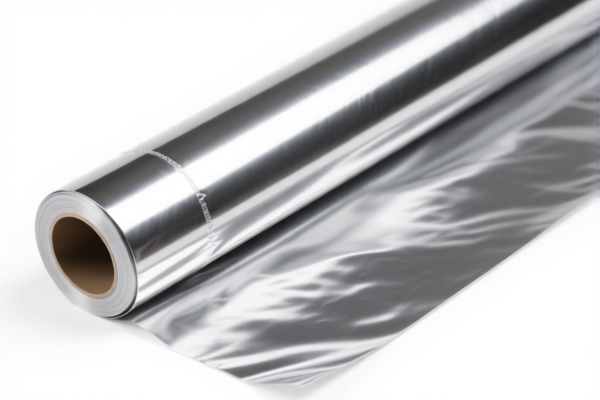
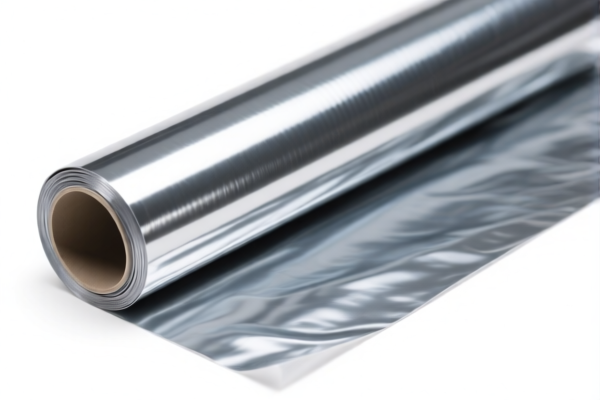
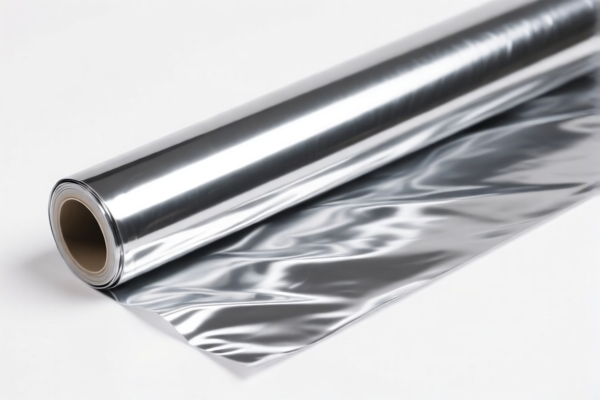
AI Analysis
🎬 PET Metallized Insulating Film (Polyester Metallized Film)
🌐 HS Code Reference & Customs Clearance Guide | 2026 Latest Tariff Analysis | Professional Level Clearance Strategy
📌 I. Product Definition & Classification: Do You Really Understand "PET Metallized Insulating Film"?
PET Metallized Insulating Film is a high-performance composite material created by vacuum-metallizing a thin layer of metal (usually aluminum) onto a Polyethylene Terephthalate (PET) substrate. It combines the electrical insulation and mechanical strength of PET with the reflective, conductive, and barrier properties of metal.
In international trade, it is classified based on two key factors: 1. Surface Treatment: Is it just a plain film, or is it metallized (metal-coated)? 2. Function/Shape: Is it used as a flexible sheet/roll (film) or does it have a specific adhesive/insulating tape form?
⚠️ Key Distinction Points:
- If the film has a visible metal coating (shiny/reflective surface) → It falls under Chapter 3901-3920 (Metallized plastics).
- If it is plain PET without metal → It falls under 3921 (Other plastic plates/sheets/films).
- If it is specifically used as an electrical insulating tape (with adhesive backing) → It may fall under 3919 (Self-adhesive plates/sheets/film).
📦 II. HS Code Classification Details (2026 Latest Tariff Authority Comparison)
Based on the provided data, here are the specific HS codes and their precise definitions. Note that all listed codes carry significant additional tariffs due to US-China trade policies.
| HS Code | Product Description | Key Characteristics | Application Scenario |
|---|---|---|---|
3920.62.00.20 |
PET Metallized Film | Material: PET; Form: Film; Metallized | General-purpose metallized PET film; packaging; decorative layers. |
3920.62.00.50 |
PET Metallized Film | Material: PET; Form: Metallized PET Film | Specific classification for metallized PET films; precise technical fit. |
3921.90.50.50 |
PET Film (Non-Metallized) | Material: PET; Form: Film; Other Plastic | Plain PET film; not metallized; falls under "Other plastic plates, sheets, film, foil, and strip". |
3921.90.40.90 |
PET Film (Non-Metallized) | Material: PET; Form: Film; Other Plastic | Other plastic film category; plain PET film without metal coating. |
3920.62.00.90 |
PET Plastic Insulating Film | Material: PET; Form: Film; No Metallization | PET plastic insulating film; explicitly no metal description; fits PET material & film definition. |
3919.90.50.30 |
PET Insulating Film (Self-Adhesive) | Material: PET; Form: Film; Insulating Use | Electrical insulating tape; self-adhesive; categorized under "Electrical insulating tape". |
🔍 Critical Reminder:
- Metallized films (codes starting with3920.62...) are distinct from plain plastic films (3921...) because of the metal layer.
- If your product is self-adhesive (tape), it must go to3919.90.50.30, not3920or3921.
- If it is non-adhesive but metallized, use3920.62....
- If it is non-adhesive and non-metallized, use3921....
💰 III. 2026 Latest Tariff Rate Breakdown (Including Surcharges & Policy Additions)
✅ Applicable Country: United States (US)
✅ Origin: China (CN)
✅ Effective Time: 2025/2026 (Current Trade Environment)
All products in the provided data are subject to Section 301 Tariffs and Section 122 Tariffs (or similar IEEPA provisions depending on the exact ruling), resulting in high effective tax rates.
🎯 1. 3920.62.00.20 & 3920.62.00.50 & 3920.62.00.90 & 3921.90.40.90
(PET Metallized & Non-Metallized Films)
| Item | Content |
|---|---|
| Base Tariff Rate | 4.2% (ad valorem) |
| Section 301 Surcharge | +25.0% (Specific to Chinese imports) |
| Section 122 / IEEPA Surcharge | +10.0% (Policy-driven additional tariff) |
| Total Effective Rate | 39.2% |
| Tax Calculation | CIF Value × 39.2% |
| De Minimis Exemption | ❌ Not Eligible (Deny de minimis for these categories) |
| Legal Basis Path | Base Tariff → Section 301 (Footnote) → Section 122 / IEEPA |
📌 Explanation:
- The 4.2% is the standard Most Favored Nation (MFN) rate for plastic films.
- The +25% is the punitive tariff under Section 301 of the Trade Act.
- The +10% is an additional policy tariff (often referred to as "122 Clause" in internal systems).
- Total: 39.2%. This is a high-cost category. Misclassification can lead to severe penalties.
🎯 2. 3921.90.50.50
(Other PET Films - Non-Metallized)
| Item | Content |
|---|---|
| Base Tariff Rate | 4.8% (ad valorem) |
| Section 301 Surcharge | +25.0% |
| Section 122 / IEEPA Surcharge | +10.0% |
| Total Effective Rate | 39.8% |
| Tax Calculation | CIF Value × 39.8% |
| De Minimis Exemption | ❌ Not Eligible |
| Legal Basis Path | Base Tariff → Section 301 → Section 122 |
📌 Note:
- Slightly higher base rate (4.8%) due to different subheading in Chapter 3921.
- Still subject to the same additional tariffs.
- Total: 39.8%.
🎯 3. 3919.90.50.30
(PET Insulating Tape - Self-Adhesive)
| Item | Content |
|---|---|
| Base Tariff Rate | 5.8% (ad valorem) |
| Section 301 Surcharge | +25.0% |
| Section 122 / IEEPA Surcharge | +10.0% |
| Total Effective Rate | 40.8% |
| Tax Calculation | CIF Value × 40.8% |
| De Minimis Exemption | ❌ Not Eligible |
| Legal Basis Path | Base Tariff → Section 301 → Section 122 |
📌 Warning:
- This is the highest tariff rate (40.8%) among all options.
- Reason: It is classified as "Self-adhesive plates, sheets, film, tape, tape and other flat shapes of plastics" (Chapter 3919), which has a higher base duty (5.8%).
- Only use this code if the product has an adhesive backing (tape). Do not use for plain films.
🛠️ IV. Customs Clearance Practical Advice (Real-World Pitfall Avoidance Guide)
✅ 1. Document Preparation Checklist (All Required)
| Document | Must Provide | Description |
|---|---|---|
| ✅ Product Specification Sheet | ✔️ | Must clearly state: Material (PET), Thickness, Width, Metallized or Not, Adhesive or Not. |
| ✅ Product Photos | ✔️ | Clear images showing surface (metallic shine vs. plain), cross-section, and labeling. |
| ✅ Commercial Invoice | ✔️ | Accurate description: "PET Metallized Insulating Film" or "PET Insulating Tape". Do not use vague terms like "Plastic Sheet". |
| ✅ Packing List | ✔️ | Consistent with invoice; details roll/disk dimensions. |
| ✅ Certificate of Origin (CO) | ✔️ | If shipped from China, confirms origin (affects tariff eligibility). |
| ✅ Material Safety Data Sheet (MSDS) | ✔️ | If applicable for chemical handling. |
✅ 2. Declaration Tips (Key Mantra)
🔥 "Metal? Yes → 3920. No Metal? → 3921. Tape? → 3919. Be Precise!"
| Situation | Correct HS Code | Wrong Practice | Consequence |
|---|---|---|---|
| Metallized PET Film (No adhesive) | 3920.62.00.20 / .50 |
Declaring as plain PET (3921) |
Under-declaration of tariff → Penalties + Back taxes |
| Plain PET Film (No metal, No adhesive) | 3921.90.40.90 / .50 |
Declaring as metallized | Over-declaration → Unnecessary high taxes |
| PET Insulating Tape (With adhesive) | 3919.90.50.30 |
Declaring as film (3920/3921) |
40.8% Tax instead of potential lower rate (if incorrectly classified) → High Cost |
| Metallized PET Tape | 3919.90.50.30 |
Declaring as film | Same as above → High Cost |
⚠️ Critical:
- If the product is metallized, you MUST use 3920.
- If the product is self-adhesive, you MUST use 3919.
- If both (metallized + self-adhesive), the adhesive nature usually pushes it to 3919.
✅ 3. Special Cases Handling
| Situation | Handling Advice |
|---|---|
| OEM Customization | Provide customer orders and design drawings to prove specific use. |
| Mixed Shipments | Separate metallized and non-metallized films in declaration. Do not bundle under one HS code if they differ. |
| Sample vs. Bulk | Ensure samples are declared accurately. Even small quantities are subject to tariffs if over de minimis ($800 is for US citizens, business imports have different rules). |
| Insulating Application | If used for electrical insulation, emphasize this in the description, but do not force it into 3919 unless it is self-adhesive. |
🌍 V. Global Market Clearance Comparison (2026 Latest)
| Country/Region | Recommended HS Code | Tariff (China Origin) | Certification Requirements | Notes |
|---|---|---|---|---|
| 🇺🇸 USA | 3920.62.00.20 (Metallized)3921.90.40.90 (Plain)3919.90.50.30 (Tape) |
39.2% - 40.8% | No specific FDA/CE for general plastic, but may need RoHS for electronics | Highest tariffs due to Section 301 + 122. |
| 🇨🇳 China | 3920.62.00 / 3921.90 / 3919.90 |
4.2% - 5.8% (Base) | CCC (if electrical components) | No additional punitive tariffs. |
| 🇪🇺 EU | 3920.62 / 3921.90 |
0% - 4% (General) | CE, REACH, RoHS | No Section 301 equivalents, but strict environmental compliance. |
| 🇦🇺 Australia | 3920.62 / 3921.90 |
5% - 10% | RCM (if electrical) | No major punitive tariffs. |
| 🇯🇵 Japan | 3920.62 / 3921.90 |
0% - 5% | PSE (if electrical) | No major punitive tariffs. |
📌 Conclusion:
- The US is the most expensive market for PET films from China due to Section 301 and Section 122 tariffs.
- Cost Savings Opportunity: If possible, consider transshipment (not recommended due to legal risks) or sourcing from third countries (Vietnam, Thailand, etc.) to avoid US punitive tariffs.
- For EU/Asia: Focus on RoHS/REACH compliance rather than tariff avoidance.
📌 VI. Common Errors & Pitfall Avoidance (Blood & Tears Lessons)
❌ Error 1: Calling "Metallized PET Film" just "Plastic Film"
👉 Consequence: Customs may downgrade to a higher-tariff code or flag for fraud. Penalty risk!
❌ Error 2: Declaring "Insulating Tape" as "Plastic Film" (3920/3921)
👉 Consequence: 40.8% Tariff applies. If declared correctly as film, it might be lower (but 3919 is specifically for tapes). Misclassification leads to back taxes + interest.
❌ Error 3: Ignoring the "Metallized" feature
👉 Consequence: 3920 (Metallized) and 3921 (Non-metallized) have different base rates. Misdeclaration causes audits.
❌ Error 4: Using "PET Sheet" instead of "PET Film"
👉 Consequence: "Sheet" implies thicker gauge. If thickness > 1mm, it may fall under different subheadings. Be precise with thickness.
✅ Correct Declaration Example:
"PET Metallized Insulating Film, 12 Micron Thickness, Width 500mm, Roll, For Electrical Insulation, Made in China"
🎯 VII. Conclusion: Professional Declaration Saves Money!
🎯 Remember the Mantra:
🔹 "Metallized = 3920 (39.2%)
Non-Metallized = 3921 (39.2-39.8%)
Adhesive Tape = 3919 (40.8%)
Be precise to avoid penalties!"🔹 "HS Code determines cost. A 1% mistake can mean thousands in taxes."
📌 Pro Tip:
If your PET films are originally from Vietnam, Mexico, Thailand, or Malaysia, you may avoid the Section 301 & 122 surcharges, reducing the effective tariff to 4.2% - 5.8%.
Recommendation: Consider supply chain adjustment or pre-classification ruling to minimize costs.
📣 Immediate Action:
📞 Contact a professional customs broker + Provide product images + Apply for Advance Ruling
🚀 Ensure smooth clearance, high efficiency, and maximized profit margins!
✨ Professional Clearance Starts with Accurate Classification!
💼 Every cent of your cost deserves precise calculation!
Customer Reviews
About HS Code Classification
The Harmonized System (HS) is an internationally standardized nomenclature developed by the World Customs Organization (WCO) to classify traded products. Over 200 countries use the HS system as the basis for customs tariffs, trade statistics, and import/export regulations.
Each HS code follows a hierarchical structure:
- Chapter (2 digits) — Broad category of goods (e.g., Chapter 84: Machinery and Mechanical Appliances)
- Heading (4 digits) — More specific grouping within the chapter
- Subheading (6 digits) — Internationally standardized breakdown, used by all WCO member countries
- National subdivisions (8-10 digits) — Country-specific extensions for further classification, such as US HTSUS 10-digit codes
Correct HS code classification is essential for smooth customs clearance, accurate duty payment, and compliance with trade regulations. Misclassification can lead to customs delays, overpayment of duties, or penalties.
When importing from CN to US, the applicable tariff rates may include:
- Most-Favored-Nation (MFN) rate — The standard duty rate applied to WTO members
- General rate — Applied to countries without trade agreements
- Trade remedy duties — Additional tariffs such as Section 301 (anti-dumping), Section 232 (national security), or countervailing duties
The information provided on this page is for reference purposes only. For official classification, please consult with your local customs authority or a licensed customs broker.