PET Plastic Anti Scratch Sheet
CN → US| HS Code | Tariff Rate | Origin | Destination | Doc |
|---|---|---|---|---|
| 3921190090 | 41.5% | CN | US | Official Doc |
| 3920620090 | 39.2% | CN | US | Official Doc |
| 3921905050 | 39.8% | CN | US | Official Doc |
| 3919905040 | 40.8% | CN | US | Official Doc |
| 3919905060 | 40.8% | CN | US | Official Doc |
Product Images
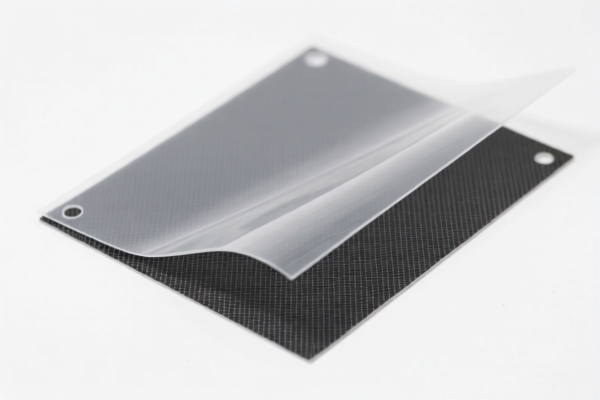
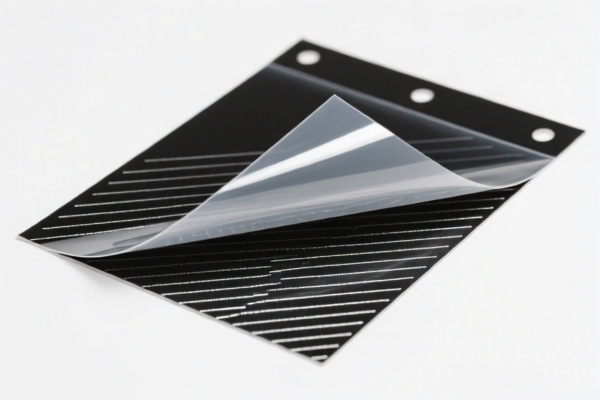
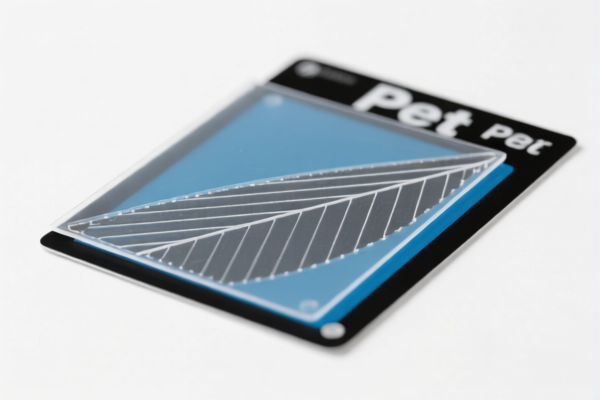
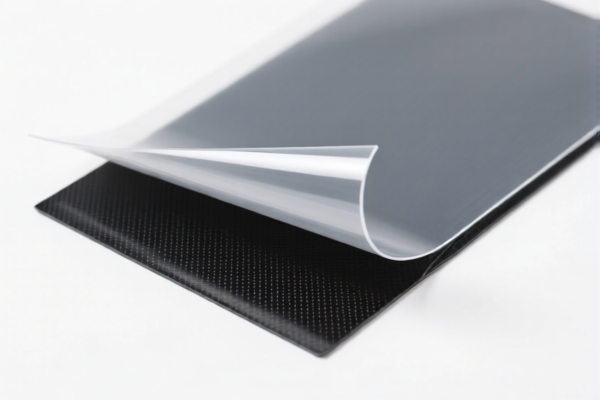
AI Analysis
🛡️ PET Plastic Anti-Scratch Sheet (Protective Film)
🌐 HS Code Reference & Customs Clearance Guide | 2026 Latest Tariff Analysis | Professional Entry Strategy
📌 I. Product Definition & Classification: What Exactly Is "PET Anti-Scratch Sheet"?
PET (Polyethylene Terephthalate) Anti-Scratch Sheets are widely used in electronics, automotive, and architectural industries to protect surfaces from abrasion. In international trade, these products are classified based on their physical form (roll vs. cut) and functional characteristic (self-adhesive vs. non-adhesive/non-metallic).
Key Distinction Criteria:
- Self-Adhesive (Self-Sticking): If the film has an adhesive layer applied during manufacturing, it typically falls under heading 3919 (Self-adhesive plates, sheets, film, foil, tape, strip and other flat shapes, of plastics).
- Non-Adhesive/Plain Film: If the film is plain or coated but not self-adhesive, it generally falls under heading 3920 (Other plates, sheets, film, foil and strip, of plastics) or 3921 (Other plates, sheets, film, foil and strip, of plastics).
⚠️ Critical Classification Point:
- If the product is a self-adhesive protective tape/film → HS 3919
- If the product is a plain protective film (peel-and-stick by static, or coated but not inherently self-adhesive in the tariff sense) → HS 3920 or 3921
- Material Specificity: "PET" is a type of polyester, so descriptions often use "Polyester" interchangeably with "PET".
📦 II. HS Code Classification Details (Based on Provided Data)
The following HS Codes are derived strictly from the provided <DATA> for "PET Plastic Anti-Scratch Sheet". Each code reflects a specific physical or functional nuance.
| HS Code | Product Description (From Data) | Key Classification Logic | Total Tax Rate |
|---|---|---|---|
3921.19.00.90 |
PET Plastic Anti-Scratch Sheet, Polyester Material, Film Form, Classified as Other Plastic Film. | Classified under "Other" plastic films. Uses generic "Polyester" material description. No mention of adhesive. | 41.5% |
3920.62.00.90 |
PET Plastic Anti-Scratch Sheet, PET Material, Protective Film Form, Non-Metallic. | Specifically identifies as Non-Metallic protective film under Heading 3920. Focuses on material purity (PET) and form (Film). | 39.2% |
3921.90.50.50 |
PET Plastic Anti-Scratch Sheet, Polyester Material, Film Form, No Material/Category Conflict. | Classified under "Other" plastic films (3921.90). Explicitly notes no conflict, implying a standard polyester film classification. | 39.8% |
3919.90.50.40 |
PET Plastic Anti-Scratch Sheet, Polyester/Plastic Material, Self-Adhesive Plastic Film Form. | Self-Adhesive characteristic triggers Heading 3919. This is a critical differentiator. | 40.8% |
3919.90.50.60 |
PET Plastic Anti-Scratch Sheet, PET Plastic Material, Film Form, No Material Conflict. | Also under Self-Adhesive Heading 3919. Slight variation in description ("PET Plastic" vs "Polyester") but same functional classification. | 40.8% |
🔍 Key Insight:
- Heading 3919 (Self-Adhesive) has a base tariff of 5.8%.
- Heading 3920/3921 (Non-Adhesive) have lower base tariffs (4.2%-6.5%) but vary by subheading.
- The Self-Adhesive codes (3919) tend to have slightly higher base duties than the most favorable non-adhesive code (3920.62), but all are significantly impacted by trade sanctions.
💰 III. 2026 Tariff Rate Breakdown (Detailed Tax Clauses)
✅ Applicable Country: United States (US)
✅ Country of Origin: China (CN)
✅ Effective Date: Current rates apply (including Section 301 and IEEPA tariffs)
🎯 1. 3921.19.00.90 – Other Plastic Films (Polyester)
| Item | Detail |
|---|---|
| Base Duty Rate | 6.5% |
| Section 301 Additional Duty | 25.0% |
| Section 122 Duty | 10.0% |
| Total Effective Rate | 41.5% |
| Tax Calculation | CIF Value × 41.5% |
| Legal Basis | HTSUS: 3921.19.00.90 + 301: 9903.88.01 + 122: Relevant Statute |
📌 Explanation:
- Base 6.5%: Standard Most Favored Nation (MFN) rate for "Other plastics films, sheets, etc."
- Section 301 (25%): Applies to most Chinese plastic films under HTS 3921.
- Section 122 (10%): A separate statutory authority often applied to specific imports, adding to the total burden.
🎯 2. 3920.62.00.90 – Non-Metallic Protective Films (PET)
| Item | Detail |
|---|---|
| Base Duty Rate | 4.2% |
| Section 301 Additional Duty | 25.0% |
| Section 122 Duty | 10.0% |
| Total Effective Rate | 39.2% |
| Tax Calculation | CIF Value × 39.2% |
| Legal Basis | HTSUS: 3920.62.00.90 + 301: 9903.88.01 + 122: Relevant Statute |
📌 Explanation:
- Base 4.2%: Lower base rate for "Plates, sheets, film... of polyethylene terephthalate" (PET).
- Section 301 (25%): Still applies fully to Chinese PET films.
- Section 122 (10%): Applies.
- Savings: This code offers the lowest total tax rate (39.2%) among the options, provided the product is non-metallic and non-self-adhesive.
🎯 3. 3921.90.50.50 – Other Plastic Films (No Conflict)
| Item | Detail |
|---|---|
| Base Duty Rate | 4.8% |
| Section 301 Additional Duty | 25.0% |
| Section 122 Duty | 10.0% |
| Total Effective Rate | 39.8% |
| Tax Calculation | CIF Value × 39.8% |
| Legal Basis | HTSUS: 3921.90.50.50 + 301: 9903.88.01 + 122: Relevant Statute |
📌 Explanation:
- Base 4.8%: Slightly higher than3920.62but lower than3921.19.
- Section 301 (25%) & Section 122 (10%) apply.
- Total: 39.8%. This is a strong candidate if the film is not self-adhesive but doesn't fit neatly into the specific PET subheading of 3920.
🎯 4. 3919.90.50.40 & 3919.90.50.60 – Self-Adhesive Films
| Item | Detail |
|---|---|
| Base Duty Rate | 5.8% |
| Section 301 Additional Duty | 25.0% |
| Section 122 Duty | 10.0% |
| Total Effective Rate | 40.8% |
| Tax Calculation | CIF Value × 40.8% |
| Legal Basis | HTSUS: 3919.90.50.40/60 + 301: 9903.88.01 + 122: Relevant Statute |
📌 Explanation:
- Base 5.8%: Higher base rate for self-adhesive products.
- Section 301 (25%) & Section 122 (10%) apply.
- Total: 40.8%.
- Crucial Note: If your product is self-adhesive (has glue/tape backing), you MUST use these codes (3919), even if the tax is higher than3920.62. Misclassification can lead to severe penalties.
🛠️ IV. Customs Clearance Practical Advice (Pitfall Avoidance Guide)
✅ 1. Preparation Checklist (Non-Negotiable)
| Document | Required | Description |
|---|---|---|
| ✅ Product Specification Sheet | ✔️ | Must clearly state: Material (PET/Polyester), Form (Film/Sheet), Adhesive Type (Self-adhesive vs. Non-adhesive), Thickness, Width. |
| ✅ Product Photos | ✔️ | Show the roll, the packaging, and a close-up of the surface (to prove if it's adhesive). |
| ✅ Commercial Invoice | ✔️ | Accurate description: e.g., "PET Protective Film, Non-Adhesive, Non-Metallic, for Screen Protection." |
| ✅ Packing List | ✔️ | Net/Gross weight, dimensions, number of rolls. |
| ✅ Origin Certificate (if applicable) | ✔️ | To verify Chinese origin for tariff calculation. |
| ✅ Third-Party Test Report | ✔️ | Optional but helpful: Proof of material composition (PET content) and lack of metallic coating (if claiming 3920.62). |
✅ 2. Classification Strategy (Key Rules)
🔥 "Check the Glue: Adhesive = 3919, Non-Adhesive = 3920/3921"
| Scenario | Correct HS Code | Why? |
|---|---|---|
| Self-Adhesive Tape/Film (Has glue layer) | 3919.90.50.40 or 3919.90.50.60 |
Chapter 39 Note 2 defines self-adhesive products under Heading 3919. |
| Non-Adhesive Protective Film (Static cling or plain) | 3920.62.00.90 |
Best rate (39.2%) if it is PET and Non-Metallic. |
| Other Plastic Film (Polyester, non-adhesive) | 3921.90.50.50 |
Good alternative (39.8%) if not fitting 3920.62 exactly. |
| Metallic Coated PET Film | Not in Data | If metallic, it may fall under different subheadings not listed here, potentially changing tax. Avoid if possible to stay within provided data. |
⚠️ Warning:
- Do NOT declare "Anti-Scratch Sheet" as a generic "Plastic Sheet" if it is self-adhesive.
- Do NOT declare a self-adhesive product as3920to save tax. CBP may assess Section 301 penalties + interest + possible fraud claims.
✅ 3. Special Cases
| Case | Handling Advice |
|---|---|
| OEM Custom Sizes | Provide order details showing custom cutting. Does not change HS code, but supports invoice accuracy. |
| Mixed Shipments | If you have both self-adhesive and non-adhesive films in one shipment, split the invoice and declare separately. Do not mix HS codes. |
| Samples vs. Commercial | Commercial shipments are fully subject to Section 301 and Section 122. Samples may still be subject to de minimis rules (currently $800) if shipped under Section 321, but this is risky for large volumes. |
🌍 V. Global Market Comparison (2026 Context)
| Market | Recommended HS Code | Est. Total Duty | Notes |
|---|---|---|---|
| 🇺🇸 United States | 3920.62.00.90 |
39.2% | Highest duty burden due to 301 + 122. |
| 🇨🇳 China (Import) | 3920.62.00.90 |
~5-6% | Lower base rates, no Section 301. |
| 🇪🇺 EU | 3920.62.00.90 |
~6.5% | No equivalent to Section 301/122. |
| 🇬🇧 UK | 3920.62.00.90 |
~6.5% | Post-Brexit tariff schedule, generally favorable. |
| 🇨🇦 Canada | 3920.62.00.90 |
~0-5% | CUSMA/USMCA may offer zero duty if originating. |
📌 Conclusion:
- US Importers face the highest costs.
- Cost Optimization: Ensure the product is non-adhesive and non-metallic to use3920.62.00.90(39.2%). Avoid3919if possible, unless it is genuinely self-adhesive.
- Supply Chain: Consider sourcing from non-China origins (e.g., Vietnam, Thailand) to potentially avoid Section 301/122 tariffs, subject to strict rules of origin.
📌 VI. Common Errors & Pitfalls (Lessons Learned)
❌ Error 1: Declaring a self-adhesive film as 3920.62.00.90 to save tax.
👉 Consequence: CBP will reclassify, charge back-taxes + penalties + interest. Possible seizure.
❌ Error 2: Not specifying "Non-Metallic" in description.
👉 Consequence: If metallic, the code may change, and Section 301 applicability might be reviewed differently.
❌ Error 3: Using vague descriptions like "Plastic Sheet" on invoice.
👉 Consequence: CBP will request detailed specs, causing delays. If specs show adhesive, they will reclassify to 3919.
✅ Correct Declaration Example:
"PET Protective Film, Non-Adhesive, Non-Metallic, Polyester, 50 Microns, for Screen Protection, HS Code 3920.62.00.90"
🎯 VII. Conclusion: Precision Saves Money!
🎯 Remember the Mantra:
🔹 "Adhesive = 3919, Non-Adhesive = 3920. Check Metallic, Check Base."
🔹 "Section 301 + 122 = 35% Extra. Choose HS Code Wisely."
🔹 "3920.62.00.90 is the Hero (39.2%), 3919 is the Costly Reality (40.8%)."
📌 Pro Tip:
If you have a high volume of shipments, consider applying for a Binding Ruling from US CBP for a specific product sample. This locks in the HS Code and prevents future disputes.
📣 Immediate Action:
📞 Verify Adhesiveness: Is your PET sheet sticky?
- Yes → Use3919.90.50.40or3919.90.50.60(40.8%)
- No → Use3920.62.00.90(39.2%) if non-metallic, otherwise3921.90.50.50(39.8%)
🚀 Clear, Accurate, Cost-Effective!
✨ Professional Clearance Starts with Correct Classification!
💼 Every Percent Saved is Pure Profit!
Customer Reviews
About HS Code Classification
The Harmonized System (HS) is an internationally standardized nomenclature developed by the World Customs Organization (WCO) to classify traded products. Over 200 countries use the HS system as the basis for customs tariffs, trade statistics, and import/export regulations.
Each HS code follows a hierarchical structure:
- Chapter (2 digits) — Broad category of goods (e.g., Chapter 84: Machinery and Mechanical Appliances)
- Heading (4 digits) — More specific grouping within the chapter
- Subheading (6 digits) — Internationally standardized breakdown, used by all WCO member countries
- National subdivisions (8-10 digits) — Country-specific extensions for further classification, such as US HTSUS 10-digit codes
Correct HS code classification is essential for smooth customs clearance, accurate duty payment, and compliance with trade regulations. Misclassification can lead to customs delays, overpayment of duties, or penalties.
When importing from CN to US, the applicable tariff rates may include:
- Most-Favored-Nation (MFN) rate — The standard duty rate applied to WTO members
- General rate — Applied to countries without trade agreements
- Trade remedy duties — Additional tariffs such as Section 301 (anti-dumping), Section 232 (national security), or countervailing duties
The information provided on this page is for reference purposes only. For official classification, please consult with your local customs authority or a licensed customs broker.