PET Plastic Composite Sheet
CN → US| HS Code | Tariff Rate | Origin | Destination | Doc |
|---|---|---|---|---|
| 3920992000 | 39.2% | CN | US | Official Doc |
| 3921904090 | 39.2% | CN | US | Official Doc |
| 3921905050 | 39.8% | CN | US | Official Doc |
| 3925900000 | 40.3% | CN | US | Official Doc |
| 3925305000 | 22.8% | CN | US | Official Doc |
Product Images
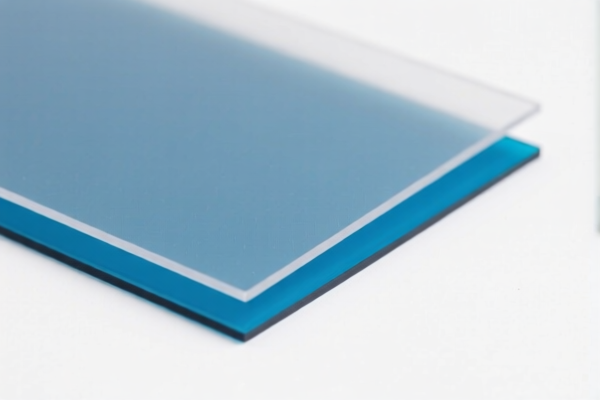
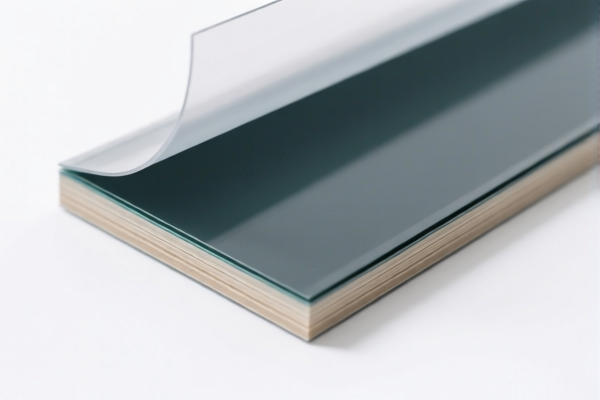

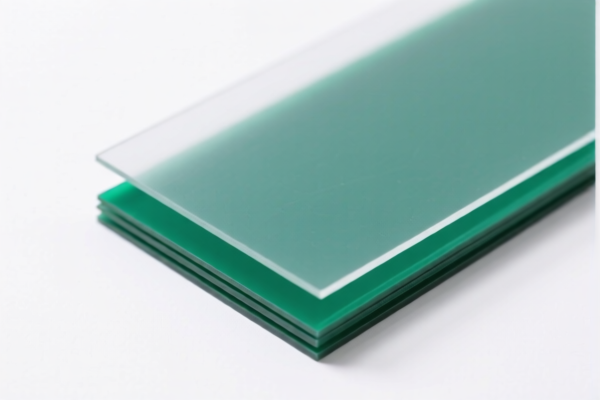
AI Analysis
🧱 PET Plastic Composite Sheet / Plates
🌐 HS Code Reference & Customs Clearance Guide | 2026 Latest Tariff Analysis | Professional Clearance Strategy
📌 I. Product Definition & Classification: What is "PET Plastic Composite Sheet"?
PET (Polyethylene Terephthalate) Plastic Sheets are high-performance engineering materials known for their strength, transparency, and UV resistance. In international trade, they are primarily classified under Chapter 39 (Plastics and Articles Thereof). The specific HS Code depends on whether the product is a simple plate/sheet or a multi-layer composite, and its intended use (construction vs. general industrial).
⚠️ Key Distinction Points:
- Composite Structure: If the material consists of multiple layers (e.g., PET + UV coating + adhesive + another plastic layer) bonded together, it may fall under 3920.99.20.00.
- Single/Uniform Plate: If it is a single homogeneous sheet or plate of PET, it falls under 3921 or 3925.
- Construction Use: If specifically designed as building accessories with UV resistance, it may be classified under 3925.30.50.00 (lower tax) or 3925.90.00.00 (general construction).
📦 II. HS Code Classification Details (2026 Latest Tariff Authority)
Based on the provided data, here are the applicable HS Codes for PET Plastic Sheets:
| HS Code | Product Description | Key Characteristics |
|---|---|---|
3920.99.20.00 |
Plastic Composite Board | Material: Plastic. Form: Composite board. Features lamination or composite material characteristics. |
3921.90.40.90 |
Plastic Board | Material: Plastic. Form: Board. Falls under "Other plastic plates, sheets, film, foil, and strip". |
3921.90.50.50 |
Plastic Plate/Film | Material: Plastic. Form: Plate. Meets classification requirements for plastic plates/sheets. |
3925.90.00.00 |
PET Anti-UV Plate | Material: PET Plastic. Form: Board/Plate. Used for construction or industrial applications. |
3925.30.50.00 |
PET Building Accessory | Material: PET Plastic. Form: Board. Purpose: Anti-UV. Specifically for building accessories. |
🔍 Focus Reminder:
- Composites vs. Simple Plates: The main difference between3920and3921is the structural complexity.3920implies a laminated/composite structure, while3921is for other plastic plates not elsewhere specified.
- Use-Based Classification:3925codes are reserved for specific industrial/building products. If the PET sheet is marketed specifically as a "building accessory" with UV properties,3925.30.50.00is the most precise and potentially favorable code.
💰 III. 2026 Latest Tariff Rate Details (Including Surtaxes & Policy Add-ons)
✅ Applicable Country: USA (US)
✅ Country of Origin: China (CN)
✅ Effective Date: Ongoing (subject to 301/122 Clauses)
🎯 1. 3920.99.20.00 — Plastic Composite Board
| Item | Content |
|---|---|
| Base Duty | 4.2% |
| Section 301 Surtax | +25.0% (USITC Footnote) |
| Clause 122 Surtax | +10.0% (Specific trade measure) |
| Total Tax Rate | 39.2% |
| Tax Calculation | CIF Value × 39.2% |
| De Minimis Eligibility | ❌ Not Eligible |
| Legal Basis Path | Base Tariff → Section 301 → Clause 122 |
📌 Explanation:
- This code applies to composite/laminated plastic boards.
- The total effective duty is 39.2%, driven by the heavy surtaxes on Chinese plastics.
🎯 2. 3921.90.40.90 — Other Plastic Board
| Item | Content |
|---|---|
| Base Duty | 4.2% |
| Section 301 Surtax | +25.0% |
| Clause 122 Surtax | +10.0% |
| Total Tax Rate | 39.2% |
| Tax Calculation | CIF Value × 39.2% |
| De Minimis Eligibility | ❌ Not Eligible |
📌 Note:
- Similar to the composite board, simple plastic plates also bear the 39.2% burden.
- Ensure the description matches "Plastic Board" and not "Building Material" to avoid misclassification.
🎯 3. 3921.90.50.50 — Plastic Plate/Sheet
| Item | Content |
|---|---|
| Base Duty | 4.8% |
| Section 301 Surtax | +25.0% |
| Clause 122 Surtax | +10.0% |
| Total Tax Rate | 39.8% |
| Tax Calculation | CIF Value × 39.8% |
| De Minimis Eligibility | ❌ Not Eligible |
📌 Note:
- Slightly higher base rate (4.8%) results in a 39.8% total rate.
- This code is for generic plastic plates/sheets that don't fit specific composite or building accessory categories.
🎯 4. 3925.90.00.00 — PET Anti-UV Plate (Construction/Industrial)
| Item | Content |
|---|---|
| Base Duty | 5.3% |
| Section 301 Surtax | +25.0% |
| Clause 122 Surtax | +10.0% |
| Total Tax Rate | 40.3% |
| Tax Calculation | CIF Value × 40.3% |
| De Minimis Eligibility | ❌ Not Eligible |
📌 Explanation:
- Classified under Chapter 39 (Plastics) but used in construction.
- Higher base duty (5.3%) makes it the most expensive option at 40.3%.
- Use this only if the product is definitively a "Plate" for construction/industrial use and not a "Building Accessory" (which has lower tax).
🎯 5. 3925.30.50.00 — PET Building Accessory (Anti-UV)
| Item | Content |
|---|---|
| Base Duty | 5.3% |
| Section 301 Surtax | +7.5% (Reduced Surtax) |
| Clause 122 Surtax | +10.0% |
| Total Tax Rate | 22.8% |
| Tax Calculation | CIF Value × 22.8% |
| De Minimis Eligibility | ❌ Not Eligible |
| Legal Basis Path | Base Tariff → Reduced 301 Clause → Clause 122 |
📌 Critical Advantage:
- This is the lowest tax rate at 22.8%.
- It applies specifically to PET Building Accessories with anti-UV properties.
- Key Requirement: The product must be marketed and described explicitly as a "Building Accessory" for construction, not just a generic "Plastic Sheet."
🛠️ IV. Customs Clearance Practical Advice (Real-World Pitfall Guide)
✅ 1. Documentation Checklist (No Exceptions)
| Document | Required | Description |
|---|---|---|
| ✅ Product Specification Sheet | ✔️ | Must detail material (PET), layers (if composite), UV resistance rating, thickness, dimensions. |
| ✅ Commercial Invoice | ✔️ | Must clearly state "PET Plastic Composite Sheet" or "PET Building Accessory." Avoid vague terms like "Plastic Part." |
| ✅ Packing List | ✔️ | List weight, volume, and item count. Ensure packaging doesn't suggest mixed products. |
| ✅ Certificate of Origin (CO) | ✔️ | Prove origin is China (or eligible country for preferential tariffs if applicable). |
| ✅ Technical Data/Photos | ✔️ | Show cross-section (for composites) or surface finish. Crucial for distinguishing 3920 vs 3921. |
✅ 2. Declaration Strategy (Key Mantra)
🔥 "Specify Use, Define Structure, Choose Lower Tax!"
| Scenario | Correct Declaration | Risk of Wrong Declaration |
|---|---|---|
| PET Sheet for Roofing/Cladding | 3925.30.50.00 (Building Accessory) |
Declaring as 3921 → 39.8% vs 22.8% |
| Multi-layer Laminated PET | 3920.99.20.00 (Composite) |
Declaring as 3921 → Potential audit for misclassification |
| Generic PET Sheet | 3921.90.40.90 |
Declaring as 3925 without proof of building use → Rejection |
✅ 3. Special Case Handling
| Situation | Handling Advice |
|---|---|
| Anti-UV Claim | Must provide test reports (e.g., ASTM G154) proving UV resistance to qualify for 3925.30.50.00. |
| Composite vs. Single Layer | If layers are bonded for functional purposes (e.g., adhesive + PET + coating), it’s a composite (3920). If just stacked, it might still be 3921. |
| Sample Shipments | Even samples are subject to 22.8% - 40.3% duties. No de minimis exemption. |
🌍 V. Global Market Clearance Comparison (2026 Latest)
| Country/Region | Recommended HS Code | Estimated Duty | Certification | Notes |
|---|---|---|---|---|
| 🇺🇸 USA | 3925.30.50.00 |
22.8% | None specific | Best rate if classified as Building Accessory. |
| 🇪🇺 EU | 3921.12.90 / 3921.90 |
0% - 6% | REACH, RoHS | No 301/122 surtaxes. Lower base duties. |
| 🇨🇳 China | 3921.90 |
5% - 7% | CCC (if applicable) | Standard import duties, no surtaxes. |
| 🇬🇧 UK | 3921.90 |
0% - 5% | UKCA | Post-Brexit alignment with EU tariffs. |
📌 Conclusion:
- USA is the most expensive market due to Section 301 + Clause 122 surtaxes.
- Strategic Move: To save ~17% in tariffs (from ~40% to 22.8%), ensure the product is documented and marketed as a "Building Accessory" rather than a generic plastic sheet.
📌 VI. Common Errors & Pitfall Guide (Lessons Learned)
❌ Error 1: Calling it "Plastic Sheet" generically.
👉 Result: Customs may default to 3921 or 3920 with higher rates (39-40%).
Fix: Use "PET Building Accessory" if applicable.
❌ Error 2: Ignoring the "Composite" structure.
👉 Result: Misclassification under 3921 for a laminated product.
Fix: Provide cross-section diagrams to justify 3920.99.20.00 if it is indeed composite.
❌ Error 3: Claiming UV resistance without proof.
👉 Result: Rejection of 3925.30.50.00 claim.
Fix: Attach UV test certificates from a recognized lab.
🎯 VII. Conclusion: Professional Declaration, Cost Optimization!
🎯 Remember the Mantra:
🔹 "Building Accessory = 22.8% | Composite/Plate = 39-40%"
🔹 "UV Proof Needed for Lower Rate!"
📌 Pro Tip:
If your PET sheets are not from China (e.g., from Vietnam, Thailand), you may avoid the 25% Section 301 and 10% Clause 122 surtaxes, reducing the total duty to just the base rate (~5-6%).
Action:
📞 Consult a customs broker to verify if your supply chain qualifies for non-China origin rules.
🚀 Optimize your product description to fit3925.30.50.00for maximum savings.
✨ Precise Classification Saves Money!
💼 Every Percentage Point Counts in Customs!
Customer Reviews
About HS Code Classification
The Harmonized System (HS) is an internationally standardized nomenclature developed by the World Customs Organization (WCO) to classify traded products. Over 200 countries use the HS system as the basis for customs tariffs, trade statistics, and import/export regulations.
Each HS code follows a hierarchical structure:
- Chapter (2 digits) — Broad category of goods (e.g., Chapter 84: Machinery and Mechanical Appliances)
- Heading (4 digits) — More specific grouping within the chapter
- Subheading (6 digits) — Internationally standardized breakdown, used by all WCO member countries
- National subdivisions (8-10 digits) — Country-specific extensions for further classification, such as US HTSUS 10-digit codes
Correct HS code classification is essential for smooth customs clearance, accurate duty payment, and compliance with trade regulations. Misclassification can lead to customs delays, overpayment of duties, or penalties.
When importing from CN to US, the applicable tariff rates may include:
- Most-Favored-Nation (MFN) rate — The standard duty rate applied to WTO members
- General rate — Applied to countries without trade agreements
- Trade remedy duties — Additional tariffs such as Section 301 (anti-dumping), Section 232 (national security), or countervailing duties
The information provided on this page is for reference purposes only. For official classification, please consult with your local customs authority or a licensed customs broker.