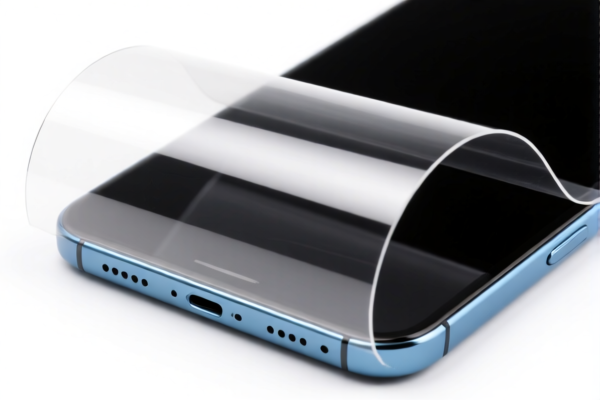
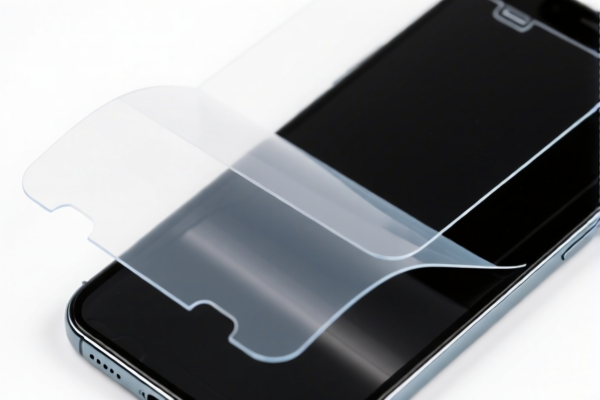
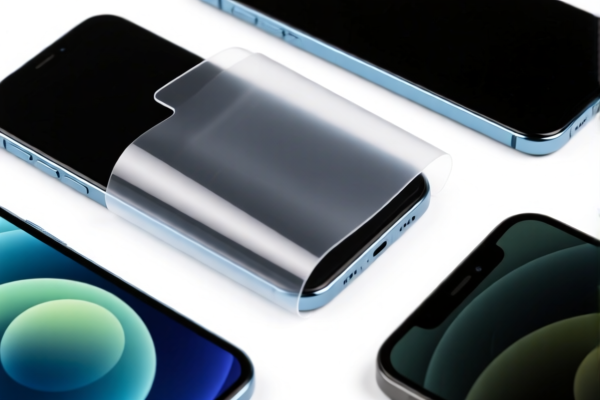
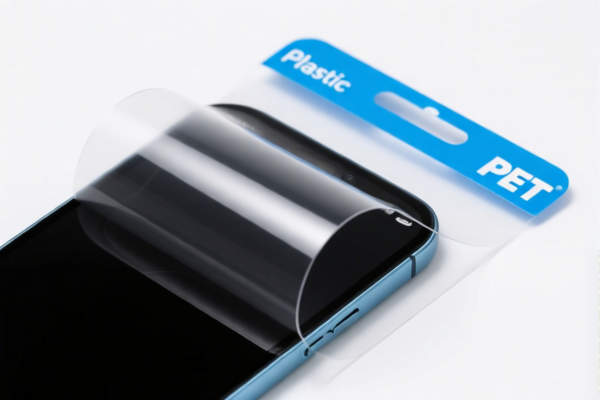
PET Plastic Display Screen Protective Film
CN → US| HS Code | Tariff Rate | Origin | Destination | Doc |
|---|---|---|---|---|
| 3920620090 | 39.2% | CN | US | Official Doc |
| 3921190090 | 41.5% | CN | US | Official Doc |
| 3919905060 | 40.8% | CN | US | Official Doc |
| 3921905050 | 39.8% | CN | US | Official Doc |
| 3919905040 | 40.8% | CN | US | Official Doc |
Product Images
AI Analysis
🛡️ PET Plastic Display Screen Protective Film
🌐 HS Code Reference & Customs Clearance Guide | 2026 Latest Tariff Analysis | Professional Clearance Strategy
📌 I. Product Definition & Classification: What Exactly is "PET Protective Film"?
PET (Polyethylene Terephthalate) Plastic Display Screen Protective Film is a critical accessory in the electronics and consumer goods industry. It is designed to protect display screens (smartphones, tablets, monitors, industrial HMI panels) from scratches, dust, and minor abrasions during manufacturing, logistics, and initial use.
In international trade, this product is classified based on its physical form (plate, sheet, or film) and chemical composition (plastic/polyester). The key distinction lies in whether it is considered a "self-adhesive" tape/film or a generic plastic sheet/film.
⚠️ Key Classification Points:
- Material: Must be 100% PET (Polyester). If it contains other plastics or is a laminate with non-polyester layers, the code may change.
- Form: Classified as a "plate, sheet, or film" (Chapter 39).
- Surface Treatment: Is it metallized? (No, typically clear or matte). Is it self-adhesive? (Yes, usually has an adhesive layer on one side).
- Function: Protection only. It does not have optical properties like a lens or filter.
📦 II. HS Code Classification Details (2026 Latest Tariff Authority Cross-Reference)
Based on the provided data, there are 5 potential HS Codes for PET Plastic Protective Films. The choice depends on specific nuances in shape (film vs. plate) and adhesive properties.
| HS Code | Product Description | Application Scenario | Key Classification Logic |
|---|---|---|---|
3920.62.00.90 |
PET Protective Film (Non-metalized, Plate/Sheet/Film) | General PET films, non-self-adhesive or generic protective layers | Classified under "Other plates, sheets, film, foil, and strip, of plastics" |
3921.19.00.90 |
PET Protective Film (Plastic Film Category) | Films that do not fit other specific subheadings but are clearly plastic films | Broad category for plastic films not elsewhere specified |
3919.90.50.60 |
PET Plastic Film (Non-adhesive or Specific Type) | Thin PET films, potentially self-adhesive but categorized under general plastic films | Focuses on the "film" morphology |
3921.90.50.50 |
PET Film (Plastic Film Category) | Another broad category for plastic films, possibly with different backing or treatment | General plastic film classification |
3919.90.50.40 |
Self-Adhesive PET Protective Film | Most Common: Self-adhesive plastic tapes/films for protection | Classified under "Self-adhesive plates, sheets, film, foil, strip, and other flat shapes" |
🔍 Crucial Note:
-3919.90.50.40is often the most accurate for self-adhesive protective films (which most screen protectors are).
-3920.62.00.90is used if the film is non-self-adhesive or if it is a thick plate/sheet used for protection.
-3921.19.00.90and3921.90.50.50are alternative classifications for general plastic films that may not fit the specific "self-adhesive" or "plate" definitions strictly.
💰 III. 2026 Latest Tariff Rate Details (Including Surtaxes & Policy Add-ons)
✅ Applicable Country: United States (US)
✅ Country of Origin: China (CN)
✅ Effective Date: November 10, 2025 (and subsequent imports)
All listed HS Codes are subject to Section 301 Tariffs (25%) and Section 122 Tariffs (10%), resulting in significantly higher total tax rates compared to standard MFN rates.
🎯 1. 3920.62.00.90 – PET Protective Film (Plate/Sheet/Film, Non-metalized)
| Item | Detail |
|---|---|
| Base Tariff | 4.2% (ad valorem) |
| Section 301 Surcharge | +25.0% (China-origin specific) |
| Section 122 Tariff | +10.0% (Specific Chinese import restriction) |
| Total Tax Rate | 39.2% |
| Calculation | CIF Value × 39.2% |
| De Minimis Exemption | ❌ NOT Eligible (Section 301 and 122 taxes apply regardless of value) |
| Legal Basis Path | USITC:3920.62.00.90 → FOOTNOTE:301 → FOOTNOTE:122 |
📌 Explanation:
- The 4.2% base rate applies to other plastic plates, sheets, film, etc.
- The 25% is the standard Section 301 tariff for most Chinese plastic products.
- The 10% is an additional penalty tariff under Section 122 for specific Chinese goods.
- Total: 39.2%. This is a high-cost category. Cost optimization strategies (e.g., third-country assembly) may be considered if volumes are large.
🎯 2. 3921.19.00.90 – PET Protective Film (Plastic Film Category)
| Item | Detail |
|---|---|
| Base Tariff | 6.5% (ad valorem) |
| Section 301 Surcharge | +25.0% |
| Section 122 Tariff | +10.0% |
| Total Tax Rate | 41.5% |
| Calculation | CIF Value × 41.5% |
| De Minimis Exemption | ❌ NOT Eligible |
| Legal Basis Path | USITC:3921.19.00.90 → FOOTNOTE:301 → FOOTNOTE:122 |
📌 Note:
- This category has a higher base rate (6.5%) compared to3920.62.00.90.
- It is generally used for plastic films that do not fit the "plate/sheet" definition of Chapter 3920.
- Total: 41.5%. This is the highest base rate among the options. Avoid this classification if another is more accurate, as it increases costs.
🎯 3. 3919.90.50.60 – PET Plastic Film (Non-adhesive/Specific)
| Item | Detail |
|---|---|
| Base Tariff | 5.8% (ad valorem) |
| Section 301 Surcharge | +25.0% |
| Section 122 Tariff | +10.0% |
| Total Tax Rate | 40.8% |
| Calculation | CIF Value × 40.8% |
| De Minimis Exemption | ❌ NOT Eligible |
| Legal Basis Path | USITC:3919.90.50.60 → FOOTNOTE:301 → FOOTNOTE:122 |
📌 Explanation:
- Chapter 3919 covers "Self-adhesive plates, sheets, film..." but this specific subheading might apply to certain non-adhesive or specific film types depending on customs interpretation.
- Total: 40.8%. Slightly higher than3920.62.00.90but lower than3921.19.00.90.
🎯 4. 3921.90.50.50 – PET Film (Plastic Film Category)
| Item | Detail |
|---|---|
| Base Tariff | 4.8% (ad valorem) |
| Section 301 Surcharge | +25.0% |
| Section 122 Tariff | +10.0% |
| Total Tax Rate | 39.8% |
| Calculation | CIF Value × 39.8% |
| De Minimis Exemption | ❌ NOT Eligible |
| Legal Basis Path | USITC:3921.90.50.50 → FOOTNOTE:301 → FOOTNOTE:122 |
📌 Note:
- Another broad plastic film category.
- Total: 39.8%. Very close to the3920.62.00.90rate (39.2%).
- Use this if the product does not fit the "plate/sheet" definition of 3920 but is clearly a plastic film.
🎯 5. 3919.90.50.40 – Self-Adhesive PET Protective Film (Recommended for Most Screen Protectors)
| Item | Detail |
|---|---|
| Base Tariff | 5.8% (ad valorem) |
| Section 301 Surcharge | +25.0% |
| Section 122 Tariff | +10.0% |
| Total Tax Rate | 40.8% |
| Calculation | CIF Value × 40.8% |
| De Minimis Exemption | ❌ NOT Eligible |
| Legal Basis Path | USITC:3919.90.50.40 → FOOTNOTE:301 → FOOTNOTE:122 |
📌 Explanation:
- Chapter 3919 is specifically for self-adhesive plastic films.
- Most display screen protective films have an adhesive layer (silicone or acrylic) on one side, making them self-adhesive.
- Total: 40.8%.
- Why this might be the best fit: If the film is self-adhesive, it must go to Chapter 3919, not 3920 or 3921. While the base rate (5.8%) is higher than3920.62.00.90(4.2%), misclassification can lead to penalties. Accuracy is key.
🛠️ IV. Customs Clearance Practical Advice (Real-World Pitfall Guide)
✅ 1. Required Documentation Checklist (No Exceptions)
| Document | Mandatory? | Notes |
|---|---|---|
| ✅ Product Specification Sheet | ✔️ | Must detail: Material (100% PET), Thickness (e.g., 0.1mm), Adhesive Type, Optical Clarity |
| ✅ Photos (Clear & Detailed) | ✔️ | Show front, back, edges, and any packaging labels. Highlight adhesive side. |
| ✅ Commercial Invoice | ✔️ | Description must match HS Code logic (e.g., "Self-Adhesive PET Film" vs. "PET Sheet") |
| ✅ Packing List | ✔️ | Include net/gross weight, dimensions, and package count |
| ✅ Certificate of Origin (CO) | ✔️ | Required for proving China origin (triggers Section 301/122) |
| ✅ Adhesive Declaration | ✔️ | If claiming 3919.90.50.40, prove it is self-adhesive |
✅ 2. Classification Strategy & Tips (Key Mantra)
🔥 “Adhesive? Go 3919! No Adhesive? Go 3920! Be Precise, Avoid Fines!”
| Scenario | Correct HS Code | Risk of Wrong Code |
|---|---|---|
| Self-Adhesive Film (Most Common) | 3919.90.50.40 (40.8%) |
Misclassifying as non-adhesive (3920) may lead to re-classification and penalties, but tax difference is small. However, legal compliance is violated. |
| Non-Adhesive PET Sheet | 3920.62.00.90 (39.2%) |
If it is adhesive, customs will reclassify to 3919, causing delays. |
| General Plastic Film (Unclear Adhesive) | 3921.19.00.90 (41.5%) |
Highest base rate. Avoid if possible. |
📌 Critical Warning:
- Section 301 and 122 tariffs apply to ALL these codes. There is no de minimis exemption for small shipments. Even a $10 sample pays ~$4 in taxes.
- Do not underestimate the 10% Section 122 tariff. It is a significant cost driver.
✅ 3. Special Situations & Solutions
| Situation | Handling Advice |
|---|---|
| Laminated Films (e.g., PET + OCA Adhesive) | If it has a separate optical clear adhesive layer, it may still be 3919. If it’s a complex laminate, consult a customs broker. |
| Metalized PET | If the film is metallized, it does NOT fall under these codes. It may fall under 3920.69 or similar, with different rates. Ensure it is non-metalized for these codes. |
| Custom Shaped Films (Cut to size) | Still classified as "film" if it’s just cut, not manufactured into a specific final product like a phone case. |
| Origin Shifting | To avoid Section 301/122, consider third-country processing (e.g., die-cutting and packaging in Vietnam or Thailand) to change origin. Note: Simple repacking does NOT change origin. Substantial transformation is required. |
🌍 V. Global Market Comparison (2026 Latest)
| Country/Region | Recommended HS Code | Base Tariff | US Surtaxes | Total Effective Rate | Notes |
|---|---|---|---|---|---|
| 🇺🇸 USA | 3919.90.50.40 or 3920.62.00.90 |
4.2%–5.8% | +35% (25% + 10%) | 39.2%–41.5% | High Barrier. No de minimis. |
| 🇨🇳 China | 3919.90.50.40 |
5.8% | 0% | 5.8% | Low cost for domestic use. |
| 🇪🇺 EU | 3919.90.90 |
6.5% | 0% | 6.5% | No Section 301/122. |
| 🇯🇵 Japan | 3919.90.00 |
6.0% | 0% | 6.0% | No Section 301/122. |
📌 Conclusion:
- The US market is extremely expensive for Chinese-made PET films due to Section 301 and 122 tariffs.
- EU, Japan, and China have much lower tariff barriers.
- Strategy: For US imports, consider supply chain diversification (e.g., sourcing from non-China origins) or absorbing the cost if demand is inelastic.
📌 VI. Common Errors & Pitfalls (Blood & Tears Lessons)
❌ Error 1: Assuming "Protective Film" is low-value and eligible for de minimis (Section 321).
👉 Consequence: SEVERE PENALTIES. Section 301 and 122 tariffs override de minimis. Customs will seize or tax the shipment.
❌ Error 2: Classifying self-adhesive film as 3920 (non-adhesive) to save 0.6% base rate.
👉 Consequence: Customs audit reveals adhesive. You pay back taxes + penalties. Risk outweighs reward.
❌ Error 3: Not declaring "Section 122" tax.
👉 Consequence: Underpayment of duties. Customs will assess additional 10% + interest.
❌ Error 4: Using vague descriptions like "Plastic Sheet" on invoices.
👉 Consequence: Customs detention for further examination. Delays in clearance.
✅ Correct Approach:
"Self-Adhesive PET Protective Film, Non-Metalized, 0.1mm Thickness, for Electronic Display Protection. HS Code: 3919.90.50.40."
🎯 VII. Conclusion: Precision in Classification Saves Money
🎯 Remember the Mantra:
🔹 "Adhesive = 3919, Non-Adhesive = 3920. Section 301 & 122 Apply to All. No De Minimis!"
🔹 "40% Tax is the Reality for US Imports from China. Plan Accordingly!"
📌 Pro Tip:
If you are importing small quantities for testing, consider shipping via air freight with a customs broker who specializes in Section 301 goods to ensure proper payment and avoid seizure. For large volumes, evaluate third-country assembly to mitigate tariff risks.
📣 Immediate Action:
📞 Contact a Licensed Customs Broker + Provide Product Samples + Apply for Advance Ruling (if needed)
🚀 Ensure Accurate HS Classification to Avoid Delays, Fines, and Surprises!
✨ Professional Clearance Starts with Accurate Classification!
💼 Your Margins Matter – Know Your True Landed Cost!
Customer Reviews
About HS Code Classification
The Harmonized System (HS) is an internationally standardized nomenclature developed by the World Customs Organization (WCO) to classify traded products. Over 200 countries use the HS system as the basis for customs tariffs, trade statistics, and import/export regulations.
Each HS code follows a hierarchical structure:
- Chapter (2 digits) — Broad category of goods (e.g., Chapter 84: Machinery and Mechanical Appliances)
- Heading (4 digits) — More specific grouping within the chapter
- Subheading (6 digits) — Internationally standardized breakdown, used by all WCO member countries
- National subdivisions (8-10 digits) — Country-specific extensions for further classification, such as US HTSUS 10-digit codes
Correct HS code classification is essential for smooth customs clearance, accurate duty payment, and compliance with trade regulations. Misclassification can lead to customs delays, overpayment of duties, or penalties.
When importing from CN to US, the applicable tariff rates may include:
- Most-Favored-Nation (MFN) rate — The standard duty rate applied to WTO members
- General rate — Applied to countries without trade agreements
- Trade remedy duties — Additional tariffs such as Section 301 (anti-dumping), Section 232 (national security), or countervailing duties
The information provided on this page is for reference purposes only. For official classification, please consult with your local customs authority or a licensed customs broker.