PET Plastic Display Screen Protector Film
CN → US| HS Code | Tariff Rate | Origin | Destination | Doc |
|---|---|---|---|---|
| 3920620090 | 39.2% | CN | US | Official Doc |
| 3921190090 | 41.5% | CN | US | Official Doc |
| 3919905060 | 40.8% | CN | US | Official Doc |
| 3921905050 | 39.8% | CN | US | Official Doc |
| 3919905040 | 40.8% | CN | US | Official Doc |
Product Images
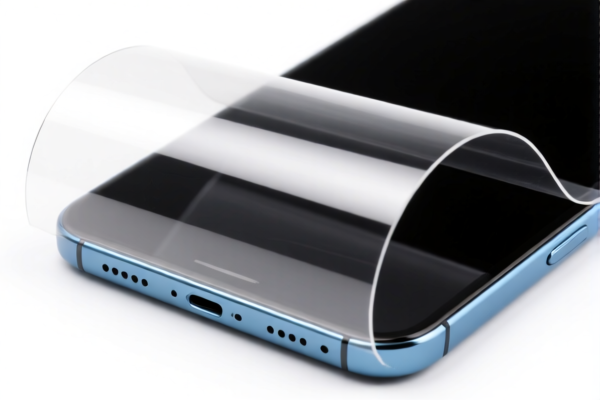
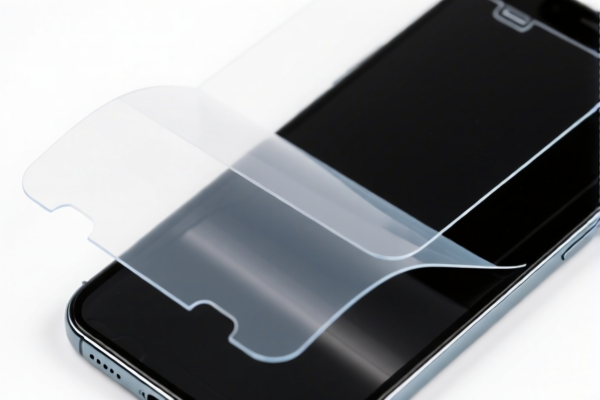
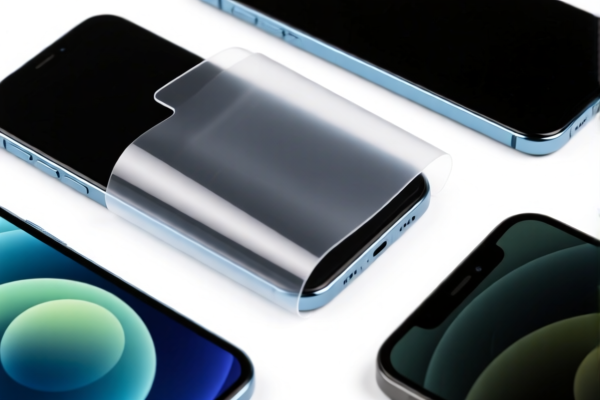
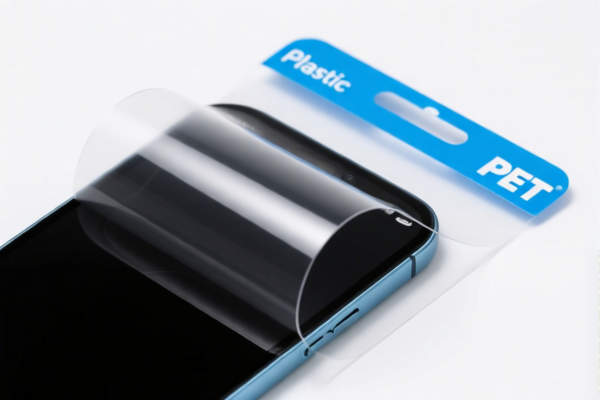
AI Analysis
🛡️ PET Plastic Display Screen Protector Film
🌐 HS Code Reference & Customs Clearance Guide | 2026 Latest Tariff Analysis | Professional Strategy for Smooth Clearance
📌 I. Product Definition & Classification: Do You Really Understand "PET Screen Protector"?
The PET Plastic Display Screen Protector Film is a critical accessory for consumer electronics, used to protect screens (smartphones, tablets, laptops, smartwatches) from scratches, impacts, and fingerprints. In international trade, it is primarily classified under Chapter 39 (Plastics and Articles Thereof), specifically as plastic films or protective layers.
The classification hinges on three key factors: 1. Material: Polyethylene Terephthalate (PET). 2. Form: Self-adhesive film or non-adhesive protective layer. 3. Function: Anti-scratch, protective, or decorative.
⚠️ Critical Distinction:
- If the product is a raw plastic sheet/film not yet adhesive or coated for protection → May fall under 3920/3921.
- If the product is self-adhesive (has backing glue) → May fall under 3919.
- If it is a laminated structure (e.g., PET + Optical Adhesive + Release Liner) → Often classified under 3921 or 3919 depending on the essential character.
📦 II. HS Code Classification Details (2026 Latest Tariff Authority Comparison)
Below are the five possible HS Codes identified for "PET Plastic Display Screen Protector Film" based on specific structural and functional nuances.
| HS Code | Product Description | Applicability Scenario | Key Classification Logic |
|--------|--------------------------|--------------------------|
| 3920.62.00.90 | PET Plastic Anti-Scratch Protection Film | Rigid/Sheet-like Structure | Classified as Plates, Sheets, Rods, Profiles (non-plasticized). Used if the film is thick, rigid, or marketed as a "sheet" protector rather than a flexible roll. Non-metalized. |
| 3921.19.00.90 | PET Plastic Anti-Scratch Protection Film | Plastic Film (Adhesive/Laminated) | Classified as Other Plastic Films. Applies when the product is a finished protective laminate (PET + Adhesive), considered a "plastic article" rather than raw film. |
| 3919.90.50.60 | PET Plastic Anti-Scratch Protection Film | Adhesive Plastic Tape/Film | Classified as Self-Adhesive Plastic Tape. Applies if the product has a clear self-adhesive backing (pressure-sensitive) and is rolled. No material conflict. |
| 3921.90.50.50 | PET Plastic Anti-Scratch Protection Film | Plastic Plate/Sheet/Film (Composite) | Classified as Other Plastic Plates/Sheets/Films. Applies to composite protective films that don't fit simple "tape" definitions but are finished protective layers. |
| 3919.90.50.40 | PET Plastic Anti-Scratch Protection Film | Self-Adhesive PET Film | Classified as Self-Adhesive Plastic Tape (Other). Specifically for PET (Polyester) protective films with adhesive backing. |
🔍 Key Insight:
- Self-Adhesive vs. Non-Adhesive: If your product has glue,3919is more likely. If it’s just a raw protective layer (like a "dry" film),3920or3921is more appropriate. - Form Factor: Rolls vs. Sheets. Rolls often lean toward3919(tape/film), while pre-cut sheets may lean toward3920or3921.
💰 III. 2026 Latest Tariff Rate Breakdown (Including Surcharges & Policy Add-ons)
✅ Applicable Country: United States (US)
✅ Country of Origin: China (CN)
✅ Effective Date: 2025 onwards (Current Trade Policy)
🚨 Note: All rates below include Base Tariff + Section 301 Tariff (25%) + 122 Clause Tariff (10%).
🎯 1. 3920.62.00.90 —— PET Protection Film (Rigid/Sheet Type)
| Item | Content |
|---|---|
| Base Tariff | 4.2% |
| Section 301 Tariff | +25.0% |
| 122 Clause Tariff | +10.0% |
| Total Effective Tax Rate | 39.2% |
| Calculation Basis | CIF Value × 39.2% |
| De Minimis Exemption | ❌ Not Eligible (Value > $800 threshold for exemption does not apply to this category under current enforcement) |
| Legal Basis Path | HTSUS:3920.62.00 → USITC Footnote: Section 301 → USTR:122 Clause |
📌 Explanation:
- 4.2%: Standard MFN duty for plastic sheets. - 25.0%: Section 301 additional duty for Chinese-origin plastic products. - 10.0%: Specific 122 Clause duty for certain plastic articles. - Total 39.2% is a high-cost entry barrier. Precise classification is vital to avoid overpayment or audits.
🎯 2. 3921.19.00.90 —— PET Protection Film (Plastic Film Type)
| Item | Content |
|---|---|
| Base Tariff | 6.5% |
| Section 301 Tariff | +25.0% |
| 122 Clause Tariff | +10.0% |
| Total Effective Tax Rate | 41.5% |
| Calculation Basis | CIF Value × 41.5% |
| De Minimis Exemption | ❌ Not Eligible |
| Legal Basis Path | HTSUS:3921.19.00 → USITC Footnote: Section 301 → USTR:122 Clause |
📌 Explanation:
- This is the highest tax rate among the options. - It applies if the product is classified as a "finished plastic film" rather than a tape or sheet. - Risk: High. Ensure your product isn't misclassified here if it qualifies for the lower3919or3920codes.
🎯 3. 3919.90.50.60 —— Self-Adhesive PET Film (Roll Type)
| Item | Content |
|---|---|
| Base Tariff | 5.8% |
| Section 301 Tariff | +25.0% |
| 122 Clause Tariff | +10.0% |
| Total Effective Tax Rate | 40.8% |
| Calculation Basis | CIF Value × 40.8% |
| De Minimis Exemption | ❌ Not Eligible |
| Legal Basis Path | HTSUS:3919.90.50 → USITC Footnote: Section 301 → USTR:122 Clause |
📌 Explanation:
- This is a mid-range tax rate. - Applies to self-adhesive films (tape-like). If your screen protector comes in rolls with adhesive backing, this is a strong candidate. - Slightly higher than3920but lower than3921.19.
🎯 4. 3921.90.50.50 —— Composite PET Film (Plate/Sheet/Film)
| Item | Content |
|---|---|
| Base Tariff | 4.8% |
| Section 301 Tariff | +25.0% |
| 122 Clause Tariff | +10.0% |
| Total Effective Tax Rate | 39.8% |
| Calculation Basis | CIF Value × 39.8% |
| De Minimis Exemption | ❌ Not Eligible |
| Legal Basis Path | HTSUS:3921.90.50 → USITC Footnote: Section 301 → USTR:122 Clause |
📌 Explanation:
- Second Lowest Tax Rate. - Applies to composite plastic films/plates that don't fit the "tape" definition of 3919 or the "sheet" definition of 3920. - Good option for pre-cut, laminated screen protectors.
🎯 5. 3919.90.50.40 —— Self-Adhesive PET Film (Other)
| Item | Content |
|---|---|
| Base Tariff | 5.8% |
| Section 301 Tariff | +25.0% |
| 122 Clause Tariff | +10.0% |
| Total Effective Tax Rate | 40.8% |
| Calculation Basis | CIF Value × 40.8% |
| De Minimis Exemption | ❌ Not Eligible |
| Legal Basis Path | HTSUS:3919.90.50 → USITC Footnote: Section 301 → USTR:122 Clause |
📌 Explanation:
- Same tax rate as3919.90.50.60(40.8%). - Distinguished by specific subheading nuances in the US HTSUS. Often depends on the exact adhesive type or product presentation.
🛠️ IV. Customs Clearance Practical Advice (Real-World Pitfall Avoidance)
✅ 1. Documentation Checklist (Non-Negotiable)
| Document | Mandatory? | Purpose |
|---|---|---|
| ✅ Product Specification Sheet | ✔️ | Must detail: Material (PET), Thickness (microns/mils), Adhesive type (if any), Dimensions, Packaging. |
| ✅ Product Photos (Real) | ✔️ | Show the product in its final packaged state. Clearly display if it is self-adhesive (peel-off liner visible). |
| ✅ Bill of Lading / Air Waybill | ✔️ | Ensure description matches invoice exactly. |
| ✅ Commercial Invoice | ✔️ | Must specify "PET Screen Protector Film" or "Self-Adhesive Plastic Film". Avoid vague terms like "Plastic Sheet". |
| ✅ Certificate of Origin (CO) | ✔️ | Required to confirm China origin (triggering 301/122 duties). |
| ✅ Labeling Info | ✔️ | Product must be labeled with material composition and country of origin. |
✅ 2. Classification Strategy (Key Mantra)
🔥 "Adhesive? Think 3919. Non-Adhesive Sheet? Think 3920/3921. Composite? Think 3921."
| Scenario | Recommended HS Code | Tax Rate | Why? |
|---|---|---|---|
| Rolls with Adhesive Backing | 3919.90.50.40 / 3919.90.50.60 |
40.8% | Classified as self-adhesive tape/film. |
| Pre-Cut Sheets, No Adhesive | 3920.62.00.90 |
39.2% | Lowest Tax. Classified as plastic sheet. |
| Pre-Cut Sheets, With Adhesive | 3921.90.50.50 |
39.8% | Second Lowest. Classified as plastic film/plate. |
| Complex Laminates (Multi-layer) | 3921.19.00.90 |
41.5% | Highest Tax. Avoid if possible; only use if structure is complex. |
💡 Pro Tip:
- If your product is non-adhesive (e.g., a "static cling" or just a protective layer without glue), strongly argue for3920.62.00.90to save 2.3% vs. the adhesive categories. - If it is adhesive, try to classify under3921.90.50.50(39.8%) rather than3921.19.00.90to save 1.7%.
✅ 3. Special Case Handling
| Situation | Handling Advice |
|---|---|
| OEM / White Label | Provide client branding details. Ensure HS Code is based on product function, not brand. |
| Packaged as "Accessory Kit" | If screen protector is sold with cleaning wipes, apply cloths, etc., declare the principal item (the film). Do not split. |
| Mixed Shipments (Phone + Screen Protector) | If screen protector is incidental to the phone (e.g., included in the box), it may not be separately taxed if declared as part of the phone's cost. However, if shipped separately, it is separately taxed. |
| Sample Shipments | Even small quantities are subject to full tariffs. No "free sample" exemption for China-origin goods under current 301 rules. |
🌍 V. Global Market Comparison (2026 Snapshot)
| Country/Region | Recommended HS Code | Base Tariff | Additional Duties (China) | Total Est. Rate | Notes |
|---|---|---|---|---|---|
| 🇺🇸 USA | 3920.62.00.90 |
4.2% | +25% (301) +10% (122) | 39.2% | Highest Cost. 301 & 122 clauses are strict. |
| 🇨🇳 China (Export) | - | - | - | 0% (Export Duty) | No export duty for plastics. |
| 🇪🇺 EU | 3920.62.00 |
6.5% | None (Generally) | 6.5% | No 301/122 equivalents. Much lower duty. |
| 🇬🇧 UK | 3920.62.00 |
6.5% | None (Generally) | 6.5% | Post-Brexit tariff aligned with EU for many goods. |
| 🇯🇵 Japan | 3920.62.00 |
5.0% | None | 5.0% | Low tariff. RCEP may apply if from member countries. |
| 🇦🇺 Australia | 3920.62.00 |
5.0% | None | 5.0% | Low tariff. FTAs may reduce to 0%. |
📌 Conclusion:
- The US market is significantly more expensive due to Section 301 and 122 Clause duties (Total ~39-41%). - EU, UK, Japan, Australia offer much lower entry barriers (5-7%). - If US tariffs are prohibitive, consider transshipment (with caution on origin rules) or supply chain diversification to non-China origins to avoid US duties.
📌 VI. Common Mistakes & Pitfalls (Lessons from the Field)
❌ Mistake 1: Declaring "Plastic Sheet" for Self-Adhesive Film
👉 Consequence: Customs may reclassify to 3919 or 3921, leading to incorrect duty assessment and potential penalties.
❌ Mistake 2: Ignoring the 122 Clause
👉 Consequence: Many importers forget the 10% 122 Clause duty. If missed, you face back taxes + interest during audits.
❌ Mistake 3: Using "Screen Protector" as the HS Code Description
👉 Consequence: HS Codes are material/structure-based, not function-based. "Screen Protector" is not an HS Code. Use "PET Plastic Film" or "Self-Adhesive Plastic Tape".
❌ Mistake 4: Assuming De Minimis ($800) Exemption Applies
👉 Consequence: Does NOT apply to China-origin goods under Section 301 and 122 Clause for most plastic products. Even small shipments are taxed.
✅ Correct Approach:
"PET Plastic Film, Self-Adhesive, 50 microns, for Electronics Protection, Made in China"
→ Declared under3919.90.50.40or3921.90.50.50depending on exact structure.
🎯 VII. Conclusion: Precision Classification Saves Money!
🎯 Remember the Mantra:
🔹 "Adhesive? Check 3919/3921. Non-Adhesive? Check 3920."
🔹 "US Tariffs are High: 39-41%. Plan for it!"
🔹 "Never Miss the 122 Clause: It’s 10% Extra!"
📌 Pro Tip:
If your PET screen protectors are packaged as part of a phone case or included in the price of the device, they may be subsumed into the device's classification (e.g., 8517.12 for smartphones). This can avoid separate plastic tariffs. However, if shipped separately, they are strictly taxed.
🚀 Action Item:
- Request a Binding Tariff Ruling from US Customs and Border Protection (CBP) for large volume shipments.
- Audit your supplier's origin documents to ensure no "China-origin" confusion.
- Consider alternative markets (EU/Asia) if US margins are compressed by 39-41% duties.
✨ Professional Clearance, From Precise Classification!
💼 Every Percent of Duty Matters!
Customer Reviews
About HS Code Classification
The Harmonized System (HS) is an internationally standardized nomenclature developed by the World Customs Organization (WCO) to classify traded products. Over 200 countries use the HS system as the basis for customs tariffs, trade statistics, and import/export regulations.
Each HS code follows a hierarchical structure:
- Chapter (2 digits) — Broad category of goods (e.g., Chapter 84: Machinery and Mechanical Appliances)
- Heading (4 digits) — More specific grouping within the chapter
- Subheading (6 digits) — Internationally standardized breakdown, used by all WCO member countries
- National subdivisions (8-10 digits) — Country-specific extensions for further classification, such as US HTSUS 10-digit codes
Correct HS code classification is essential for smooth customs clearance, accurate duty payment, and compliance with trade regulations. Misclassification can lead to customs delays, overpayment of duties, or penalties.
When importing from CN to US, the applicable tariff rates may include:
- Most-Favored-Nation (MFN) rate — The standard duty rate applied to WTO members
- General rate — Applied to countries without trade agreements
- Trade remedy duties — Additional tariffs such as Section 301 (anti-dumping), Section 232 (national security), or countervailing duties
The information provided on this page is for reference purposes only. For official classification, please consult with your local customs authority or a licensed customs broker.