PET Plastic Electronic Packaging Sheet
CN → US| HS Code | Tariff Rate | Origin | Destination | Doc |
|---|---|---|---|---|
| 3919905060 | 40.8% | CN | US | Official Doc |
| 3919102055 | 40.8% | CN | US | Official Doc |
| 3920620090 | 39.2% | CN | US | Official Doc |
| 3920620050 | 39.2% | CN | US | Official Doc |
| 3926909989 | 22.8% | CN | US | Official Doc |
Product Images
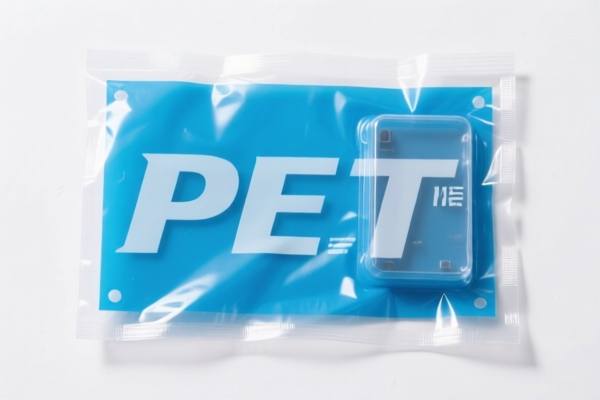
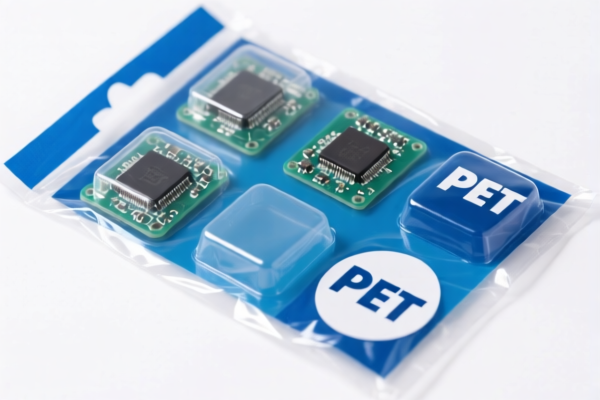
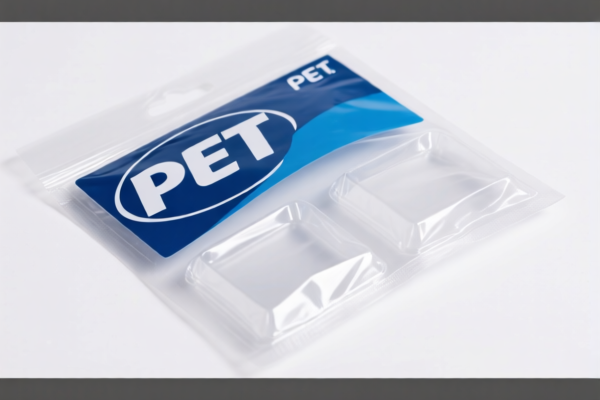
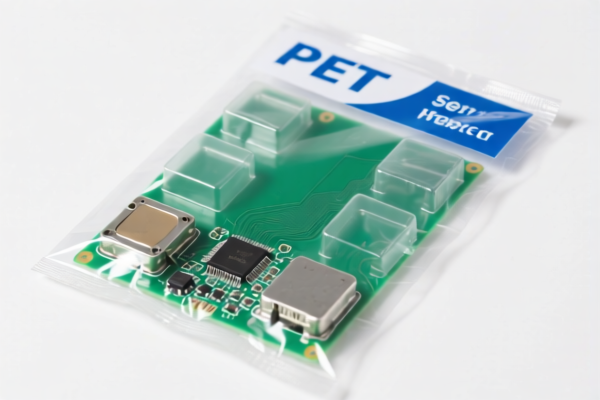
AI Analysis
📦 PET Plastic Electronic Label Substrate (PET Plastic Electronic Packaging Sheet)
🌐 HS Code Reference & Customs Clearance Guide | 2026 Latest Tariff Analysis | Professional Clearance Strategy
📌 Part 1: Product Definition & Classification: What Exactly Is This?
PET Plastic Electronic Label Substrate (often referred to as electronic packaging sheets or label base materials) refers to high-quality Polyethylene Terephthalate (PET) films used as the foundational carrier for electronic labels, RFID tags, smart labels, and industrial markings. In international trade, these products are primarily classified under Chapter 39 (Plastics and Articles Thereof).
The classification depends heavily on the specific physical form (film vs. sheet/plate) and whether it is processed into a specific article or remains a raw substrate.
⚠️ Key Distinction Point:
- If the product is a thin, flexible film suitable for printing/converting into labels → Usually falls under 3919 or 3920.
- If the product is a rigid or semi-rigid sheet/plate not further processed → May fall under 3920.
- If it is a final "other plastic article" not specifically listed elsewhere → 3926.
📦 Part 2: HS Code Classification Details (2026 Latest Tariff Authority Comparison)
Based on the provided data, here are the specific HS Codes and their corresponding tax implications for PET Plastic Electronic Label Substrates:
| HS Code | Product Description | Physical Form | Total Tax Rate | Key Characteristics |
|---|---|---|---|---|
3919.90.50.60 |
PET Plastic Electronic Label Substrate | Flat film/Sheet (Base Material) | 40.8% | Thin, flexible film type, often self-adhesive or backing material. |
3919.10.20.55 |
PET Plastic Electronic Label Substrate | Flat film/Sheet (Base Material) | 40.8% | Self-adhesive films or similar rolled materials. |
3920.62.00.90 |
PET Plastic Electronic Label Substrate | Film/Sheet | 39.2% | Non-self-adhesive PET films/sheets, specifically for electronic applications. |
3920.62.00.50 |
PET Plastic Electronic Label Substrate | Plate, Sheet, Film, Foil | 39.2% | General PET plastic plates/sheets/films/foils. |
3926.90.99.89 |
PET Plastic Electronic Label Substrate | Other Plastic Articles | 22.8% | Residual category; if not strictly defined as film/plate in Ch 39 sections. |
🔍 Critical Insight:
- Codes3919and3920attract higher tariffs (39.2% - 40.8%) due to specific trade remedies.
- Code3926offers a significantly lower rate (22.8%) but requires proving the item doesn't fit the strict definitions of Chapter 39 films/plates.
- All classifications assume Origin: China and Destination: USA (implied by 122 Clause/Section 301 context).
💰 Part 3: 2026 Latest Tariff Rate Breakdown (Including Additional Duties & Policy Surcharges)
✅ Applicable Country: United States (US)
✅ Origin: China (CN)
✅ Effective Time: Ongoing (Section 301 & IEEPA provisions active)
🎯 1. High-Tariff Category: HS Codes 3919.90.50.60 & 3919.10.20.55
| Item | Detail |
|---|---|
| Base Duty Rate | 5.8% (ad valorem) |
| Section 301 Additional Duty | +25.0% |
| Section 122 Clause Duty | +10.0% |
| Total Effective Rate | 40.8% |
| Calculation Basis | CIF Value × 40.8% |
| De Minimis Exemption | ❌ Not Eligible (High-value threshold exceeded/Specific exclusions apply) |
| Legal Path | HTSUS:3919.xx.xx → USITC Footnote: Section 301 → IEEPA: Section 122 |
📌 Explanation:
- The 25% Section 301 tariff applies to a wide range of Chinese plastic products.
- The 10% Section 122 tariff is a specific surcharge on certain imported goods, often overlapping with Section 301.
- Total 40.8% is a heavy burden. Accurate documentation is vital to avoid disputes over the "film" vs. "sheet" definition.
🎯 2. Mid-Tariff Category: HS Codes 3920.62.00.90 & 3920.62.00.50
| Item | Detail |
|---|---|
| Base Duty Rate | 4.2% (ad valorem) |
| Section 301 Additional Duty | +25.0% |
| Section 122 Clause Duty | +10.0% |
| Total Effective Rate | 39.2% |
| Calculation Basis | CIF Value × 39.2% |
| De Minimis Exemption | ❌ Not Eligible |
| Legal Path | HTSUS:3920.62.xx → USITC Footnote: Section 301 → IEEPA: Section 122 |
📌 Explanation:
- Slightly 1.6% cheaper than the 3919 codes.
- These codes refer to other plates, sheets, film, foil, and strip of plastics.
- Differentiation from 3919: 3919 is for self-adhesive tapes/films. If your PET substrate is non-adhesive raw film, 3920 is the correct and cheaper classification.
🎯 3. Low-Tariff Category: HS Code 3926.90.99.89
| Item | Detail |
|---|---|
| Base Duty Rate | 5.3% (ad valorem) |
| Section 301 Additional Duty | +7.5% (Note: Reduced 301 rate for this residual category) |
| Section 122 Clause Duty | +10.0% |
| Total Effective Rate | 22.8% |
| Calculation Basis | CIF Value × 22.8% |
| De Minimis Exemption | ❌ Not Eligible |
| Legal Path | HTSUS:3926.90.99 → USITC Footnote: Section 301 (List 4B/Reduced) → IEEPA: Section 122 |
📌 Explanation:
- This is the most cost-effective option at 22.8%.
- It falls under "Other plastic articles and articles of other materials".
- Risk: U.S. Customs may challenge this if they deem the product strictly a "film" or "sheet" (Ch 3900-3920). You must prove it is an "article" or does not fit the specific definitions of films/plates.
- The Section 301 rate here is lower (7.5% vs 25%) due to specific exclusions or list classifications for residual plastic items.
🛠️ Part 4: Customs Clearance Practical Advice (Real-World Pitfall Avoidance)
✅ 1. Documentation Checklist (Non-Negotiable)
| Document | Required | Notes |
|---|---|---|
| ✅ Product Specification Sheet | ✔️ | Must detail: Material (100% PET), Thickness (microns/mm), Width, Roll/Sheet format. |
| ✅ Technical Data Sheet (TDS) | ✔️ | Show surface treatments (corona, primer) if any. Proves it's a "substrate" not a finished label. |
| ✅ Commercial Invoice | ✔️ | Clear description: "PET Film, Non-Adhesive, for Electronic Labels." Avoid vague terms like "Plastic Wrap." |
| ✅ Packing List | ✔️ | Weight, dimensions, number of rolls/sheets. |
| ✅ Certificate of Origin (CO) | ✔️ | Essential for proving Origin: China to apply correct Section 301 rates. |
| ✅ Photos of Product & Packaging | ✔️ | Show label, product, and any markings. |
✅ 2. Classification Strategy (Key Decision Logic)
🔥 "Adhesive vs. Non-Adhesive; Film vs. Sheet; Definitive vs. Residual!"
| Product Characteristic | Recommended HS Code | Why? |
|---|---|---|
| Self-Adhesive PET Film (e.g., with glue backing) | 3919.90.50.60 or 3919.10.20.55 |
Chapter 3919 is exclusively for self-adhesive tapes/films. |
| Non-Adhesive PET Film/Sheet (Raw material) | 3920.62.00.90 or 3920.62.00.50 |
Chapter 3920 covers plates, sheets, film (non-adhesive). |
| Complex Form/Finished Article (Not just film/plate) | 3926.90.99.89 |
If shaped or processed beyond simple film/sheet, use residual category for lower tax. |
⚠️ Warning:
- Do not misdeclare a simple PET roll as "Other Plastic Article" (3926) without strong technical justification. Customs may reclassify it to3920or3919, leading to back taxes + penalties.
- Ensure the Section 301 applicability is correctly marked. Some specific plastic films may have exclusions, but most label substrates are included.
✅ 3. Special Case Handling
| Scenario | Advice |
|---|---|
| Customs Audit on "Film" Definition | Provide cross-section photos and thickness measurements. "Film" is typically <1mm; "Sheet" is >1mm. Be consistent. |
| Applying for Exclusion | Check if your specific PET grade has a Section 301 Exclusion Number. If yes, apply immediately to avoid the 25% surcharge. |
| Hybrid Products (PET + Paper) | If it's a composite, it may not be purely Ch 39. Consult a specialist. Pure PET is safest for the codes above. |
🌍 Part 5: Global Market Comparison (2026 Snapshot)
| Country/Region | Likely HS Code | Base Duty | Section 301/Additional | Total Est. | Notes |
|---|---|---|---|---|---|
| 🇺🇸 USA | 3920.62.00.90 |
4.2% | +35% (25+10) | 39.2% | High barrier. Check exclusions. |
| 🇺🇸 USA | 3926.90.99.89 |
5.3% | +17.5% (7.5+10) | 22.8% | Riskier classification, but cheaper. |
| 🇪🇺 EU | 3920.62.00 |
6.5% | 0% (Generally) | 6.5% | No Section 301 equivalent. Much easier. |
| 🇨🇳 China | 3920.62.00 |
4.2% (Import) | 0% | 4.2% | Low import duty. |
📌 Conclusion:
- The U.S. market is highly protected with significant additional duties on Chinese PET plastics.
- The EU and other markets are significantly more favorable, with no equivalent to the U.S. Section 301/122 tariffs.
- Strategy: If targeting the U.S., consider supply chain diversification (e.g., sourcing PET from Vietnam or Malaysia) if volumes are high, as these countries may not face the same duties.
📌 Part 6: Common Mistakes & Pitfalls (Lessons Learned)
❌ Mistake 1: Classifying Adhesive PET as 3920 (Non-Adhesive).
👉 Consequence: Customs reclassification to 3919 (40.8%), plus penalties for misdeclaration.
❌ Mistake 2: Using 3926 for simple PET Rolls without justification.
👉 Consequence: Customs may reject the lower rate, arguing it fits 3920 or 3919, leading to audit and back payments.
❌ Mistake 3: Ignoring the Section 122 Clause.
👉 Consequence: Even if Section 301 is mitigated, the 10% surcharge still applies unless specifically exempted (rare).
✅ Correct Approach:
"PET Film, Unadhesive, 50 Microns, 1000mm Width, for Electronic Label Substrate, Origin: China"
→ Classify under3920.62.00.90unless technical specs prove otherwise.
🎯 Part 7: Conclusion: Precision in Classification, Savings in Cost!
🎯 Key Takeaways:
🔹 "Adhesive? Go 3919 (40.8%). Non-Adhesive? Go 3920 (39.2%). Complex? Try 3926 (22.8%)."
🔹 "Section 301 + Section 122 = High Cost. Verify exclusions!"
🔹 "Documentation is King. Prove the material, the form, and the use."
📌 Pro Tip:
If your PET substrate is sourced from or processed in a third country (e.g., South Korea, Vietnam) before export to the U.S., check if you can claim non-China origin to avoid all Section 301/122 tariffs.
Always apply for an Advance Ruling from U.S. Customs if the classification is borderline between 3920 and 3926.
📣 Immediate Action:
📞 Consult a Licensed Customs Broker
📄 Prepare Technical Data Sheets
🚀 Optimize Supply Chain for Tariff Efficiency
✨ Professional Clearance Starts with Accurate Classification!
💼 Every Percent Saved is Profit Gained!
Customer Reviews
About HS Code Classification
The Harmonized System (HS) is an internationally standardized nomenclature developed by the World Customs Organization (WCO) to classify traded products. Over 200 countries use the HS system as the basis for customs tariffs, trade statistics, and import/export regulations.
Each HS code follows a hierarchical structure:
- Chapter (2 digits) — Broad category of goods (e.g., Chapter 84: Machinery and Mechanical Appliances)
- Heading (4 digits) — More specific grouping within the chapter
- Subheading (6 digits) — Internationally standardized breakdown, used by all WCO member countries
- National subdivisions (8-10 digits) — Country-specific extensions for further classification, such as US HTSUS 10-digit codes
Correct HS code classification is essential for smooth customs clearance, accurate duty payment, and compliance with trade regulations. Misclassification can lead to customs delays, overpayment of duties, or penalties.
When importing from CN to US, the applicable tariff rates may include:
- Most-Favored-Nation (MFN) rate — The standard duty rate applied to WTO members
- General rate — Applied to countries without trade agreements
- Trade remedy duties — Additional tariffs such as Section 301 (anti-dumping), Section 232 (national security), or countervailing duties
The information provided on this page is for reference purposes only. For official classification, please consult with your local customs authority or a licensed customs broker.