PET Plastic Food Packaging Sheet
CN → US| HS Code | Tariff Rate | Origin | Destination | Doc |
|---|---|---|---|---|
| 3921190090 | 41.5% | CN | US | Official Doc |
| 3920620020 | 39.2% | CN | US | Official Doc |
| 3921905050 | 39.8% | CN | US | Official Doc |
| 3920620090 | 39.2% | CN | US | Official Doc |
| 3920620090 | 39.2% | CN | US | Official Doc |
Product Images
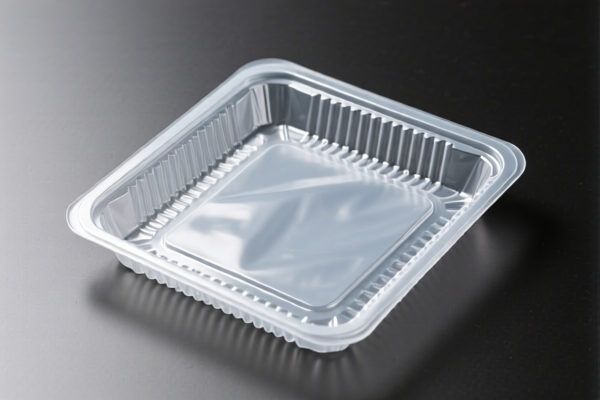
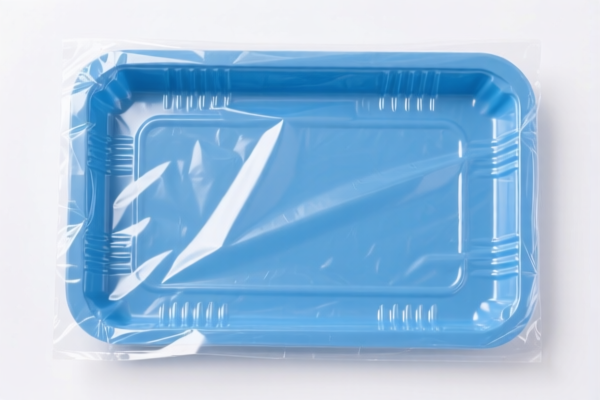
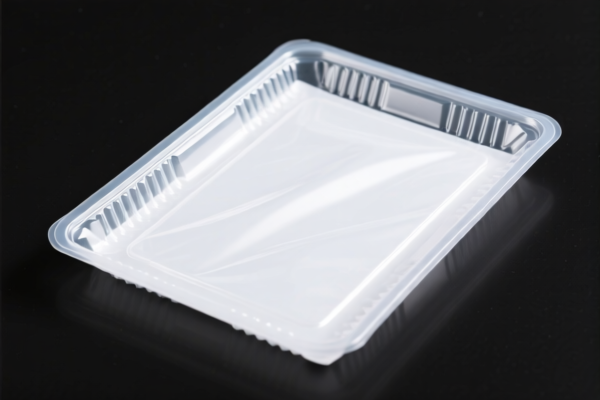

AI Analysis
🍱 PET Plastic Food Packaging Sheet (食品级PET塑料片)
🌐 HS Code Reference & Customs Clearance Guide | 2026 Latest Tariff Analysis | Professional Clearance Strategy for US Imports
📌 I. Product Definition and Classification: What Exactly is "PET Food Packaging Sheet"?
PET (Polyethylene Terephthalate) food packaging sheets are rigid, transparent plastic sheets used primarily for blister packaging, clamshell containers, and vacuum forming. In international trade, these are classified under Chapter 39 (Plastics and Articles Thereof).
The critical distinction lies in the specific composition and processing: * Polyester Sheets (Heading 3920): Rigid sheets made from polyesters (PET). * Other Plastic Sheets (Heading 3921): May include laminated sheets or those not specifically classified under 3920.
⚠️ Key Classification Point:
- If the product is a monolayer rigid PET sheet suitable for direct food contact and forming, it typically falls under 3920.62 (Polyester).
- If the product is laminated, coated, or considered "other" plastic sheets not fitting the strict definition of 3920, it may fall under 3921.19 or 3921.90.
- Food Grade Status: Does not change the HS Code but is crucial for FDA compliance documentation.
📦 II. HS Code Classification Details (2026 Latest Tariff Authority Comparison)
Based on the provided data, here are the five specific HS Codes applicable to Food Grade PET Plastic Sheets. Note that while the base material is the same (PET), the classification varies based on sub-heading specificity.
| HS Code | Product Description | Applicable Scenario | Tax Category |
|---|---|---|---|
3921.19.00.90 |
Food Grade PET Plastic Sheet (Sheet form, PET material). Classified as "Other plastic sheets." | General PET sheets not strictly defined as polyester in sub-heading 3920; broad "other" classification. | Total Tax: 41.5% |
3920.62.00.20 |
Food Grade PET Plastic Sheet. Classified specifically under Polyester (PET) plates, sheets. | Rigid PET sheets explicitly recognized as polyester. Often preferred for pure PET products. | Total Tax: 39.2% |
3921.90.50.50 |
Food Grade PET Plastic Sheet. Fits description of "Plates, sheets, film, foil and strips" under general plastic articles. | Used when the product doesn't fit specific polyester sub-codes but is still a plastic sheet. | Total Tax: 39.8% |
3920.62.00.90 |
Food Grade PET Plastic Sheet. Non-metalized, falls within reasonable scope of polyester sheets. | Pure PET sheets without metallic coatings. A common code for standard clear PET packaging material. | Total Tax: 39.2% |
3920.62.00.90 |
PET Plastic Handcraft Packaging Board (Board form, PET material). Non-metalized. | Specifically for thicker board-like PET products used in crafts or rigid packaging, not thin sheets. | Total Tax: 39.2% |
🔍 Key Insight:
- The lowest total tax rate (39.2%) is available under HS Code 3920.62.00.20 and 3920.62.00.90.
- HS Code 3921.19.00.90 carries a higher tax rate (41.5%) due to its "Other" classification in Chapter 3921.
- Metalization: Ensure the product is clearly described as "Non-metalized" to avoid incorrect classification under metalized plastic codes, which may have different rules.
💰 III. 2026 Latest Tariff Rate Details (Including Surtaxes & Policy Add-ons)
✅ Applicable Country: United States (US)
✅ Origin: China (CN)
✅ Effective Date: 2025年11月10日起 (Including subsequent imports)
🎯 1. 3920.62.00.20 & 3920.62.00.90 —— Polyester PET Sheets (Best for Standard PET)
| Item | Detail |
|---|---|
| Base Tariff | 4.2% |
| Section 301 Surcharge | +25.0% |
| Section 122 Tariff | +10.0% |
| Total Tax Rate | 39.2% |
| Calculation Method | CIF Value × 39.2% |
| De Minimis Exemption | ❌ Not Eligible (deny_de_minimis) |
| Legal Basis Path | Section 301: 25% + Section 122: 10% + Base: 4.2% |
📌 Explanation:
- Base Tariff (4.2%): Standard Most Favored Nation (MFN) rate for polyester plastic sheets.
- Section 301 Surcharge (25%): Applies to Chinese-origin goods under the US Trade Act.
- Section 122 Tariff (10%): Additional surcharge applied to specific plastic products from China.
- Total 39.2%: This is the most cost-effective option for pure, non-metalized PET sheets.
🎯 2. 3921.90.50.50 —— Other Plastic Sheets (General Category)
| Item | Detail |
|---|---|
| Base Tariff | 4.8% |
| Section 301 Surcharge | +25.0% |
| Section 122 Tariff | +10.0% |
| Total Tax Rate | 39.8% |
| Calculation Method | CIF Value × 39.8% |
| De Minimis Exemption | ❌ Not Eligible |
| Legal Basis Path | Section 301: 25% + Section 122: 10% + Base: 4.8% |
📌 Note:
- Slightly higher base tariff (4.8%) compared to polyester-specific codes.
- Use only if the product does not strictly meet the definition of "polyester sheets" under 3920.
🎯 3. 3921.19.00.90 —— Other Plastic Sheets (Higher Surcharge)
| Item | Detail |
|---|---|
| Base Tariff | 6.5% |
| Section 301 Surcharge | +25.0% |
| Section 122 Tariff | +10.0% |
| Total Tax Rate | 41.5% |
| Calculation Method | CIF Value × 41.5% |
| De Minimis Exemption | ❌ Not Eligible |
| Legal Basis Path | Section 301: 25% + Section 122: 10% + Base: 6.5% |
📌 Warning:
- Highest tax rate (41.5%) among the options.
- Avoid this code unless the product composition strictly requires "Other Plastic Sheets" classification and cannot be justified as polyester under 3920.
🛠️ IV. Customs Clearance Practical Advice (Pitfall Avoidance Guide)
✅ 1. Required Documentation Checklist
| Document | Mandatory | Description |
|---|---|---|
| ✅ Product Specification Sheet | ✔️ | Must specify: Material (100% PET), Thickness, Food Grade Certification, Non-metalized status. |
| ✅ FDA Food Contact Notification (FCN) | ✔️ | Essential for "Food Grade" claims. Without it, goods may be detained. |
| ✅ Commercial Invoice | ✔️ | Must clearly state "Food Grade PET Plastic Sheet" and HS Code. |
| ✅ Packing List | ✔️ | Detail weight, dimensions, and number of rolls/sheets. |
| ✅ Certificate of Origin (CO) | ✔️ | Required for origin verification (China origin triggers surcharges). |
| ✅ Test Report | ✔️ | Third-party lab report confirming food safety (FDA 21 CFR 177.1630). |
✅ 2. Declaration Tips (Key Mantra)
🔥 "PET is Polyester, 3920 is Best; Food Grade Needs FDA, Don't Guess the Rest!"
| Scenario | Correct Declaration | Wrong Practice |
|---|---|---|
| Standard Clear PET Sheet | 3920.62.00.90 |
Misclassifying as 3921.19 → 41.5% Tax |
| Thick PET Board for Crafts | 3920.62.00.90 |
Misclassifying as 3921.90 → 39.8% Tax |
| Metalized PET Film | Not in List | Declaring as "Non-metalized" → Customs Penalties |
| Laminated PET Film | 3921.19.00.90 |
Attempting to classify as pure polyester → Rejection |
✅ 3. Special Cases Handling
| Case | Handling Advice |
|---|---|
| OEM Custom Printing | If printing is minor, still classifies as 3920.62.00.90. If printing constitutes substantial transformation, consult a broker. |
| Co-extruded PET Sheets | If PET is the outer layer and essential character, 3920.62 may still apply. Provide layer structure diagram. |
| Food Grade Claim | Must provide FDA compliance docs. Mislabeling non-food grade as food grade leads to import refusal. |
| Small Sample Shipments | No De Minimis Exemption for China origin. Even small shipments pay 39.2%-41.5%. |
🌍 V. Global Market Comparison (2026 Latest)
| Country/Region | Recommended HS Code | Tariff (China Origin) | Certification Requirement | Notes |
|---|---|---|---|---|
| 🇺🇸 USA | 3920.62.00.90 |
39.2% | FDA 21 CFR 177.1630 | Highest surcharges (Section 301 + 122). |
| 🇨🇳 China | 3920.62.00.90 |
5% - 10% | GB 4806 (Food Contact) | Lower base tax, no US surcharges. |
| 🇪🇺 EU | 3920.62.00.00 |
6.5% | EU 10/2011 (Food Contact) | No Section 301/122. VAT applies. |
| 🇬🇧 UK | 3920.62.00.00 |
6.5% | UK Food Standards Agency | Post-Brexit regulations apply. |
| 🇯🇵 Japan | 3920.62.00.00 |
6% - 10% | Japan FSANZ Standards | No surcharges. |
📌 Conclusion:
- USA is the most expensive market for PET plastic sheets due to cumulative surcharges (Base 4.2% + 25% + 10% = 39.2%).
- EU/UK/Japan offer significantly lower tariff burdens (~6-10%) but have strict food contact regulations.
📌 VI. Common Mistakes & Pitfall Guide (Lessons Learned)
❌ Mistake 1: Misclassifying PET as "Other Plastic" (3921)
👉 Consequence: Higher tax rate (41.5% vs 39.2%). Why? PET is chemically a polyester, which has a specific heading (3920).
❌ Mistake 2: Ignoring Food Grade Documentation
👉 Consequence: FDA Detention. Even if the HS Code is correct, lack of FDA compliance leads to 99.9% return or destruction.
❌ Mistake 3: Declaring "Plastic Roll" without specifying Material
👉 Consequence: Customs requests additional info, causing delays and storage fees. Always specify "PET" or "Polyethylene Terephthalate".
❌ Mistake 4: Assuming De Minimis Applies
👉 Consequence: Small shipments from China are NOT exempt. Taxes apply to every dollar.
✅ Correct Practice:
"Food Grade Polyester (PET) Plastic Sheet, Clear, Non-Metalized, FDA 21 CFR 177.1630 Compliant, 12 Micron Thickness, Roll/Packaged"
🎯 VII. Conclusion: Precise Classification Saves Money!
🎯 Remember the Mantra:
🔹 "PET is Polyester, 3920 Wins; 3921 is Costly, 41.5% Burns."
🔹 "Food Grade Needs FDA, Docs Ready or Denied."
🔹 "US Tax is High, 39.2% is the Target, 41.5% is a Waste."
📌 Pro Tip:
- For standard clear PET sheets, always aim for
3920.62.00.90or3920.62.00.20to minimize taxes at 39.2%.- Pre-clearance: Submit FDA compliance docs and product specs to your customs broker before shipment arrival.
- Avoid
3921.19.00.90unless absolutely necessary, as it adds 2.3% more tax.
📣 Immediate Action:
📞 Contact your customs broker to confirm the specific product structure (monolayer vs. laminated).
📄 Ensure FDA FCN is on file for the specific PET formulation.
🚀 Optimize your supply chain to handle the 39.2% US tariff in your cost structure.
✨ Professional Clearance, Starting with Accurate Classification!
💼 Your Margin Depends on Precision!
Customer Reviews
About HS Code Classification
The Harmonized System (HS) is an internationally standardized nomenclature developed by the World Customs Organization (WCO) to classify traded products. Over 200 countries use the HS system as the basis for customs tariffs, trade statistics, and import/export regulations.
Each HS code follows a hierarchical structure:
- Chapter (2 digits) — Broad category of goods (e.g., Chapter 84: Machinery and Mechanical Appliances)
- Heading (4 digits) — More specific grouping within the chapter
- Subheading (6 digits) — Internationally standardized breakdown, used by all WCO member countries
- National subdivisions (8-10 digits) — Country-specific extensions for further classification, such as US HTSUS 10-digit codes
Correct HS code classification is essential for smooth customs clearance, accurate duty payment, and compliance with trade regulations. Misclassification can lead to customs delays, overpayment of duties, or penalties.
When importing from CN to US, the applicable tariff rates may include:
- Most-Favored-Nation (MFN) rate — The standard duty rate applied to WTO members
- General rate — Applied to countries without trade agreements
- Trade remedy duties — Additional tariffs such as Section 301 (anti-dumping), Section 232 (national security), or countervailing duties
The information provided on this page is for reference purposes only. For official classification, please consult with your local customs authority or a licensed customs broker.