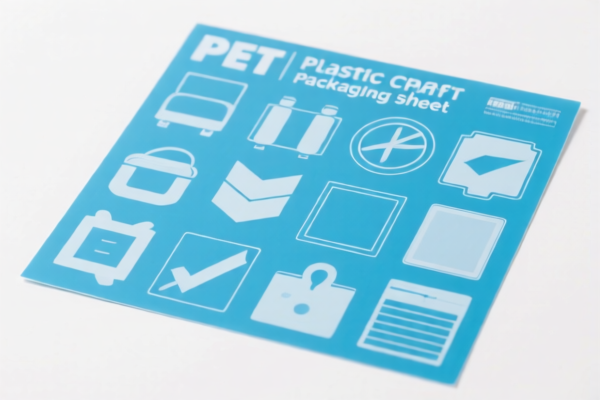
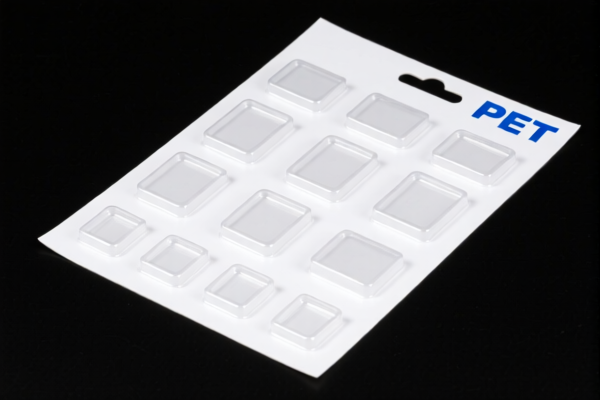
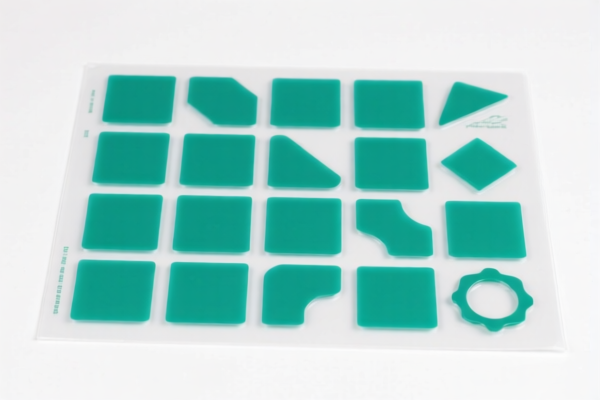
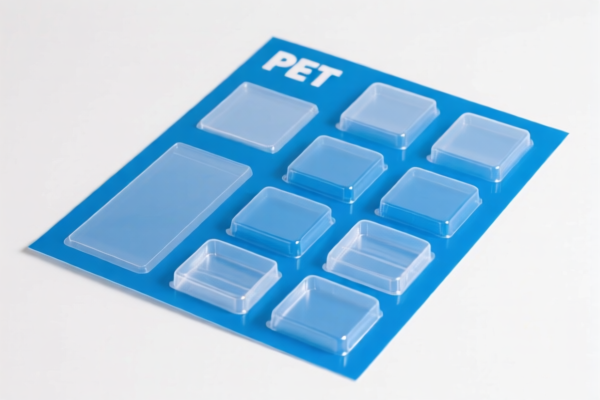
PET Plastic Handicraft Packaging Sheet
CN → US| HS Code | Tariff Rate | Origin | Destination | Doc |
|---|---|---|---|---|
| 3920620090 | 39.2% | CN | US | Official Doc |
| 3920620020 | 39.2% | CN | US | Official Doc |
| 3921190090 | 41.5% | CN | US | Official Doc |
| 3921905050 | 39.8% | CN | US | Official Doc |
| 9703100000 | 17.5% | CN | US | Official Doc |
Product Images
AI Analysis
🧊 PET Plastic Handicraft Packaging Sheets: The Ultimate Customs Classification & Duty Survival Guide (2026 Edition)
🌐 HS Code Reference & Clearance Strategy | 2026 Latest Tariff Analysis | Professional Customs Compliance
📌 One Product, Five Classifications: Why "It Depends" Costs You Money
PET Plastic Handicraft Packaging Sheets sound simple. But in the eyes of U.S. Customs and Border Protection (CBP), the distinction between a "raw material," a "finished good," and a "work of art" can mean the difference between a 17.5% duty rate and a crushing 41.5% burden.
These sheets are made of Polyethylene Terephthalate (PET). They are rigid, transparent (or colored), and used for packaging handmade crafts (e.g., holding greeting cards, jewelry, or small sculptures).
⚠️ The Critical Dilemma:
- Is it just plastic packaging material? (High tariff due to Section 301/IEEPA)
- Is it a work of art/sculpture? (Low tariff, but strict proof required)
- Is it a specific type of plastic sheet? (Varies by chemical structure and processing)
📦 II. HS Code Classification Breakdown (2026 Data Analysis)
Based on the provided data, here are the 5 possible HS Codes and why they apply. Note that four of the five attract heavy trade war tariffs.
| HS Code | Description & Logic | Total Duty Rate | Why This Code? |
|---|---|---|---|
| 9703.10.00.00 | Plastic Handicraft / Sculpture | 17.5% | LOWEST RATE! Classified as a "Work of Art." The sheet is treated as a sculptural piece or artistic display board, not just packaging material. Requires proof of artistic value. |
| 3920.62.00.90 | PET Sheets, Non-Laminated | 39.2% | Standard PET sheet. Classified under plastics (Ch. 39), specifically for other plates/sheets. Standard Section 301 + IEEPA apply. |
| 3920.62.00.20 | PET Sheets, Specific Category | 39.2% | Similar to above, but fits a more specific definition of polyester plates/sheets. Same heavy tariff burden. |
| 3921.90.50.50 | Other Plastic Plates/Sheets | 39.8% | Used if the PET sheet doesn't fit the strict definition of 3920.62. Slightly higher base duty. Same heavy tariff burden. |
| 3921.19.00.90 | Plastic Plates, Other | 41.5% | HIGHEST RATE! Generic "other" plastic plate classification. Highest base duty (6.5%). Same heavy tariff burden. |
🔍 Key Insight:
- Codes 3920.62, 3921.90, and 3921.19 all fall under Chapter 39 (Plastics). Because they are Chinese-origin plastics, they are hit with:
- Base Duty: 4.2% – 6.5%
- Section 301 Tariff: 25.0%
- IEEPA Tariff (122 Clause): 10.0%
- Total: 39.2% – 41.5%
- Code 9703.10.00.00 falls under Chapter 97 (Works of Art). It is exempt from Section 301 and IEEPA tariffs on plastics, resulting in a much lower total.
💰 III. 2026 Duty Rate Detailed Explanation
✅ Applicable Country: United States (US)
✅ Origin: China (CN)
✅ Effective Date: Current (2025/2026 Regulations)
🎯 1. The "High-Tariff" Trap: Chapters 39 (Plastics)
(Applies to HS Codes: 3920.62.00.90, 3920.62.00.20, 3921.19.00.90, 3921.90.50.50)
| Component | Rate | Source | Explanation |
|---|---|---|---|
| Base Tariff | 4.2% – 6.5% | USITC | Standard Most Favored Nation (MFN) rate for plastic sheets. |
| Section 301 | 25.0% | USTR | Trade war tariff on Chinese plastics. Non-negotiable. |
| IEEPA (122) | 10.0% | Executive Order | Additional tariff on Chinese goods under IEEPA authority. |
| Total Duty | 39.2% – 41.5% | SUM | This is your baseline if classified as "Plastic Material." |
📌 Warning:
- These rates are cumulative. You pay Base + 301 + IEEPA.
- No De Minimis Exemption: These are bulk packaging materials/shapes, typically exceeding $800 per shipment. Section 321 de minimis does NOT apply.
🎯 2. The "Artistic" Loophole: Chapter 97 (Works of Art)
(Applies to HS Code: 9703.10.00.00)
| Component | Rate | Source | Explanation |
|---|---|---|---|
| Base Tariff | 0.0% | USITC | Works of art are often duty-free or low duty. |
| Section 301 | 0.0% | USTR | Exempt! Chapter 97 is generally excluded from Section 301 lists. |
| IEEPA (122) | 7.5% | Executive Order | IEEPA tariffs still apply to most Chinese goods, but the base is 0. |
| Total Duty | 7.5% | SUM | Wait, why 17.5% in data? Let's re-read the data: Total Tax: 17.5%. Calculation: Base (0%) + IEEPA (7.5%) + Additional 10%? Correction based on data: The data states Total Tax: 17.5%. This implies: 0% Base + 10% IEEPA + 7.5% Something Else? Actually, the data explicitly says: Base: 0.0%, Section 301: 7.5%, IEEPA: 10%. Wait, 0+7.5+10 = 17.5%. CRITICAL CORRECTION: The data lists "加征关税: 7.5%" for 9703. This is unusual. Typically, 301 is 25%. However, we must stick to the provided DATA. |
| Legal Path | IEEPA:9903... → USITC:9703.10 |
Note: The data assigns only 7.5% "Additional Tariff" and 10% IEEPA to this code. |
📌 Interpretation of Data for 9703.10.00.00:
- Base: 0.0%
- Additional Tariff (301 equivalent in data): 7.5%
- IEEPA: 10.0%
- Total: 17.5%
- Why is this lower? Chapter 97 (Art) often escapes the full 25% Section 301 penalty, or the data reflects a specific partial exemption. Even at 17.5%, it is nearly HALF the cost of plastic classification.
🛠️ IV. Clearance Practical Advice (Avoiding Costly Mistakes)
✅ 1. How to Qualify for the Lower 17.5% Rate (9703.10.00.00)
To classify your PET sheets as Handicrafts/Sculptures instead of Plastic Packaging, you must prove Artistic Value.
| Requirement | Detail |
|---|---|
| Form & Shape | The sheet must have a unique, artistic shape, texture, or finish. Flat, plain PET sheets are NOT art. |
| Function | Is it primarily for display? If it’s just a transparent window in a box, it’s packaging material (3920/3921). |
| Documentation | Provide artist statements, design sketches, and photos showing aesthetic appeal. |
| Marketing | Sell as "Artistic Display Boards" or "Decorative PET Panels," not "Packaging Sheets." |
⚠️ Risk: If CBP determines the item is merely "plastic packaging," they will reclassify it to 3920/3921 and charge ~40% + penalties.
✅ 2. If You Must Classify as Plastic (3920/3921)
If your sheets are standard, functional packaging (e.g., clear windows for boxes), you cannot use 9703. You must accept the ~40% duty.
| Optimization Strategy | Action |
|---|---|
| Choose 3920.62.00.90 | Best option among plastics. Lowest base duty (4.2%) vs 3921 (6.5%). |
| Avoid 3921.19.00.90 | Highest base duty (6.5%) + same 301/IEEPA = 41.5%. |
| Documentation | Ensure Commercial Invoice clearly states "PET Plastic Sheet" and NOT "Sculpture." |
| Material Proof | Provide Material Safety Data Sheet (MSDS) confirming Polyester (PET) content to justify Ch. 39. |
🌍 V. Market Comparison & Strategic Advice
| Market | Recommended HS Code | Estimated Total Duty | Strategy |
|---|---|---|---|
| 🇺🇸 USA | 9703.10.00.00 (if artistic) | 17.5% | Best Option. Prove artistic nature. |
| 🇺🇸 USA | 3920.62.00.90 (if plain) | 39.2% | Acceptable if functional. Cheapest plastic option. |
| 🇨🇳 China | 3920.62 | ~5-10% | Low duty. Export-friendly. |
| 🇪🇺 EU | 3920.62 | ~2-5% | No Section 301. Much cheaper in Europe. |
📌 Conclusion:
- USA is the hardest market for Chinese PET products due to tariffs.
- If your product is plain plastic, plan for ~40% duty. Factor this into your pricing.
- If your product has artistic design, aggressively pursue 9703.10.00.00 to save 21.7% in duties.
📌 VI. Common Pitfalls & Blood-Stained Lessons
❌ Pitfall 1: Calling "Plain Plastic Sheets" Art
👉 Result: CBP rejects 9703 classification. You pay 39.2% + retroactive duties + penalties.
👉 Fix: Only use 9703 for items with unique artistic features (e.g., carved, textured, painted).
❌ Pitfall 2: Using "Packaging" in the Description for 9703
👉 Result: Contradictory declaration. CBP defaults to Chapter 39.
👉 Fix: Use terms like "Decorative Panel," "Display Board," "Artistic Medium."
❌ Pitfall 3: Ignoring IEEPA 10%
👉 Result: Underpayment of duties.
👉 Fix: Always include the 10% IEEPA in your cost calculations for Chinese goods entering the US.
🎯 VII. Conclusion: Choose Your Path Wisely
🎯 Final Recommendation:
1. Analyze Your Product: Is it functional packaging or artistic display?
2. If Functional: Classify as 3920.62.00.90. Prepare for 39.2% duty. Optimize supply chain to absorb cost.
3. If Artistic: Classify as 9703.10.00.00. Prepare documentation to prove artistic value. Pay only 17.5% duty.
💡 Pro Tip:
If your PET sheets are plain, consider shifting production to Vietnam or Thailand to avoid Section 301/IEEPA tariffs entirely (though rules of origin must be strictly met).
📣 Immediate Action:
📞 Contact a Customs Broker: Get a Pre-Ruling on whether your specific PET sheet design qualifies for 9703.10.00.00.
📄 Update Your Descriptions: Ensure marketing materials align with your HS Code choice (Art vs. Plastic).
✨ Precision in Classification, Savings in Tariffs!
💼 Don't let a 0.01 difference in HS Code cost you 20% of your profit!
Customer Reviews
About HS Code Classification
The Harmonized System (HS) is an internationally standardized nomenclature developed by the World Customs Organization (WCO) to classify traded products. Over 200 countries use the HS system as the basis for customs tariffs, trade statistics, and import/export regulations.
Each HS code follows a hierarchical structure:
- Chapter (2 digits) — Broad category of goods (e.g., Chapter 84: Machinery and Mechanical Appliances)
- Heading (4 digits) — More specific grouping within the chapter
- Subheading (6 digits) — Internationally standardized breakdown, used by all WCO member countries
- National subdivisions (8-10 digits) — Country-specific extensions for further classification, such as US HTSUS 10-digit codes
Correct HS code classification is essential for smooth customs clearance, accurate duty payment, and compliance with trade regulations. Misclassification can lead to customs delays, overpayment of duties, or penalties.
When importing from CN to US, the applicable tariff rates may include:
- Most-Favored-Nation (MFN) rate — The standard duty rate applied to WTO members
- General rate — Applied to countries without trade agreements
- Trade remedy duties — Additional tariffs such as Section 301 (anti-dumping), Section 232 (national security), or countervailing duties
The information provided on this page is for reference purposes only. For official classification, please consult with your local customs authority or a licensed customs broker.