PET Plastic Light Blocking Film
CN → US| HS Code | Tariff Rate | Origin | Destination | Doc |
|---|---|---|---|---|
| 3921190090 | 41.5% | CN | US | Official Doc |
| 3920620090 | 39.2% | CN | US | Official Doc |
| 3921905050 | 39.8% | CN | US | Official Doc |
| 3919905040 | 40.8% | CN | US | Official Doc |
| 3919905060 | 40.8% | CN | US | Official Doc |
Product Images
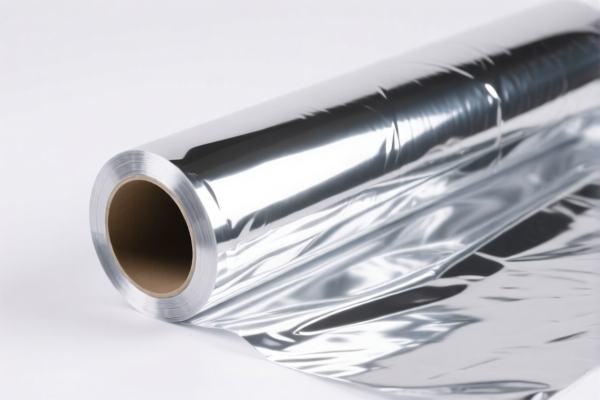
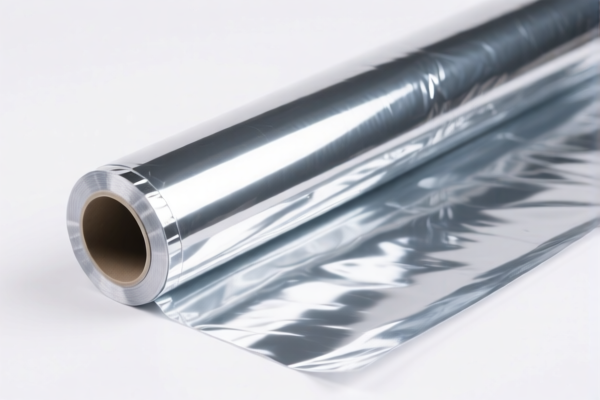


AI Analysis
🛡️ PET Plastic Light Blocking Film (Anti-Scratch/Protective)
🌐 HS Code Reference & Customs Clearance Guide | 2026 Latest Tariff Analysis | Professional Level Strategy
📌 I. Product Definition & Classification: What Exactly is "PET Light Blocking Film"?
PET (Polyethylene Terephthalate) Light Blocking Film is a high-performance plastic film widely used in electronics, automotive, and construction industries. Its primary functions are light shielding (blackout) and surface protection (anti-scratch).
In international trade, the classification depends heavily on its physical form, self-adhesive nature, and structural characteristics:
1. General Plastic Film (Non-adhesive or Laminated)
- Simple PET films, often used for backing or packaging.
- Key characteristic: Not primarily defined by self-adhesive properties.
- 📌 Typical HS Codes: 3921.19.00.90, 3920.62.00.90
2. Self-Adhesive Plastic Film
- Films with an adhesive layer (e.g., screen protectors, architectural window films with glue).
- Key characteristic: Comes with a backing liner and adhesive ready for application.
- 📌 Typical HS Codes: 3919.90.50.40, 3919.90.50.60
⚠️ Critical Distinction:
- If the film is laminated or has special surface treatments for light blocking but lacks a self-adhesive function, it may fall under Chapter 39 (Articles of Plastics).
- If it is explicitly a self-adhesive roll (like a screen protector), it falls under Heading 3919 (Self-adhesive plates, sheets, film, foil, tape, strip and other flat shapes, of plastics).
📦 II. HS Code Classification Details (2026 Latest Tariff Authority Match)
| HS Code | Product Description | Application Scenario | Key Feature |
|---|---|---|---|
3921.19.00.90 |
Other plates, sheets, film, foil and strip, of plastics: Of polyolefins... (Note: Summary states PET) | General protective films, non-adhesive light blocking sheets | Non-adhesive PET film |
3920.62.00.90 |
Other plates, sheets, film, foil and strip, of plastics: Of polyethylene terephthalate (PET) | Standard PET films, industrial protective layers | Pure PET material, no adhesive |
3921.90.50.50 |
Other plates, sheets, film, etc.: Other | Multi-layer laminated PET films, treated for light blocking | Laminated/Processed PET |
3919.90.50.40 |
Self-adhesive plates, sheets, etc.: Of plastics, other | Self-adhesive PET protective films (e.g., phone screens) | With Adhesive Layer |
3919.90.50.60 |
Self-adhesive plates, sheets, etc.: Of plastics, other | Self-adhesive PET films for industrial/light blocking | With Adhesive Layer |
🔍 Key Insight:
- Adhesive determines the chapter path: If it has glue, look at 3919; if not, look at 3920/3921.
- PET vs. Polyolefin: While3921.19mentions polyolefins, many general summaries group PET protective films here if they are laminated. However, pure PET films are more accurately3920.62.
- Light Blocking Function: This is a chemical/physical property and does not change the HS code. It is declared as a functional attribute under "Other" or specific subheadings.
💰 III. 2026 Latest Tariff Rate Breakdown (US Imports from China)
✅ Applicable Country: United States (US)
✅ Origin: China (CN)
✅ Effective Date: 2025/2026 (Includes Section 301 & IEEPA duties)
🎯 1. 3921.19.00.90 —— General Plastic Film (Non-Adhesive/Laminated)
| Item | Content |
|---|---|
| Base Tariff Rate | 6.5% (Most Favored Nation) |
| Section 301 Duty | +25.0% (Additional duty on Chinese goods) |
| IEEPA Duty (Section 122/1301) | +10.0% (Additional duty on certain Chinese goods) |
| Total Tariff Rate | 41.5% |
| Tax Calculation | CIF Value × 41.5% |
| De Minimis Exemption? | ❌ No (Valuation over $800 triggers duty) |
| Legal Basis Path | HTSUS: 3921.19.00.90 → Footnote 9903.88.01 (25%) → IEEPA: 9903.01.25 (10%) |
📌 Explanation:
- Base 6.5%: Standard US import duty for plastic films.
- 25% Section 301: Targeted at Chinese manufactured goods, including plastics.
- 10% IEEPA: Recent additions for specific categories of Chinese imports.
- Total 41.5%: High cost driver. Must be accounted for in pricing.
🎯 2. 3920.62.00.90 —— Pure PET Film
| Item | Content |
|---|---|
| Base Tariff Rate | 4.2% |
| Section 301 Duty | +25.0% |
| IEEPA Duty | +10.0% |
| Total Tariff Rate | 39.2% |
| Tax Calculation | CIF Value × 39.2% |
| De Minimis Exemption? | ❌ No |
| Legal Basis Path | HTSUS: 3920.62.00.90 → Footnote 9903.88.01 → IEEPA: 9903.01.24 |
📌 Note:
- Slightly lower base rate (4.2% vs 6.5%) makes this 2.3% cheaper than3921.19.
- Ideal for pure PET sheets/films without lamination or adhesive.
🎯 3. 3921.90.50.50 —— Laminated/Processed PET Film
| Item | Content |
|---|---|
| Base Tariff Rate | 4.8% |
| Section 301 Duty | +25.0% |
| IEEPA Duty | +10.0% |
| Total Tariff Rate | 39.8% |
| Tax Calculation | CIF Value × 39.8% |
| De Minimis Exemption? | ❌ No |
📌 Note:
- Best for multi-layer PET films where light blocking is achieved via lamination or coating.
🎯 4. 3919.90.50.40 & 3919.90.50.60 —— Self-Adhesive PET Film
| Item | Content |
|---|---|
| Base Tariff Rate | 5.8% |
| Section 301 Duty | +25.0% |
| IEEPA Duty | +10.0% |
| Total Tariff Rate | 40.8% |
| Tax Calculation | CIF Value × 40.8% |
| De Minimis Exemption? | ❌ No |
| Legal Basis Path | HTSUS: 3919.90.50.XX → Footnote 9903.88.01 → IEEPA |
📌 Note:
- Applies to screen protectors, adhesive window films, or tape-like PET films.
- If your product has a sticky side, you MUST use 3919 codes, not 3920/3921. Misclassification leads to penalties.
🛠️ IV. Customs Clearance Practical Advice (Pitfall Avoidance Guide)
✅ 1. Required Documentation Checklist
| Document | Mandatory? | Description |
|---|---|---|
| ✅ Product Spec Sheet | ✔️ | Must detail: Material (100% PET or blend), Thickness (microns), Light Blockage %, Adhesive Type (if any). |
| ✅ Commercial Invoice | ✔️ | Clearly state "PET Plastic Film" or "Self-Adhesive PET Protective Film". Avoid vague terms like "Plastic Sheet". |
| ✅ Packing List | ✔️ | Show dimensions, weight, and number of rolls/sheets. |
| ✅ Adhesive Confirmation | ✔️ | Critical: Declare if self-adhesive. If yes, must use 3919. If no, use 3920/3921. |
| ✅ Safety Data Sheet (SDS) | ✔️ | For chemical composition verification. |
| ✅ Photos of Product | ✔️ | Show the film roll, liner (if adhesive), and application context. |
✅ 2. Classification Strategy (Key Mantra)
🔥 "Adhesive decides 3919; Pure/Laminated decides 3920/3921. Light blocking is just a feature, not a code!"
| Scenario | Correct HS Code | Wrong HS Code | Consequence |
|---|---|---|---|
| Screen Protector (with glue) | 3919.90.50.40/60 |
3920.62.00.90 |
Penalty + Duty Recalculation |
| Plain PET Sheet (no glue) | 3920.62.00.90 |
3919.90.50.40 |
Underpayment Penalty |
| Laminated PET Film | 3921.90.50.50 |
3920.62.00.90 |
Possible Re-classification & Delay |
| Adhesive Tape | 3919.90.50.40 |
3921.19.00.90 |
High Risk of Audit |
✅ 3. Special Cases & Tips
| Situation | Handling Advice |
|---|---|
| Custom Light Blocking Coating | Declare as "Coated PET Film". Still falls under 3920/3921 unless the coating changes the fundamental character significantly. |
| Exporting to US | Budget for 39%–41.5% tariff. Consider pricing strategies or supply chain shifts if margins are thin. |
| De Minimis ($800) | Does NOT apply due to Section 301 and IEEPA duties. Even small shipments are taxed. |
| Country of Origin | If assembled in Vietnam/Malaysia from Chinese PET, you might qualify for lower tariffs, but must prove Substantial Transformation. |
🌍 V. Global Market Comparison (2026)
| Country/Region | Recommended HS Code | Total Tariff (China Origin) | Key Certification | Notes |
|---|---|---|---|---|
| 🇺🇸 USA | 3919.90.50.40 (Adhesive) |
40.8% | None specific | High Duty due to 301+IEEPA |
| 🇺🇸 USA | 3920.62.00.90 (Non-Adhesive) |
39.2% | None specific | Slightly cheaper than adhesive |
| 🇪🇺 EU | 3920.62.00.90 |
6.5% | REACH, RoHS | No Section 301. Standard MFN rate. |
| 🇨🇳 China | 3920.62.00.90 |
6.5% | None | Import duty for Chinese re-imports. |
| 🇯🇵 Japan | 3920.62.00.90 |
6.0% | PSE (if electrical) | Moderate duty. |
📌 Conclusion:
- USA is the most expensive market due to layered tariffs (Base + 301 + IEEPA).
- EU and Asia have significantly lower barriers for PET films.
- Tariff Engineering: Ensure accurate classification between3919(Adhesive) and3920/3921(Non-Adhesive) to avoid overpayment or penalties.
📌 VI. Common Mistakes & Pitfalls (Lessons Learned)
❌ Mistake 1: Calling it "Protective Tape" when it's just a film.
👉 Result: Misclassification under 3919 (Adhesive) when it should be 3920. Risk of penalty if it is adhesive.
❌ Mistake 2: Ignoring the "Light Blocking" aspect.
👉 Result: No impact on HS Code, but must be declared in description to avoid ambiguity. If it's a "Smart Film" with electrodes, it moves to Chapter 85 (Electrical). Stick to passive PET for these codes.
❌ Mistake 3: Assuming De Minimis ($800) exemption applies.
👉 Result: FALSE. Section 301 and IEEPA duties apply regardless of value. Small shipments will still be taxed.
✅ Correct Practice:
"PET Plastic Light Blocking Film, Self-Adhesive, 100 Microns, Blackout, Roll Form, Model XYZ"
→ Use3919.90.50.40"PET Plastic Light Blocking Film, Non-Adhesive, 120 Microns, Matte Finish, Sheet Form"
→ Use3920.62.00.90
🎯 VII. Conclusion: Professional Classification Saves Money!
🎯 Remember the Mantra:
🔹 "Adhesive = 3919 (40.8%); Pure PET = 3920 (39.2%); Laminated = 3921 (39.8%-41.5%)."
🔹 "Light blocking is a feature, not a category. Adhesion is the king of classification!"
📌 Pro Tip:
- If your film is just PET with a black coating, use 3920.62.00.90 (39.2%).
- If it has glue on one side, use 3919.90.50.40 (40.8%).
- Always declare material composition (PET) and adhesive status clearly in the commercial invoice.
📣 Immediate Action:
📞 Consult a licensed customs broker to verify if your specific "Light Blocking" technology (e.g., metallic coating vs. dyed) changes the classification.
🚀 Accurate HS Code = Accurate Cost = Profit Protection!
✨ Professional Clearance Starts with Precise Classification!
💼 Every cent saved on duty is profit earned!
Customer Reviews
About HS Code Classification
The Harmonized System (HS) is an internationally standardized nomenclature developed by the World Customs Organization (WCO) to classify traded products. Over 200 countries use the HS system as the basis for customs tariffs, trade statistics, and import/export regulations.
Each HS code follows a hierarchical structure:
- Chapter (2 digits) — Broad category of goods (e.g., Chapter 84: Machinery and Mechanical Appliances)
- Heading (4 digits) — More specific grouping within the chapter
- Subheading (6 digits) — Internationally standardized breakdown, used by all WCO member countries
- National subdivisions (8-10 digits) — Country-specific extensions for further classification, such as US HTSUS 10-digit codes
Correct HS code classification is essential for smooth customs clearance, accurate duty payment, and compliance with trade regulations. Misclassification can lead to customs delays, overpayment of duties, or penalties.
When importing from CN to US, the applicable tariff rates may include:
- Most-Favored-Nation (MFN) rate — The standard duty rate applied to WTO members
- General rate — Applied to countries without trade agreements
- Trade remedy duties — Additional tariffs such as Section 301 (anti-dumping), Section 232 (national security), or countervailing duties
The information provided on this page is for reference purposes only. For official classification, please consult with your local customs authority or a licensed customs broker.