PET Plastic Roll Film
CN → US| HS Code | Tariff Rate | Origin | Destination | Doc |
|---|---|---|---|---|
| 3920992000 | 39.2% | CN | US | Official Doc |
| 3921905050 | 39.8% | CN | US | Official Doc |
| 3921190010 | 41.5% | CN | US | Official Doc |
| 3920620090 | 39.2% | CN | US | Official Doc |
| 3919905060 | 40.8% | CN | US | Official Doc |
Product Images
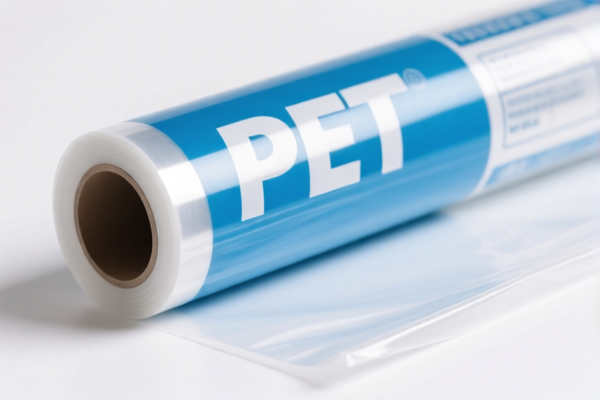
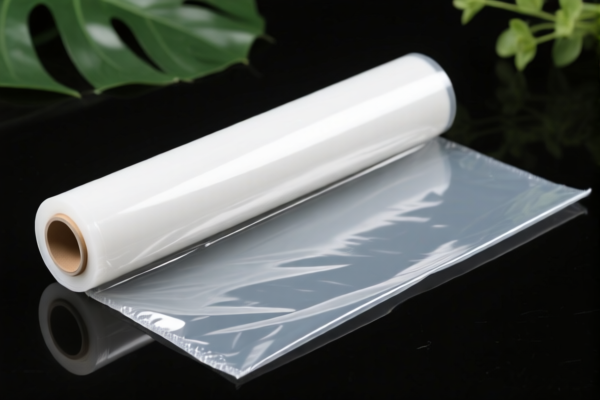
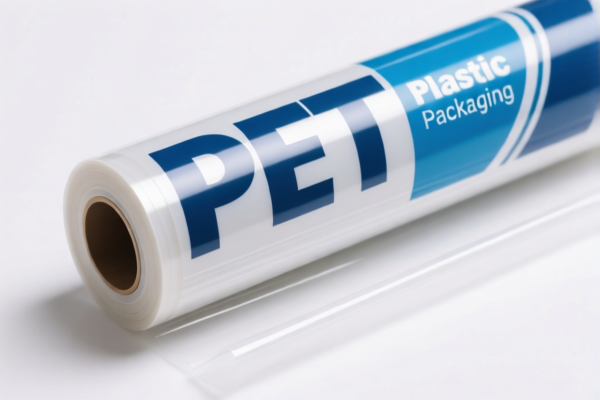
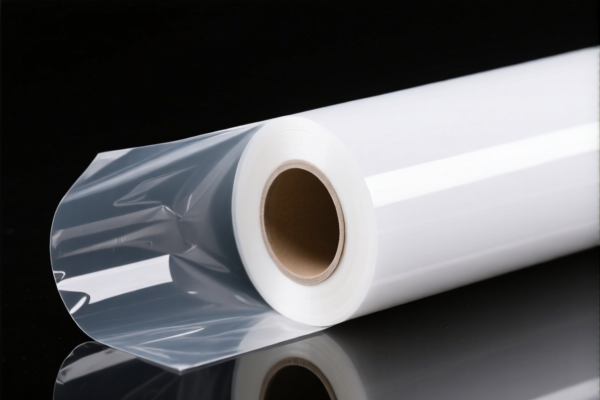
AI Analysis
🧪 PET Plastic Roll Film (Polyester Film)
🌐 HS Code Reference & Customs Clearance Guide | 2026 Latest Tariff Analysis | Professional Entry Strategies
📌 I. Product Definition & Classification: Do You Really Know "PET Film"?
Polyester (PET) plastic film is a high-performance polymer material widely used in packaging, electrical insulation, graphic arts, and industrial applications. In international trade, it is strictly classified based on its physical form, function, and processing state.
Key Distinctions: * Flat Sheets/Unwound Rolls (Plates/Films) Non-adhesive, plain films used for further processing. Classified under Chapter 39 (Plastics and Articles Thereof), specifically subheadings 3920 or 3921. * Self-Adhesive Rolls: Films coated with an adhesive backing (e.g., labels, tape base). Classified under 3919 (Self-adhesive plates, sheets, film...). * Metalized Films: If coated with aluminum, they may fall under different subheadings (not included in the provided but critical for accurate classification).
⚠️ Critical Classification Point:
- If the film is non-adhesive and sold in rolls/sheets → Check 3920 or 3921.
- If the film is self-adhesive (has glue) → Check 3919.
- Misclassification between "plain film" and "adhesive film" leads to significant tax discrepancies and potential customs penalties.
📦 II. HS Code Classification Details (Based on Provided Data)
| HS Code | Product Description | Application Scenario | Key Classification Basis |
|---|---|---|---|
3920.99.20.00 |
PET Plastic Film (Non-cellulose, non-reinforced, flexible) | General purpose packaging, non-metalized plain film | Matches "plate, sheet, film, foil, strip" characteristics; non-cellular |
3921.90.50.50 |
PET Plastic Film (Other plastic plates/sheets/films) | Generic PET film not fitting specific 3920 categories | Fits "other plastic plates, sheets, film, foil, strip" material & form |
3921.19.00.10 |
PET Plastic Film (High consistency in material/form) | Specialized PET film where material/form dictates this code | Based on high consistency of material and form under "other plastic plates/sheets/films" |
3920.62.00.90 |
PET Plastic Film (Non-metalized) | Standard PET film explicitly not metalized | Matches PET material & film form; excludes metalized categories |
3919.90.50.60 |
Self-Adhesive PET Roll Film | Label stock, tape backing, adhesive-coated films | Self-adhesive nature; roll form; plastic adhesive film |
🔍 Important Note:
- Codes 3920.xxxx and 3921.xxxx apply to non-adhesive PET films.
- Code 3919.xxxx applies ONLY if the film has an adhesive backing.
- Do not confuse "roll form" with "adhesive." A plain PET film in a roll is still 3920/3921, not 3919.
💰 III. 2026 Latest Tariff Rate Breakdown (Including Surcharges & Policy Add-ons)
✅ Applicable Country: United States (US)
✅ Country of Origin: China (CN)
✅ Effective Date: From November 10, 2025 (and subsequent imports)
🎯 1. 3920.99.20.00 — PET Plastic Film (Non-cellular, Flexible)
| Item | Detail |
|---|---|
| Base Duty Rate | 4.2% (ad valorem) |
| Section 301 Surcharge | +25.0% |
| Section 122 Surcharge | +10.0% |
| Total Tariff Rate | 39.2% |
| Tax Calculation | CIF Value × 39.2% |
| De Minimis Exemption | ❌ Not Eligible |
| Legal Basis Path | USITC:3920.99.20.00 → SECTION301:25% → SECTION122:10% |
📌 Explanation:
- 4.2% is the standard Most Favored Nation (MFN) duty.
- 25% is the Section 301 tariff on Chinese goods.
- 10% is the Section 122 tariff (Trade Expansion Act of 1962).
- Total: 39.2%. This is a high-cost category for plain PET films.
🎯 2. 3921.90.50.50 — Other Plastic Plates/Sheets/Films
| Item | Detail |
|---|---|
| Base Duty Rate | 4.8% (ad valorem) |
| Section 301 Surcharge | +25.0% |
| Section 122 Surcharge | +10.0% |
| Total Tariff Rate | 39.8% |
| Tax Calculation | CIF Value × 39.8% |
| De Minimis Exemption | ❌ Not Eligible |
| Legal Basis Path | USITC:3921.90.50.50 → SECTION301:25% → SECTION122:10% |
📌 Note:
- Slightly higher base rate (4.8%) than3920.99.20.00.
- Same surcharges apply.
- Total 39.8% makes this one of the most expensive options in the provided list.
🎯 3. 3921.19.00.10 — PET Film (High Material/Form Consistency)
| Item | Detail |
|---|---|
| Base Duty Rate | 6.5% (ad valorem) |
| Section 301 Surcharge | +25.0% |
| Section 122 Surcharge | +10.0% |
| Total Tariff Rate | 41.5% |
| Tax Calculation | CIF Value × 41.5% |
| De Minimis Exemption | ❌ Not Eligible |
| Legal Basis Path | USITC:3921.19.00.10 → SECTION301:25% → SECTION122:10% |
📌 Warning:
- This code has the highest base rate (6.5%) among non-adhesive options.
- Total 41.5% is the most expensive classification in the set for plain films.
- Only use if the product’s physical properties strictly mandate this specific subheading.
🎯 4. 3920.62.00.90 — PET Film (Non-Metalized)
| Item | Detail |
|---|---|
| Base Duty Rate | 4.2% (ad valorem) |
| Section 301 Surcharge | +25.0% |
| > Section 122 Surcharge | +10.0% |
| Total Tariff Rate | 39.2% |
| Tax Calculation | CIF Value × 39.2% |
| De Minimis Exemption | ❌ Not Eligible |
| Legal Basis Path | USITC:3920.62.00.90 → SECTION301:25% → SECTION122:10% |
📌 Explanation:
- Specifically for non-metalized PET films.
- If your film is metalized (e.g., for reflective packaging), this code is incorrect.
- Total 39.2% is the standard competitive rate for plain, non-metalized PET.
🎯 5. 3919.90.50.60 — Self-Adhesive PET Roll Film
| Item | Detail |
|---|---|
| Base Duty Rate | 5.8% (ad valorem) |
| Section 301 Surcharge | +25.0% |
| Section 122 Surcharge | +10.0% |
| Total Tariff Rate | 40.8% |
| Tax Calculation | CIF Value × 40.8% |
| De Minimis Exemption | ❌ Not Eligible |
| Legal Basis Path | USITC:3919.90.50.60 → SECTION301:25% → SECTION122:10% |
📌 Key Distinction:
- This is the only adhesive film in the list.
- Total 40.8% is higher than non-adhesive 3920 codes (39.2%) but lower than the highest 3921 code (41.5%).
- CRITICAL: Do not use this for plain films. If you declare adhesive film as3920, you risk classification errors and penalties.
🛠️ IV. Customs Clearance Practical Advice (Real-World Pitfall Guide)
✅ 1. Required Documentation Checklist (All Must Be Provided)
| Document | Mandatory? | Description |
|---|---|---|
| ✅ Product Specification Sheet | ✔️ | Must specify: Thickness, Width, Material (PET), Adhesive Type (if any), Metalization Status |
| ✅ Product Photos | ✔️ | Clear images showing roll ends, labels, and any printed/coated surfaces |
| ✅ Commercial Invoice | ✔️ | Must clearly state: "PET Plastic Film," HS Code, Country of Origin (China) |
| ✅ Packing List | ✔️ | Detail gross/net weight, dimensions, and number of rolls |
| ✅ Certificate of Origin (CO) | ✔️ | Required to confirm Chinese origin for surcharge application |
| ✅ Adhesive Declaration | ✔️ | If using HS 3919, must declare adhesive composition and weight |
| ✅ Metalization Declaration | ✔️ | If using HS 3920.62, must confirm no metal coating. If metalized, code may change |
✅ 2. Declaration Tips (Key Mantra)
🔥 “Plain vs. Adhesive, Metalized vs. Plain, Describe Clearly, Avoid Fines!”
| Situation | Correct Declaration | Incorrect Practice |
|---|---|---|
| Plain PET Film (Rolls) | 3920.99.20.00 or 3920.62.00.90 |
Declare as "Plastic Sheet" → 39.2% |
| Plain PET Film (Metalized) | Not in Data (Likely 3920.61/3920.62 variant) | Declare as non-metalized (3920.62.00.90) → Penalty! |
| Adhesive PET Film (Labels) | 3919.90.50.60 |
Declare as plain film (3920) → Classification Error |
| General PET Film | 3921.90.50.50 |
Use 3921.19.00.10 unnecessarily → 41.5% vs 39.8% |
✅ 3. Special Circumstances Handling
| Situation | Handling Advice |
|---|---|
| OEM Custom PET Film | Provide client specs + design file. Avoid vague terms like "Plastic Material." Use "Biaxially Oriented Polyester (BOPET) Film." |
| Metalized PET | Do NOT use 3920.62.00.90. Metalized films often have different subheadings. Consult current HTSUS for metalized codes. Misdeclaration leads to 100% penalty on duty evaded. |
| Adhesive vs. Non-Adhesive | If the film has a pressure-sensitive adhesive, it MUST be 3919. Declaring adhesive film as 3920 is a major red flag for CBP. |
| Thickness Variations | Ensure description matches the specific subheading. If thickness dictates a different chapter (e.g., >1mm might be considered "plastics in primary forms"), reclassify. |
🌍 V. Global Market Clearance Comparison (2026 Latest)
| Country/Region | Recommended HS Code | Tariff Rate | Certification Requirements | Remarks |
|---|---|---|---|---|
| 🇺🇸 USA | 3920.99.20.00 / 3921.90.50.50 |
39.2% - 39.8% (Plain) 40.8% (Adhesive) |
FDA (if for food contact) Prop 65 |
High tariffs due to Section 301 & 122. |
| 🇨🇳 China | 3920.99 / 3921.90 |
4.2% - 4.8% | CCC (if applicable) | No Section 301/122 surcharges. |
| 🇪🇺 EU | 3920.62 / 3921.90 |
0% - 3% (varies) | REACH Compliance | No major surcharges. Check REACH SVHC. |
| 🇬🇧 UK | 3920.62 / 3921.90 |
0% - 3% | UKCA Mark (if regulated) | Post-Brexit rules apply. |
| 🇨🇦 Canada | 3920.99 / 3921.90 |
0% - 5% | Health Canada (if food) | FTA benefits may apply if originating. |
📌 Conclusion:
- USA is the most expensive market due to cumulative surcharges (301 + 122).
- Plain PET films are generally cheaper than adhesive PET films in the US.
- Metalized films are not covered in the provided data and may have different rates; verify before shipment.
📌 VI. Common Mistakes & Pitfall Guide (Blood & Tears Lessons)
❌ Mistake 1: Declaring Adhesive PET Film as 3920.99.20.00
👉 Consequence: Classification error. CBP may assess 100% penalty on the duty difference and interest.
✅ Fix: Always check for adhesive. If yes, use 3919.90.50.60.
❌ Mistake 2: Declaring Metalized PET Film as 3920.62.00.90
👉 Consequence: 3920.62.00.90 is for non-metalized. Metalized films may have different HTSUS codes (e.g., 3920.61 or 3920.62 with different suffixes).
✅ Fix: Clearly state "Metalized" or "Aluminized" in description.
❌ Mistake 3: Using vague descriptions like "Plastic Roll"
👉 Consequence: Customs broker may misclassify, leading to delays or wrong duty assessment.
✅ Fix: Use precise terms: "Biaxially Oriented Polyester (BOPET) Film, 12 micron, Non-Adhesive."
❌ Mistake 4: Ignoring Section 122 Surcharge
👉 Consequence: Forgetting to include the 10% Section 122 tariff in cost calculations.
✅ Fix: Always add 39.2% (or relevant total) for Chinese-origin PET films entering the US.
🎯 VII. Conclusion: Professional Declaration, Save Money, Ensure Compliance!
🎯 Remember the Mantra:
🔹 "Plain Film = 3920/3921 (39.2%-39.8%)
🔹 "Adhesive Film = 3919 (40.8%)"
🔹 "Metalized = Check Special Codes"
🔹 "China Origin = 301 + 122 Surcharges Apply"
📌 Pro Tip:
- If your PET film is food-grade, ensure it meets FDA 21 CFR regulations.
- If your film is adhesive, provide a Declaration of Adhesive Composition to avoid classification disputes.
- Request an Advance Ruling from US CBP if your product is unique or borderline between 3920 and 3921.
📣 Immediate Action:
📞 Contact a Licensed Customs Broker
📄 Provide Product Specs + Photos + Adhesive/Metalization Status
🚀 Apply for HS Code Pre-Ruling
💼 Ensure Your PET Plastic Film Clears Customs Smoothly and Efficiently!
✨ Professional Clearance Starts with Precise Classification!
💼 Every Cent of Tax You Save is Pure Profit!
Customer Reviews
About HS Code Classification
The Harmonized System (HS) is an internationally standardized nomenclature developed by the World Customs Organization (WCO) to classify traded products. Over 200 countries use the HS system as the basis for customs tariffs, trade statistics, and import/export regulations.
Each HS code follows a hierarchical structure:
- Chapter (2 digits) — Broad category of goods (e.g., Chapter 84: Machinery and Mechanical Appliances)
- Heading (4 digits) — More specific grouping within the chapter
- Subheading (6 digits) — Internationally standardized breakdown, used by all WCO member countries
- National subdivisions (8-10 digits) — Country-specific extensions for further classification, such as US HTSUS 10-digit codes
Correct HS code classification is essential for smooth customs clearance, accurate duty payment, and compliance with trade regulations. Misclassification can lead to customs delays, overpayment of duties, or penalties.
When importing from CN to US, the applicable tariff rates may include:
- Most-Favored-Nation (MFN) rate — The standard duty rate applied to WTO members
- General rate — Applied to countries without trade agreements
- Trade remedy duties — Additional tariffs such as Section 301 (anti-dumping), Section 232 (national security), or countervailing duties
The information provided on this page is for reference purposes only. For official classification, please consult with your local customs authority or a licensed customs broker.