PET Printing Film
CN → US| HS Code | Tariff Rate | Origin | Destination | Doc |
|---|---|---|---|---|
| 3920992000 | 39.2% | CN | US | Official Doc |
| 3920620090 | 39.2% | CN | US | Official Doc |
| 3919905060 | 40.8% | CN | US | Official Doc |
| 3919905040 | 40.8% | CN | US | Official Doc |
| 3921905050 | 39.8% | CN | US | Official Doc |
Product Images
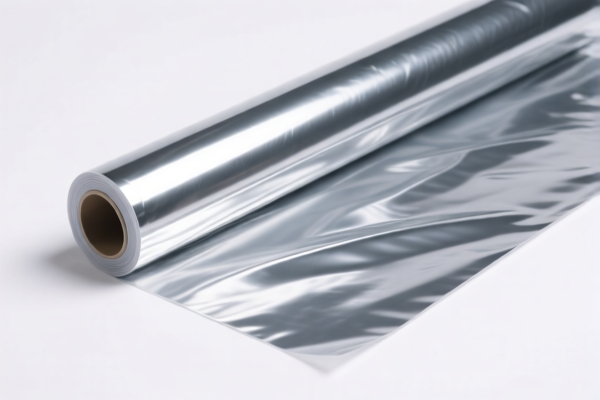
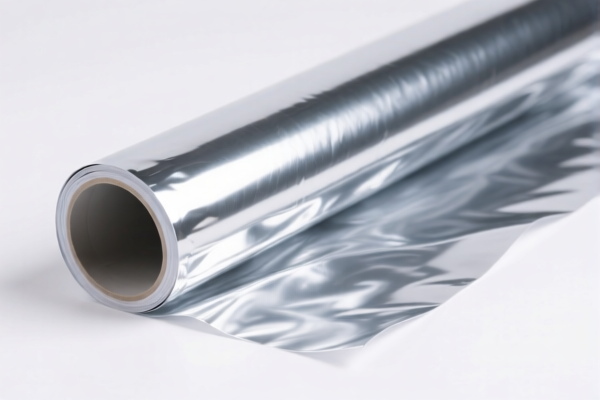
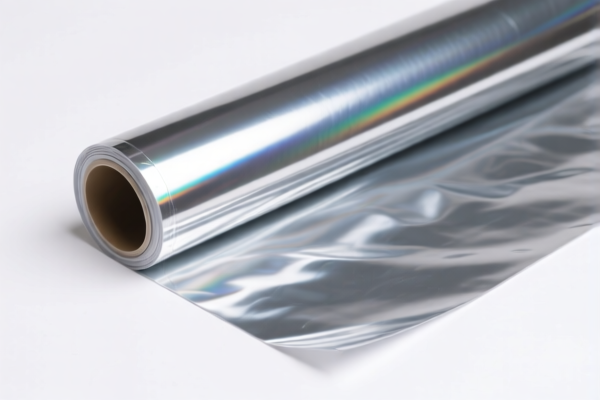
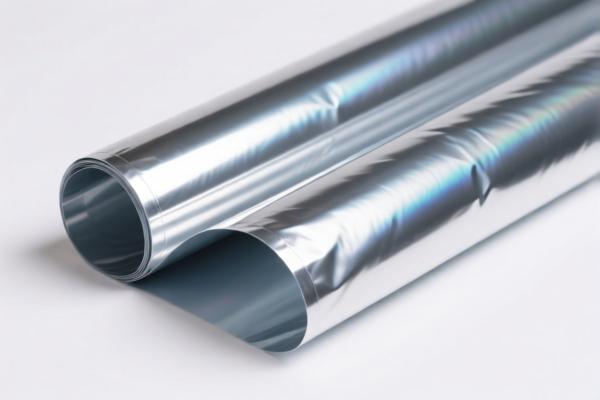
AI Analysis
🖨️ PET Printing Film (Polyester Printing Film)
🌐 HS Code Reference & Customs Clearance Guide | 2026 Updated Tariff Analysis | Professional Entry Strategy
📌 I. Product Definition & Classification: Do You Really Understand "PET Film"?
PET (Polyethylene Terephthalate) printing film is a versatile plastic material widely used in packaging, labels, and industrial applications. In international trade, its classification depends heavily on its physical form (flexible sheet vs. self-adhesive) and functionality.
Key Distinctions: 1. Flexible Sheets/Films (Non-Adhesive): Rolls or sheets used for packaging or coating. These fall under Chapter 39.20 or 39.21. 2. Self-Adhesive Films: Films with a pre-applied adhesive backing, ready for labels or tapes. These fall under Chapter 39.19.
⚠️ Critical Classification Point:
- If the film is not self-adhesive → It is a "Plastic Sheet/Film" (3920 or 3921).
- If the film has an adhesive backing → It is "Self-Adhesive Plastic Tape/Film" (3919).
- Misclassification here can lead to significant duty differences and customs holds.
📦 II. HS Code Classification Details (2026 Latest Tariff Authority Reference)
Based on the provided data, here are the specific HS Codes applicable to PET Printing Film, depending on its exact configuration:
| HS Code | Product Description | Classification Logic | Tax Rate (Total) |
|---|---|---|---|
3920.99.20.00 |
PET Plastic Film: Classified as "Other plastic flexible films" | Non-adhesive, general-purpose PET film, not elsewhere specified. | 39.2% |
3920.62.00.90 |
PET Film: Fits classification for "Polyethylene Terephthalate Films" | Specifically identified as PET (polyester) film, non-adhesive. | 39.2% |
3919.90.50.60 |
PET Plastic Film: Classified as "Other self-adhesive plastic films" | Self-adhesive PET film (e.g., label backing). | 40.8% |
3919.90.50.40 |
PET Self-Adhesive Film: Fits flat film characteristics | Self-adhesive PET film with flat characteristics. | 40.8% |
3921.90.50.50 |
PET Plastic Film: Classified as "Other plastic plates, sheets, film, foil, and strip" | Non-adhesive, but categorized under broader "plates/sheets" rather than flexible films. | 39.8% |
🔍 Key Insight:
- Non-Adhesive Films (3920&3921): Generally attract slightly lower total duties (39.2%–39.8%).
- Self-Adhesive Films (3919): Attract higher total duties (40.8%) due to higher base tariffs.
- Base Duty Variance: The base duty for3919(5.8%) is higher than3920(4.2%) or3921(4.8%).
💰 III. 2026 Latest Tariff Rate Breakdown (Including Additional Taxes)
✅ Applicable Country: United States (US)
✅ Origin: China (CN)
✅ Effective Date: From November 10, 2025 (inclusive)
🎯 1. Non-Adhesive PET Films (3920.99.20.00, 3920.62.00.90, 3921.90.50.50)
| Item | Content |
|---|---|
| Base Duty Rate | 4.2% (3920) or 4.8% (3921) |
| Section 301 Additional Duty | +25.0% (Mandatory for most Chinese plastic films) |
| Section 122 Additional Duty | +10.0% (Specific trade measures) |
| Total Tax Rate | 39.2% (3920) or 39.8% (3921) |
| Calculation Basis | CIF Value × Total Rate |
| De Minimis Exemption | ❌ Not Eligible (High duty rates exceed de minimis thresholds) |
📌 Explanation:
- The 25% is the standard Section 301 tariff on Chinese goods.
- The 10% is an additional Section 122 tariff.
- The Base Duty varies slightly (4.2% vs 4.8%) depending on whether it's classified as "flexible film" (3920) or "other plastic sheets" (3921).
- Total Duty: Ranges from 39.2% to 39.8%. This is a high-cost category.
🎯 2. Self-Adhesive PET Films (3919.90.50.60, 3919.90.50.40)
| Item | Content |
|---|---|
| Base Duty Rate | 5.8% |
| Section 301 Additional Duty | +25.0% |
| Section 122 Additional Duty | +10.0% |
| Total Tax Rate | 40.8% |
| Calculation Basis | CIF Value × 40.8% |
| De Minimis Exemption | ❌ Not Eligible |
📌 Explanation:
- Self-adhesive films have a higher base duty (5.8%) compared to non-adhesive films (4.2%/4.8%).
- Additional taxes (25% + 10%) are identical.
- Result: Total duty is 40.8%, which is ~1.0–1.6% higher than non-adhesive alternatives.
- Cost Impact: For every $10,000 shipment, you pay $408 in duties vs. $392–$398 for non-adhesive.
🛠️ IV. Customs Clearance Practical Advice (Actionable Pitfall Guide)
✅ 1. Required Documentation Checklist (Non-Negotiable)
| Document | Mandatory? | Notes |
|---|---|---|
| ✅ Product Specification Sheet | ✔️ | Must state: Material (PET), Thickness (mils/mm), Width, Length, Coating Type. |
| ✅ Adhesive Status Confirmation | ✔️ | Critical: Explicitly state "Self-Adhesive" or "Non-Adhesive". If self-adhesive, provide adhesive type (water-activated, pressure-sensitive, etc.). |
| ✅ Commercial Invoice | ✔️ | Must match HS Code exactly. Avoid vague terms like "Plastic Sheet." Use "PET Printing Film." |
| ✅ Certificate of Origin (CO) | ✔️ | Required for origin verification. |
| ✅ Shipping Label/Packaging Photos | ✔️ | Show roll/dimensions to confirm "Flexible Film" vs. "Rigid Sheet." |
| ✅ Third-Party Test Report | ✔️ | Optional but helpful if customs questions composition. |
✅ 2. Classification Strategy (Key Rule of Thumb)
🔥 “Adhesive Determines Chapter 3919, No Adhesive Goes to 3920/3921”
| Scenario | Correct HS Code | Estimated Duty | Risk |
|---|---|---|---|
| Plain PET Roll (for printing/laminating) | 3920.99.20.00 or 3920.62.00.90 |
39.2% | Low, if clearly non-adhesive. |
| PET Roll with Glue Backing (labels) | 3919.90.50.60 or 3919.90.50.40 |
40.8% | High risk if misclassified as non-adhesive. |
| Thick PET Sheet (>1mm, rigid) | 3921.90.50.50 |
39.8% | Ensure it’s not too thin/flexible, or it may be reclassified to 3920. |
⚠️ Warning:
- If you declare "Self-Adhesive" but customs finds it’s non-adhesive, you may face underpayment issues or audits.
- If you declare "Non-Adhesive" but it’s self-adhesive, you’ll face underpayment of the higher base duty (5.8% vs 4.2%).
- Best Practice: Always include "Adhesive: Yes/No" in the invoice description.
✅ 3. Special Scenarios
| Scenario | Handling Advice |
|---|---|
| Coated/Printed Film | Still classified under PET film HS codes. Coating/printing doesn’t change the base material classification unless it adds significant functional value (e.g., conductive). |
| Composite Materials | If PET is laminated with paper or aluminum, classification may shift (e.g., to Chapter 48). Check composite rules! |
| Sample Shipments | Even small samples are subject to the 39.2%–40.8% duty. De minimis ($800) does not apply due to high rates. |
🌍 V. Global Market Comparison (2026 Latest)
| Country/Region | Recommended HS Code | Duty (China Origin) | Certification Requirements | Notes |
|---|---|---|---|---|
| 🇺🇸 USA | 3920.99.20.00 / 3919.90.50.60 |
39.2% – 40.8% | None specific | High duties due to Section 301 + 122. |
| 🇨🇳 China | 3920.99.20.00 / 3919.90.50.60 |
5% – 6% | RoHS (if electronic) | Low duty for domestic trade. |
| 🇪🇺 EU | 3920.62.00.00 / 3919.10.00 |
6.5% – 7.5% | REACH, RoHS | No Section 301. More stable rates. |
| 🇬🇧 UK | 3920.62.00.00 / 3919.10.00 |
6.5% – 7.5% | UKCA, REACH | Post-Brexit rules apply. |
| 🇦🇺 Australia | 3920.62.00.00 / 3919.10.00 |
5% – 10% | SAA | Free Trade Agreement (ChAFTA) may apply. |
📌 Conclusion:
- USA is the most expensive market for PET film due to Section 301 & 122 tariffs.
- EU/UK/AU are significantly cheaper (6–10%).
- Consider supply chain diversification if shipping large volumes to the US.
📌 VI. Common Mistakes & Pitfalls (Lessons Learned)
❌ Mistake 1: Declaring "Self-Adhesive" film as "Non-Adhesive" to save 1.6% duty.
👉 Consequence: Customs audit, penalty, and back-payment of duties + interest.
❌ Mistake 2: Using generic "Plastic Film" on invoice.
👉 Consequence: Customs will classify to the highest possible duty or hold shipment for clarification.
❌ Mistake 3: Ignoring "Section 122" tariff.
👉 Consequence: Underestimating total landed cost. The 10% is separate from the 25%.
❌ Mistake 4: Assuming samples are duty-free.
👉 Consequence: High duty rates apply even to small samples under $800.
✅ Correct Approach:
"PET Film, 2mil, Gloss Finish, Non-Adhesive, Roll, 1000ft"
OR
"PET Self-Adhesive Label Stock, 3mil, Pressure Sensitive, Roll, 1000ft"
🎯 VII. Conclusion: Precision Saves Money!
🎯 Remember This Rule:
🔹 "Adhesive? → 40.8% No Adhesive? → 39.2%-39.8%
🔹 "Section 301 + 122 = 35% Additional
🔹 "Always Declare Exact Material & Adhesive Status"
📌 Pro Tip:
If your PET film is coated for printing, ensure the coating is minor. If it’s a functional coating (e.g., anti-static, conductive), classification may change.
Consider pre-ruling with US Customs (CBP) if volumes are high, to lock in the HS Code and avoid disputes.
📣 Next Steps:
📞 Contact your freight forwarder with precise product specs.
📄 Prepare a detailed invoice with "Adhesive: Yes/No" clearly stated.
💡 Calculate landed cost using 39.2%–40.8% duty for US imports.
✨ Customs clearance starts with correct classification!
💼 Your profit margin depends on accurate HS Code selection!
Customer Reviews
About HS Code Classification
The Harmonized System (HS) is an internationally standardized nomenclature developed by the World Customs Organization (WCO) to classify traded products. Over 200 countries use the HS system as the basis for customs tariffs, trade statistics, and import/export regulations.
Each HS code follows a hierarchical structure:
- Chapter (2 digits) — Broad category of goods (e.g., Chapter 84: Machinery and Mechanical Appliances)
- Heading (4 digits) — More specific grouping within the chapter
- Subheading (6 digits) — Internationally standardized breakdown, used by all WCO member countries
- National subdivisions (8-10 digits) — Country-specific extensions for further classification, such as US HTSUS 10-digit codes
Correct HS code classification is essential for smooth customs clearance, accurate duty payment, and compliance with trade regulations. Misclassification can lead to customs delays, overpayment of duties, or penalties.
When importing from CN to US, the applicable tariff rates may include:
- Most-Favored-Nation (MFN) rate — The standard duty rate applied to WTO members
- General rate — Applied to countries without trade agreements
- Trade remedy duties — Additional tariffs such as Section 301 (anti-dumping), Section 232 (national security), or countervailing duties
The information provided on this page is for reference purposes only. For official classification, please consult with your local customs authority or a licensed customs broker.