PET Rattan Ball
CN → US| HS Code | Tariff Rate | Origin | Destination | Doc |
|---|---|---|---|---|
| 3926909989 | 22.8% | CN | US | Official Doc |
| 4602900000 | 38.5% | CN | US | Official Doc |
| 9503000073 | 10.0% | CN | US | Official Doc |
| 4602198000 | 37.3% | CN | US | Official Doc |
| 9503000071 | 10.0% | CN | US | Official Doc |
Product Images
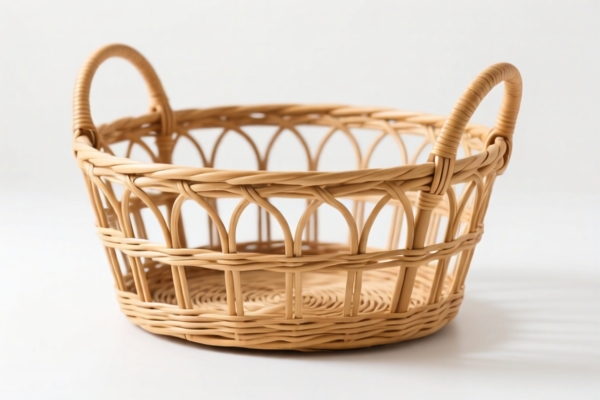
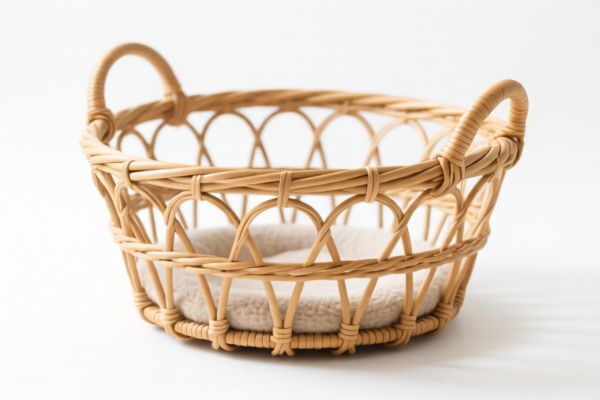
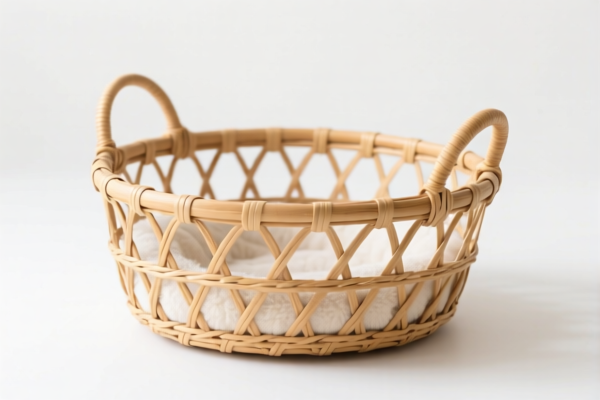
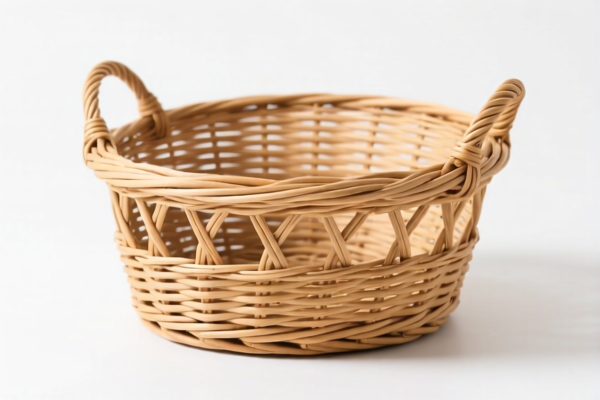
AI Analysis
🧺 PET Rattan Ball (PET Rattan Sphere)
🌐 HS Code Reference & Customs Clearance Guide | 2026 Latest Tariff Full Analysis | Professional-Level Clearance Strategy
📌 I. Product Definition & Classification: What Exactly is a "PET Rattan Ball"?
PET Rattan is a synthetic material made from Polyethylene Terephthalate (PET) plastic, processed into strips that mimic natural rattan or wicker. When formed into a spherical shape, it serves various purposes depending on its construction and intended use. In international trade, this product is primarily categorized into two distinct groups based on its physical form and intended use:
1. Decorative/Woven Products (Decorative Items): If the ball is used as a home decoration, garden ornament, or display prop, it is classified as a "woven product" or "other plastic product." The key factor here is that it is made of woven strips of plastic (PET) or artificial plant fibers.
2. Toy/Recreational Items (Toys): If the ball is designed for playing, sporting activities (like catch), or entertainment, it is classified under "Toys." The key factor here is the function (play/entertainment) rather than just the material.
⚠️ Key Distinction Point:
- If the item is primarily for decoration, gardening, or display → Classified as Woven Plastic/Plant Material Product (HS Codes: 4602.xx or 3926.90).
- If the item is primarily for play, sports, or recreation → Classified as Toy (HS Code: 9503.00).
📦 II. HS Code Classification Details (2026 Latest Tariff Authority Comparison)
| HS Code | Product Description | Application Scenario | Classification Basis |
|---|---|---|---|
3926.90.99.89 |
Other articles of plastics | General decorative plastic balls, non-woven PET spheres | Plastic material, other articles |
4602.90.00.00 |
Woven articles of plaiting materials | Woven PET rattan balls (imitating natural rattan) | Woven structure, plastic/synthetic fiber |
9503.00.00.73 |
Ball toys | Balls for play, sports, entertainment made of PET | Functional toy, plastic material |
4602.19.80.00 |
Other articles of vegetable materials | PET balls classified as "artificial plant fiber" woven goods | Woven, treated as plant material substitute |
9503.00.00.71 |
Other balls, designed for recreational purposes | Specific toy balls, decorative but sold as toys | Functional toy, spherical shape |
🔍 Key Reminder:
- If the product is woven (like a basket ball shape), it leans towards 4602 or 3926.
- If the product is molded or explicitly marketed as a toy/sporting good, it must go to 9503.
- Misclassification can lead to significant duty differences (e.g., 10% vs. 38.5%).
💰 III. 2026 Latest Tariff Rate Detailed Breakdown (Including Surtaxes, Policy Surcharges)
✅ Applicable Country: United States (US)
✅ Country of Origin: China (CN)
✅ Effective Time: November 10, 2025 (including subsequent imports)
🎯 1. 3926.90.99.89 — Other Plastic Articles (Non-Woven PET Balls)
| Item | Content |
|---|---|
| Base Tariff | 5.3% (ad valorem) |
| Section 301 Surcharge | +7.5% (Additional Tariff) |
| Section 122 Tariff | +10% (Specific 122 Clause Tariff) |
| Total Tariff | 22.8% |
| Tax Calculation | CIF Value × 22.8% |
| De Minimis Exemption? | ❌ No (deny_de_minimis) |
| Legal Basis Path | Section 301: 7.5% + Section 122: 10% + Base: 5.3% |
📌 Explanation:
- This code applies to PET balls that are not woven or are considered general plastic articles.
- The 22.8% total duty is moderately high but significantly lower than the woven category.
- Section 122 is a specific additional tariff applied to certain Chinese goods.
🎯 2. 4602.90.00.00 — Woven Articles of Plaiting Materials (Woven PET Rattan)
| Item | Content |
|---|---|
| Base Tariff | 3.5% (ad valorem) |
| Section 301 Surcharge | +25.0% (Additional Tariff) |
| Section 122 Tariff | +10% (Specific 122 Clause Tariff) |
| Total Tariff | 38.5% |
| Tax Calculation | CIF Value × 38.5% |
| De Minimis Exemption? | ❌ No (deny_de_minimis) |
| Legal Basis Path | Section 301: 25% + Section 122: 10% + Base: 3.5% |
📌 Note:
- This is the most common classification for "PET Rattan" because "Rattan" implies a woven/plaited structure.
- The 25% Section 301 tariff is the main driver of the high cost.
- Even though the base tariff is low (3.5%), the surcharges make it one of the highest-tariff categories for this product.
🎯 3. 9503.00.00.73 / 9503.00.00.71 — Toy Balls (Plastic/PET)
| Item | Content |
|---|---|
| Base Tariff | 0.0% (ad valorem) |
| Section 301 Surcharge | 0.0% (No Additional Tariff) |
| Section 122 Tariff | +10% (Specific 122 Clause Tariff) |
| Total Tariff | 10.0% |
| Tax Calculation | CIF Value × 10.0% |
| De Minimis Exemption? | ❌ No (deny_de_minimis) |
| Legal Basis Path | Section 122: 10% + Base: 0% |
📌 Key Advantage:
- If your PET Rattan Ball is marketed as a toy (e.g., for kids, pets, or recreational sports), you can leverage this classification.
- 10% is the lowest duty rate among all options.
- Critical Condition: The product must clearly have toy characteristics (e.g., durable for play, marketed for entertainment). If customs suspects it's just a decoration, they may reclassify it to 4602 (38.5%).
🎯 4. 4602.19.80.00 — Other Articles of Vegetable Materials (PET as Artificial Plant Fiber)
| Item | Content |
|---|---|
| Base Tariff | 2.3% (ad valorem) |
| Section 301 Surcharge | +25.0% (Additional Tariff) |
| Section 122 Tariff | +10% (Specific 122 Clause Tariff) |
| Total Tariff | 37.3% |
| Tax Calculation | CIF Value × 37.3% |
| De Minimis Exemption? | ❌ No (deny_de_minimis) |
| Legal Basis Path | Section 301: 25% + Section 122: 10% + Base: 2.3% |
📌 Note:
- This code is used if PET is treated as an "artificial plant fiber" and woven.
- The tariff is very high (37.3%), similar to 4602.90.
- Only use this if you have strong documentation proving the "plant material" nature, which is difficult for plastic-based products.
🛠️ IV. Customs Clearance Practical Advice (Field Pitfall Avoidance Guide)
✅ 1. Preparation Checklist (All Required)
| Document | Mandatory | Description |
|---|---|---|
| ✅ Product Specifications | ✔️ | Material composition (100% PET), weaving technique, dimensions |
| ✅ Product Photos | ✔️ | Clear images showing woven structure OR toy features (e.g., bounce, color) |
| ✅ Commercial Invoice | ✔️ | Accurate description: "Woven Decorative Ball" vs. "Play Ball" |
| ✅ Packing List | ✔️ | Weight, volume, number of pieces |
| ✅ Origin Certificate | ✔️ | Proof of origin (China) |
| ✅ Test Reports | ✔️ | If claimed as toy: CPSIA/ASTM F963 (US Toy Safety Standard) |
| ✅ Declaration Statement | ✔️ | Confirm whether it's for "Decoration" or "Play" |
✅ 2. Declaration Tips (Key Mnemonic)
🔥 "Toy gets 10%, Woven gets 38%, Decorative 23%! Choose wisely!"
| Scenario | Correct Declaration | Wrong Practice |
|---|---|---|
| Selling as Home Decor | 3926.90.99.89 (22.8%) or 4602.90.00.00 (38.5%) |
Declaring as toy → Risk of penalty |
| Selling as Toy/Play | 9503.00.00.73 (10%) |
Declaring as decoration → High tax missed |
| Selling as Pet Toy | 9503.00.00.73 (10%) |
Declaring as decoration → High tax missed |
| Woven Rattan Ball | 4602.90.00.00 (38.5%) |
Declaring as molded plastic → Misclassification |
✅ 3. Special Cases Handling
| Situation | Handling Advice |
|---|---|
| OEM Custom Balls | If designed as a toy (e.g., for dogs, kids), provide design drawings showing play function. |
| Mixed Pack | If boxes contain both toys and decorations, split declaration. Do not mix codes. |
| PET "Rattan" Look | Even if it looks like rattan, if it's plastic and not woven, use 3926.90. If woven, use 4602. |
| Toy Safety Compliance | To use 9503 (10%), you MUST have toy safety test reports (ASTM F963). Without them, customs may reject toy classification. |
🌍 V. Global Market Comparison (2026 Latest)
| Country/Region | Recommended HS Code | Tariff (China Origin) | Certification Requirements | Remarks |
|---|---|---|---|---|
| 🇺🇸 USA | 9503.00.00.73 (Toy) |
10% | ASTM F963, CPSIA | Best for Toys |
| 🇺🇸 USA | 4602.90.00.00 (Woven) |
38.5% | None specific | Worst for Woven |
| 🇨🇳 China | 9503.00.00.73 |
0% | CCC (if applicable) | No surtax |
| 🇪🇺 EU | 9503.00.00.73 |
0% (if <€150) | CE, EN71 | Low duty |
| 🇬🇧 UK | 9503.00.00.73 |
0% | UKCA | Low duty |
📌 Conclusion:
- USA is the most tax-sensitive market for this product.
- Toy classification (9503) saves 15-28% in tariffs compared to decorative/woven classifications.
- Ensure product is marketed and labeled as a toy to justify the 10% rate.
📌 VI. Common Errors & Pitfall Guide (Blood and Tears Lessons)
❌ Error 1: Declaring a Toy as "Woven Decoration" (4602.90)
👉 Consequence: You pay 38.5% instead of 10%. Overpayment of 28.5%!
❌ Error 2: Declaring a Decoration as a "Toy" (9503.00)
👉 Consequence: Customs rejects due to lack of Toy Safety Certs (ASTM F963). Goods detained, fined, or reclassified to 4602 (38.5%).
❌ Error 3: Not specifying "Woven" vs. "Molded"
👉 Consequence: Customs asks for clarification, delaying clearance by 2-4 weeks.
❌ Error 4: Ignoring Section 122
👉 Consequence: All categories above include a 10% Section 122 tariff. Do not forget to budget for it!
✅ Correct Approach:
"If it bounces, it's a toy (10%). If it sits, it's decor (22-38%). Prove it with photos and certs!"
🎯 VII. Conclusion: Professional Declaration, Save Money, Speed Up Clearance!
🎯 Remember the Mnemonic:
🔹 "Toy gets 10%, Woven gets 38%, Decorative 23%! Choose wisely!"
🔹 "HS Code is Life. 28% difference in duty. Declare wrong, lose profit!"
📌 Pro Tip:
If your PET Rattan Ball is not strictly a toy but has play elements, consult a customs broker for a Pre-Ruling. This can lock in the 10% toy rate if you have strong marketing materials showing recreational use.
📣 Immediate Action:
📞 Contact your customs broker + Provide product photos + Get ASTM F963 Test Reports if claiming Toy status.
🚀 Clear customs smoothly, maximize your profit margin!
✨ Professional Customs Clearance Starts with Accurate Classification!
💼 Every Cent of Duty is Worth Precise Calculation!
Customer Reviews
About HS Code Classification
The Harmonized System (HS) is an internationally standardized nomenclature developed by the World Customs Organization (WCO) to classify traded products. Over 200 countries use the HS system as the basis for customs tariffs, trade statistics, and import/export regulations.
Each HS code follows a hierarchical structure:
- Chapter (2 digits) — Broad category of goods (e.g., Chapter 84: Machinery and Mechanical Appliances)
- Heading (4 digits) — More specific grouping within the chapter
- Subheading (6 digits) — Internationally standardized breakdown, used by all WCO member countries
- National subdivisions (8-10 digits) — Country-specific extensions for further classification, such as US HTSUS 10-digit codes
Correct HS code classification is essential for smooth customs clearance, accurate duty payment, and compliance with trade regulations. Misclassification can lead to customs delays, overpayment of duties, or penalties.
When importing from CN to US, the applicable tariff rates may include:
- Most-Favored-Nation (MFN) rate — The standard duty rate applied to WTO members
- General rate — Applied to countries without trade agreements
- Trade remedy duties — Additional tariffs such as Section 301 (anti-dumping), Section 232 (national security), or countervailing duties
The information provided on this page is for reference purposes only. For official classification, please consult with your local customs authority or a licensed customs broker.