PET Self adhesive Transparent Label
CN → US| HS Code | Tariff Rate | Origin | Destination | Doc |
|---|---|---|---|---|
| 3919102055 | 40.8% | CN | US | Official Doc |
| 3919905060 | 40.8% | CN | US | Official Doc |
| 3926909989 | 22.8% | CN | US | Official Doc |
| 3926909400 | 35.0% | CN | US | Official Doc |
| 3920620090 | 39.2% | CN | US | Official Doc |
Product Images
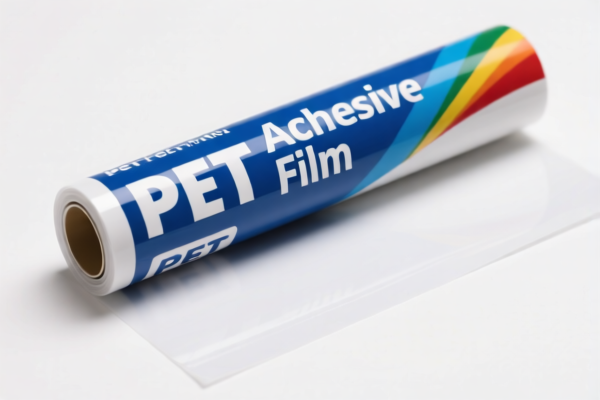
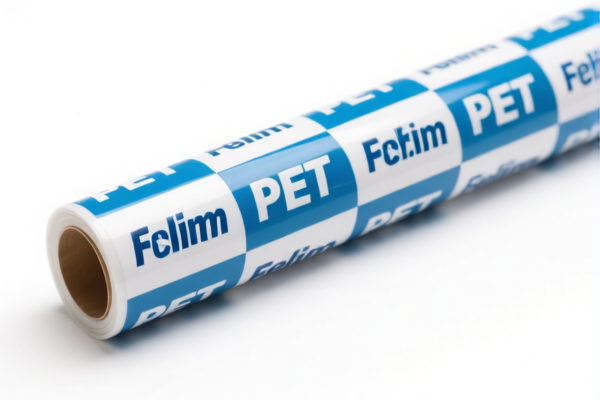
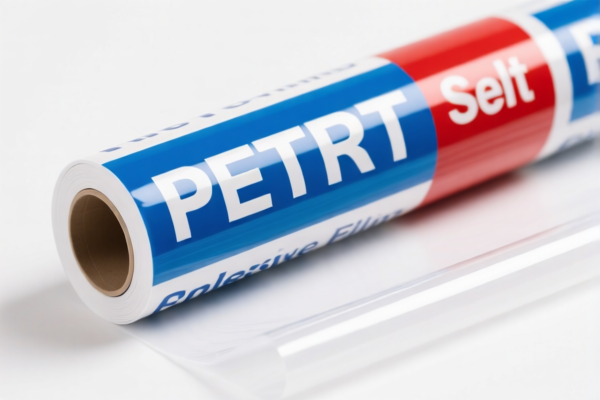
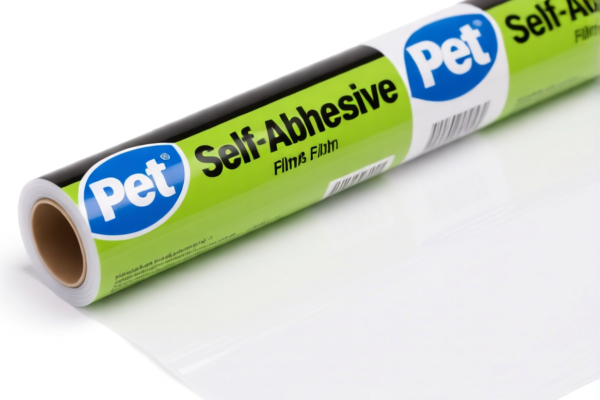
AI Analysis
🏷️ PET Self-Adhesive Transparent Label
🌐 HS Code Reference & Customs Clearance Guide | 2026 Latest Tariff Analysis | Professional Compliance Strategy
📌 I. Product Definition & Classification: Do You Truly Understand "PET Labels"?
PET (Polyethylene Terephthalate) self-adhesive transparent labels are widely used in consumer goods, electronics, pharmaceuticals, and logistics. In international trade, their classification depends heavily on structure, function, and application.
Key Classification Logic: * Is it a generic "self-adhesive plastic sheet/film"? → Falls under Chapter 39, Heading 3919 (Self-adhesive plates, sheets, film, foil, tape, strip, and other flat shapes). * Is it specifically manufactured as a "label"? → May fall under Chapter 39, Heading 3926 (Other articles of plastics), specifically for items not specified elsewhere, often used for labeling applications. * Is it a bare "film" without adhesive processing? → If it’s just plain PET film without the adhesive backing, it might be classified differently, but since your product is "Self-Adhesive," it primarily competes between 3919 and 3926.
⚠️ Critical Distinction Point: - If the product is primarily recognized as a self-adhesive plastic film/sheet (regardless of final use like labeling) → Classify under 3919.xx. - If the product is specifically identified as a plastic article for labeling (often processed with specific printing, perforation, or backing for labels) → Classify under 3926.90.
📦 II. HS Code Classification Details (Based on Provided DATA)
Based strictly on the provided <DATA>, here are the five valid HS codes for PET Self-Adhesive Transparent Labels, along with their explanations and tax implications.
| HS Code | Product Description | Application Context | Tax Rate (Total) |
|---|---|---|---|
| 3919.10.20.55 | PET Self-Adhesive Film, classified as self-adhesive plastic sheets | Generic self-adhesive plastic film; broad category | 40.8% |
| 3919.90.50.60 | PET Self-Adhesive Film, fits "Other Self-Adhesive Plastic Films" | Alternative self-adhesive film classification | 40.8% |
| 3926.90.99.89 | Plastic Article, Other (PET), suitable for Labeling | Specific recognition as a "label" or plastic article | 22.8% |
| 3926.90.94.00 | PET Film Article, classified as Other Plastic Articles | Broader plastic article category for film-based products | 35.0% |
| 3920.62.00.90 | PET Film, suitable for Transparent Label Use | If classified as unworked or semi-worked PET film before adhesive application (less common for finished self-adhesive labels) | 39.2% |
🔍 Key Insight from DATA: - Lowest Tax Rate: 3926.90.99.89 at 22.8%. This code specifically mentions "suitable for labeling" (标签类), which aligns best with the product name "Label." - Highest Tax Rate: 3919.10.20.55 and 3919.90.50.60 at 40.8%. These are classified as general self-adhesive films. - Note: The product name "PET Self adhesive Transparent Label" strongly suggests 3926.90.99.89 because it explicitly fits the description "suitable for labels" and offers the lowest duty burden.
💰 III. 2026 Latest Tariff Rate Breakdown (Detailed Tax Clauses)
✅ Applicable Country: United States (US)
✅ Origin: China (CN)
✅ Effective Date: From 2025/2026 onwards (as per data context)
🎯 1. 3919.10.20.55 & 3919.90.50.60 —— Self-Adhesive Plastic Films
| Item | Content |
|---|---|
| Base Tariff | 5.8% (for 3919.10) / 0.0% (for 3919.90 - Note: DATA shows 5.8% for 3919.10 and implies similar structure) |
| USITC Additional Tariff (Section 301) | +25.0% |
| IEEPA Additional Tariff (Section 122) | +10.0% |
| Total Tariff Rate | 40.8% |
| Calculation Basis | CIF Value × 40.8% |
| De Minimis Eligibility | ❌ Not Eligible (High tariffs usually block de minimis) |
| Legal Basis Path | USITC:3919.10.20.55 → FOOTNOTE:301 → IEEPA:122 |
📌 Explanation: - Base Tariff: The base duty is low (5.8% or 0% depending on specific subheading nuance in 3919). - Section 301 Tariff (+25%): Applied to most Chinese plastic articles. - Section 122 Tariff (+10%): A specific additional levy often applied to certain goods, adding to the burden. - Total: 40.8%. This is a high-cost classification. Avoid if a lower-rated code exists.
🎯 2. 3926.90.99.89 —— Plastic Articles, Other (Best Fit for Labels)
| Item | Content |
|---|---|
| Base Tariff | 5.3% |
| USITC Additional Tariff (Section 301) | +7.5% |
| IEEPA Additional Tariff (Section 122) | +10.0% |
| Total Tariff Rate | 22.8% |
| Calculation Basis | CIF Value × 22.8% |
| De Minimis Eligibility | ❌ Not Eligible |
| Legal Basis Path | USITC:3926.90.99.89 → FOOTNOTE:301 → IEEPA:122 |
📌 Explanation: - Base Tariff: 5.3%. - Section 301 Tariff: Only +7.5% (Significantly lower than the 25% for 3919). This is because "Other plastic articles" sometimes enjoy reduced Section 301 rates compared to raw films/sheets. - Section 122 Tariff: +10.0%. - Total: 22.8%. This is the most cost-effective classification for PET labels provided in the DATA.
🎯 3. 3926.90.94.00 —— Other Plastic Articles (Film Type)
| Item | Content |
|---|---|
| Base Tariff | 0.0% |
| USITC Additional Tariff (Section 301) | +25.0% |
| IEEPA Additional Tariff (Section 122) | +10.0% |
| Total Tariff Rate | 35.0% |
| Calculation Basis | CIF Value × 35.0% |
| De Minimis Eligibility | ❌ Not Eligible |
| Legal Basis Path | USITC:3926.90.94.00 → FOOTNOTE:301 → IEEPA:122 |
📌 Explanation: - While the base tariff is 0%, the Section 301 rate is 25%, pushing the total to 35.0%. - Less favorable than
3926.90.99.89.
🎯 4. 3920.62.00.90 —— PET Film (Label Use)
| Item | Content |
|---|---|
| Base Tariff | 4.2% |
| USITC Additional Tariff (Section 301) | +25.0% |
| IEEPA Additional Tariff (Section 122) | +10.0% |
| Total Tariff Rate | 39.2% |
| Calculation Basis | CIF Value × 39.2% |
| De Minimis Eligibility | ❌ Not Eligible |
| Legal Basis Path | USITC:3920.62.00.90 → FOOTNOTE:301 → IEEPA:122 |
📌 Explanation: - Classified as PET film. Base is 4.2%, but Section 301 is 25%. - Total 39.2%. High cost.
🛠️ IV. Customs Clearance Practical Advice
✅ 1. Recommended HS Code: 3926.90.99.89
Based on the provided DATA, 3926.90.99.89 is the optimal choice for "PET Self-Adhesive Transparent Label" because: 1. Product Match: The summary explicitly states "suitable for labeling" (适用于标签类). 2. Cost Efficiency: It has the lowest total tax rate (22.8%) compared to other options (35.0%, 39.2%, 40.8%). 3. Section 301 Advantage: It benefits from a reduced Section 301 tariff of 7.5% instead of the standard 25% applied to many plastic films/sheets.
📌 Declaration Strategy: - Commercial Invoice Description: "PET Self-Adhesive Transparent Label, Plastic Material, Used for Product Labeling" - HS Code:
3926.90.99.89- Material: 100% PET (Polyethylene Terephthalate) - Process: Self-adhesive backing, clear/transparent.
✅ 2. Documentation Checklist
| Document | Requirement | Reason |
|---|---|---|
| Commercial Invoice | Clearly state "Labels" and "PET Material" | To justify classification under 3926 (Articles) vs 3919 (Films) |
| Product Photo | Show the label roll, adhesive side, and any branding | Visual proof of "label" nature |
| Material Spec Sheet | Confirm 100% PET composition | To verify material classification |
| Origin Certificate | CO (Certificate of Origin) | Required for US import |
| Filing Details | Include Section 301 and 122 tariff codes | Ensure correct tax calculation (22.8%) |
✅ 3. Common Pitfalls & Avoidance
❌ Pitfall 1: Classifying as 3919.10.20.55 (Self-Adhesive Film) * Consequence: Tax rate jumps to 40.8% (Section 301 at 25%). * Avoidance: Do not describe it merely as "PET Film." Emphasize its end-use as a "Label" (Article of Plastic).
❌ Pitfall 2: Misclassifying as 3920.62.00.90 (PET Film) * Consequence: Tax rate is 39.2%. * Avoidance: If the product is already self-adhesive and formatted for labeling, it is an "Article" (3926), not just "Film" (3920).
❌ Pitfall 3: Ignoring Section 122 Tariff * Consequence: Underpayment. All codes in the DATA include a +10% IEEPA/Section 122 tariff. * Avoidance: Always calculate total tax = Base + Section 301 + Section 122.
🌍 V. Global Comparison (Contextual)
| Market | Recommended HS Code | Approx. Tariff (China Origin) | Notes |
|---|---|---|---|
| 🇺🇸 USA | 3926.90.99.89 |
22.8% | Includes Section 301 (7.5%) + Section 122 (10%) + Base (5.3%) |
| 🇨🇳 China | 3926.90.99.89 |
Low (Check local tariff) | Export from China has no export duty for this category usually. |
| 🇪🇺 EU | 3920.62.00.00 or 3926.90.97.99 |
Varies (0-6% base) | EU may classify differently; usually lower base rates but no Section 301/122. |
📌 Conclusion: For US imports, 3926.90.99.89 is the strategic winner. It reduces the Section 301 burden significantly (7.5% vs 25%).
📌 VI. Final Checklist for Importers
✅ Step 1: Confirm product is a finished label (cut, printed, or rolled with adhesive). ✅ Step 2: Use HS Code 3926.90.99.89. ✅ Step 3: Calculate total duty as 22.8% of CIF value. ✅ Step 4: Prepare documentation highlighting "Label Application" to support classification. ✅ Step 5: Verify with a licensed customs broker if the product has additional features (e.g., metallic inks, special adhesives) that might shift classification.
🎯 Pro Tip:
"Labels are Articles, not just Films." By classifying under 3926 (Other Articles of Plastics) rather than 3919 (Self-Adhesive Films), you can save ~18% in total tariffs (22.8% vs 40.8%). Always aim for the 22.8% rate!
📣 Action Required:
📝 Update your product catalog to emphasize "Self-Adhesive Labels" instead of just "PET Film." 📊 Apply HS Code 3926.90.99.89 for US shipments to maximize cost savings. 🚀 Clear Customs Efficiently, Save Costs, Boost Profitability!
✨ Professional Classification Saves Money.
💼 Every Percentage Point Counts!
Customer Reviews
About HS Code Classification
The Harmonized System (HS) is an internationally standardized nomenclature developed by the World Customs Organization (WCO) to classify traded products. Over 200 countries use the HS system as the basis for customs tariffs, trade statistics, and import/export regulations.
Each HS code follows a hierarchical structure:
- Chapter (2 digits) — Broad category of goods (e.g., Chapter 84: Machinery and Mechanical Appliances)
- Heading (4 digits) — More specific grouping within the chapter
- Subheading (6 digits) — Internationally standardized breakdown, used by all WCO member countries
- National subdivisions (8-10 digits) — Country-specific extensions for further classification, such as US HTSUS 10-digit codes
Correct HS code classification is essential for smooth customs clearance, accurate duty payment, and compliance with trade regulations. Misclassification can lead to customs delays, overpayment of duties, or penalties.
When importing from CN to US, the applicable tariff rates may include:
- Most-Favored-Nation (MFN) rate — The standard duty rate applied to WTO members
- General rate — Applied to countries without trade agreements
- Trade remedy duties — Additional tariffs such as Section 301 (anti-dumping), Section 232 (national security), or countervailing duties
The information provided on this page is for reference purposes only. For official classification, please consult with your local customs authority or a licensed customs broker.