PET Tape
CN → US| HS Code | Tariff Rate | Origin | Destination | Doc |
|---|---|---|---|---|
| 3920100000 | 39.2% | CN | US | Official Doc |
| 3920991000 | 41.0% | CN | US | Official Doc |
| 3919102055 | 40.8% | CN | US | Official Doc |
| 5903102090 | 35.0% | CN | US | Official Doc |
| 3920100000 | 39.2% | CN | US | Official Doc |
Product Images


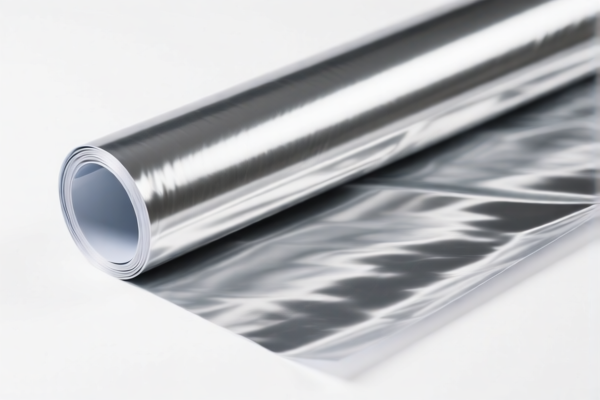

AI Analysis
🎗️ PET Tape (Polyester Tape)
🌐 HS Code Reference & Customs Clearance Guide | 2026 Latest Tariff Analysis | Professional Compliance Strategy
📌 I. Product Definition & Classification: What Exactly is "PET Tape"?
PET Tape, primarily composed of Polyethylene Terephthalate (PET) or sometimes broadly categorized with Polyethylene (PE) in generic customs data contexts, is a versatile plastic tape. In international trade, its classification depends heavily on its physical form (roll vs. strip), adhesion properties, and specific application.
Based on the provided , the classification logic leans towards plastic strips/tapes rather than self-adhesive labels or specific industrial fabric impregnations. The key distinction lies in whether it is viewed as a raw plastic strip (Chapter 39) or a coated/impregnated material (Chapter 59).
⚠️ Critical Distinction Point:
- If the tape is a solid plastic strip without significant adhesive backing treated as a "self-adhesive" label, it often falls under Plastic Articles (Chapter 39).
- If it is heavily coated, impregnated, or layered for specific industrial use, it might be argued under Chapter 59, though shows Chapter 39 is the dominant classification for standard PET/PE tapes.
📦 II. HS Code Classification Details (2026 Latest Tariff Authority Reference)
| HS Code | Product Description | Application Scenario | Adhesive/Coating Status |
|---|---|---|---|
3920.10.00.00 |
Plates, sheets, film, foil and strip, of polymers of ethylene (Note: Data maps PET/PE here) | Generic plastic strips, packaging base, non-adhesive or lightly adhesive PET/PE tape | ❌ Primarily Polymer Material |
3920.99.10.00 |
Other plates, sheets, film, foil and strip, of plastics | Non-cellular, non-reinforced plastic strips; fallback category | ❌ Base Plastic |
3919.10.20.55 |
Self-adhesive plates, sheets, film, foil, tape, roll and other flat shapes, of plastics | Self-adhesive PET/PE tape; general purpose adhesive tape | ✅ Self-Adhesive |
5903.10.20.90 |
Textile fabrics impregnated, coated, covered or laminated with plastics | Industrial PET tape where plastic is a coating on a substrate | ✅ Coated/Laminated |
🔍 Key Clarification from :
-3920.10.00.00: The data explicitly states that PET Tape shares similar material logic with PE Tape (Ethylene Polymer) and is classified as a plastic strip.
-3919.10.20.55: Applied if the tape is strictly defined as self-adhesive (sticky side + plastic backing).
-5903.10.20.90: Applied if the tape is considered impregnated/coated plastic fabric, though this has the lowest base tax but still carries high附加 taxes.
💰 III. 2026 Latest Tariff Rate Breakdown (Including Surcharges & Policy Add-ons)
✅ Applicable Country: USA (US)
✅ Origin: China (CN)
✅ Effective Date: Post-2025 (Current Trade War Context)
✅ Note: All rates below include Section 301 (25%) and Section 122/IEEPA (10%) surcharges as per .
🎯 1. 3920.10.00.00 —— Plastic Strip (Polymer of Ethylene/PET Logic)
| Item | Content |
|---|---|
| Base Tariff | 4.2% |
| Section 301 Surcharge | +25.0% |
| Section 122/IEEPA Surcharge | +10.0% |
| Total Effective Tax Rate | 39.2% |
| Tax Calculation | CIF Value × 39.2% |
| De Minimis Exemption | ❌ Not Eligible (High duty rates exclude de minimis) |
| Legal Basis Path | USITC:3920.10.00.00 → Section 301 → Section 122 |
📌 Explanation:
- This is the most common classification for standard PET/PE plastic strips that are not primarily defined by their adhesive properties or fabric substrate.
- The 4.2% base is relatively low, but the 35% in附加 taxes make it expensive.
🎯 2. 3920.99.10.00 —— Other Plastic Strip (Non-Cellular)
| Item | Content |
|---|---|
| Base Tariff | 6.0% |
| Section 301 Surcharge | +25.0% |
| Section 122/IEEPA Surcharge | +10.0% |
| Total Effective Tax Rate | 41.0% |
| Tax Calculation | CIF Value × 41.0% |
| De Minimis Exemption | ❌ Not Eligible |
| Legal Basis Path | USITC:3920.99.10.00 → Section 301 → Section 122 |
📌 Note:
- Used for plastic strips that do not fit specific sub-categories like "Ethylene Polymer."
- Slightly higher than3920.10.00.00due to a higher base rate (6.0% vs 4.2%).
🎯 3. 3919.10.20.55 —— Self-Adhesive Plastic Tape
| Item | Content |
|---|---|
| Base Tariff | 5.8% |
| Section 301 Surcharge | +25.0% |
| Section 122/IEEPA Surcharge | +10.0% |
| Total Effective Tax Rate | 40.8% |
| Tax Calculation | CIF Value × 40.8% |
| De Minimis Exemption | ❌ Not Eligible |
| Legal Basis Path | USITC:3919.10.20.55 → Section 301 → Section 122 |
📌 Note:
- Best for consumer-facing adhesive tapes (e.g., packing tape, masking tape with PET/PE backing).
- The base rate (5.8%) is between the other two, but the total is still very high due to fixed surcharges.
🎯 4. 5903.10.20.90 —— Plastic-Coated Fabric/Impregnated Plastic
| Item | Content |
|---|---|
| Base Tariff | 0.0% |
| Section 301 Surcharge | +25.0% |
| Section 122/IEEPA Surcharge | +10.0% |
| Total Effective Tax Rate | 35.0% |
| Tax Calculation | CIF Value × 35.0% |
| De Minimis Exemption | ❌ Not Eligible |
| Legal Basis Path | USITC:5903.10.20.90 → Section 301 → Section 122 |
📌 Key Insight:
- Lowest Total Tax (35%) among all options due to 0% base tariff.
- However, this requires proving the product is "impregnated, coated, or laminated" (e.g., plastic fabric or heavily coated textile).
- Risk: Misclassification risk is higher. Customs may challenge if the product is just a simple plastic strip, not a coated fabric.
🛠️ IV. Customs Clearance Practical Advice (Avoiding Pitfalls)
✅ 1. Document Checklist (Mandatory)
| Document | Required | Explanation |
|---|---|---|
| ✅ Product Specification Sheet | ✔️ | Must specify: Material (PET/PE), Thickness, Width, Adhesive Type (if any). |
| ✅ Photos (Clear Label & Structure) | ✔️ | Show if it's self-adhesive, coated, or a plain strip. |
| ✅ Commercial Invoice | ✔️ | Clearly state "PET Tape" or "Plastic Strip" – avoid vague terms like "Packaging Material." |
| ✅ Bill of Lading | ✔️ | Match HS Code description. |
| ✅ Origin Certificate | ✔️ | If shipped from China, confirm origin for surcharge calculation. |
✅ 2. Declaration Strategy (Key Tips)
🔥 “Describe Material, Not Just Use! Be Specific to Lower Base Rate!”
| Scenario | Recommended HS Code | Why? |
|---|---|---|
| Plain PET Strip (No adhesive, no fabric base) | 3920.10.00.00 |
Best base rate (4.2%) for polymer strips. |
| Self-Adhesive Tape (e.g., packing tape) | 3919.10.20.55 |
Fits "self-adhesive" definition accurately. |
| Coated Fabric/Industrial Tape | 5903.10.20.90 |
Lowest total tax (35%), but must prove coating/impregnation. |
| Generic Plastic Strip (Fallback) | 3920.99.10.00 |
Use only if it doesn’t fit 3920.10 or 3919. |
✅ 3. Special Considerations
| Issue | Handling Advice |
|---|---|
| PET vs. PE Confusion | treats PET similarly to PE (Polymer of Ethylene) for 3920.10.00.00. Ensure your spec sheet highlights "Polyester/PET" but acknowledges polymer strip classification. |
| Adhesive Content | If adhesive is minimal (e.g., pressure-sensitive only), 3920 might apply. If adhesive is a key feature (tape roll), 3919 is safer. |
| Section 122/301 Impact | All codes suffer from +35% additional taxes. No code is "tax-free" for Chinese origin. Cost planning must include these. |
| De Minimis | ❌ Never use De Minimis for these HS Codes. The high duty rates mean packages will be taxed or seized if declared under $800 incorrectly. |
🌍 V. Global Market Comparison (2026 Snapshot)
| Market | Recommended HS Code | Est. Total Tax (CN Origin) | Notes |
|---|---|---|---|
| 🇺🇸 USA | 3920.10.00.00 / 3919.10.20.55 |
39.2% – 40.8% | High surcharges due to trade policies. |
| 🇪🇺 EU | 3920.10.00 |
~6-8% | No Section 301/122. Standard EU tariff. |
| 🇨🇳 China | 3920.10.00 |
~5-6% | Import duties + VAT. No extra war taxes. |
| 🇨🇦 Canada | 3920.10.00 |
~5% + 5% B&C | Generally lower than US. |
📌 Conclusion:
- The US market is the most challenging due to layered surcharges (Base + 301 + 122).
-5903.10.20.90offers the lowest total tax in the US (35%), but requires strict proof of "coated/impregnated" nature.
-3920.10.00.00is the safest, most common classification for standard PET/PE plastic tapes.
📌 VI. Common Errors & Pitfalls (Lessons Learned)
❌ Error 1: Declaring "PET Tape" as "General Plastic Sheet" (3920.90)
👉 Consequence: Misclassification penalty + higher base tax if 3920.99 applies.
❌ Error 2: Ignoring Section 122/301 Surcharges
👉 Consequence: Underpayment of taxes by 35%, leading to delays, fines, or seizure.
❌ Error 3: Claiming De Minimis for Rolls of Tape
👉 Consequence: Customs will assess full duties (35-41%) + penalties. Not exempt.
❌ Error 4: Using 5903 without Proof of Coating
👉 Consequence: Customs may downgrade to 3920 or 3919, resulting in higher effective tax than planned and audit risks.
✅ Correct Approach:
"PET Tape, Polyethylene Terephthalate, Plastic Strip, 0.1mm Thickness, 100mm Width, Self-Adhesive Backing, for Industrial Packaging."
🎯 VII. Conclusion: Precision in Classification Saves Money!
🎯 Key Takeaway:
🔹 For Plain Strips: Use
3920.10.00.00(39.2% total).
🔹 For Adhesive Tape: Use3919.10.20.55(40.8% total).
🔹 For Coated Fabric/Industrial: Try5903.10.20.90(35.0% total) IF you can prove the coating/impregnation.
🔹 Always Account for +35% Surcharges in your cost model for US imports from China.
📌 Pro Tip:
If your PET Tape is used in high-tech or medical applications, consult a customs broker about potential HTS exemption codes or special manufacturing zones that might reduce base rates, though surcharges often remain.
📣 Action Plan:
1. Confirm Material: Is it pure PET strip or coated fabric?
2. Confirm Adhesion: Is it self-adhesive?
3. Calculate Total Cost: Base Tax + 25% + 10%.
4. Prepare Documentation: Specs, Photos, Invoice.
5. Select HS Code: Match the most accurate description from the table above.
✨ Accurate Classification is Your Best Defense Against Customs Audits!
💼 Know Your HS Code, Control Your Costs, Ship with Confidence!
Customer Reviews
About HS Code Classification
The Harmonized System (HS) is an internationally standardized nomenclature developed by the World Customs Organization (WCO) to classify traded products. Over 200 countries use the HS system as the basis for customs tariffs, trade statistics, and import/export regulations.
Each HS code follows a hierarchical structure:
- Chapter (2 digits) — Broad category of goods (e.g., Chapter 84: Machinery and Mechanical Appliances)
- Heading (4 digits) — More specific grouping within the chapter
- Subheading (6 digits) — Internationally standardized breakdown, used by all WCO member countries
- National subdivisions (8-10 digits) — Country-specific extensions for further classification, such as US HTSUS 10-digit codes
Correct HS code classification is essential for smooth customs clearance, accurate duty payment, and compliance with trade regulations. Misclassification can lead to customs delays, overpayment of duties, or penalties.
When importing from CN to US, the applicable tariff rates may include:
- Most-Favored-Nation (MFN) rate — The standard duty rate applied to WTO members
- General rate — Applied to countries without trade agreements
- Trade remedy duties — Additional tariffs such as Section 301 (anti-dumping), Section 232 (national security), or countervailing duties
The information provided on this page is for reference purposes only. For official classification, please consult with your local customs authority or a licensed customs broker.