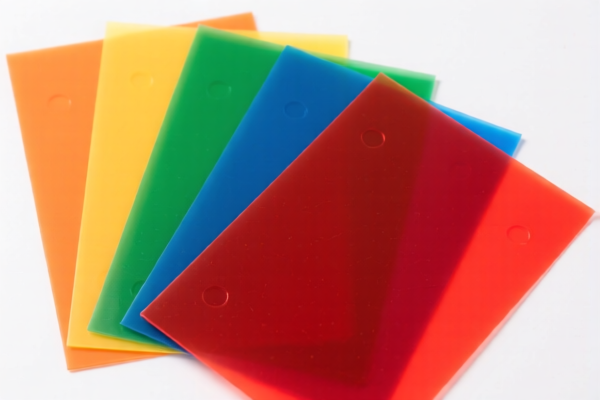
PET塑料彩色条
CN → US| HS Code | Tariff Rate | Origin | Destination | Doc |
|---|---|---|---|---|
| 3916903000 | 41.5% | CN | US | Official Doc |
| 5404198040 | 41.9% | CN | US | Official Doc |
| 5404900000 | 35.0% | CN | US | Official Doc |
| 3916905000 | 40.8% | CN | US | Official Doc |
| 3926909905 | 22.8% | CN | US | Official Doc |
Product Images



AI Analysis
🧵 PET Colored Strips (Polyethylene Terephthalate Colored Strips)
🌐 HS Code Reference & Customs Clearance Guide | 2026 Tax Analysis | Strategic通关策略
📌 一、Product Definition & Classification: What are "PET Colored Strips"?
PET Colored Strips are rigid, colored extruded products made from Polyethylene Terephthalate (PET), a type of polyester plastic. They are typically shaped as rods, bars, strips, or tapes and are widely used in packaging, textiles, construction, and industrial applications.
In international trade, the classification depends heavily on the material composition, morphology (shape), and intended use: * Plastic Products (Chapter 39): If the product is primarily a plastic rod/bar/profile used as a structural or packaging component. * Synthetic Fibers (Chapter 54): If the product is classified as a monofilament, strip, or tape intended for weaving, binding, or textile applications.
⚠️ Critical Distinction:
- If the strip is thick, rigid, and used as a bar or profile → Chapter 39 (Higher tariffs due to specific 122条款).
- If the strip is thin, flexible, and used as a synthetic fiber/tape → Chapter 54 (Varies based on tax structure).
- The "122 Clause" (Section 301/Trade Action) significantly impacts the total tax rate, often adding a fixed 10% on top of other duties.
📦 二、HS Code Classification Matrix (2026 Data)
Based on the provided dataset, here is the authoritative breakdown for PET Colored Strips.
| HS Code | Product Description (Summary) | Material & Morphology | Classification Category | Total Tax Rate |
|---|---|---|---|---|
| 3916.90.50.00 | PET Plastic Colored Strip, PET Material, Bar/Profile Shape | Polyester Plastic, Rod/Bar | Other Plastic Rods/Bars/Profiles | 40.8% |
| 3926.90.99.05 | PET Plastic Colored Strip, All Plastic, Strap/Strip Shape | Plastic, Strap/Strip | Other Plastic Articles | 22.8% |
| 3926.90.99.89 | PET Colored Strip, Polyester Material, Strip Shape | Polyethylene Terephthalate, Strip | Other Plastic Articles | 22.8% |
| 3916.90.30.00 | PET Plastic Colored Strip, Plastic Material, Rod/Profile Shape | Plastic, Rod/Bar | Other Plastic Monofil/Rods/Profiles | 41.5% |
| 5404.19.80.40 | PET Colored Strip, Polyester Material, Monofilament/Strip | Polyester, Strip/Filament | Other Synthetic Monofilaments | 41.9% |
| 5404.90.00.00 | PET Colored Strip, Synthetic Fiber/Plastic, Strap/Tape | Synthetic Fiber/Plastic, Strap | Other Synthetic Fiber Straps | 35.0% |
🔍 Key Insight:
- Chapter 39 (Plastics) products face a Base Duty (~5.3-6.5%) + 25% Additional Duty + 10% "122 Clause" Duty.
- Chapter 54 (Fibers) products show a similar structure but with 0% Base Duty for the 5404.90.00.00 category, yet still incur the 25% + 10% surcharges.
- Tax Range: From 22.8% (lowest) to 41.9% (highest). The 122 Clause is the consistent hidden cost driver.
💰 三、Detailed Tax Structure Breakdown (2026)
Applicable to US imports from China (assuming "122 Clause" and "Additional Duty" refer to Section 301/US Trade Action policies).
🎯 1. Category: Plastic Rods & Profiles (HS 3916.90.50.00 & 3916.90.30.00)
High-risk classification for structural plastic items.
| Tax Component | Rate (HS 3916.90.50.00) | Rate (HS 3916.90.30.00) | Legal/Policy Basis |
|---|---|---|---|
| Base Tariff | 5.8% | 6.5% | MFN Rate |
| Additional Duty | +25.0% | +25.0% | Section 301 (Trade Action) |
| "122 Clause" Duty | +10.0% | +10.0% | Specific Trade Remediation Clause |
| TOTAL RATE | 40.8% | 41.5% | High Cost |
📌 Explanation:
- The 25% is the standard "Section 301" additional tariff applied to many Chinese plastic goods.
- The 10% ("122 Clause") is an additional surcharge likely related to specific trade remedy investigations or anti-dumping measures targeting polyester/plastic extrusions.
- Result: These items are extremely expensive to import into the US under this classification.
🎯 2. Category: Other Plastic Articles (HS 3926.90.99.05 & 3926.90.99.89)
Lower tax bracket for general plastic strips/straps.
| Tax Component | Rate | Legal/Policy Basis |
|---|---|---|
| Base Tariff | 5.3% | MFN Rate |
| Additional Duty | +7.5% | Note: This is lower than the 25% bracket, likely due to a specific product exclusion or different sub-category. |
| "122 Clause" Duty | +10.0% | Still applies. |
| TOTAL RATE | 22.8% | Moderate Cost |
📌 Explanation:
- Why is the "Additional Duty" only 7.5% here? This suggests these specific sub-codes might have different eligibility or are part of a list with lower surcharges (or the data reflects a specific exemption scenario).
- The 10% "122 Clause" remains mandatory, making this the most tax-efficient route if the product fits this description.
🎯 3. Category: Synthetic Fibers & Straps (HS 5404.19.80.40 & 5404.90.00.00)
Textile-grade classification.
| Tax Component | Rate (5404.19.80.40) | Rate (5404.90.00.00) | Legal/Policy Basis |
|---|---|---|---|
| Base Tariff | 6.9% | 0.0% | MFN Rate |
| Additional Duty | +25.0% | +25.0% | Section 301 |
| "122 Clause" Duty | +10.0% | +10.0% | Trade Remediation |
| TOTAL RATE | 41.9% | 35.0% | High/Moderate Cost |
📌 Explanation:
- 5404.19.80.40: High base duty + full surcharges = 41.9%.
- 5404.90.00.00: Zero base duty saves 6.9%, resulting in a 35.0% total. This is a crucial saving if the product is strictly a "strap/tape" and not a "fiber filament."
🛠️ 四、Customs Clearance Strategy & Practical Advice
✅ 1. Preparation of Documentation (Mandatory)
To avoid delays and audits, ensure your shipment includes: * Technical Specification Sheet: Explicitly state the diameter, width, thickness, and tensile strength. * Material Composition Certificate: Proof that the material is 100% PET (Polyester) and not a mix with PVC or other plastics. * Product Photos: Show the cross-section to prove if it is a "rod" (3916) or a "strip/tape" (3926/5404). * Declaration of Use: Clearly state the end-use (e.g., "for packaging," "for textile weaving," "for construction reinforcement"). * Why? If you claim it's for "weaving," you might aim for 5404 (lower base duty). If you claim "structural rod," you fall into 3916 (higher duty).
✅ 2. Strategic HS Code Selection (Tax Optimization)
🔥 The Golden Rule: Define the "Primary Function" and "Physical Form" accurately.
| Scenario | Recommended HS Code | Reason |
|---|---|---|
| Thick, rigid, structural bars | 3916.90.50.00 or 3916.90.30.00 | Fits "Plastic Rods/Profiles" definition. |
| Thin, flexible, wide strips | 3926.90.99.05 or 3926.90.99.89 | Lower total tax (22.8%) if not fiber. |
| Textile-grade, very thin strands | 5404.19.80.40 | If used for weaving/binding. |
| Flat, wide straps/tapes | 5404.90.00.00 | Best Option! 35.0% (0% base duty saves money). |
⚠️ Warning: Do not misclassify a thick rod as a "straw" (3926) to save tax. Customs officers will check the cross-section. If it's a solid rod, it must be 3916, risking penalties.
✅ 3. Addressing the "122 Clause" & Additional Duties
- The 10% "122 Clause" is a fixed surcharge that applies to almost all plastic and synthetic fiber imports from China in this dataset.
- Actionable Advice:
- Pre-Import Verification: Check if your specific product code has an Exclusion List (Section 301 exclusions). If your product is on the exclusion list, the 25% or 10% surcharge might be waived.
- Transshipment Warning: Avoid routing through countries solely to evade these tariffs; the "Country of Origin" rule will likely trace back to China.
✅ 4. Common Mistakes to Avoid
- ❌ Misinterpreting "Strip": Calling a thick rod a "strip" to get into 3926 (22.8%) instead of 3916 (40.8%). Risk: Customs re-classification + 20% penalty.
- ❌ Ignoring Material Purity: If the product contains >10% other materials (e.g., additives, glass fiber), the "All Plastic" (3926) classification might fail.
- ❌ Vague Descriptions: Using "Plastic Strip" without specifying "PET" or "Polyester." This leads to General Rate classification, which can be even higher.
🌍 五、Market Comparison & Final Verdict
| Market | Recommended HS Code | Est. Total Tax | Strategy |
|---|---|---|---|
| USA | 3926.90.99.05 or 5404.90.00.00 | 22.8% - 35.0% | Avoid 3916 codes if possible. Optimize for "Strip" or "Tape" definition. |
| Global | Varies | N/A | Ensure "PET" is clearly declared to avoid generic plastic duties. |
🎯 Final Takeaway:
The tax burden on PET Colored Strips is heavily influenced by the 122 Clause (10%) and the Base Tariff.
- Best Case: Classify as 3926.90.99.05/89 or 5404.90.00.00 for a ~23-35% rate.
- Worst Case: Classify as 3916.90.50/30 or 5404.19.80.40 leads to ~41-42%.Strategy: Verify the physical dimensions and end-use. If your product is a flat, wide tape/strap, fight for 5404.90.00.00 or 3926.90.99.05 to save up to 16% in tariffs compared to the "Rod" category.
📌 Pro Tip:
Request a "Binding Tariff Classification" (Advance Ruling) from the customs authority before shipping. This guarantees your HS code and tax rate, preventing costly delays or surprise audits at the border.
✨ Customs Clearance = Precision + Documentation.
💰 Save 16% by classifying correctly. Don't leave money on the table!
Customer Reviews
About HS Code Classification
The Harmonized System (HS) is an internationally standardized nomenclature developed by the World Customs Organization (WCO) to classify traded products. Over 200 countries use the HS system as the basis for customs tariffs, trade statistics, and import/export regulations.
Each HS code follows a hierarchical structure:
- Chapter (2 digits) — Broad category of goods (e.g., Chapter 84: Machinery and Mechanical Appliances)
- Heading (4 digits) — More specific grouping within the chapter
- Subheading (6 digits) — Internationally standardized breakdown, used by all WCO member countries
- National subdivisions (8-10 digits) — Country-specific extensions for further classification, such as US HTSUS 10-digit codes
Correct HS code classification is essential for smooth customs clearance, accurate duty payment, and compliance with trade regulations. Misclassification can lead to customs delays, overpayment of duties, or penalties.
When importing from CN to US, the applicable tariff rates may include:
- Most-Favored-Nation (MFN) rate — The standard duty rate applied to WTO members
- General rate — Applied to countries without trade agreements
- Trade remedy duties — Additional tariffs such as Section 301 (anti-dumping), Section 232 (national security), or countervailing duties
The information provided on this page is for reference purposes only. For official classification, please consult with your local customs authority or a licensed customs broker.