PIE Server
CN → US| HS Code | Tariff Rate | Origin | Destination | Doc |
|---|---|---|---|---|
| 8471410110 | 17.5% | CN | US | Official Doc |
| 8471410150 | 17.5% | CN | US | Official Doc |
| 8517690000 | 35.0% | CN | US | Official Doc |
| 8517610000 | 17.5% | CN | US | Official Doc |
Product Images
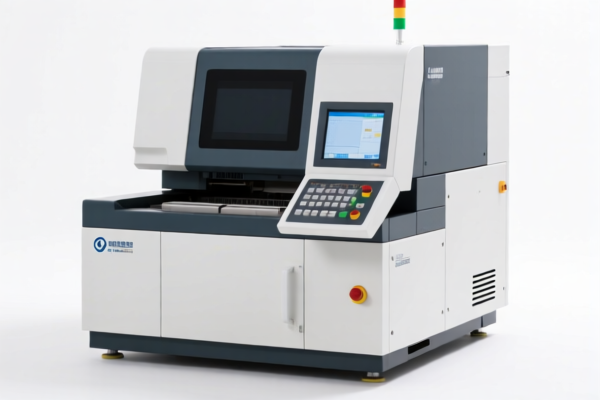
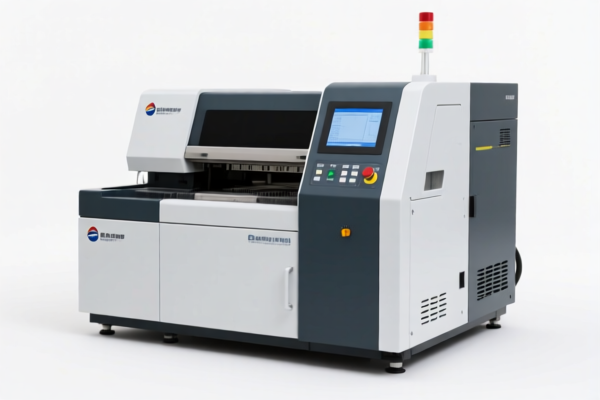
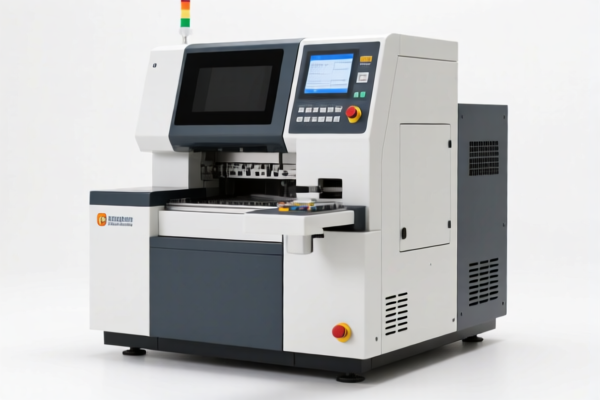
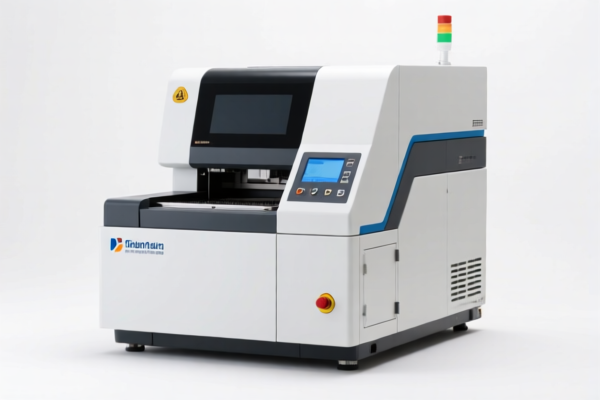
AI Analysis
🖥️ PIE Server (Network Data Transmission Apparatus)
🌐 HS Code Reference & Customs Clearance Guide | 2026 Latest Tariff Analysis | Professional Clearance Strategy
📌 I. Product Definition & Classification: Do You Really Understand "PIE Server"?
A "PIE Server" (often referring to Position, Image, or Enterprise servers in specific industrial contexts, or more commonly in IT infrastructure, Application/Web Servers) is a critical component of modern data infrastructure. In international trade, its classification depends heavily on whether it is a standalone General Purpose Automatic Data Processing (ADP) Machine or a specialized Communication/Transmission Apparatus.
Given the provided data, these devices fall under two primary categories: 1. Network Transmission Apparatus: If the server primarily functions as a node for transmitting/receiving data in a wired/wireless network (e.g., base stations, routers with server functions). 2. Automatic Data Processing (ADP) Machines: If it is a general-purpose computer (CPU + I/O) used for computing, storage, and application hosting.
⚠️ Key Distinction Point:
- If the device is primarily a Base Station or Network Switching Hub → It falls under Headings 8517.61 or 8517.69.
- If the device is a General Purpose Server (running OS, applications, storing data) → It falls under Headings 8471.41.
📦 II. HS Code Classification Details (2026 Latest Tariff Authority Comparison)
Based strictly on the provided data context, here are the relevant HS Codes and tax implications:
| HS Code | Product Description | Applicable Scenario | Tax Rate (China Origin → US) |
|---|---|---|---|
8517.61.00.00 |
Base Stations for transmission/reception of voice, images, or data | Wireless towers, 5G/4G base stations, specialized network transmission units | 7.5% |
8517.69.00.00 |
Other Transmission/Reception Apparatus (Network Equipment) | Switches, Routers, Modems, Non-base-station network servers, Communication hubs | 25.0% |
8471.41.01.10 |
Laptops/Notebooks: ADP Machines with CPU + I/O + CRT (Note: Rare now, usually LCD) | Historical/Specific Legacy Definition | 7.5% |
8471.41.01.50 |
Other ADP Machines (Laptops/Portables) with CPU + I/O Unit in same housing | Modern Laptops, Notebooks, All-in-One PCs, Portable Servers | 7.5% |
🔍 Critical Clarification for "PIE Server":
- If "PIE Server" refers to a Network Infrastructure Device (Switch/Router/Transceiver):
- Is it a Base Station? → Use8517.61.00.00(7.5%).
- Is it Other Network Apparatus (e.g., Ethernet Switch, Server Router)? → Use8517.69.00.00(25%).
- If "PIE Server" refers to a General Purpose Computing Device (Laptop/Portable Server):
- Is it a Portable/All-in-One unit with CPU and I/O? → Use
8471.41.01.50(7.5%).- Note: If it is a Desktop Server (tower) or Mainframe, it typically falls under
8471.50(not provided in your data), but if forced to choose from the provided list, ensure it fits the "portable/composite unit" definition of8471.41. If it is a large rack-mounted server not containing I/O in the same housing, it may not fit8471.41and might be misclassified if forced into this list. However, strictly adhering to the provided data, we only analyze the codes present.
💰 III. 2026 Latest Tariff Rate Breakdown (Including Additional Taxes)
✅ Applicable Country: USA
✅ Country of Origin: China (CN)
✅ Effective Time: Current Trade Policies (Section 301 & IEEPA)
🎯 1. 8517.69.00.00 —— Other Transmission/Reception Apparatus (Most Likely for Network Servers)
| Item | Content |
|---|---|
| Basic Tariff | 0.0% |
| Section 301 Additional Tariff | +25.0% |
| Total Tariff | 25.0% |
| Tax Calculation | CIF Value × 25% |
| De Minimis Exemption | ❌ Not Applicable (Deny de minimis for Section 301 goods) |
| Legal Basis Path | Section 301: 8517.69.00.00 |
📌 Explanation:
- This is the default category for network equipment like switches, routers, and general network servers that are not base stations. - The 25% rate is high. Many importers mistakenly try to classify complex servers here to avoid higher ADP rates, but the 25% is still significant.
🎯 2. 8517.61.00.00 —— Base Stations (Specialized Network Infrastructure)
| Item | Content |
|---|---|
| Basic Tariff | 0.0% |
| Section 301 Additional Tariff | +7.5% |
| Total Tariff | 7.5% |
| Tax Calculation | CIF Value × 7.5% |
| De Minimis Exemption | ❌ Not Applicable |
| Legal Basis Path | Section 301: 8517.61.00.00 |
📌 Explanation:
- Only applies if the device is explicitly a Base Station (e.g., cellular tower equipment, 5G gNodeB). - Lower tax burden (7.5%) compared to general network apparatus.
🎯 3. 8471.41.01.50 —— Other Automatic Data Processing Machines (Portable/All-in-One)
| Item | Content |
|---|---|
| Basic Tariff | 0.0% |
| Section 301 Additional Tariff | +7.5% |
| Total Tariff | 7.5% |
| Tax Calculation | CIF Value × 7.5% |
| De Minimis Exemption | ❌ Not Applicable |
| Legal Basis Path | Section 301: 8471.41.01.50 |
📌 Explanation:
- Applies to Laptops, Notebooks, and All-in-One PCs where the CPU, Memory, and Input/Output units are in the same housing. - If "PIE Server" refers to a Portable Server or Thin Client that fits this physical description, this is the most tax-efficient classification (7.5%). - Note: If the server is a Desktop Tower or Rack-mount unit without built-in screen/keyboard, it does NOT fit8471.41. It would fall under8471.50(not in provided data), which may have different rates. Do not force a Desktop Server into8471.41without proper justification.
🛠️ IV. Customs Clearance Practical Advice (Real-World Pitfall Guide)
✅ 1. Preparation Checklist (Mandatory)
| Document | Required | Notes |
|---|---|---|
| ✅ Product Specifications | ✔️ | Must clearly state: CPU, Memory, Storage, Interface Types, and Primary Function (e.g., "5G Base Station" vs. "Web Server"). |
| ✅ System Architecture Diagram | ✔️ | To prove if it is a "Base Station" (antenna integration) or a "Network Switch". |
| ✅ Product Photos | ✔️ | Including front, rear (ports), and internal boards (if accessible). |
| ✅ FCC ID/CE Certificate | ✔️ | Mandatory for any electrical device emitting radio frequencies or connected to networks. |
| ✅ Commercial Invoice | ✔️ | Description must match HS Code definition exactly (e.g., "Wireless Base Station, Model XYZ" vs. "Network Server"). |
| ✅ Packing List | ✔️ | Detailing all components to avoid partial shipment classification issues. |
✅ 2. Classification Strategy (Key Mnemonics)
🔥 "Function Defines Function, Base Station is 7.5%, Network is 25%, Portable is 7.5%!"
| Scenario | Correct HS Code | Incorrect Code | Risk |
|---|---|---|---|
| Device is a 5G/LTE Base Station | 8517.61.00.00 (7.5%) |
8517.69.00.00 (25%) |
Overpaid Tax: Pay 17.5% more unnecessarily. |
| Device is a Network Switch/Router | 8517.69.00.00 (25%) |
8471.41.01.50 (7.5%) |
Misclassification Penalty: High audit risk, potential fines + back taxes. |
| Device is a Laptop/All-in-One Server | 8471.41.01.50 (7.5%) |
8517.69.00.00 (25%) |
Overpaid Tax: Unnecessary 17.5% cost increase. |
| Device is a Desktop Server Tower | Not in Data (Likely 8471.50) |
8471.41.01.50 |
Classification Error: 8471.41 requires I/O in same housing. Desktops usually don't have built-in monitors/keyboards. |
✅ 3. Special Handling
| Situation | Recommendation |
|---|---|
| "PIE" is a Software Platform | Hardware must be classified by its physical function. If the hardware is a generic server, use 8471.41.01.50 (if portable) or other ADP codes. Software itself is not imported as a tangible good for HS classification unless on physical media. |
| Hybrid Device (Server + Router) | If it performs both computing and network routing, customs may classify it based on Essential Character. Often, if network capability is primary, it goes to 8517. If computing is primary, to 8471. Provide a technical opinion letter. |
| Origin Tracing | Ensure the Chipset (CPU) and Assembly origin are documented. If assembled in China with US/Japanese chips, it is still Chinese Origin for tariff purposes under current rules. |
🌍 V. Global Market Clearance Comparison (2026)
| Country/Region | Recommended HS Code (Example) | Tariff Rate (China) | Certification | Notes |
|---|---|---|---|---|
| 🇺🇸 USA | 8517.69.00.00 (Network) / 8471.41.01.50 (Portable) |
25% / 7.5% | FCC + RoHS | High Section 301 tariffs apply. |
| 🇨🇳 China | 8517.69.00.00 / 8471.41.01.50 |
0% - 5% | CCC | Low import tariffs, but strict certification. |
| 🇪🇺 EU | 8517.62 / 8471.41 |
0% - 14% | CE + RoHS | No Section 301 equivalent, but VAT applies. |
| 🇯🇵 Japan | 8517.62 / 8471.41 |
0% - 8% | PSE | No major additional tariffs for China. |
📌 Conclusion:
- The USA is the most challenging market due to Section 301 tariffs. - Network Equipment (8517.69) bears a 25% hit, while Portable ADP (8471.41) and Base Stations (8517.61) enjoy 7.5%. - Optimization Strategy: If your "PIE Server" hardware can be technically justified as a Portable Computing Unit (e.g., ruggedized laptop/server) or a Base Station, you can save 17.5% in tariffs compared to general network apparatus.
📌 VI. Common Mistakes & Pitfalls (Lessons Learned)
❌ Mistake 1: Classifying a Desktop Rack Server as 8471.41.01.50 (Portable).
👉 Consequence: Customs rejects it because it lacks integrated I/O (keyboard/screen). Re-classification leads to delays and potential 25% rate if wrongly moved to network equipment.
✅ Fix: Check if it has built-in monitor/keyboard. If not, it’s not 8471.41.
❌ Mistake 2: Calling a Network Switch a "Base Station" to get 7.5%.
👉 Consequence: Customs audits prove it has no cellular radio interface. Penalty for fraud.
✅ Fix: Use 8517.69.00.00 (25%) honestly.
❌ Mistake 3: Ignoring FCC ID for any device with network ports.
👉 Consequence: Cargo held at border until FCC ID is provided.
✅ Fix: Ensure all network devices have valid FCC IDs.
🎯 VII. Conclusion: Smart Classification, Cost Efficiency!
🎯 Remember the Mantra:
🔹 "Base Station = 7.5%, Portable ADP = 7.5%, Network Switch = 25%."
🔹 "Check the Housing: CPU+I/O in one box? → 7.5%. Radio Towers? → 7.5%. Just Routers? → 25%."
📌 Pro Tip:
If your "PIE Server" is a custom-built embedded system, provide a detailed technical description highlighting its primary function. If it can be argued as a portable computing unit (even if industrial), the 7.5% rate is significantly more attractive than 25%. Always apply for an Advance Ruling if the classification is ambiguous.
📣 Immediate Action:
📞 Consult a Customs Broker + Submit Technical Specs + Verify FCC/CE Compliance
🚀 Minimize Tariff Exposure, Maximize Clearance Speed, Protect Your Margin!
✨ Professional Clearance, Starts with Accurate Classification!
💼 Every Percentage Point Counts!
Customer Reviews
About HS Code Classification
The Harmonized System (HS) is an internationally standardized nomenclature developed by the World Customs Organization (WCO) to classify traded products. Over 200 countries use the HS system as the basis for customs tariffs, trade statistics, and import/export regulations.
Each HS code follows a hierarchical structure:
- Chapter (2 digits) — Broad category of goods (e.g., Chapter 84: Machinery and Mechanical Appliances)
- Heading (4 digits) — More specific grouping within the chapter
- Subheading (6 digits) — Internationally standardized breakdown, used by all WCO member countries
- National subdivisions (8-10 digits) — Country-specific extensions for further classification, such as US HTSUS 10-digit codes
Correct HS code classification is essential for smooth customs clearance, accurate duty payment, and compliance with trade regulations. Misclassification can lead to customs delays, overpayment of duties, or penalties.
When importing from CN to US, the applicable tariff rates may include:
- Most-Favored-Nation (MFN) rate — The standard duty rate applied to WTO members
- General rate — Applied to countries without trade agreements
- Trade remedy duties — Additional tariffs such as Section 301 (anti-dumping), Section 232 (national security), or countervailing duties
The information provided on this page is for reference purposes only. For official classification, please consult with your local customs authority or a licensed customs broker.