PMMA Acrylic Sheet
CN → US| HS Code | Tariff Rate | Origin | Destination | Doc |
|---|---|---|---|---|
| 3920515050 | 41.5% | CN | US | Official Doc |
| 3920515090 | 41.5% | CN | US | Official Doc |
| 3906100000 | 41.3% | CN | US | Official Doc |
| 3921110000 | 40.3% | CN | US | Official Doc |
| 3906902000 | 41.3% | CN | US | Official Doc |
Product Images
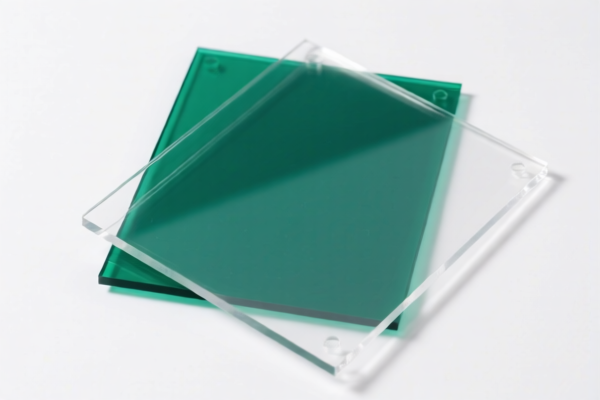
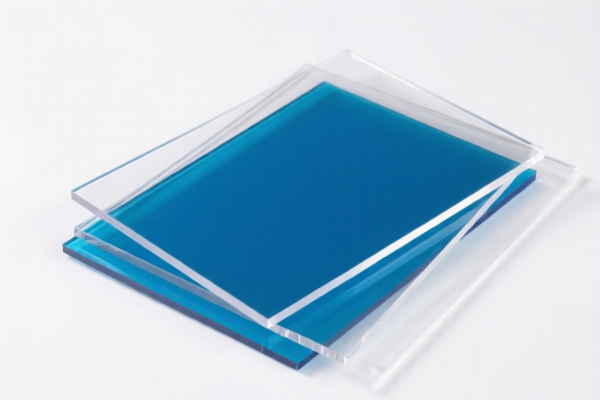
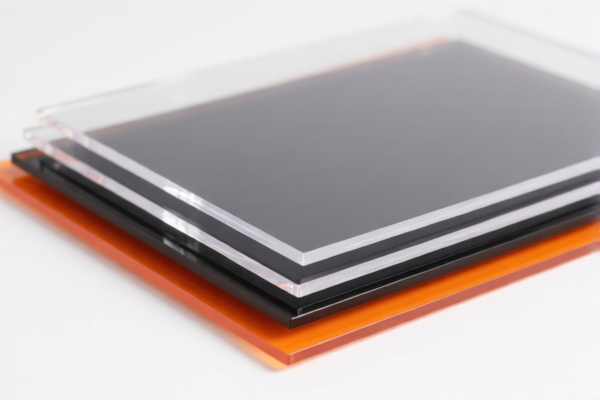
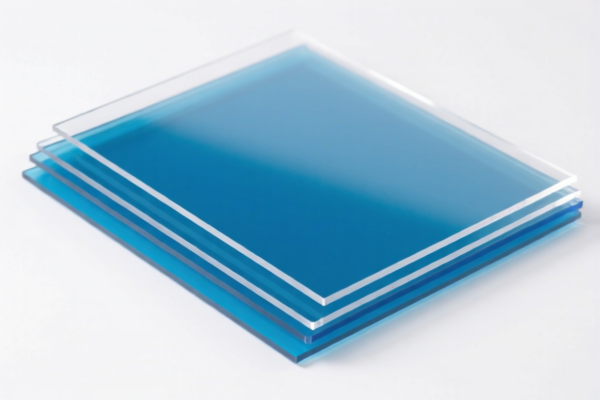
AI Analysis
🧊 PMMA Acrylic Sheet (Polymethyl Methacrylate)
🌐 HS Code Reference & Customs Clearance Guide | 2026 Latest Tariff Analysis | Professional Entry Strategy
📌 I. Product Definition & Classification: Do You Really Understand "Acrylic"?
PMMA (Polymethyl Methacrylate), commonly known as Acrylic, is a transparent thermoplastic often used as a lightweight or shatter-resistant alternative to glass. In international trade, its classification depends heavily on its form and state of processing.
Key Distinction Points: * Semi-finished Primary Forms: If the sheet is considered a primary shape or intermediate semi-finished product without further fabrication, it may fall under Chapter 39.06 or 39.06.90. * Finished Plates/Sheets: If defined strictly as "plates or sheets" of polymers, it falls under Chapter 39.20. * Other Plastic Articles: If classified under "other plates, sheets, film, foil, and strip," it may fall under Chapter 39.21.
⚠️ Critical Note:
- Misclassification Risk: Declaring a standard acrylic sheet as "other plastic articles" (3921) instead of "plates/sheets" (3920) can lead to disputes over the base duty rate (5.3% vs 6.3%/6.5%).
- Material Match: All listed HS codes explicitly match PMMA (Acrylic). The difference lies in the specific sub-category definition within the Harmonized System.
📦 II. HS Code Classification Details (2026 Latest Tariff Authority Match)
| HS Code | Product Description | Applicable Scenario | Base Duty | Total Tax Rate |
|---|---|---|---|---|
3920.51.50.50 |
Acrylic (PMMA) Plates/Sheets | Standard flat sheets, clear/tinted, processed form | 6.5% | 41.5% |
3920.51.50.90 |
Other PMMA Plates/Sheets | Acrylic sheets not specified in 50.50, generic category | 6.5% | 41.5% |
3906.10.00.00 |
PMMA in Primary Forms | Acrylic considered as a semi-finished primary polymer shape | 6.3% | 41.3% |
3921.11.00.00 |
Other Plates, Sheets, Film, Foil, Strip | PMMA classified under "other" plastic articles (lower base duty) | 5.3% | 40.3% |
3906.90.20.00 |
Other Acrylic Resins in Primary Forms | Broad category for acrylic resins, semi-finished state | 6.3% | 41.3% |
🔍 Key Observation:
- Lowest Total Tax:3921.11.00.00offers the lowest total tax rate at 40.3% due to a lower base duty (5.3%).
- Highest Specificity:3920.51.50.50is the most precise for "Acrylic Plates/Sheets" but has a slightly higher base duty (6.5%).
- Primary Form Ambiguity: Codes3906.10.00.00and3906.90.20.00apply if customs authorities view the sheet as a "primary form" rather than a finished plate.
💰 III. 2026 Latest Tariff Rate Breakdown (Including Surtaxes & Policy Add-ons)
✅ Applicable Country: United States (US)
✅ Origin: China (CN)
✅ Effective Date: 2025 November 10 onwards (for subsequent imports)
🎯 1. 3920.51.50.50 & 3920.51.50.90 — Acrylic Plates/Sheets
| Item | Content |
|---|---|
| Base Duty | 6.5% (ad valorem) |
| Section 301 Surtax | +25.0% (USITC Footnote for Chinese goods) |
| Section 122 Tariff | +10.0% (Specific clause for certain plastic articles) |
| Total Tax Rate | 41.5% |
| Tax Calculation | CIF Value × 41.5% |
| De Minimis Eligibility | ❌ Not Eligible (High tax rate exceeds threshold) |
| Legal Basis Path | USITC:3920.51.50.50 → Section 301: 25% → Section 122: 10% |
📌 Explanation:
- Base Duty (6.5%): Standard MFN rate for plastic plates/sheets.
- Section 301 (25%): Broad surtax on Chinese-manufactured goods.
- Section 122 (10%): Additional tariff targeting specific plastic products.
- Total 41.5%: This is a very high effective rate. Cost planning must account for this fully.
🎯 2. 3906.10.00.00 & 3906.90.20.00 — PMMA in Primary Forms
| Item | Content |
|---|---|
| Base Duty | 6.3% (ad valorem) |
| Section 301 Surtax | +25.0% |
| Section 122 Tariff | +10.0% |
| Total Tax Rate | 41.3% |
| Tax Calculation | CIF Value × 41.3% |
| De Minimis Eligibility | ❌ Not Eligible |
| Legal Basis Path | USITC:3906.10.00.00 → Section 301: 25% → Section 122: 10% |
📌 Note:
- Slightly lower than 3920 codes due to 0.2% difference in base duty.
- Suitable if the product is imported as "raw" acrylic sheets before cutting/fabrication.
🎯 3. 3921.11.00.00 — Other Plates, Sheets, Film, Foil, Strip
| Item | Content |
|---|---|
| Base Duty | 5.3% (ad valorem) |
| Section 301 Surtax | +25.0% |
| Section 122 Tariff | +10.0% |
| Total Tax Rate | 40.3% |
| Tax Calculation | CIF Value × 40.3% |
| De Minimis Eligibility | ❌ Not Eligible |
| Legal Basis Path | USITC:3921.11.00.00 → Section 301: 25% → Section 122: 10% |
📌 Advantage:
- Lowest Total Tax (40.3%).
- Justification: Classified as "other" plastic articles rather than specific "plates/sheets" of polymers. This may require a strong technical argument that the product falls under the broader "other" category.
🛠️ IV. Customs Clearance Practical Advice (Real-World Pitfall Guide)
✅ 1. Documentation Checklist (Essential)
| Document | Required | Notes |
|---|---|---|
| ✅ Product Specification Sheet | ✔️ | Must state: Material (PMMA), Dimensions, Thickness, Color, Transparency, Grade (e.g., Cast/Extruded) |
| ✅ Material Safety Data Sheet (MSDS) | ✔️ | Confirms chemical composition (Polymethyl Methacrylate) |
| ✅ Commercial Invoice | ✔️ | Clearly describe as "PMMA Acrylic Sheets" or "Polymethyl Methacrylate Plates" |
| ✅ Packing List | ✔️ | Detail weight, dimensions, and quantity. Avoid vague terms like "Plastic Goods" |
| ✅ Certificate of Origin | ✔️ | Crucial for determining applicability of Section 301 & 122 tariffs |
✅ 2. Declaration Strategy (Key Tips)
🔥 "Be Specific, Match Description, Avoid Generic Terms!"
| Scenario | Correct Declaration | Incorrect Declaration | Consequence |
|---|---|---|---|
| Standard Clear Acrylic Sheet | "PMMA Acrylic Sheet, Cast, 3mm, Clear" | "Plastic Sheet" | Risk of misclassification to 3921 (lower base) or 3906 (primary form) |
| Tinted/Dyed Acrylic | "Colored PMMA Sheets" | "Acrylic Product" | May trigger detailed scrutiny |
| Semi-finished Raw Sheets | "PMMA in Primary Form" | "Finished Acrylic Sign" | Misclassification error |
📌 Strategy:
- If aiming for the lowest tax (40.3%), consider declaring under 3921.11.00.00 with a technical justification that it fits "other plates, sheets..." rather than specific 3920.51.
- However, 3920.51.50.50 is the most direct match for "Acrylic Sheets." Use this if no strong argument exists for 3921.
- Never omit "PMMA" or "Acrylic" from the description. Customs needs to identify the polymer.
✅ 3. Special Circumstances
| Scenario | Handling Advice |
|---|---|
| OEM Custom Colors | Specify "Custom Colored PMMA Sheets." Does not change HS code but affects value. |
| Sheets with Adhesive | If one side is adhesive-backed, it may still fall under 3920, but declare clearly as "Pressure-Sensitive Acrylic Sheets." |
| Imported for Further Processing | If sheets will be cut/fabreated in the US, ensure the entry reflects the raw material status to avoid "finished goods" scrutiny. |
| Section 301 Exemptions | Check if your specific HS code and origin are exempted. Currently, no exemption is listed for these codes in the provided data. |
🌍 V. Global Market Comparison (2026 Latest)
| Country/Region | Recommended HS Code | Duty Rate | Certification | Notes |
|---|---|---|---|---|
| 🇺🇸 United States | 3920.51.50.50 or 3921.11.00.00 |
40.3% - 41.5% | None specific for acrylic | High tariffs due to Section 301 & 122 |
| 🇨🇳 China | 3920.51.50.50 |
~5-6% (Import) | CCC (if applicable) | Lower base duty, no Section 301 |
| 🇪🇺 European Union | 3920.51.50.50 |
0-5% (depending on trade agreements) | REACH Compliance | No Section 301/122 equivalent |
| 🇬🇧 United Kingdom | 3920.51.50.50 |
0-6% | UKCA Marking | Post-Brexit rules apply |
| 🇯🇵 Japan | 3920.51.50.50 |
5% | PSE (if electrical components) | Standard MFN rates |
📌 Conclusion:
- US Market: Extremely high effective duty (~40-41%). Cost absorption or supply chain adjustment is critical.
- Other Markets: Significantly lower duties. Consider diversifying shipping routes if feasible.
📌 VI. Common Errors & Pitfalls (Lessons Learned)
❌ Error 1: Declaring "Acrylic" without specifying "PMMA" or polymer type
👉 Consequence: Customs may classify under a generic "other plastic" code with unclear duties or detain shipment for clarification.
❌ Error 2: Misclassifying as "Plastic Articles" (3926) instead of "Plates/Sheets" (3920/3921)
👉 Consequence: Potential duty evasion detection, leading to penalties and back-taxes.
❌ Error 3: Ignoring Section 122 Tariff
👉 Consequence: Missing the additional 10% charge. Total tax becomes 31.5% instead of 41.5% in calculations, causing cash flow issues.
❌ Error 4: Using "Plexiglas" as the sole product name
👉 Consequence: "Plexiglas" is a brand name. Must declare generic chemical name "Polymethyl Methacrylate" or "PMMA" for accurate classification.
✅ Correct Declaration Example:
"PMMA Acrylic Sheets, Cast, 3mm Thickness, Clear, Polymethyl Methacrylate, Not Further Fabricated, For Industrial Use"
🎯 VII. Conclusion: Precise Classification Saves Money!
🎯 Remember:
🔹 "PMMA is not just 'Plastic'." Specify the polymer.
🔹 "3920 vs 3921: A 1.2% Difference Matters." Choose wisely based on product definition.
🔹 "Section 301 + 122 = 35% Surtax." Always calculate total landed cost with these additions.
🔹 "No De Minimis for High Tariffs." Do not expect small packages to bypass duties.
📌 Pro Tip:
If your supplier can provide Cast PMMA vs Extruded PMMA, ensure the description matches. Some sub-codes may differentiate based on manufacturing process, though in the provided data, both fall under similar broad categories.
Consult a Customs Broker for a Pre-Ruling if you are unsure whether to use3920.51.50.50or3921.11.00.00. This can save thousands in potential duty disputes.
📣 Action Required:
📞 Contact your logistics provider with the exact product specs (Material: PMMA, Form: Sheets/Plates).
📄 Request a Tariff Impact Analysis for3920.51.50.50vs3921.11.00.00to optimize costs.
🚀 Plan for ~41% Landed Cost for US imports of Acrylic Sheets from China.
✨ Professional Customs Clearance Starts with Accurate Classification!
💼 Every Percent of Duty Saved is Pure Profit!
Customer Reviews
About HS Code Classification
The Harmonized System (HS) is an internationally standardized nomenclature developed by the World Customs Organization (WCO) to classify traded products. Over 200 countries use the HS system as the basis for customs tariffs, trade statistics, and import/export regulations.
Each HS code follows a hierarchical structure:
- Chapter (2 digits) — Broad category of goods (e.g., Chapter 84: Machinery and Mechanical Appliances)
- Heading (4 digits) — More specific grouping within the chapter
- Subheading (6 digits) — Internationally standardized breakdown, used by all WCO member countries
- National subdivisions (8-10 digits) — Country-specific extensions for further classification, such as US HTSUS 10-digit codes
Correct HS code classification is essential for smooth customs clearance, accurate duty payment, and compliance with trade regulations. Misclassification can lead to customs delays, overpayment of duties, or penalties.
When importing from CN to US, the applicable tariff rates may include:
- Most-Favored-Nation (MFN) rate — The standard duty rate applied to WTO members
- General rate — Applied to countries without trade agreements
- Trade remedy duties — Additional tariffs such as Section 301 (anti-dumping), Section 232 (national security), or countervailing duties
The information provided on this page is for reference purposes only. For official classification, please consult with your local customs authority or a licensed customs broker.