PMMA Flexible Automotive Interior Film
CN → US| HS Code | Tariff Rate | Origin | Destination | Doc |
|---|---|---|---|---|
| 3921904090 | 39.2% | CN | US | Official Doc |
| 3920511000 | 41.0% | CN | US | Official Doc |
| 3920591000 | 41.0% | CN | US | Official Doc |
| 3926909989 | 22.8% | CN | US | Official Doc |
| 3926305000 | 22.8% | CN | US | Official Doc |
Product Images
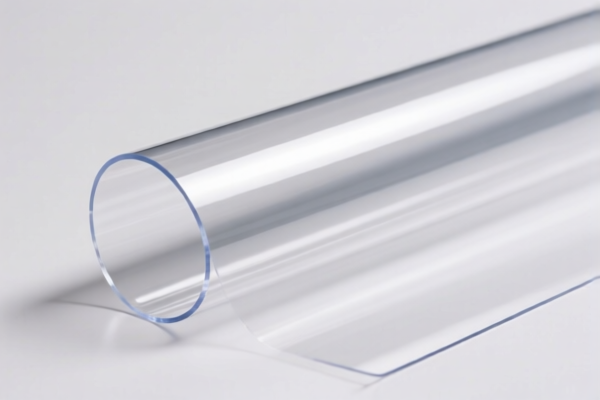
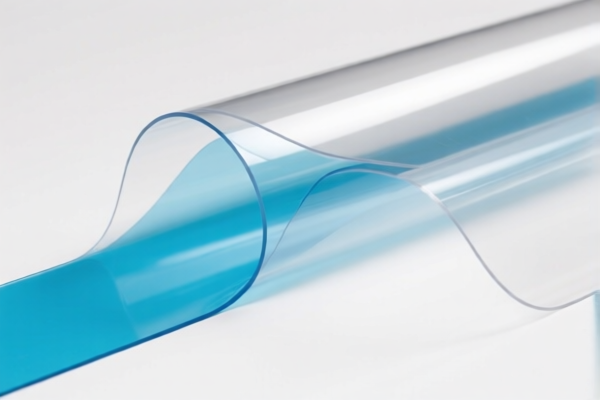
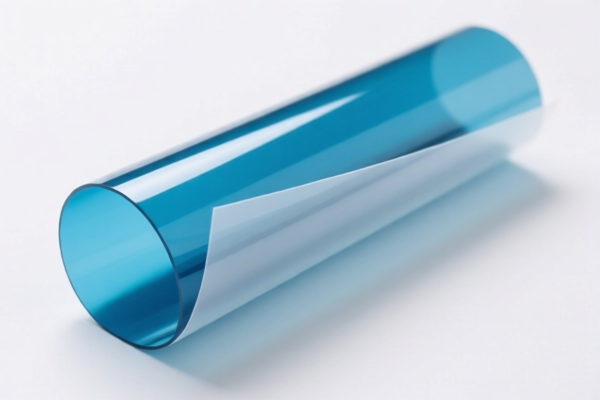
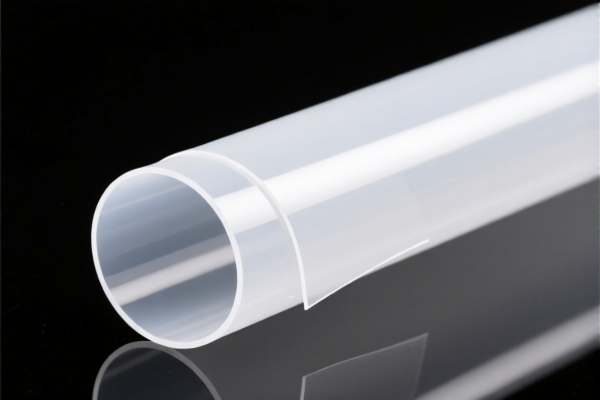
AI Analysis
🚗 PMMA Flexible Automotive Interior Film (Polymethyl Methacrylate)
🌐 HS Code Reference & Customs Clearance Guide | 2026 Latest Tariff Analysis | Professional Clearance Strategy
📌 I. Product Definition & Classification: Understanding "PMMA Automotive Films"
PMMA (Polymethyl Methacrylate), commonly known as acrylic, is a transparent thermoplastic often used as a lightweight or shatter-resistant alternative to glass. In the context of automotive interiors, this material typically appears as flexible films or sheets used for dashboards, trim panels, console covers, and decorative accents.
In international trade, the classification of PMMA films depends heavily on: 1. Physical Form: Is it a rigid plate/sheet or a flexible film? 2. Intended Use: Is it a general-purpose plastic material or a specific accessory for a vehicle? 3. Processing State: Is it raw material or a finished/part-processed component?
⚠️ Critical Distinction Point:
- If the product is a general-purpose plastic film without specific automotive shaping → It falls under Chapter 39 (Plastics and Articles Thereof) as raw/semi-finished materials.
- If the product is specifically shaped or designated for automotive interior use (e.g., pre-cut, specific texture for dashboards) → It may qualify as an automotive part/accessory, shifting to Chapter 39 (Specific Subheadings) or potentially Chapter 87 (though Chapter 39 is more common for films).
📦 II. HS Code Classification Details (2026 Latest Tariff Authority Mapping)
Based on the provided data, there are 5 distinct classifications for PMMA films, ranging from general plastic articles to specific automotive accessories. The tax burden varies significantly based on the specific HS code chosen.
| HS Code | Product Description | Usage Scenario | Key Classification Feature |
|---|---|---|---|
3921.19.00.90 |
Other plates, sheets, film, foil and strip of plastics (PMMA) | General purpose PMMA flexible films | General Plastic Article |
3920.59.10.00 |
Plates, sheets, film, foil and strip, of acrylic polymers (PMMA) | Acrylic polymer films, flexible form | Acrylic Polymer Specific |
3926.30.50.00 |
Articles of plastics for furniture, office, industrial use... (Automotive Interior Parts) | Specifically for automotive interiors | Automotive Accessory/Part |
3921.90.40.90 |
Other plates, sheets, film, foil and strip of plastics (PMMA) | General purpose, other flexible films | General Plastic Article (Other) |
3920.51.10.00 |
Plates, sheets, film, foil and strip, of acrylic polymers (PMMA) | Acrylic polymer films, rigid/specific form | Acrylic Polymer Specific (Other) |
🔍 Key Insight:
-3926.30.50.00is the lowest tax burden (22.8%) but requires proving the item is a specific accessory for automotive interiors.
-3921/3920codes are considered general plastic materials and attract higher tariffs (41-41.5%) due to Section 301 and IEEPA duties.
- Do not misclassify a general PMMA film as an "automotive part" if it is sold as raw material; conversely, do not classify a finished, shaped automotive trim as a "general plate" if it fits the specific accessory definition.
💰 III. 2026 Latest Tariff Rate Breakdown (Including Additional Duties & Policies)
✅ Applicable Country: United States (US)
✅ Country of Origin: China (CN)
✅ Effective Date: 2025 November 10 onwards (including subsequent imports)
🎯 1. 3921.19.00.90 — General Plastic Film (PMMA)
| Item | Details |
|---|---|
| Base Duty Rate | 6.5% |
| Section 301 Duty | +25.0% |
| IEEPA Duty (122 Clause) | +10.0% |
| Total Duty Rate | 41.5% |
| Calculation Basis | CIF Value × 41.5% |
| De Minimis Eligibility | ❌ Not Eligible |
| Legal Basis Path | USITC:3921.19.00.90 → FOOTNOTE:301 → IEEPA:122 |
📌 Explanation:
- This is a general plastic film category. It attracts the full Section 301 (25%) and IEEPA (10%) surcharges.
- Total Tax: 41.5%. High cost entry for general raw materials.
🎯 2. 3920.59.10.00 — Acrylic Polymer Film (Flexible)
| Item | Details |
|---|---|
| Base Duty Rate | 6.0% |
| Section 301 Duty | +25.0% |
| IEEPA Duty (122 Clause) | +10.0% |
| Total Duty Rate | 41.0% |
| Calculation Basis | CIF Value × 41.0% |
| De Minimis Eligibility | ❌ Not Eligible |
| Legal Basis Path | USITC:3920.59.10.00 → FOOTNOTE:301 → IEEPA:122 |
📌 Explanation:
- Specifically for acrylic polymers (PMMA).
- Total Tax: 41.0%. Slightly lower base rate (6.0% vs 6.5%) but same additional duties.
- Suitable for raw acrylic films sold to converters.
🎯 3. 3926.30.50.00 — Automotive Interior Parts (PMMA Film/Accessory)
| Item | Details |
|---|---|
| Base Duty Rate | 5.3% |
| Section 301 Duty | +7.5% |
| IEEPA Duty (122 Clause) | +10.0% |
| Total Duty Rate | 22.8% |
| Calculation Basis | CIF Value × 22.8% |
| De Minimis Eligibility | ❌ Not Eligible |
| Legal Basis Path | USITC:3926.30.50.00 → FOOTNOTE:301 (Reduced) → IEEPA:122 |
📌 Explanation:
- This is the most cost-effective option if the product qualifies.
- It is classified as an article of plastic for automotive interiors.
- Significantly lower Section 301 rate (7.5% vs 25%).
- Total Tax: 22.8%. Savings of ~18.7% compared to general plastic film classifications.
- Requirement: Must be demonstrably an accessory/part for automotive interiors (e.g., specific shapes, textures, or marketing as automotive trim).
🎯 4. 3921.90.40.90 — Other Plastic Film (PMMA)
| Item | Details |
|---|---|
| Base Duty Rate | 4.2% |
| Section 301 Duty | +25.0% |
| IEEPA Duty (122 Clause) | +10.0% |
| Total Duty Rate | 39.2% |
| Calculation Basis | CIF Value × 39.2% |
| De Minimis Eligibility | ❌ Not Eligible |
| Legal Basis Path | USITC:3921.90.40.90 → FOOTNOTE:301 → IEEPA:122 |
📌 Explanation:
- "Other" plastic plates/sheets/films.
- Total Tax: 39.2%. Lower base rate (4.2%) but full Section 301 (25%) applies.
- Useful for non-acrylic-specific or miscellaneous PMMA films that don't fit3920.59.
🎯 5. 3920.51.10.00 — Other Acrylic Polymer Articles
| Item | Details |
|---|---|
| Base Duty Rate | 6.0% |
| Section 301 Duty | +25.0% |
| IEEPA Duty (122 Clause) | +10.0% |
| Total Duty Rate | 41.0% |
| Calculation Basis | CIF Value × 41.0% |
| De Minimis Eligibility | ❌ Not Eligible |
| Legal Basis Path | USITC:3920.51.10.00 → FOOTNOTE:301 → IEEPA:122 |
📌 Explanation:
- Another acrylic polymer subheading.
- Total Tax: 41.0%. Same high tax burden as3920.59.10.00.
- Typically for rigid or different form acrylic articles not covered by3920.59.
🛠️ IV. Customs Clearance Practical Advice (Battle-Tested Pitfall Avoidance)
✅ 1. Preparation Checklist (Non-Negotiable)
| Document | Required? | Explanation |
|---|---|---|
| ✅ Product Specification Sheet | ✔️ | Must detail: Material (PMMA), Thickness, Width, Length, Flexibility, Optical Clarity. |
| ✅ Application Statement | ✔️ | Crucial for 3926.30.50.00: Explicitly state "Used for automotive interior trim/dashboard decoration." |
| ✅ Product Photos | ✔️ | Show the film rolls, any pre-cut shapes, texture (e.g., wood grain, carbon fiber look), and packaging. |
| ✅ Commercial Invoice | ✔️ | Must clearly describe the item as "PMMA Automotive Interior Film" or "Acrylic Polymer Film for Auto Trim." |
| ✅ Bill of Lading / Packing List | ✔️ | Consistent weights and dimensions. |
| ✅ Origin Certificate (CO) | ✔️ | Required for China origin verification and Section 301/IEEPA application. |
✅ 2. Declaration Strategy (Key Mnemonics)
🔥 "Auto Part vs. Raw Material: The 18.7% Difference!"
| Scenario | Recommended HS Code | Risk Level | Why? |
|---|---|---|---|
| Selling raw PMMA film rolls to a converter who then makes parts | 3921.19.00.90 or 3920.59.10.00 |
🟡 Medium | Safe, but high tax (41-41.5%). No automotive claim needed. |
| Selling pre-cut, textured PMMA films specifically for car dashboards/trim | 3926.30.50.00 |
🔴 High | Requires strong evidence. Must prove it's an "accessory." If challenged, may be reclassified to 41.5%. |
| Mixed shipment (Raw film + Finished auto trim) | Split Declaration | 🟢 Low | Declare raw film under 3921/3920 and finished parts under 3926.30.50.00. |
📌 Key Tip:
- If you use3926.30.50.00, ensure your invoice description and marketing materials emphasize "Automotive Interior Application."
- If the film is generic (e.g., clear plastic sheet sold to multiple industries), do not use3926.30.50.00. Use3921.19.00.90instead to avoid penalties.
✅ 3. Special Cases Handling
| Situation | Recommendation |
|---|---|
| OEM Custom PMMA Film | Provide OEM contract or design specs showing it's for a specific car model's interior. |
| Multi-Layer Laminated Film | Ensure spec shows it's still primarily PMMA. If other materials dominate, classification may change. |
| Sample Shipments | Even samples are subject to duties. Declare accurately. Use "Samples for Automotive Interior Design Review." |
| Returned Goods | If re-exporting defective goods, apply for duty drawback. Keep all original entry documents. |
🌍 V. Global Market Customs Comparison (2026 Latest)
| Country/Region | Recommended HS Code | Est. Duty Rate (China Origin) | Certification Requirements | Notes |
|---|---|---|---|---|
| 🇺🇸 USA | 3926.30.50.00 (If auto part) |
22.8% (Part) / 41.5% (Film) | No special cert. But strict origin rules. | Highest risk/reward. Prove auto use to save ~18.7%. |
| 🇪🇺 EU | 3920.51.00 / 3926.90 |
~5-7% + VAT | REACH, RoHS | No Section 301/IEEPA. Simpler. |
| 🇨🇳 China | 3920.59.10 / 3926.30 |
5-10% | CCC (if applicable) | Lower duty, no additional Sino-US tariffs. |
| 🇯🇵 Japan | 3920.51.00 / 3926.90 |
~5-8% | PSE (if electrical) | No additional trade war tariffs. |
📌 Conclusion:
- USA is the most complex due to Section 301 and IEEPA.
- Strategy for USA: Maximize the use of3926.30.50.00if the product is genuinely an automotive interior accessory. This saves nearly 19% in duties.
- EU/Asia: Focus on standard plastic film classifications.
📌 VI. Common Mistakes & Pitfalls (Blood & Tears Lessons)
❌ Mistake 1: Calling a generic plastic film "Automotive Part" to get lower tax.
👉 Consequence: Customs audit → Reclassification to 3921/3920 → Back taxes + Penalties.
❌ Mistake 2: Not specifying "PMMA" or "Acrylic" in the description.
👉 Consequence: Customs may classify under a higher-rate generic plastic code → Higher Duty.
❌ Mistake 3: Splitting a single roll of PMMA film into multiple entries to confuse authorities.
👉 Consequence: Flags for fraud → Seizure.
❌ Mistake 4: Ignoring IEEPA 122 Clause.
👉 Consequence: Underpayment of the 10% IEEPA duty → Interest + Penalties.
✅ Correct Declaration Example:
"PMMA Flexible Film, Automotive Interior Trim Material, Clear/Textured, 0.5mm Thick, for Dashboard Decoration, Model XYZ, China Origin"
🎯 VII. Conclusion: Professional Declaration, Cost Optimization!
🎯 Remember the Mnemonic:
🔹 "Auto Part: 22.8% (Save Big!)"
🔹 "General Film: 41.5% (Pay More!)"
🔹 "Prove Auto Use, Or Pay the Price!"
📌 Pro Tip:
If your PMMA film is shipped from Vietnam, Mexico, or Malaysia, you may qualify for IEEPA Exemptions or FTAA/USMCA benefits.
Always apply for an Advance Ruling (CBP Ruling) if the classification is ambiguous. It provides legal certainty.
📣 Immediate Action:
📞 Consult a Customs Broker + Provide Product Specs + Request CBP Ruling
🚀 Optimize Your Supply Chain, Clear Faster, Profit More!
✨ Professional Customs Clearance Starts with Accurate Classification!
💼 Every Percent of Duty Saved is Pure Profit!
Customer Reviews
About HS Code Classification
The Harmonized System (HS) is an internationally standardized nomenclature developed by the World Customs Organization (WCO) to classify traded products. Over 200 countries use the HS system as the basis for customs tariffs, trade statistics, and import/export regulations.
Each HS code follows a hierarchical structure:
- Chapter (2 digits) — Broad category of goods (e.g., Chapter 84: Machinery and Mechanical Appliances)
- Heading (4 digits) — More specific grouping within the chapter
- Subheading (6 digits) — Internationally standardized breakdown, used by all WCO member countries
- National subdivisions (8-10 digits) — Country-specific extensions for further classification, such as US HTSUS 10-digit codes
Correct HS code classification is essential for smooth customs clearance, accurate duty payment, and compliance with trade regulations. Misclassification can lead to customs delays, overpayment of duties, or penalties.
When importing from CN to US, the applicable tariff rates may include:
- Most-Favored-Nation (MFN) rate — The standard duty rate applied to WTO members
- General rate — Applied to countries without trade agreements
- Trade remedy duties — Additional tariffs such as Section 301 (anti-dumping), Section 232 (national security), or countervailing duties
The information provided on this page is for reference purposes only. For official classification, please consult with your local customs authority or a licensed customs broker.