PMMA Flexible Packaging Material
CN → US| HS Code | Tariff Rate | Origin | Destination | Doc |
|---|---|---|---|---|
| 3926909910 | 22.8% | CN | US | Official Doc |
| 3926909989 | 22.8% | CN | US | Official Doc |
| 9405920000 | 38.7% | CN | US | Official Doc |
| 3921190090 | 41.5% | CN | US | Official Doc |
| 3920591000 | 41.0% | CN | US | Official Doc |
Product Images
AI Analysis
💎 PMMA Flexible Packaging Material (Acrylic Resin Films/Sheets)
🌐 HS Code Reference & Customs Clearance Guide | 2026 Latest Tariff Analysis | Professional Compliance Strategy
📌 I. Product Definition & Classification: What Exactly is "PMMA Flexible Packaging"?
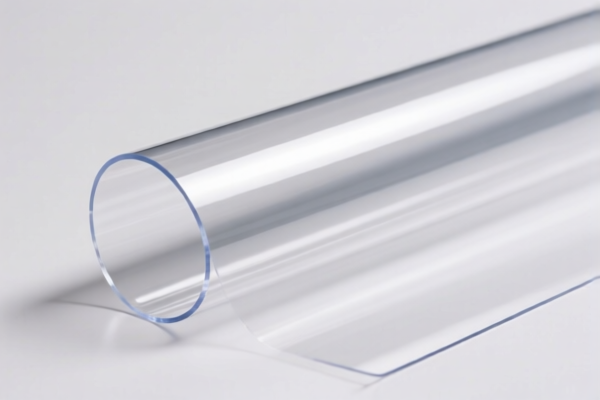
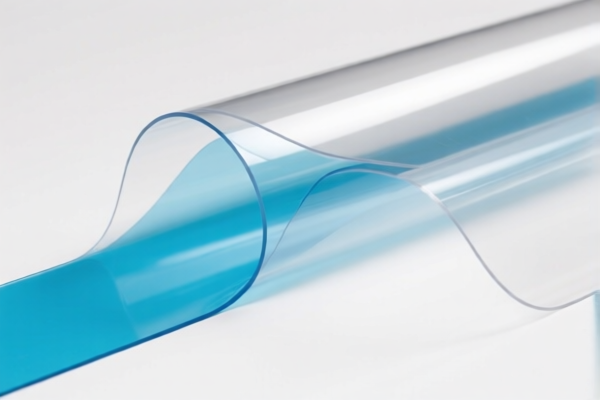
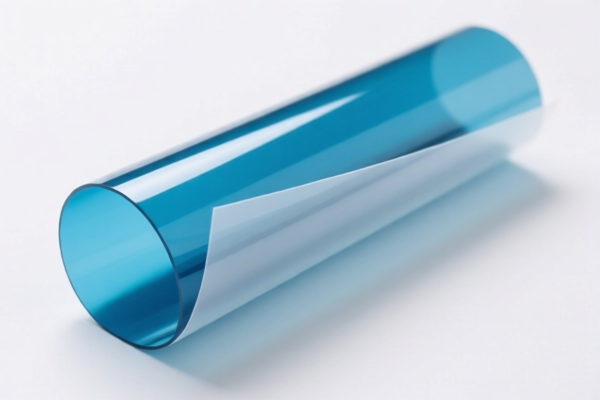
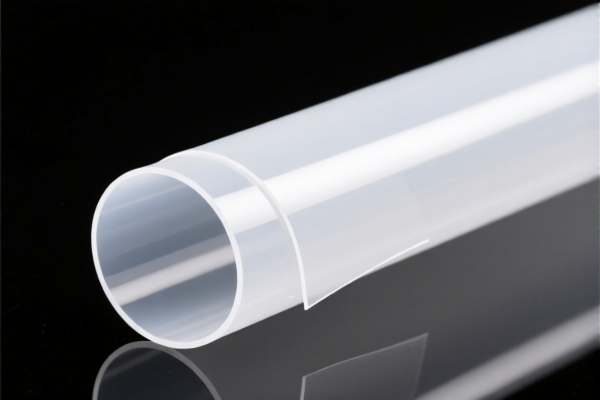
PMMA (Polymethyl Methacrylate), commonly known as acrylic, is a transparent thermoplastic. When used in "flexible packaging materials," it typically refers to: * PMMA Flexible Films/Sheets: Thin, roll-fed acrylic films used for packaging, labeling, or decorative wraps. * PMMA Light Guide Plates/Light Diffusers: Soft, flexible acrylic components used in lighting or display packaging contexts.
In international trade, the classification depends heavily on whether the PMMA item is a standalone film/sheet (classified under Chapter 39) or a component/parts of a specific appliance (classified under Chapter 94).
⚠️ Key Distinction:
- If the product is a raw material/film/sheet for general use or packaging → It falls under Chapter 39 (Plastics).
- If the product is a specific part of a lighting fixture or display device (e.g., a light guide plate integrated into a lamp) → It may fall under Chapter 94 (Furniture/Lighting) or Chapter 90.
📦 II. HS Code Classification Details (2026 Latest Tariff Alignment)
| HS Code | Product Description | Applicable Scenario | Key Characteristic |
|---|---|---|---|
| 3926.90.99.10 | Other articles of plastic: PMMA flexible light guide plates/plastic articles | PMMA flexible light guide plates; general plastic articles not specified elsewhere | ✅ Light Guide Plates (Flexible) |
| 3926.90.99.89 | Other articles of plastic: PMMA flexible light guide plates; "catch-all" category | PMMA flexible items not fitting other specific subheadings; general PMMA accessories | ✅ General Flexible PMMA Parts |
| 9405.92.00.00 | Parts of lighting fittings and lighting equipment: Plastic parts | PMMA components acting as parts of lighting devices (e.g., diffusers in lamps) | ✅ Lighting Fitting Parts |
| 3921.19.00.90 | Other plates, sheets, film, foil and strip: Other plastics (PMMA) | PMMA flexible films/plates used for general packaging or industrial use | ✅ General PMMA Films/Sheets |
| 3920.59.10.00 | Other plates, sheets, film, foil and strip: Acrylic polymers | Specific PMMA rigid/flexible sheets/foils (often thicker or specific grade) | ✅ Acrylic Polymer Sheets/Foils |
🔍 Critical Note:
- "Flexible Packaging" usually implies films or sheets. If it is a simple film/strip, 3921.19 or 3920.59 is more accurate.
- If it is a light guide plate (even if flexible), customs may view it as a specialized plastic article (3926.90).
- If it is a part of a lamp (e.g., a diffuser sold with a lamp kit), it may be classified as a lighting part (9405.92).
💰 III. 2026 Latest Tariff Rate Breakdown (Including Surtaxes & Policy Add-ons)
✅ Applicable Country: United States (US)
✅ Origin: China (CN)
✅ Effective Date: From November 10, 2025 onwards (including subsequent imports)
🎯 1. 3926.90.99.10 & 3926.90.99.89 — Other Plastic Articles (PMMA Light Guide/Flexible Parts)
| Item | Content |
|---|---|
| Base Tariff | 5.3% |
| Section 301 Surtax | +7.5% |
| Section 122 Tariff | +10% |
| Total Tax Rate | 22.8% |
| Tax Calculation | CIF Value × 22.8% |
| De Minimis Eligibility | ❌ No (denied_de_minimis) |
| Legal Basis Path | USITC:3926.90.99 → Section 301: 7.5% → Section 122: 10% |
📌 Explanation:
- These codes cover general plastic articles and light guide plates.
- The 22.8% total rate is a combination of base duty (5.3%) plus significant political tariffs (Section 301: 7.5% + Section 122: 10%).
- Warning: Section 122 tariffs are often applied to specific categories of goods from China to address trade imbalances.
🎯 2. 9405.92.00.00 — Parts of Lighting Fittings (PMMA Components)
| Item | Content |
|---|---|
| Base Tariff | 3.7% |
| Section 301 Surtax | +25.0% |
| Section 122 Tariff | +10% |
| Total Tax Rate | 38.7% |
| Tax Calculation | CIF Value × 38.7% |
| De Minimis Eligibility | ❌ No (denied_de_minimis) |
| Legal Basis Path | USITC:9405.92.00 → Section 301: 25% → Section 122: 10% |
📌 Explanation:
- If your PMMA flexible material is classified as a part of a lighting device (e.g., a light diffuser), it attracts a much higher Section 301 tariff (25%).
- Total 38.7% is significantly higher than general plastic articles.
- Strategy: If the product is a standalone film/package, do NOT classify it as a "lighting part" unless it is explicitly sold as a spare part for a lamp.
🎯 3. 3921.19.00.90 — Other Plastic Plates/Sheets/Films (PMMA Flexible)
| Item | Content |
|---|---|
| Base Tariff | 6.5% |
| Section 301 Surtax | +25.0% |
| Section 122 Tariff | +10% |
| Total Tax Rate | 41.5% |
| Tax Calculation | CIF Value × 41.5% |
| De Minimis Eligibility | ❌ No (denied_de_minimis) |
| Legal Basis Path | USITC:3921.19.00 → Section 301: 25% → Section 122: 10% |
📌 Explanation:
- This code is for general plastic films/plates.
- The 25% Section 301 surtax applies to most plastic articles, leading to a high total rate.
🎯 4. 3920.59.10.00 — Acrylic Polymers (Sheets/Foils)
| Item | Content |
|---|---|
| Base Tariff | 6.0% |
| Section 301 Surtax | +25.0% |
| Section 122 Tariff | +10% |
| Total Tax Rate | 41.0% |
| Tax Calculation | CIF Value × 41.0% |
| De Minimis Eligibility | ❌ No (denied_de_minimis) |
| Legal Basis Path | USITC:3920.59.10 → Section 301: 25% → Section 122: 10% |
📌 Explanation:
- Specific to acrylic polymers.
- Similar to3921.19, it bears the full 25% Section 301 surtax.
🛠️ IV. Customs Clearance Practical Advice (Battle-Tested Pitfall Avoidance)
✅ 1. Documentation Checklist (Mandatory)
| Document | Required | Description |
|---|---|---|
| ✅ Product Specification Sheet | ✔️ | Must specify material (PMMA), form (film/sheet/plate), thickness, dimensions, and flexibility. |
| ✅ Product Photos | ✔️ | Show the product in its packaged state, roll form, or flexible nature. |
| ✅ Commercial Invoice | ✔️ | Clearly describe as "PMMA Flexible Film" or "Acrylic Light Guide Plate," NOT just "Plastic Material." |
| ✅ Bill of Lading | ✔️ | Ensure weight and volume match invoice. |
| ✅ Certificate of Origin | ✔️ | Essential for determining Section 122 applicability. |
| ✅ Third-Party Test Report | ✔️ | RoHS, REACH (if EU), or specific plastic property tests (optional but helpful). |
✅ 2. Classification Strategy (Key Mnemonics)
🔥 "Flexible Film? Check 3921/3920. Light Guide? Check 3926. Lighting Part? Check 9405!"
| Scenario | Correct HS Code | Wrong Classification | Consequence |
|---|---|---|---|
| PMMA Flexible Film for Packaging | 3921.19.00.90 or 3920.59.10.00 |
9405.92.00.00 |
❌ High Tariff (38.7% vs 41.5% – close, but wrong legal basis risks audit) |
| PMMA Light Guide Plate (Flexible) | 3926.90.99.10 |
9405.92.00.00 |
❌ Tax Diff: 22.8% vs 38.7% → Save 15.9%! |
| PMMA Part of a Lamp Kit | 9405.92.00.00 |
3926.90.99.10 |
⚠️ Higher tax (38.7%) but might be legally required if sold as a lamp part. |
| General PMMA Sheet | 3921.19.00.90 |
3926.90.99.89 |
❌ Risk of misclassification audit. |
📌 Crucial Tip:
If your product is a Light Guide Plate (LGP), even if flexible, classify it under 3926.90.99.10. This yields a 22.8% rate, which is significantly lower than the 38.7% rate for lighting parts (9405.92.00.00) or 41% for general films (3921/3920).
✅ 3. Special Cases
| Scenario | Handling Advice |
|---|---|
| OEM Custom PMMA Film | Provide client orders and design specs. Prove it's a "general plastic article" or "light guide" based on function. |
| PMMA Film Sold with Packaging Machinery | Classify as accessories to machinery (Chapter 84), not plastic. This may lower tariffs! |
| PMMA Part of a Display Device | If part of an LED display, classify under 8528 (Monitors/Displays) or 3926. Avoid 9405 unless it's strictly a lamp part. |
🌍 V. Global Market Customs Comparison (2026 Latest)
| Country/Region | Recommended HS Code | Tariff Rate | Certification Required | Notes |
|---|---|---|---|---|
| 🇺🇸 USA | 3926.90.99.10 (Light Guide) or 3921.19.00.90 (Film) |
22.8% (Light Guide) 41.5% (Film) |
No specific certs, but RoHS recommended | Section 122 & 301 apply. Light Guide is cheaper! |
| 🇨🇳 China | 3921.19.00.90 |
6.5% | CCC (if electrical components) | No additional surtaxes for most plastics. |
| 🇪🇺 EU | 3920.59.10.00 |
0% - 6.5% | CE, REACH, RoHS | Check if "flexible" qualifies for lower duty. |
| 🇦🇺 Australia | 3921.19.00.90 |
5% | RCM (if electrical) | Low base tariff. |
| 🇯🇵 Japan | 3920.59.10.00 |
0% - 6% | PSE (if electrical) | Low base tariff. |
📌 Conclusion:
- USA has the highest tariffs due to Section 301 and Section 122.
- Strategy for USA: If your PMMA flexible material is a light guide plate, use 3926.90.99.10 to pay 22.8%. If it's a general film, you will pay ~41%.
- Avoid classifying PMMA flexible items as lighting parts (9405.92) unless absolutely necessary, as the 38.7% rate is high and risky.
📌 VI. Common Mistakes & Pitfall Guide (Lessons Learned)
❌ Mistake 1: Classifying PMMA Light Guide Plates as Lighting Parts (9405.92)
👉 Consequence: Pay 38.7% instead of 22.8%. Loss of 15.9% in profit margin!
❌ Mistake 2: Calling "PMMA Film" just "Plastic Bag"
👉 Consequence: Customs may reclassify as 3923.29 (Plastic bags) with different duties, or flag for misdeclaration. Always specify "PMMA Film" or "Acrylic Sheet".
❌ Mistake 3: Ignoring Section 122 Tariff (10%)
👉 Consequence: Budgeting based only on base tariff (5-6%) leads to 10-15% unexpected cost increase. Always include Section 122 in CIF calculations.
❌ Mistake 4: Missing Section 301 Surtax (7.5% or 25%)
👉 Consequence: If the product falls under a higher Category (e.g., 3921/3920 vs 3926), the surtax jumps from 7.5% to 25%.
✅ Correct Declaration Example:
"PMMA Flexible Light Guide Plate, Acrylic Material, Used in LED Lighting Systems, Model: LGA-2026, Made in China"
→ HS Code:3926.90.99.10
→ Rate: 22.8%
🎯 VII. Conclusion: Precise Classification Saves Money!
🎯 Remember the Mnemonic:
🔹 "Light Guide? 3926.22.8%! Film? 3921/3920.41%! Lighting Part? 9405.38.7%! Avoid 9405 if you can!"
🔹 "Section 122 adds 10%. Section 301 adds 7.5% or 25%. Plan for the worst!"
📌 Pro Tip:
If your PMMA flexible material is an accessory to a machine (e.g., a conveyor belt component or packaging machine part), investigate classification under Chapter 84. This may bypass plastic tariffs entirely!
📣 Immediate Action:
📞 Consult with a customs broker for an Advance Ruling on your specific PMMA product.
🚀 Accurate Classification = Lower Duties = Higher Profit!
✨ Professional Customs Clearance Starts with Accurate Classification!
💼 Every Percentage Point Counts in Global Trade!
Customer Reviews
About HS Code Classification
The Harmonized System (HS) is an internationally standardized nomenclature developed by the World Customs Organization (WCO) to classify traded products. Over 200 countries use the HS system as the basis for customs tariffs, trade statistics, and import/export regulations.
Each HS code follows a hierarchical structure:
- Chapter (2 digits) — Broad category of goods (e.g., Chapter 84: Machinery and Mechanical Appliances)
- Heading (4 digits) — More specific grouping within the chapter
- Subheading (6 digits) — Internationally standardized breakdown, used by all WCO member countries
- National subdivisions (8-10 digits) — Country-specific extensions for further classification, such as US HTSUS 10-digit codes
Correct HS code classification is essential for smooth customs clearance, accurate duty payment, and compliance with trade regulations. Misclassification can lead to customs delays, overpayment of duties, or penalties.
When importing from CN to US, the applicable tariff rates may include:
- Most-Favored-Nation (MFN) rate — The standard duty rate applied to WTO members
- General rate — Applied to countries without trade agreements
- Trade remedy duties — Additional tariffs such as Section 301 (anti-dumping), Section 232 (national security), or countervailing duties
The information provided on this page is for reference purposes only. For official classification, please consult with your local customs authority or a licensed customs broker.