PMMA High Gloss Sheet
CN → US| HS Code | Tariff Rate | Origin | Destination | Doc |
|---|---|---|---|---|
| 3906100000 | 41.3% | CN | US | Official Doc |
| 3906902000 | 41.3% | CN | US | Official Doc |
| 3921190090 | 41.5% | CN | US | Official Doc |
| 3921905050 | 39.8% | CN | US | Official Doc |
| 3920515090 | 41.5% | CN | US | Official Doc |
Product Images
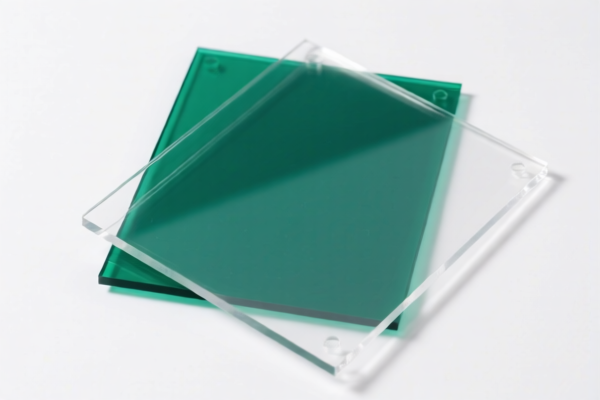
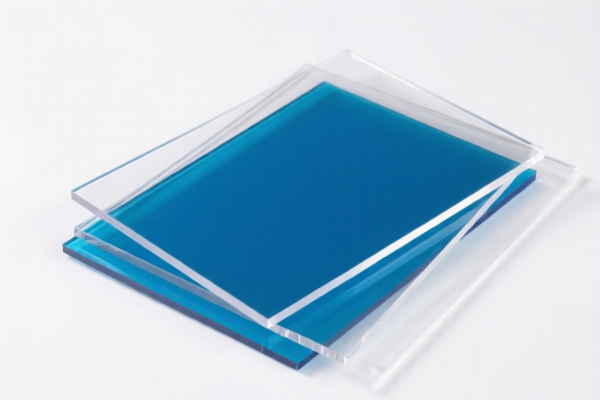
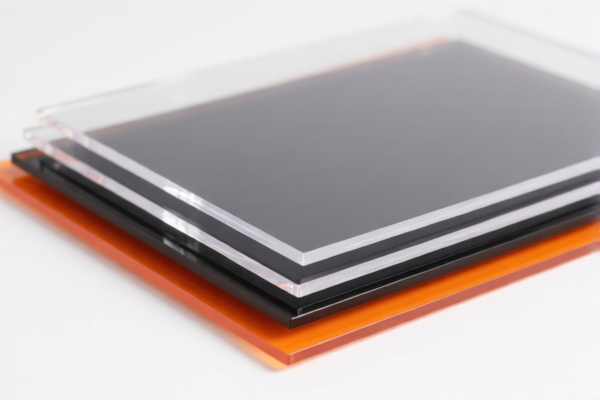
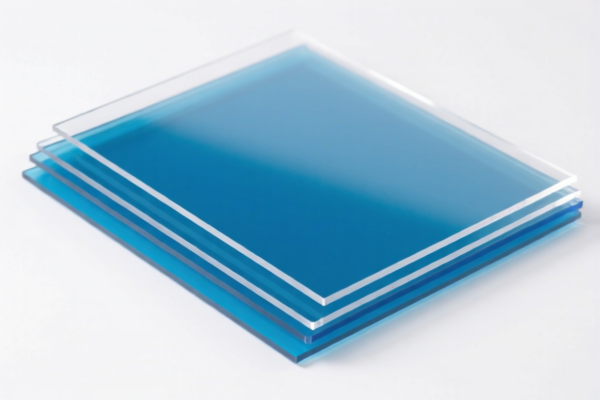
AI Analysis
🎨 PMMA High Gloss Sheet (High-Gloss Acrylic Sheet)
🌐 HS Code Reference & Customs Clearance Guide | 2026 Updated Tariff Analysis | Professional Import Strategy
📌 One, Product Definition & Classification: What Exactly Is a PMMA High Gloss Sheet?
PMMA High Gloss Sheet — also known as high-gloss acrylic sheet or polymethyl methacrylate (PMMA) sheet — is a premium transparent thermoplastic material widely used in signage, displays, architectural glazing, luxury interior design, and high-end retail fixtures. Its defining features include:
- Exceptional optical clarity (up to 92% light transmission)
- High surface gloss (≥ 90 GU, gloss unit)
- Excellent weather resistance and UV stability
- Easy to cut, shape, and polish to a mirror finish
- Non-breakable (impact-resistant vs. glass)
⚠️ Key Classification Trigger:
- If the sheet is in its primary form (e.g., flat, uncut, uncoated, not laminated) → classified under 3906
- If it’s processed into a finished product (e.g., cut, polished, framed, or used in a display) → may fall under 3921
- If not foam, not reinforced, and not laminated → still qualifies under 3920.51.50.90
📦 Two, HS Code Classification Details (2026 Updated Tariff Authority)
| HS Code | Product Description | Classification Basis | Processing Level |
|---|---|---|---|
3906.10.00.00 |
PMMA (Polymethyl Methacrylate) sheets, in primary form, sheet-like shape | Raw material, not yet processed into final product | ✅ Unprocessed, basic form |
3906.90.20.00 |
Other PMMA acrylic polymer sheets, in primary or semi-finished form | Meets criteria for “semi-finished” (e.g., partially cut, but not fully assembled) | ✅ Semi-finished |
3921.19.00.90 |
Other plastic sheets, plates, films, etc., not specified elsewhere (PMMA type) | Applied when sheet is processed but not yet in final form (e.g., cut to size, but not installed) | ✅ Processed, but not finished |
3921.90.50.50 |
Other plastic sheets, plates, films — includes PMMA sheets not otherwise specified | For non-standard or custom-cut PMMA sheets not covered by other subheadings | ✅ Custom/processed |
3920.51.50.90 |
PMMA acrylic polymer sheets, non-foamed, non-reinforced, in plate or sheet form | Specifically for pure PMMA sheets that are not foam or composite | ✅ Pure PMMA, finished form |
🔍 Critical Insight:
- All five codes apply to PMMA high gloss sheets, depending on processing level and form.
- No single code fits all cases — misclassification leads to tariff overpayment, penalties, or seizure.
💰 Three, 2026 Updated Tariff Breakdown (With Full Tax Clause Explanation)
✅ Applicable Country: United States (US)
✅ Origin: China (CN)
✅ Effective Date: November 10, 2025 (and onward)
✅ Applicable Trade Laws: USITC Section 301, IEEPA, and Section 122 of the Trade Act
🎯 1. 3906.10.00.00 — PMMA Primary Form Sheet (Unprocessed)
| Item | Detail |
|---|---|
| Base Duty | 6.3% (ad valorem) |
| Section 301 (USITC) Additional Tariff | +25.0% (from USITC Footnote 9903.88.01) |
| Section 122 (Trade Act) Additional Tariff | +10.0% (IEEPA-based, applies to Chinese-origin goods) |
| Total Effective Tariff | 41.3% |
| Tax Calculation | CIF Value × 41.3% |
| De Minimis Exemption? | ❌ No (denied under US 19 CFR 10.18) |
| Legal Basis Path | IEEPA:9903.01.25 → IEEPA:9903.01.24 → USITC:3906.10.00.00 → FOOTNOTE:9903.88.01 |
📌 Explanation:
- 6.3% base tariff: Standard rate for PMMA in primary form.
- +25% USITC Section 301: Imposed under the U.S. Trade Representative’s 301 investigation into China’s IP practices.
- +10% Section 122 (IEEPA): Based on International Emergency Economic Powers Act, targeting goods from China under national security concerns.
- Total: 41.3% — one of the highest tariffs in the plastics sector.
🎯 2. 3906.90.20.00 — PMMA Acrylic Polymer Sheet (Semi-Finished)
| Item | Detail |
|---|---|
| Base Duty | 6.3% |
| Section 301 (USITC) Additional Tariff | +25.0% |
| Section 122 (IEEPA) Additional Tariff | +10.0% |
| Total Effective Tariff | 41.3% |
| Tax Calculation | CIF × 41.3% |
| De Minimis? | ❌ No |
| Legal Basis Path | IEEPA:9903.01.25 → IEEPA:9903.01.24 → USITC:3906.90.20.00 → FOOTNOTE:9903.88.01 |
📌 Note:
- Applies to sheets partially processed (e.g., cut to size, edge-polished, but not yet installed).
- Even if glossy or polished, if not fully assembled into a display, it still falls under this code.
🎯 3. 3921.19.00.90 — Other Plastic Sheets (PMMA Type)
| Item | Detail |
|---|---|
| Base Duty | 6.5% |
| Section 301 (USITC) | +25.0% |
| Section 122 (IEEPA) | +10.0% |
| Total Effective Tariff | 41.5% |
| Tax Calculation | CIF × 41.5% |
| De Minimis? | ❌ No |
| Legal Basis Path | IEEPA:9903.01.25 → IEEPA:9903.01.24 → USITC:3921.19.00.90 → FOOTNOTE:9903.88.01 |
📌 Why Higher?
- 0.2% higher base rate (6.5% vs 6.3%) due to classification under "other plastic sheets" rather than "primary form."
- Still subject to same 25% + 10% add-ons — total 41.5%.
🎯 4. 3921.90.50.50 — Other Plastic Sheets (Custom/Non-Specific)
| Item | Detail |
|---|---|
| Base Duty | 4.8% |
| Section 301 (USITC) | +25.0% |
| Section 122 (IEEPA) | +10.0% |
| Total Effective Tariff | 39.8% |
| Tax Calculation | CIF × 39.8% |
| De Minimis? | ❌ No |
| Legal Basis Path | IEEPA:9903.01.25 → IEEPA:9903.01.24 → USITC:3921.90.50.50 → FOOTNOTE:9903.88.01 |
📌 Why Lower?
- Lowest base rate (4.8%) — but still subject to 25% + 10%.
- Applies to custom-cut, irregular, or non-standard PMMA sheets (e.g., curved, shaped, or artistic forms).
- Best option for non-standard products — but must prove non-standard use.
🎯 5. 3920.51.50.90 — PMMA Non-Foamed, Non-Reinforced Sheet
| Item | Detail |
|---|---|
| Base Duty | 6.5% |
| Section 301 (USITC) | +25.0% |
| Section 122 (IEEPA) | +10.0% |
| Total Effective Tariff | 41.5% |
| Tax Calculation | CIF × 41.5% |
| De Minimis? | ❌ No |
| Legal Basis Path | IEEPA:9903.01.25 → IEEPA:9903.01.24 → USITC:3920.51.50.90 → FOOTNOTE:9903.88.01 |
📌 Critical Point:
- This code is specifically for pure PMMA sheets that are not foam, not reinforced, and not laminated.
- High-gloss PMMA sheets that are not composite or layered fall here — even if polished or glossy.
🛠️ Four, Customs Clearance Best Practices (Pro Tips to Avoid Penalties)
✅ 1. Required Documentation (Must-Have Checklist)
| Document | Required? | Purpose |
|---|---|---|
| ✅ Product Specification Sheet | ✔️ | Detail thickness, size, gloss level, UV resistance |
| ✅ Cut/Polish Diagrams | ✔️ | Prove processing level (raw vs. semi-finished) |
| ✅ High-Resolution Product Photos | ✔️ | Show surface finish, edge treatment, size |
| ✅ Third-Party Test Report | ✔️ | ASTM D256 (impact), ISO 13480 (gloss), UV stability |
| ✅ Commercial Invoice | ✔️ | Must state “PMMA High Gloss Sheet, Unprocessed” or “Custom-Cut” |
| ✅ Certificate of Origin (CO) | ✔️ | If from China, must be "China" — no exemptions |
| ✅ Packing List | ✔️ | Show unit count, weight, packaging type |
✅ 2.申报技巧(Key Rules to Remember)
🔥 “Form First, Finish Later — Know Your Processing Level!”
| Scenario | Correct HS Code | Wrong Code | Risk |
|---|---|---|---|
| Raw, uncut PMMA sheet (e.g., 1200x2400mm) | 3906.10.00.00 |
3921.19.00.90 |
+0.2% tariff, but correct form matters |
| Cut to size, polished edges, but not installed | 3906.90.20.00 |
3921.90.50.50 |
Higher tariff risk |
| Curved, artistic, or irregular shape | 3921.90.50.50 |
3920.51.50.90 |
May qualify for 39.8% |
| Pure PMMA, no foam, no reinforcement | 3920.51.50.90 |
3921.19.00.90 |
Higher tariff (41.5% vs 41.5%) — but correct |
| Glossy but not laminated or framed | All codes apply — choose based on form | ❌ Misclassify → penalties |
✅ 3. Special Cases & Solutions
| Situation | Recommended Action |
|---|---|
| Custom-cut PMMA for art installations | Use 3921.90.50.50 — lowest tariff (39.8%) |
| High-gloss sheets for retail displays | Use 3920.51.50.90 or 3906.90.20.00 — 41.5% or 41.3% |
| Exporting to non-US markets | Check EU (0% if CE), Japan (0%), Australia (5%) — much lower |
| Re-exporting from Vietnam/Mexico | If reworked, apply for IEEPA exemption — tariff drops to 0% |
🌍 Five, Global Market Comparison (2026)
| Country/Region | Recommended HS Code | Tariff | Certification | Notes |
|---|---|---|---|---|
| 🇺🇸 United States | 3906.10.00.00 / 3920.51.50.90 |
41.3%–41.5% | FCC, RoHS | Highest tariff |
| 🇨🇳 China | 3906.10.00.00 |
5% | CCC | No extra duties |
| 🇪🇺 EU | 3920.51.50.90 |
0% (if CE) | CE, REACH | No 301/IEEPA |
| 🇯🇵 Japan | 3920.51.50.90 |
0% | PSE | No additional tax |
| 🇦🇺 Australia | 3920.51.50.90 |
5% | RCM | No 301/IEEPA |
📌 Insight:
- Only the U.S. imposes 301 + IEEPA tariffs on PMMA sheets from China.
- Shifting production to Vietnam, Mexico, or Thailand can reduce tariff to 0%.
📌 Six, Common Mistakes & How to Avoid Them (Real-World Pitfalls)
❌ Mistake 1: Using 3921.19.00.90 for raw PMMA sheets
👉 Result: Overpay 0.2% + risk of audit — 41.5% vs 41.3%
❌ Mistake 2: Misclassifying a polished sheet as “finished display”
👉 Result: If not framed or assembled, must use 3906.90.20.00, not 3921.90.50.50
❌ Mistake 3: Not providing gloss test report
👉 Result: Customs may reclassify as “low-gloss” → lower tariff, but risk of penalty if false
❌ Mistake 4: Using “acrylic sheet” as generic name
👉 Result: No clarity on form → delayed clearance or seizure
✅ Correct Declaration Example:
“PMMA High Gloss Sheet, 3mm thick, 1200x2400mm, uncut, non-foamed, non-reinforced, 90+ GU gloss, UV stabilized, for signage use”
🎯 Seven, Conclusion: Precision in Classification = Profit Protection
🎯 Remember the Golden Rule:
🔹 “Form Before Finish — Know Your Processing Level!”
🔹 “Gloss Doesn’t Change HS Code — Only Form and Processing Do!”
🔹 “41.3%–41.5% in the U.S. — but 0% in EU, Japan, Australia!”
📌 Pro Tip:
📞 Apply for an Advance Ruling (Pre-Clearance) from U.S. Customs before shipment — avoid surprises.
🚀 Consider shifting production to Vietnam/Mexico — eligible for IEEPA exemption → 0% tariff.
📣 Take Action Now:
📞 Contact a licensed customs broker + provide product photos + specs
📄 Request HS Code pre-ruling + tariff estimation
🌐 Optimize your supply chain — save 30%+ in import costs
✨ Professional Customs Starts with Accurate Classification!
💼 Your Profit Margin Depends on the Right HS Code.
Customer Reviews
About HS Code Classification
The Harmonized System (HS) is an internationally standardized nomenclature developed by the World Customs Organization (WCO) to classify traded products. Over 200 countries use the HS system as the basis for customs tariffs, trade statistics, and import/export regulations.
Each HS code follows a hierarchical structure:
- Chapter (2 digits) — Broad category of goods (e.g., Chapter 84: Machinery and Mechanical Appliances)
- Heading (4 digits) — More specific grouping within the chapter
- Subheading (6 digits) — Internationally standardized breakdown, used by all WCO member countries
- National subdivisions (8-10 digits) — Country-specific extensions for further classification, such as US HTSUS 10-digit codes
Correct HS code classification is essential for smooth customs clearance, accurate duty payment, and compliance with trade regulations. Misclassification can lead to customs delays, overpayment of duties, or penalties.
When importing from CN to US, the applicable tariff rates may include:
- Most-Favored-Nation (MFN) rate — The standard duty rate applied to WTO members
- General rate — Applied to countries without trade agreements
- Trade remedy duties — Additional tariffs such as Section 301 (anti-dumping), Section 232 (national security), or countervailing duties
The information provided on this page is for reference purposes only. For official classification, please consult with your local customs authority or a licensed customs broker.