PMMA High Strength Board
CN → US| HS Code | Tariff Rate | Origin | Destination | Doc |
|---|---|---|---|---|
| 3920515090 | 41.5% | CN | US | Official Doc |
| 3926909989 | 22.8% | CN | US | Official Doc |
| 3920515050 | 41.5% | CN | US | Official Doc |
| 3906100000 | 41.3% | CN | US | Official Doc |
| 3906902000 | 41.3% | CN | US | Official Doc |
Product Images
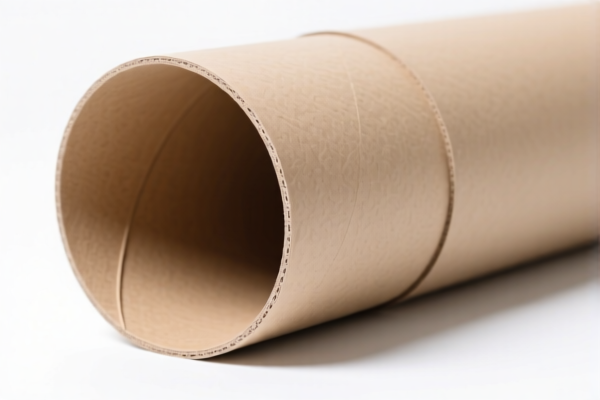
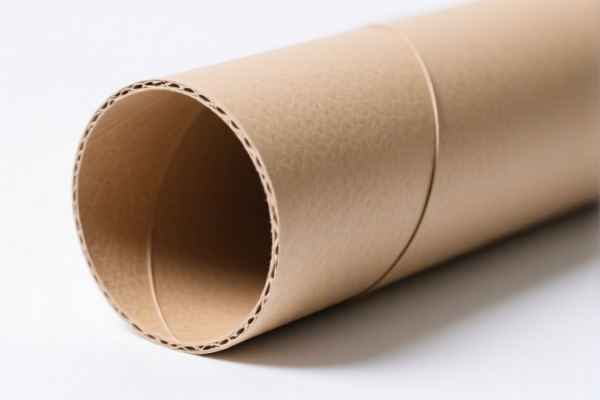

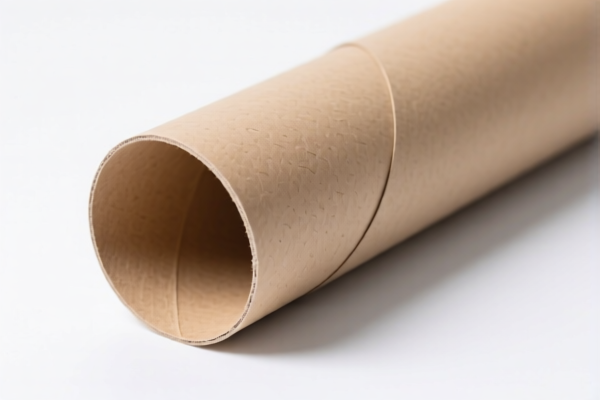
AI Analysis
🛡️ PMMA High Strength Board (Acrylic Plate)
🌐 HS Code Classification & Customs Clearance Guide | 2026 Tariff Analysis | Professional Export Strategy
📌 I. Product Definition: What is "PMMA High Strength Board"?
PMMA (Polymethyl Methacrylate), commonly known as Acrylic, is a transparent thermoplastic often used as a lightweight or shatter-resistant alternative to glass. "High Strength Board" typically refers to extruded or cast acrylic sheets with enhanced mechanical properties (impact resistance, tensile strength).
In international trade, the classification depends heavily on: 1. Physical Form: Is it a finished plate/panel, or a raw material/semi-finished sheet? 2. Chemical Composition: Specific polymer structure (e.g., Homopolymer vs. Copolymer). 3. Processing Level: Primary form (blocks/sheets) vs. Finished article (cut/processed).
⚠️ Critical Distinction:
- If classified under Chapter 39.06 (Acrylic polymers in primary forms), it is treated as a raw material/semi-finished good.
- If classified under Chapter 39.20 (Other plates/sheets), it is treated as a processed plastic article.
- Misclassification risk: Declaring a finished high-strength plate as "raw material" (3906) to avoid higher duties can lead to customs audits, penalties, or re-classification into 3920 with back-taxes.
📦 II. HS Code Classification Matrix (Based on Provided Data)
| HS Code | Product Description | Key Characteristics | Tax Rate (Total) |
|---|---|---|---|
3920.51.50.90 |
PMMA High Strength Board Material: Polymethyl methacrylate Form: Plate |
Fits description of acrylic polymer plates. High-strength variant. | 41.5% |
3926.90.99.89 |
PMMA High Strength Board Material: Plastic Form: Plate |
Classified under "Other plastic articles." Broader category for other plastic plates not specified elsewhere. | 22.8% |
3920.51.50.50 |
PMMA High Strength Board Material: Poly(methyl methacrylate) Form: Plate |
Acrylic polymer plate. Note: Does not mention flame retardancy. | 41.5% |
3906.10.00.00 |
PMMA Large Plate Material: Polymethyl methacrylate Form: Large Plate/Block |
Fits logic of Primary Form/Semi-finished. Initial stage of acrylic production. | 41.3% |
3906.90.20.00 |
PMMA Large Plate Material: Poly(methyl methacrylate) Form: Large Plate/Sheet |
Fits logic of Primary Form/Semi-finished. Sheet characteristics in primary form. | 41.3% |
🔍 Key Insight:
-3920codes (41.5%) imply the product is a finished or semi-finished plate specifically for use as a plate.
-3906codes (41.3%) imply the product is in primary form (e.g., large blocks or raw sheets before further processing into specific plates).
-3926code (22.8%) is a lower duty option for "other plastic articles," but requires proving the item does not fit the specific "plate" definition of 3920. This is risky for standard "High Strength Boards" which are clearly plates.
💰 III. Detailed Tariff Breakdown (2026 Latest Rates)
✅ Applicable Market: United States (US)
✅ Origin: China (CN)
✅ Effective Date: From Nov 10, 2025 onwards
🎯 1. 3920.51.50.90 & 3920.51.50.50 – Acrylic Polymer Plates
These two codes have identical tariff structures.
| Item | Content |
|---|---|
| Base Duty Rate | 6.5% (Ad Valorem) |
| Section 301 Tariff | +25.0% (Trade Policy Concerns) |
| Section 122 Tariff | +10.0% (Specific Chinese Import Restrictions) |
| Total Effective Rate | 41.5% |
| Calculation Basis | CIF Value × 41.5% |
| De Minimis Exemption | ❌ Not Applicable (Denied) |
| Legal Path | Base: 3920 → Section 301: 25% → Section 122: 10% |
📌 Explanation:
- The 6.5% is the standard Most Favored Nation (MFN) rate for acrylic plates.
- The 25% is the standard Section 301 tariff for Chapter 39 plastics from China.
- The 10% Section 122 tariff applies to specific acrylic/polymer products.
- Total: 41.5%. This is a high-cost classification.
🎯 2. 3906.10.00.00 & 3906.90.20.00 – Primary Form Acrylic (Large Plates/Blocks)
These two codes also share identical tariff structures.
| Item | Content |
|---|---|
| Base Duty Rate | 6.3% (Ad Valorem) |
| Section 301 Tariff | +25.0% |
| Section 122 Tariff | +10.0% |
| Total Effective Rate | 41.3% |
| Calculation Basis | CIF Value × 41.3% |
| De Minimis Exemption | ❌ Not Applicable |
| Legal Path | Base: 3906 → Section 301: 25% → Section 122: 10% |
📌 Explanation:
- The base rate is slightly lower at 6.3% compared to 6.5% for finished plates.
- However, the additional tariffs remain the same (35% total).
- Total: 41.3%. Marginally cheaper than 3920, but only if the product is genuinely in "primary form" (e.g., large raw blocks or unprocessed sheets). If it's a cut "High Strength Board," this classification may be challenged.
🎯 3. 3926.90.99.89 – Other Plastic Articles
| Item | Content |
|---|---|
| Base Duty Rate | 5.3% (Ad Valorem) |
| Section 301 Tariff | +7.5% |
| Section 122 Tariff | +10.0% |
| Total Effective Rate | 22.8% |
| Calculation Basis | CIF Value × 22.8% |
| De Minimis Exemption | ❌ Not Applicable |
| Legal Path | Base: 3926 → Section 301: 7.5% → Section 122: 10% |
📌 Critical Warning:
- This code offers a significantly lower rate (22.8%).
- Risk: Using this code for a "High Strength Board" (which is clearly a plate) is high-risk. Customs may argue that "plates" are specifically covered under 3920. If audited, you may face penalties for misclassification. Only use if the product is a custom-shaped plastic part that doesn't fit the standard "plate" definition.
🛠️ IV. Customs Clearance Operational Advice (Best Practices)
✅ 1. Documentation Checklist (Mandatory)
| Document | Requirement | Purpose |
|---|---|---|
| Product Specification Sheet | ✔️ Must | Define material (PMMA), thickness, dimensions, mechanical properties (impact strength, tensile strength). |
| HS Code Justification Letter | ✔️ Must | Explain why you chose the specific HS Code (e.g., "Primary Form" vs. "Finished Plate"). |
| Commercial Invoice | ✔️ Must | Clearly state "PMMA Acrylic High Strength Board," quantity, weight, and value. |
| Packing List | ✔️ Must | Detail packaging to confirm no other items are mixed (which could trigger different codes). |
| Certificate of Origin (CO) | ✔️ Optional | Proves Chinese origin, which triggers Section 301/122 tariffs. |
| Third-Party Test Report | ✔️ Recommended | Proof of "High Strength" properties if claiming specific performance benefits. |
✅ 2. Declaration Strategy (Key Tips)
🔥 "Form Defines Code: Primary vs. Finished"
| Scenario | Recommended HS Code | Reason |
|---|---|---|
| Raw PMMA Sheets/Blocks (Large, uncut, raw material) | 3906.10.00.00 or 3906.90.20.00 |
Fits "Primary Form" definition. |
| Cut/Acrylic Plates (Standard sizes, processed for use) | 3920.51.50.50 or 3920.51.50.90 |
Fits "Plates/Sheets" definition. |
| Custom-Shaped Plastic Parts (Not a standard plate) | 3926.90.99.89 |
Fits "Other Plastic Articles." Lower tax but higher risk. |
⚠️ Avoid: Using
3926.90.99.89for standard rectangular "High Strength Boards" unless you have strong justification that it is not a "plate." Customs brokers often flag this as suspicious.
✅ 3. Special Cases & Mitigation
| Case | Recommendation |
|---|---|
| OEM Custom Boards | Provide design files and client orders to prove specific use. If custom-shaped, consider 3926 with justification. |
| Flame Retardant PMMA | If the board is flame retardant, ensure description matches. Some codes may have different scrutiny. |
| Mixed Containers | If shipping PMMA boards with other plastic articles, declare separately. Mixed declarations can lead to complex audits. |
| Pre-Ruling (Advance Ruling) | For large shipments, apply for an HS Code Advance Ruling from CBP. This provides legal certainty and protects against penalties. |
🌍 V. Global Market Comparison (2026)
| Market | Preferred HS Code | Estimated Duty (China Origin) | Notes |
|---|---|---|---|
| 🇺🇸 USA | 3920.51.50.x0 or 3906.xx.xx.x0 |
41.3% - 41.5% | High Section 301 + 122 tariffs. |
| 🇪🇺 EU | 3920.51.00 |
~6.5% | No Section 301/122 equivalents. Lower duty. |
| 🇨🇳 China | 3920.51.50 |
~6.5% | Domestic consumption. |
| 🇬🇧 UK | 3920.51.00 |
~6.5% | Post-Brexit tariffs similar to EU. |
| 🇯🇵 Japan | 3920.51.00 |
~6.0% | Low duty, no significant surcharges. |
📌 Conclusion:
- The USA is the most challenging market due to Section 301 and 122 tariffs.
- Cost Planning: Factor in ~41.5% of the CIF value for customs duties.
- Supply Chain: Consider sourcing from countries with favorable trade agreements (e.g., Vietnam, Mexico) if possible, though PMMA supply chains are often concentrated in Asia.
📌 VI. Common Mistakes & Pitfalls (Lessons Learned)
❌ Mistake 1: Declaring "PMMA Plates" as 3926 (Other Plastic Articles) to save tax.
👉 Consequence: Customs may reject the declaration, demand the correct 3920 code, and apply penalties for undervaluation.
👉 Correct: Use 3920 for standard plates.
❌ Mistake 2: Confusing "Primary Form" (3906) with "Finished Plate" (3920).
👉 Consequence: If you ship pre-cut, high-strength boards, declaring them as "primary form" is inaccurate.
👉 Correct: If boards are cut to size and ready for use, use 3920.
❌ Mistake 3: Ignoring Section 122 Tariffs.
👉 Consequence: Underpaying duties by 10%.
👉 Correct: Always include the 10% Section 122 tariff in cost calculations for Chinese acrylic products.
✅ Correct Declaration Example:
"PMMA (Polymethyl Methacrylate) High Strength Acrylic Plates, Extruded, 10mm Thickness, Clear, HS Code 3920.51.50.90, Origin China."
🎯 VII. Conclusion: Smart Classification, Smooth Clearance
🎯 Key Takeaway:
🔹 PMMA High Strength Boards are generally classified under
3920.51.50.x0(41.5% duty) as finished plates.
🔹 Primary Form PMMA (large blocks/sheets) may use3906(41.3% duty), but must meet "primary form" criteria.
🔹 Avoid3926unless the product is clearly not a standard plate, due to high audit risk.
🔹 Total Cost: Prepare for ~41.5% in duties for US imports from China.
📌 Pro Tip:
Apply for an HS Code Advance Ruling before shipping large volumes. This locks in the classification and prevents unexpected penalties or delays at the port.
📣 Action Required:
📞 Consult a Licensed Customs Broker to validate your specific product description.
📄 Prepare Detailed Specifications highlighting form, material, and processing level.
🚀 Accurate Classification = Faster Clearance + Predictable Costs.
✨ Precision in Classification Saves Money.
💼 Every Percentage Point of Duty Counts.
Customer Reviews
About HS Code Classification
The Harmonized System (HS) is an internationally standardized nomenclature developed by the World Customs Organization (WCO) to classify traded products. Over 200 countries use the HS system as the basis for customs tariffs, trade statistics, and import/export regulations.
Each HS code follows a hierarchical structure:
- Chapter (2 digits) — Broad category of goods (e.g., Chapter 84: Machinery and Mechanical Appliances)
- Heading (4 digits) — More specific grouping within the chapter
- Subheading (6 digits) — Internationally standardized breakdown, used by all WCO member countries
- National subdivisions (8-10 digits) — Country-specific extensions for further classification, such as US HTSUS 10-digit codes
Correct HS code classification is essential for smooth customs clearance, accurate duty payment, and compliance with trade regulations. Misclassification can lead to customs delays, overpayment of duties, or penalties.
When importing from CN to US, the applicable tariff rates may include:
- Most-Favored-Nation (MFN) rate — The standard duty rate applied to WTO members
- General rate — Applied to countries without trade agreements
- Trade remedy duties — Additional tariffs such as Section 301 (anti-dumping), Section 232 (national security), or countervailing duties
The information provided on this page is for reference purposes only. For official classification, please consult with your local customs authority or a licensed customs broker.