PMMA Large Board
CN → US| HS Code | Tariff Rate | Origin | Destination | Doc |
|---|---|---|---|---|
| 3920515050 | 41.5% | CN | US | Official Doc |
| 3920515090 | 41.5% | CN | US | Official Doc |
| 3906100000 | 41.3% | CN | US | Official Doc |
| 3906902000 | 41.3% | CN | US | Official Doc |
| 3921110000 | 40.3% | CN | US | Official Doc |
Product Images
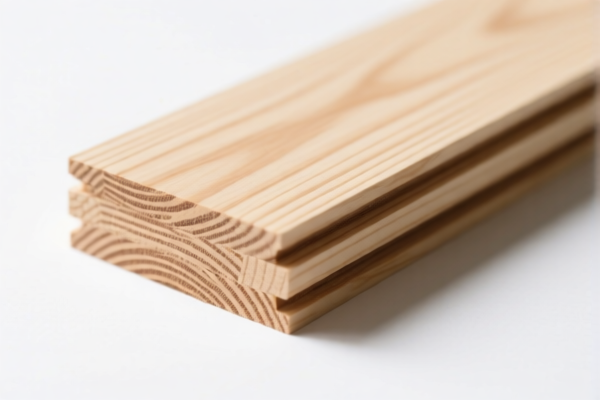
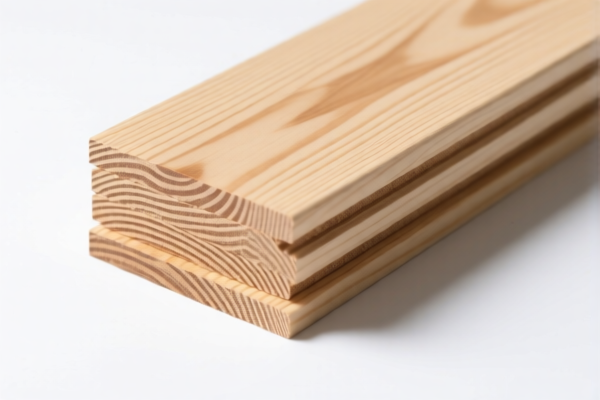
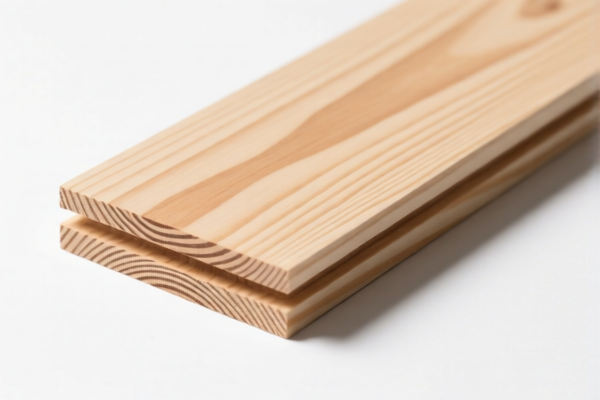
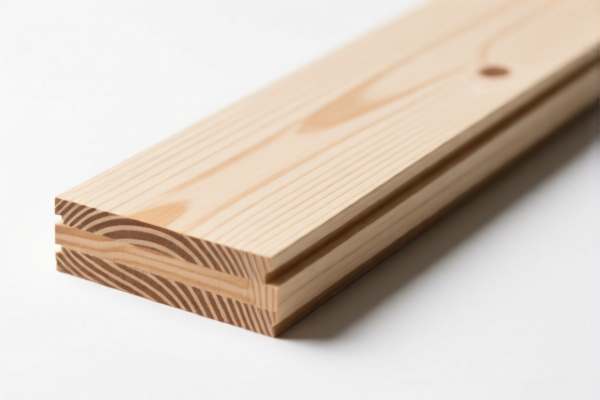
AI Analysis
🧊 Acrylic / PMMA Large Boards: The Ultimate HS Code & Taxation Guide (2026)
🌐 HS Code Reference & Customs Clearance Guide | 2026 Latest Tariff Analysis | Professional Customs Strategy
📌 I. Product Definition & Classification: Do You Really Understand "PMMA Large Boards"?
PMMA (Polymethyl Methacrylate), commonly known as Acrylic, is a transparent thermoplastic often used as a lightweight or shatter-resistant alternative to glass. In international trade, "Large Boards" refer to solid sheets of this material.
Depending on the physical form (sheet vs. raw resin) and processing level (semi-finished vs. finished plate), PMMA boards fall into different Harmonized System (HS) categories. Misclassification can lead to significant tax discrepancies.
⚠️ Key Classification Point:
- If it is a finished sheet/plate intended for cutting/shaping → Look at Chapter 39 (Plastics and Articles Thereof), specifically Heading 3920 or 3921.
- If it is considered raw semi-finished resin → Look at Chapter 39, Heading 3906.
- Note: The specific 8-digit HS codes below are tailored for US Import (10-digit NRTS).
📦 II. HS Code Classification Details (2026 Latest Tariff Authority Comparison)
| HS Code | Product Description | Application Scenario | Status |
|---|---|---|---|
3920.51.50.50 |
Plates, sheets, film, foil, and strip, of polymers of methyl methacrylate | Finished Acrylic Sheets (Solid, flat plates for fabrication) | ✅ Most Common |
3920.51.50.90 |
Other plates, sheets, film, etc., of polymers of methyl methacrylate | Other PMMA Sheets (Non-standard sizes or specific finishes) | ✅ Common |
3906.10.00.00 |
Polymers of methyl methacrylate, in primary forms | Raw/Primary Form PMMA (Granules, pellets, or blocks that are not yet shaped into commercial boards) | ⚠️ Raw Material |
3906.90.20.00 |
Other polymers of methyl methacrylate, in primary forms | Semi-Finished PMMA (Raw resin used for manufacturing sheets) | ⚠️ Semi-Finished |
3921.11.00.00 |
Other plates, sheets, film, foil, and strip, of polymers of ethylene | Clarification Needed: Usually PE, but some broad polymer categories may overlap if mislabelled. However, for pure PMMA, 3920 is preferred. | ❌ Risk |
🔍 Critical Reminder:
- "Board" vs. "Sheet": In customs terminology, rigid PMMA plates are typically classified under 3920 (Plates, sheets, film, foil, and strip, of plastics).
- 3920.51 specifically targets Polymers of Methyl Methacrylate (PMMA).
- Avoid3906unless you are importing raw resin pellets/blocks, not pre-formed boards.
- Avoid3921unless the product is clearly classified as "Other Plastics" (PMMA has its own specific subheading 3920.51).
💰 III. 2026 Latest Tariff Rate Breakdown (Including Surcharge & Policy Add-ons)
✅ Applicable Country: United States (US)
✅ Country of Origin: China (CN)
✅ Effective Date: From November 10, 2025 (including subsequent imports)
🎯 1. 3920.51.50.50 & 3920.51.50.90 —— Finished PMMA Large Boards
These are the most common codes for commercial acrylic sheets.
| Item | Detail |
|---|---|
| Base Tariff Rate | 6.5% (Ad Valorem) |
| Section 301 Surcharge | +25.0% (USITC Footnote for Chinese Origin) |
| IEEPA Surcharge (122 Provision) | +10.0% (Specific tariff line for certain plastic products) |
| Total Effective Tax Rate | 41.5% |
| Tax Calculation | CIF Value × 41.5% |
| De Minimis Eligibility | ❌ Not Eligible (High risk for small packages; subject to full duty) |
| Legal Basis Path | HTSUS:3920.51.50 → USITC:Section 301 → IEEPA:122 Clause |
📌 Explanation:
- Base 6.5%: Standard MFN rate for PMMA sheets.
- 25% Surcharge: Applies to all Chinese-made plastic products under Section 301.
- 10% IEEPA: A specific additional tariff under the International Emergency Economic Powers Act for this category.
- Total 41.5%: This is a very high effective tax rate. Cost planning must include this burden.
🎯 2. 3906.10.00.00 & 3906.90.20.00 —— Raw/Semi-Finished PMMA
If customs determines the "board" is actually a raw block or semi-finished resin form.
| Item | Detail |
|---|---|
| Base Tariff Rate | 6.3% (Ad Valorem) |
| Section 301 Surcharge | +25.0% |
| IEEPA Surcharge (122 Provision) | +10.0% |
| Total Effective Tax Rate | 41.3% |
| Tax Calculation | CIF Value × 41.3% |
| De Minimis Eligibility | ❌ Not Eligible |
| Legal Basis Path | HTSUS:3906.10.00 → USITC:Section 301 → IEEPA:122 Clause |
📌 Note:
- Although the base rate is slightly lower (6.3% vs 6.5%), the total tax remains 41.3%, which is nearly identical to finished boards.
- Misclassifying finished boards as raw resin (3906) to save 0.2% is risky and may lead to audits and penalties.
🎯 3. 3921.11.00.00 —— Caution: Potential Misclassification
| Item | Detail |
|---|---|
| Base Tariff Rate | 5.3% |
| Section 301 Surcharge | +25.0% |
| IEEPA Surcharge (122 Provision) | +10.0% |
| Total Effective Tax Rate | 40.3% |
| Tax Calculation | CIF Value × 40.3% |
| Legal Basis Path | HTSUS:3921.11.00 → USITC:Section 301 → IEEPA:122 Clause |
📌 Warning:
-3921.11typically refers to Ethylene Polymers (PE). If your product is PMMA, this code is incorrect.
- Using an incorrect HS code to achieve a lower tax rate (40.3% vs 41.5%) is considered fraud.
- Do not use this code for PMMA unless you have a specific legal ruling allowing it (highly unlikely). Stick to3920.51.
🛠️ IV. Customs Clearance Practical Advice (Field Pitfall Avoidance Guide)
✅ 1. Required Documentation Checklist (No Exceptions)
| Document | Must Provide | Description |
|---|---|---|
| ✅ Commercial Invoice | ✔️ | Must clearly state "PMMA Large Board" or "Acrylic Sheet", not just "Plastic Plate". |
| ✅ Packing List | ✔️ | Detail dimensions, thickness, weight, and quantity of each board. |
| ✅ Product Specification Sheet | ✔️ | Include: Material (100% PMMA), Thickness, Size, Transparency, UV resistance, etc. |
| ✅ Certificate of Origin (CO) | ✔️ | Essential for proving Chinese origin and calculating accurate surcharges. |
| ✅ Bill of Lading/Air Waybill | ✔️ | Matches invoice and packing list data. |
| ✅ Customs Ruling (Optional but Recommended) | ✔️ | If unsure, apply for an Advance Ruling from CBP to lock in the HS Code. |
✅ 2. Declaration Tips (Key Mnemonic)
🔥 "Clear Name, Exact Code, No Raw Claims for Sheets!"
| Situation | Correct Declaration Method | Wrong Practice |
|---|---|---|
| Finished Acrylic Sheets | 3920.51.50.50 (Acrylic PMMA Sheet) |
Declaring as "Raw Plastic" → 3906 → Audit Risk |
| Large Size Boards | Declare actual dimensions (e.g., 4ft x 8ft) | Vague description "Plastic Board" → Delay |
| Packaging | Indicate if vacuum-packed or palletized | Hiding packaging details → Inspection Risk |
| Thickness | Specify mm/inch | Omitting thickness → Classification Dispute |
✅ 3. Special Handling Scenarios
| Situation | Handling Advice |
|---|---|
| OEM Custom Sizes | Provide order details + design drawings to prove they are "sheets" not "parts of machinery". |
| Mixed Containers | If mixing PMMA boards with other plastics, declare separately. Commingling can lead to misclassification. |
| Damaged Goods | If boards are cracked, declare as "Rejected/Rejected Goods" if returning. Otherwise, pay full duty on CIF value. |
| Transshipment | If shipped via a third country (e.g., Vietnam), ensure the Substantial Transformation rule is met to change origin. Otherwise, China origin still applies (41.5% tax). |
🌍 V. Global Main Market Clearance Comparison (2026 Latest)
| Country/Region | Recommended HS Code | Tariff Rate (China Origin) | Certification Requirements | Notes |
|---|---|---|---|---|
| 🇺🇸 USA | 3920.51.50.50 |
41.5% | None specific for general import | High surcharge due to Section 301 + IEEPA |
| 🇨🇳 China | 3920.51.50.50 |
0%~6.5% (Import Duty) | None | No surcharge for exports from CN |
| 🇪🇺 EU | 3920.51.00 |
6.5% | REACH Compliance | No Section 301 equivalent, but strict chemical regulations |
| 🇬🇧 UK | 3920.51.00 |
6.5% | UKCA Marking (if applicable) | Post-Brexit rules apply |
| 🇯🇵 Japan | 3920.51.00 |
6.0% | PSE (if electrical parts involved) | Generally lower tax than US |
📌 Conclusion:
- USA is the most expensive market for PMMA boards from China due to the 41.5% effective tax rate.
- EU and Asia offer significantly lower tax burdens (~6-7%).
- For US imports, cost calculation must include the full 41.5%. Consider pricing strategies or sourcing from non-China origins if feasible.
📌 VI. Common Errors & Pitfall Guide (Lessons Learned from Blood & Tears)
❌ Error 1: Declaring PMMA Boards as "Raw Plastic Resin" (3906)
👉 Consequence: CBP detects physical difference → Penalty + Back Taxes + Possible Fraud Charges.
❌ Error 2: Using 3921.11 for PMMA to save 1.2%
👉 Consequence: Incorrect HS Code → Seizure of Goods + Fines. PMMA is specifically listed under 3920.51.
❌ Error 3: Vague Description "Plastic Board"
👉 Consequence: CBP examiners may classify under a higher duty or require additional testing → Delay in Clearance.
❌ Error 4: Ignoring IEEPA 122 Clause
👉 Consequence: Underpayment of 10% → Reassessment + Interest.
✅ Correct Practice:
"Polymethyl Methacrylate (PMMA) Sheets, Clear, 4mm Thickness, Size 1200mm x 2400mm, For Fabrication Use, Model XYZ, Origin: China"
🎯 VII. Conclusion: Professional Declaration, Save Money, Avoid Risks!
🎯 Remember the Mnemonic:
🔹 "PMMA is 3920.51, not 3921 or 3906 for sheets!"
🔹 "41.5% Tax in US, Plan Budget Accordingly!"
🔹 "Clear Description, Avoid Delays!"
📌 Pro Tip:
If you are importing large quantities, consider applying for a CBP Advance Ruling. This provides legal certainty on your HS Code and prevents post-clearance audits.
Also, check if your supplier can provide non-China origin materials (e.g., from Taiwan or Korea) to potentially avoid Section 301 surcharges (if applicable under specific rules).
📣 Immediate Action:
📞 Contact a licensed customs broker + Provide Product Specs + Apply for HS Code Confirmation
🚀 Ensure your PMMA Boards pass customs smoothly, save costs, and enhance efficiency!
✨ Professional Customs Clearance Starts with Accurate Classification!
💼 Every cent of your cost deserves precise calculation!
Customer Reviews
About HS Code Classification
The Harmonized System (HS) is an internationally standardized nomenclature developed by the World Customs Organization (WCO) to classify traded products. Over 200 countries use the HS system as the basis for customs tariffs, trade statistics, and import/export regulations.
Each HS code follows a hierarchical structure:
- Chapter (2 digits) — Broad category of goods (e.g., Chapter 84: Machinery and Mechanical Appliances)
- Heading (4 digits) — More specific grouping within the chapter
- Subheading (6 digits) — Internationally standardized breakdown, used by all WCO member countries
- National subdivisions (8-10 digits) — Country-specific extensions for further classification, such as US HTSUS 10-digit codes
Correct HS code classification is essential for smooth customs clearance, accurate duty payment, and compliance with trade regulations. Misclassification can lead to customs delays, overpayment of duties, or penalties.
When importing from CN to US, the applicable tariff rates may include:
- Most-Favored-Nation (MFN) rate — The standard duty rate applied to WTO members
- General rate — Applied to countries without trade agreements
- Trade remedy duties — Additional tariffs such as Section 301 (anti-dumping), Section 232 (national security), or countervailing duties
The information provided on this page is for reference purposes only. For official classification, please consult with your local customs authority or a licensed customs broker.