PMMA Transparent Acrylic Sheet
CN → US| HS Code | Tariff Rate | Origin | Destination | Doc |
|---|---|---|---|---|
| 3920511000 | 41.0% | CN | US | Official Doc |
| 3906902000 | 41.3% | CN | US | Official Doc |
| 3921110000 | 40.3% | CN | US | Official Doc |
| 3906100000 | 41.3% | CN | US | Official Doc |
| 3921190090 | 41.5% | CN | US | Official Doc |
Product Images
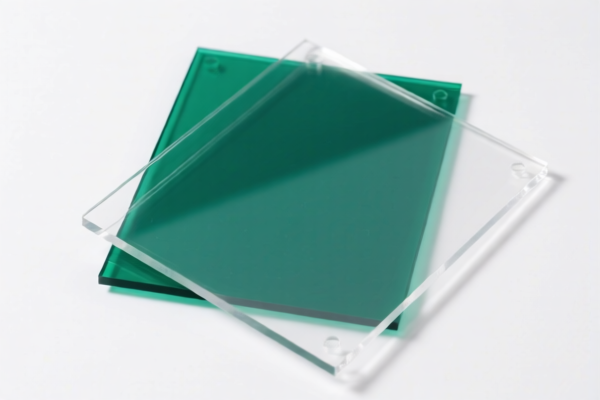
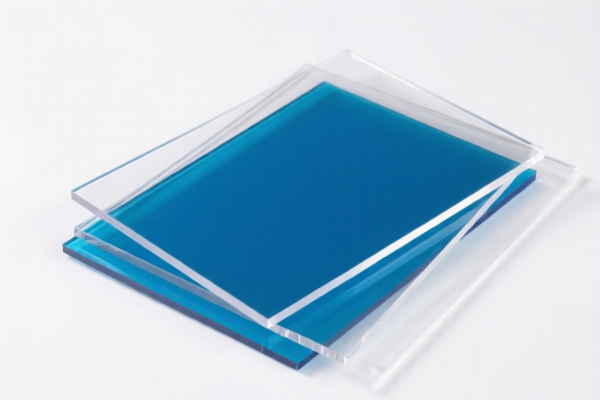
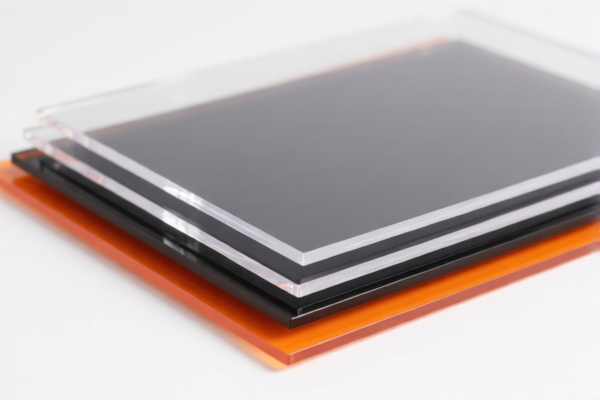
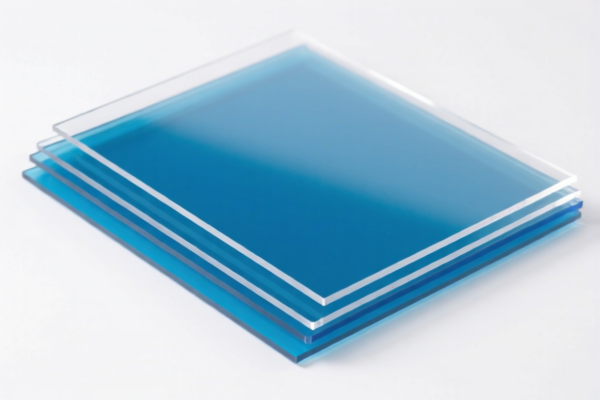
AI Analysis
💎 PMMA Transparent Acrylic Sheet
🌐 HS Code Reference & Customs Clearance Guide | 2026 Latest Tariff Analysis | Professional Entry Strategy
📌 I. Product Definition & Classification: Do You Really Understand "Acrylic"?
Acrylic, chemically known as Polymethyl Methacrylate (PMMA), is a versatile transparent thermoplastic often referred to as "glass substitute." In international trade, its classification depends strictly on its form (raw polymer vs. processed sheet) and state (semi-finished vs. finished goods).
Primary Forms: 1. Raw/Primary Resin (Blocks/Granules): Unprocessed PMMA polymer ready for molding. 2. Sheets/Plates (Semi-finished): Solid sheets produced via casting or extrusion, ready for cutting, bending, or fabrication. 3. Specialty Sheets: Micro-porous, colored, or specialized functional sheets.
⚠️ Key Classification Point:
- If it is a solid sheet/plate (not foam/micro-porous) → Generally falls under Chapter 39, Heading 3920 or 3921.
- If it is a raw polymer block/granule → Generally falls under Heading 3906.
- Crucial Distinction: Most "Acrylic Sheets" imported for fabrication are classified under 3920 or 3921, NOT 3906, unless they are specific unprocessed blocks.
📦 II. HS Code Classification Details (2026 Latest Tariff Authority Mapping)
Based on the provided data, here are the four most relevant HS Codes for PMMA Transparent Acrylic Sheets, along with their specific tax implications.
| HS Code | Product Description | Applicable Scenario | Tax Rate (Total) |
|---|---|---|---|
3920.51.10.00 |
Acrylic (PMMA) Sheet/Plate | Solid sheets/films/foils/bands. Most common for standard clear acrylic sheets. | 41.0% |
3906.90.20.00 |
Acrylic (PMMA) in Primary/Semi-finished Form | Raw polymer blocks or unprocessed semi-finished shapes. | 41.3% |
3921.11.00.00 |
Other Plates, Sheets, Film, Foil, Band (PMMA) | Polymers in plate form, fitting "other plastic plates" category. | 40.3% |
3906.10.00.00 |
Acrylic (PMMA) Primary Form | Semi-finished primary state of PMMA. | 41.3% |
3921.19.00.90 |
Other Plates/Sheets (Not Micro-porous) | Solid sheets that do not fit "micro-porous" definitions. | 41.5% |
🔍 Priority Recommendation:
- For standard transparent cast or extruded acrylic sheets,3920.51.10.00is the most precise and commonly used code, with a 41.0% total tariff.
- If the goods are declared as "primary form" polymer blocks rather than finished sheets,3906.90.20.00or3906.10.00.00may apply (41.3%).
- If classified broadly under "other plastic plates,"3921.11.00.00offers the lowest rate at 40.3%, but must strictly meet the definition of "other plastic plates."
💰 III. 2026 Latest Tariff Rate Breakdown (Including Surcharges & Policy Add-ons)
✅ Applicable Country: United States (US)
✅ Origin: China (CN)
✅ Effective Date: 2025 November 10 onwards (for subsequent imports)
🎯 1. 3920.51.10.00 —— Acrylic (PMMA) Sheet/Plate (Primary Choice)
| Item | Detail |
|---|---|
| Base Tariff | 6.0% (Ad Valorem) |
| Section 301 Tariff (25%) | +25.0% (USITC Section 301, China-origin goods) |
| Section 122 Tariff | +10.0% (Specific policy surcharge) |
| Total Tariff Rate | 41.0% |
| Tax Calculation | CIF Value × 41.0% |
| De Minimis Exemption? | ❌ NO (Deny De Minimis: Items subject to Section 301/122 do not qualify for $800 de minimis clearance) |
| Legal Basis Path | USITC:3920.51.10.00 → 301 Tariff: +25% → 122 Tariff: +10% |
📌 Explanation:
- The 6.0% base rate is the standard Most Favored Nation (MFN) rate.
- The 25.0% is the additional duty imposed under Section 301 of the Trade Act of 1974 against Chinese goods.
- The 10.0% is an additional "122 Clause" tariff.
- Total: 41.0%. This is a high-cost import category. Profit margins must be carefully calculated.
🎯 2. 3906.90.20.00 & 3906.10.00.00 —— PMMA Primary/Semi-finished Form
| Item | Detail |
|---|---|
| Base Tariff | 6.3% |
| Section 301 Tariff (25%) | +25.0% |
| Section 122 Tariff | +10.0% |
| Total Tariff Rate | 41.3% |
| Tax Calculation | CIF Value × 41.3% |
| De Minimis Exemption? | ❌ NO |
| Legal Basis Path | USITC:3906.xxxx → 301 Tariff: +25% → 122 Tariff: +10% |
📌 Note:
- Slightly higher base rate (6.3% vs 6.0%) leads to a 41.3% total rate.
- Applies if the product is declared as "primary polymer" rather than "sheet/plate."
- Risk: Misdeclaring sheets as "primary form" to avoid Section 301 is considered customs fraud.
🎯 3. 3921.11.00.00 —— Other Plastic Plates/Sheets (Lowest Rate Option)
| Item | Detail |
|---|---|
| Base Tariff | 5.3% |
| Section 301 Tariff (25%) | +25.0% |
| Section 122 Tariff | +10.0% |
| Total Tariff Rate | 40.3% |
| Tax Calculation | CIF Value × 40.3% |
| De Minimis Exemption? | ❌ NO |
| Legal Basis Path | USITC:3921.11.00.00 → 301 Tariff: +25% → 122 Tariff: +10% |
📌 Strategy:
- This offers the lowest total tariff (40.3%) among the options.
- Requirement: Must strictly qualify as "other plastic plates" under Heading 3921. If the sheet is specifically identified as PMMA in Heading 3920,3920.51.10.00(41.0%) might be more accurate. However,3921.11.00.00can be argued if the sheet does not fit specific 3920 subheadings. Consult a customs broker for pre-classification.
🎯 4. 3921.19.00.90 —— Other Plates/Sheets (Non-Micro-porous)
| Item | Detail |
|---|---|
| Base Tariff | 6.5% |
| Section 301 Tariff (25%) | +25.0% |
| Section 122 Tariff | +10.0% |
| Total Tariff Rate | 41.5% |
| Tax Calculation | CIF Value × 41.5% |
| De Minimis Exemption? | ❌ NO |
| Legal Basis Path | USITC:3921.19.00.90 → 301 Tariff: +25% → 122 Tariff: +10% |
📌 Note:
- Highest base rate (6.5%) leads to the highest total tariff (41.5%).
- Avoid unless the product specifically fits this "other" category and not 3920 or 3921.11.
🛠️ IV. Customs Clearance Practical Advice (Field Risk Avoidance Guide)
✅ 1. Required Documentation Checklist (Missing items will cause delays)
| Document | Mandatory | Description |
|---|---|---|
| ✅ Product Specification Sheet | ✔️ | Must state material: "100% Polymethyl Methacrylate (PMMA)," thickness, dimensions, transparency level. |
| ✅ Declaration of Non-Micro-porous | ✔️ | Explicitly state: "Not a micro-porous film or sheet." This prevents classification under higher-rate micro-porous codes. |
| ✅ Commercial Invoice | ✔️ | Clearly describe as "PMMA Transparent Acrylic Sheet," not just "Plastic Sheet." |
| ✅ Packing List | ✔️ | Detail weight, dimensions, and packaging type. |
| ✅ Certificate of Origin (CO) | ✔️ | If applicable, to verify China origin for 301/122 tariff calculation. |
| ✅ FCC/UL Certifications | ✔️ | If used in electronics or safety applications. |
✅ 2. Declaration Tips (Key Mnemonics)
🔥 “Material Precise, Form Clear, No Micro-pores, Tax Saved!”
| Scenario | Correct Declaration | Incorrect Practice |
|---|---|---|
| Standard Clear Acrylic Sheet | 3920.51.10.00 (PMMA Sheet) |
Vague term "Plastic Sheet" → Potential audit |
| Raw PMMA Block | 3906.90.20.00 |
Declaring block as "Sheet" → Misclassification penalty |
| Colored/Tinted Acrylic | 3920.51.10.00 or 3921.19.00.90 |
Assuming color changes HS Code significantly → It usually doesn’t for PMMA sheets |
| Micro-porous Acoustic Panel | 3921.19.00.90 |
Declaring as solid sheet → Tariff penalty |
✅ 3. Special Circumstances Handling
| Situation | Handling Suggestion |
|---|---|
| OEM Custom Sizes | Provide custom order details. Ensure "Sheet" classification remains valid regardless of cut size. |
| Laminated Acrylic | If laminated with other materials, classification may change. Check composite rules. |
| Acrylic + Metal Frame | Do NOT split! Declare as a set if intended for single use. Splitting can lead to higher combined tariffs. |
| Import from Vietnam/Mexico | If re-exported or manufactured outside China, check for USMCA or ASEAN preferential tariffs. IEEPA Exemption may apply! |
🌍 V. Global Market Comparison (2026 Latest)
| Country/Region | Recommended HS Code | Base Tariff | Additional Surcharges (China Origin) | Total Est. Rate |
|---|---|---|---|---|
| 🇺🇸 USA | 3920.51.10.00 |
6.0% | +25% (301) +10% (122) | 41.0% |
| 🇨🇳 China | 3920.51.10.00 |
5.0-6.0% | None | ~5-6% |
| 🇪🇺 EU | 3920.51.00.00 |
6.5% | None (unless trade disputes) | 6.5% |
| 🇬🇧 UK | 3920.51.00.00 |
6.5% | None | 6.5% |
| 🇦🇺 Australia | 3920.51.00.00 |
5.0% | None | 5.0% |
📌 Conclusion:
- The US is the most expensive market for Chinese-origin PMMA sheets due to Section 301 and 122 tariffs.
- EU/UK/Australia are significantly cheaper for imports from China (no Section 301).
- Strategy: If targeting the US, consider diversifying supply chain to Vietnam or Mexico to mitigate tariffs.
📌 VI. Common Mistakes & Pitfalls (Lessons Learned)
❌ Mistake 1: Declaring "Acrylic" as "Plastic" without material specification.
👉 Consequence: Customs may assign a generic, higher-tax code or demand detailed lab tests.
❌ Mistake 2: Failing to disclose "Micro-porous" status.
👉 Consequence: If it IS micro-porous but declared as solid, you may face penalties for incorrect classification. If it IS NOT micro-porous but declared as such, you may pay unnecessary duties.
❌ Mistake 3: Assuming De Minimis ($800) applies to small shipments.
👉 Consequence: Items subject to 301/122 tariffs are EXCLUDED from De Minimis. Even a $100 acrylic sheet will be fully taxed and inspected.
✅ Correct Practice:
“PMMA Transparent Acrylic Sheet, 1220x2440mm, 5mm thickness, Non-Micro-porous, 100% Acrylic”
🎯 VII. Conclusion: Professional Declaration, Cost Optimization!
🎯 Remember the Mantra:
🔹 “PMMA is PMMA, Not Glass.
🔹 Section 301 & 122 are Real, 41% is the Price.
🔹 No De Minimis for China, Plan Ahead or Lose Money!”
📌 Pro Tip:
If your PMMA sheets are manufactured in Vietnam, Mexico, or Thailand, you may qualify for IEEPA Exemptions or USMCA/ASEAN preferential tariffs, potentially reducing rates to 0%~5%.
Recommendation: Apply for a Binding Ruling (Advance Ruling) from US Customs before shipping to lock in the HS Code and duty rate.
📣 Take Action Now:
📞 Consult a licensed customs broker
📄 Prepare detailed product specifications
🚀 Secure supply chain diversification to avoid high US tariffs
✨ Professional Clearance Starts with Accurate Classification!
💼 Every Dollar Saved is Profit Gained!
Customer Reviews
About HS Code Classification
The Harmonized System (HS) is an internationally standardized nomenclature developed by the World Customs Organization (WCO) to classify traded products. Over 200 countries use the HS system as the basis for customs tariffs, trade statistics, and import/export regulations.
Each HS code follows a hierarchical structure:
- Chapter (2 digits) — Broad category of goods (e.g., Chapter 84: Machinery and Mechanical Appliances)
- Heading (4 digits) — More specific grouping within the chapter
- Subheading (6 digits) — Internationally standardized breakdown, used by all WCO member countries
- National subdivisions (8-10 digits) — Country-specific extensions for further classification, such as US HTSUS 10-digit codes
Correct HS code classification is essential for smooth customs clearance, accurate duty payment, and compliance with trade regulations. Misclassification can lead to customs delays, overpayment of duties, or penalties.
When importing from CN to US, the applicable tariff rates may include:
- Most-Favored-Nation (MFN) rate — The standard duty rate applied to WTO members
- General rate — Applied to countries without trade agreements
- Trade remedy duties — Additional tariffs such as Section 301 (anti-dumping), Section 232 (national security), or countervailing duties
The information provided on this page is for reference purposes only. For official classification, please consult with your local customs authority or a licensed customs broker.